1 pound 1970
Market Prices
12 salesAbout This Note
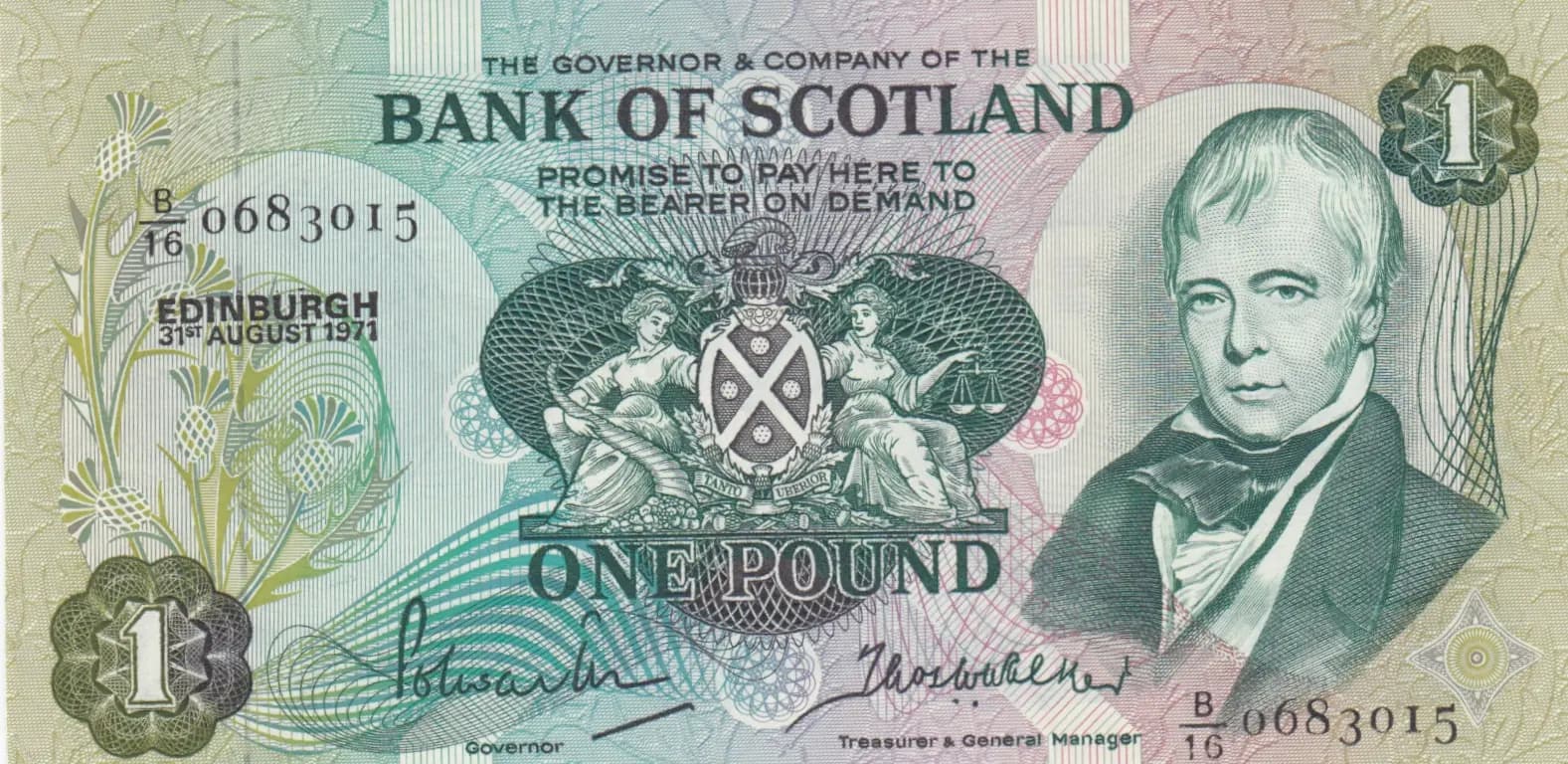
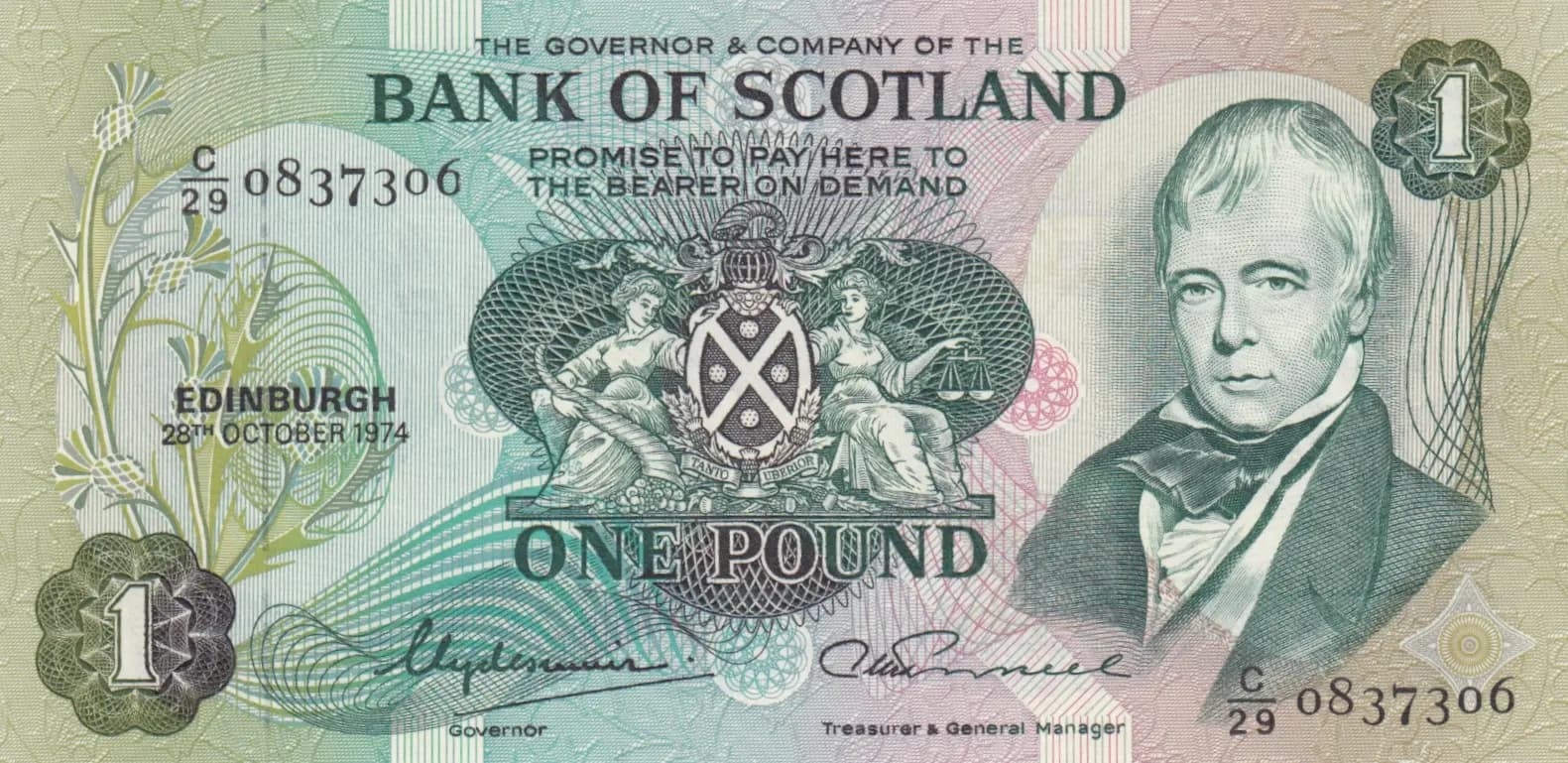
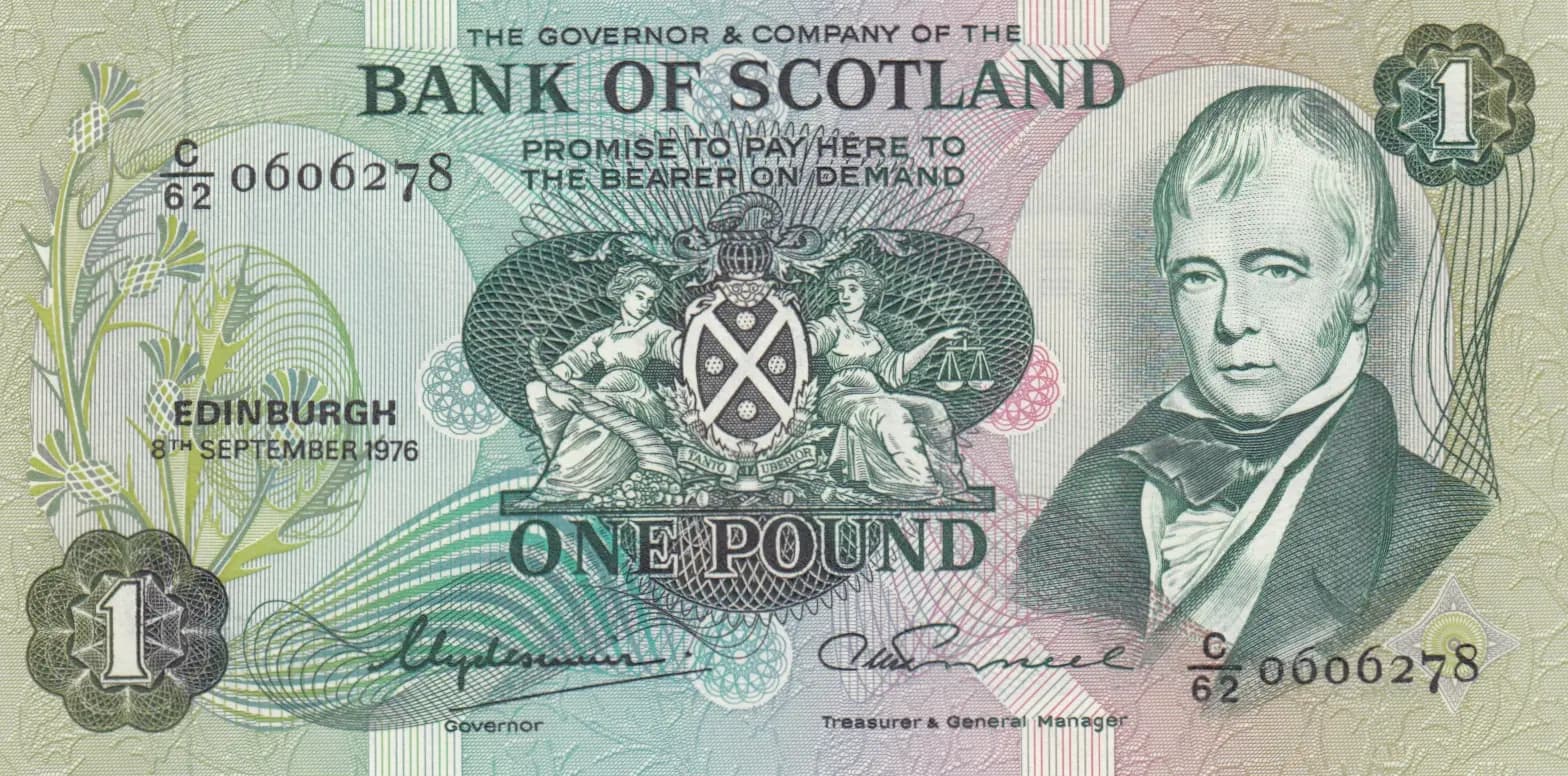
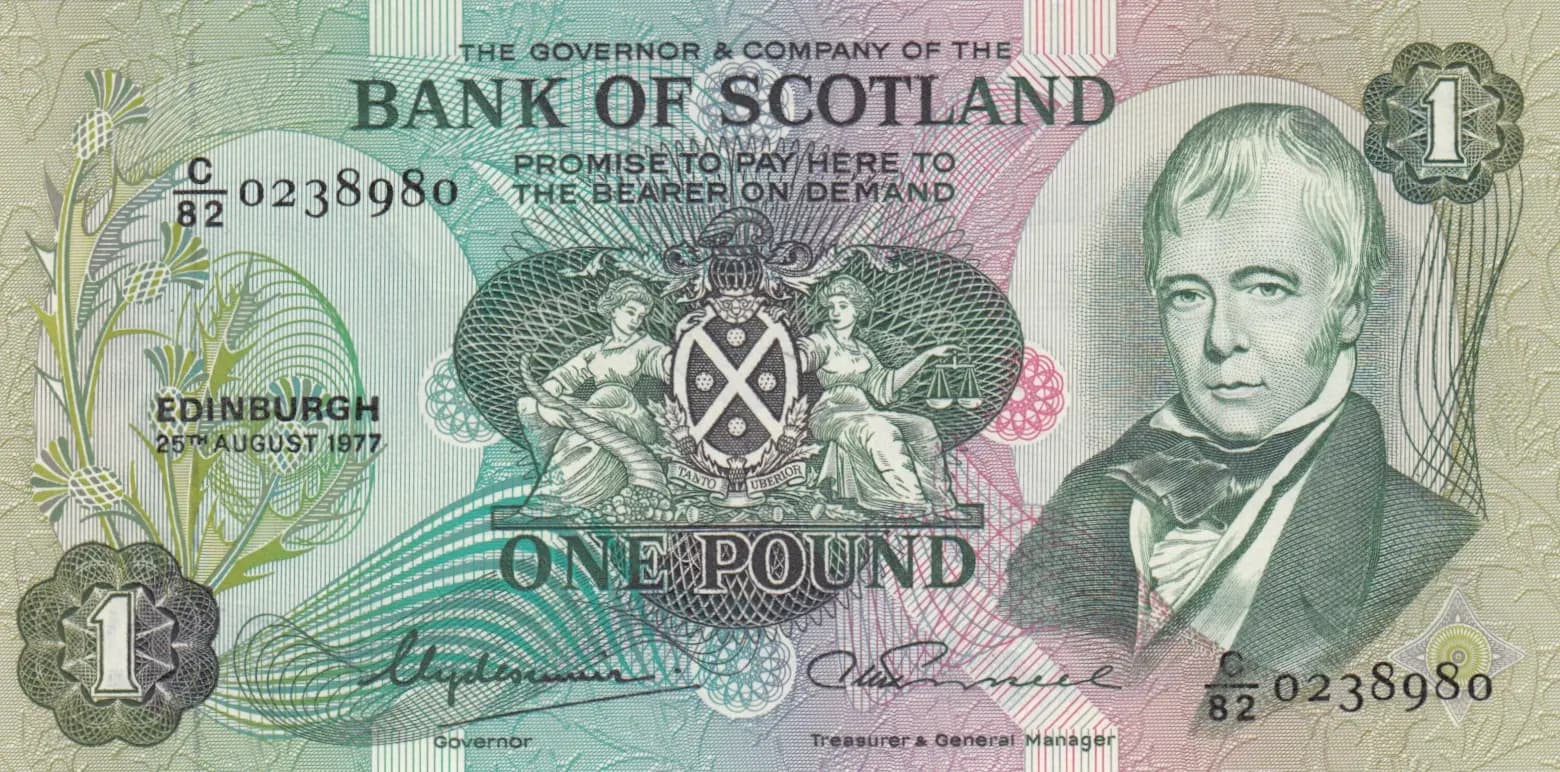
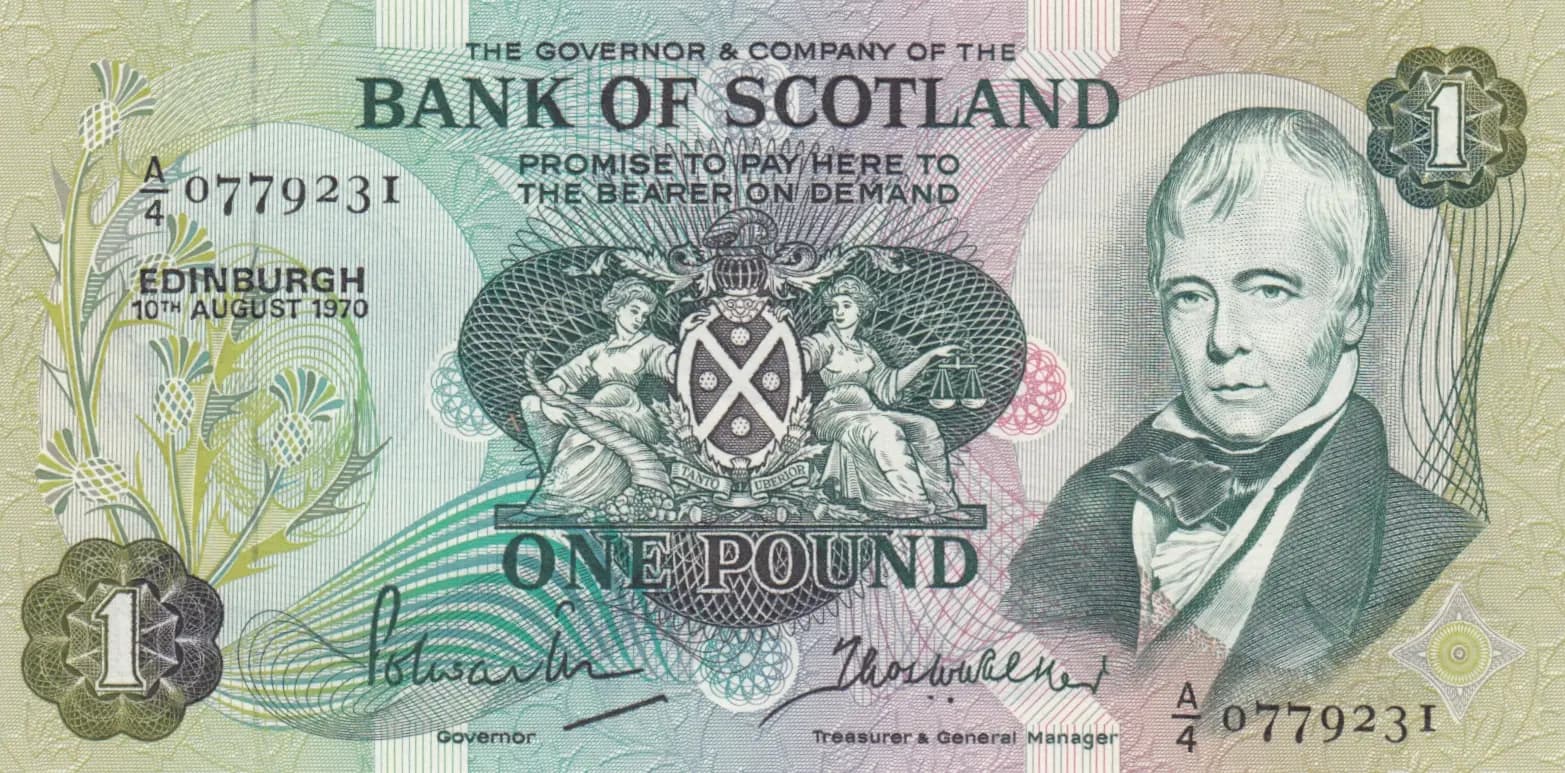
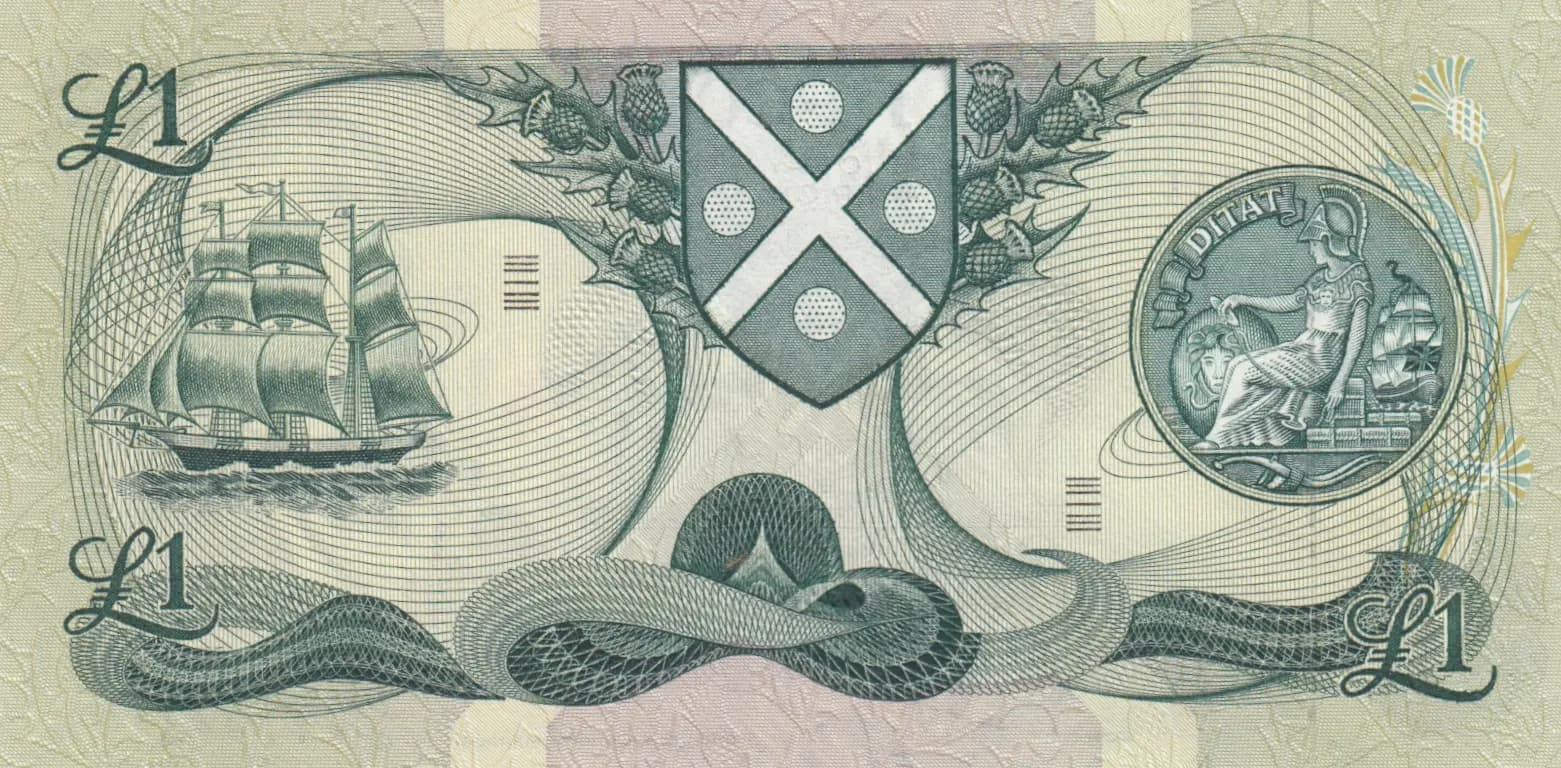
This Bank of Scotland one pound note from 1970 is presented in uncirculated condition with crisp, vibrant colors and sharp printing throughout. The note features Sir Walter Scott on the obverse and a striking composition of Scottish maritime and heraldic imagery on the reverse, including a full-rigged sailing ship and classical allegorical figures. The pristine preservation and strong eye appeal make this an attractive example of early 1970s Scottish currency design.
Common. This is a regular issue note from the 1970-1988 circulation period with substantial print runs. eBay market data provided shows consistent sales across multiple condition grades, with UNC examples realizing approximately $55 (2019 catalog value) and typical sales ranging from $4-$51 depending on condition and grading. The abundance of historical price data and frequency of availability on the secondary market confirm this as a commonly encountered note among collectors. No special scarcity factors (limited print runs, early withdrawal, or recalled series) apply to this standard issue.
This note was issued during a period of significant design evolution for Bank of Scotland currency, representing the bank's 300+ year heritage through carefully chosen Scottish symbolism. The prominent use of thistles, the saltire (St. Andrew's Cross), and the sailing ship reflect Scotland's maritime trading history and national identity during the early 1970s. Sir Walter Scott's portrait honors the Scottish literary giant and emphasizes the cultural importance placed on Scottish heritage by the issuing authority.
The obverse features Sir Walter Scott, the renowned Scottish author and poet, positioned on the right side in formal 19th-century attire. The central vignette displays the Bank of Scotland coat of arms flanked by two allegorical female figures (likely representing Commerce and Justice or similar virtues), with ornamental thistles providing Scottish national context on the left. The reverse presents a three-part composition: on the left, a fully-rigged merchant sailing vessel depicting Scotland's maritime commerce; in the center, a large heraldic shield featuring the saltire (X-cross of St. Andrew) with four quarters, surrounded by thistle ornaments; and on the right, a circular medal containing a classical seated female figure (Pallas Athena or similar allegorical representation of wisdom/protection) with heraldic shield. The color scheme employs pastels on the obverse (greens, pinks, creams, yellows) while the reverse uses single-color green engraving.
Front side: 'THE GOVERNOR & COMPANY OF THE BANK OF SCOTLAND' (institutional identification); 'PROMISE TO PAY HERE TO THE BEARER ON DEMAND' (legal tender declaration); 'ONE POUND' (denomination); 'EDINBURGH' (place of issue); '10th AUGUST 1970' (date of issue); 'A 0779231' (serial number, printed top left and bottom right); 'Governor' and 'Treasurer & General Manager' (signature titles). Back side: '£1' (denomination marker, repeated on both sides). All inscriptions are in English.
Intaglio engraving (line engraving and recess printing), the traditional and most secure method for banknote production. The visual analysis confirms this through the observation of fine parallel lines, cross-hatching, detailed scrollwork, and varying line weights characteristic of hand-engraved plates. No printer attribution is definitively established for this Pick number from the visual evidence alone, though Bank of Scotland notes of this era were typically produced by established security printers such as Waterlow & Sons or Thomas De La Rue. The fine linework patterns visible throughout both sides serve dual purposes: aesthetic appeal and security against counterfeiting.
This example displays serial number prefix 'A' (position 0779231), indicating a regular issue note. The date of printing visible on the obverse reads '10th AUGUST 1970,' consistent with the 1970 initiation of this design series. The catalog references replacement notes with serial prefixes Z/1, Z/2, and Z/3, which constitute a distinct variety and command premium valuations; this example is not a replacement note. No overprints, modifications, or experimental printing characteristics are evident in the visual analysis, confirming this as a standard circulation variety of Pick-111a.