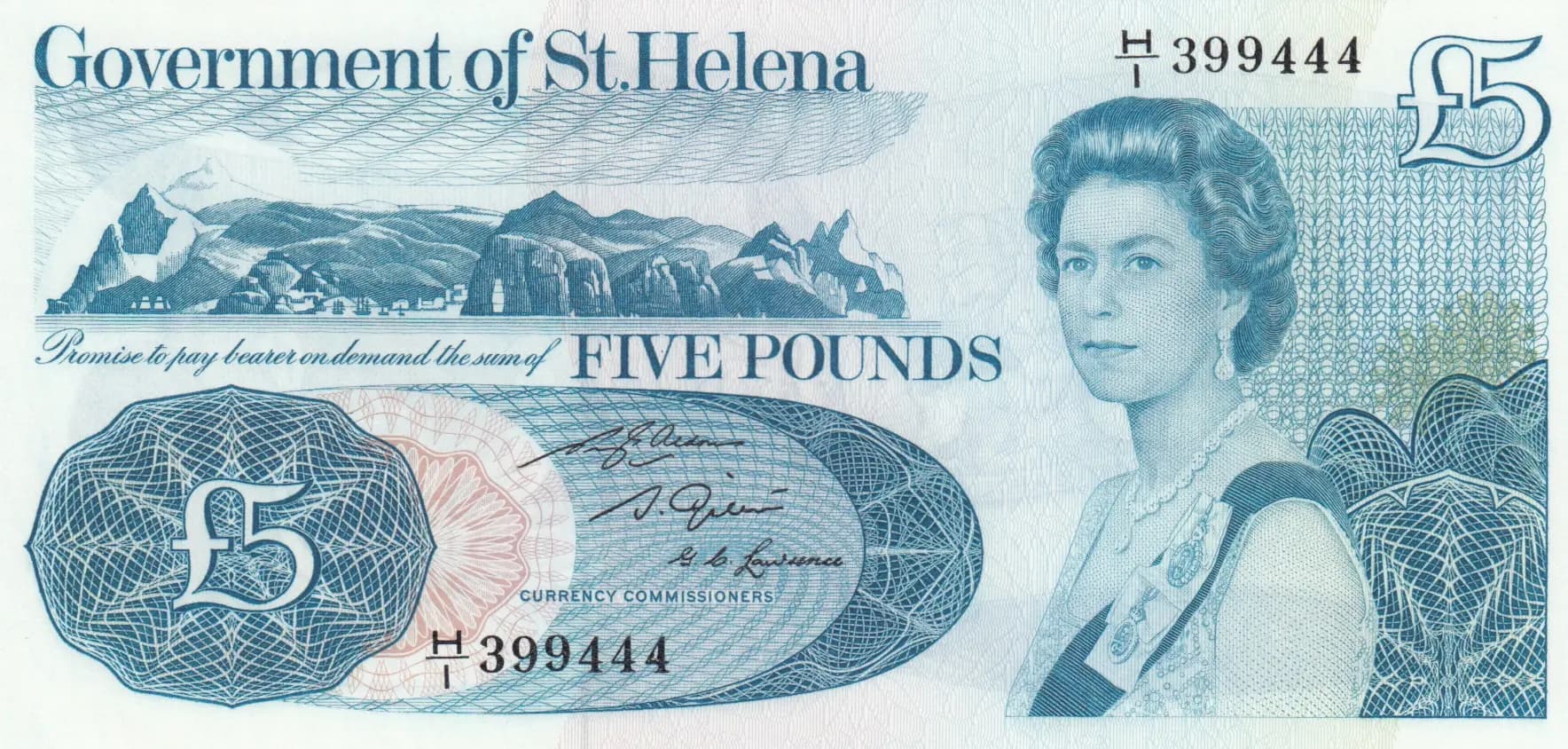
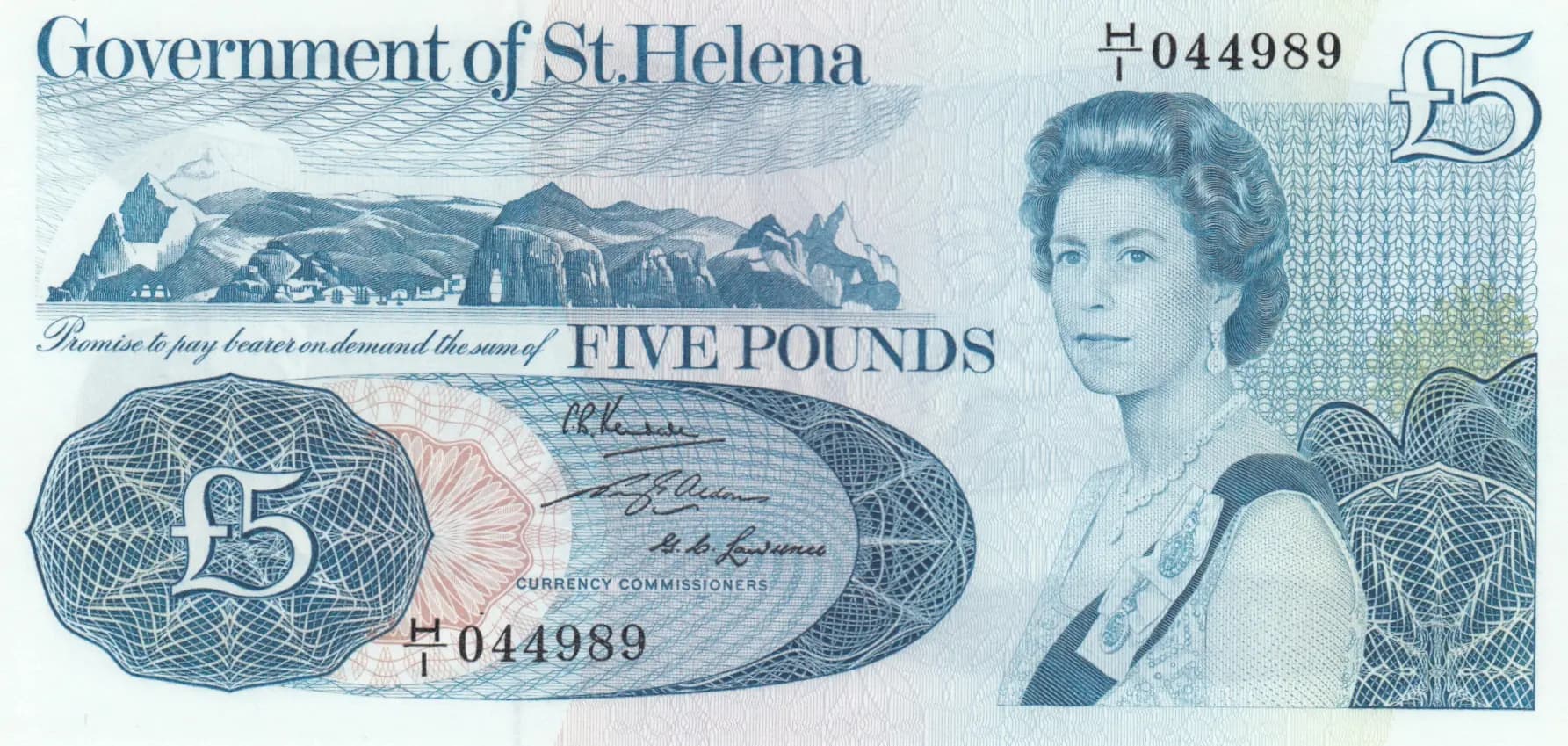
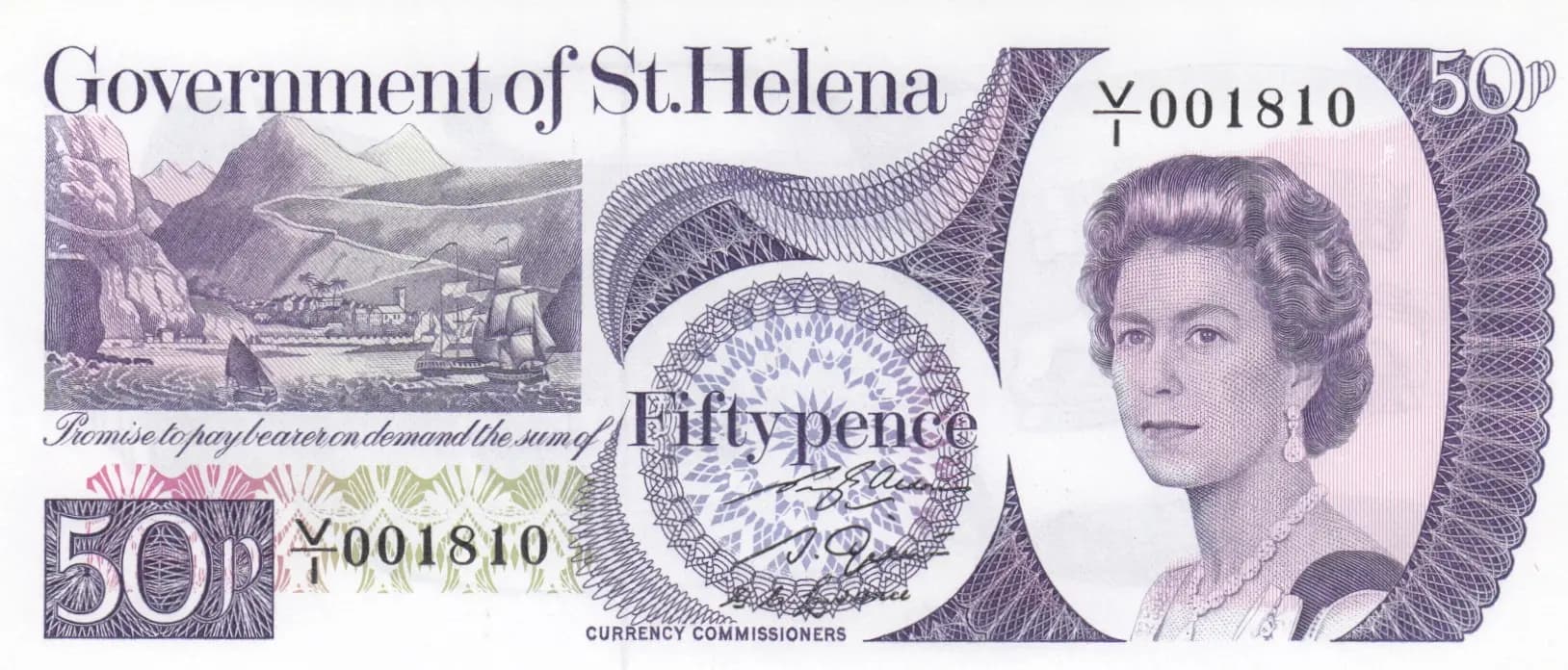
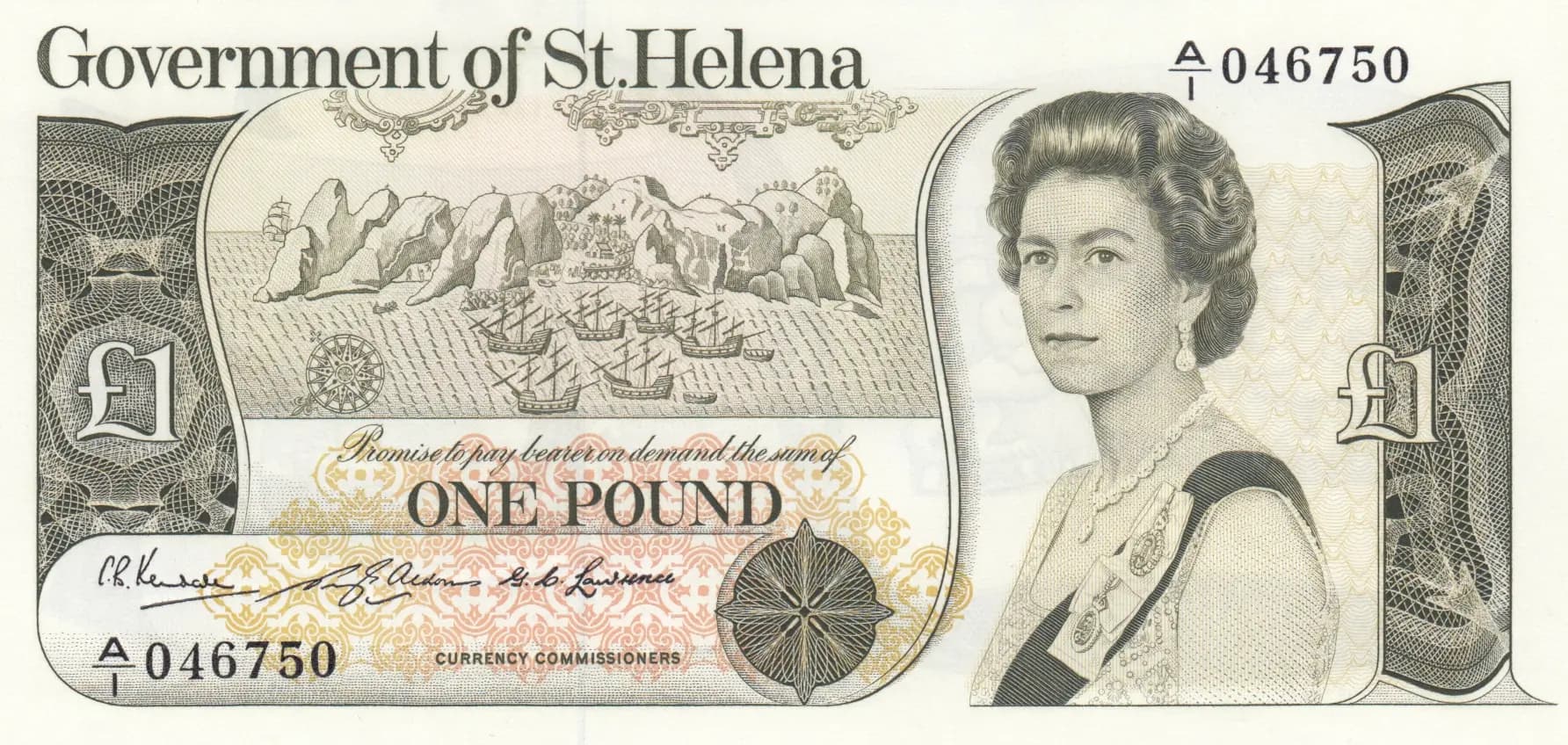
5 pounds 1976 specimen
About This Note
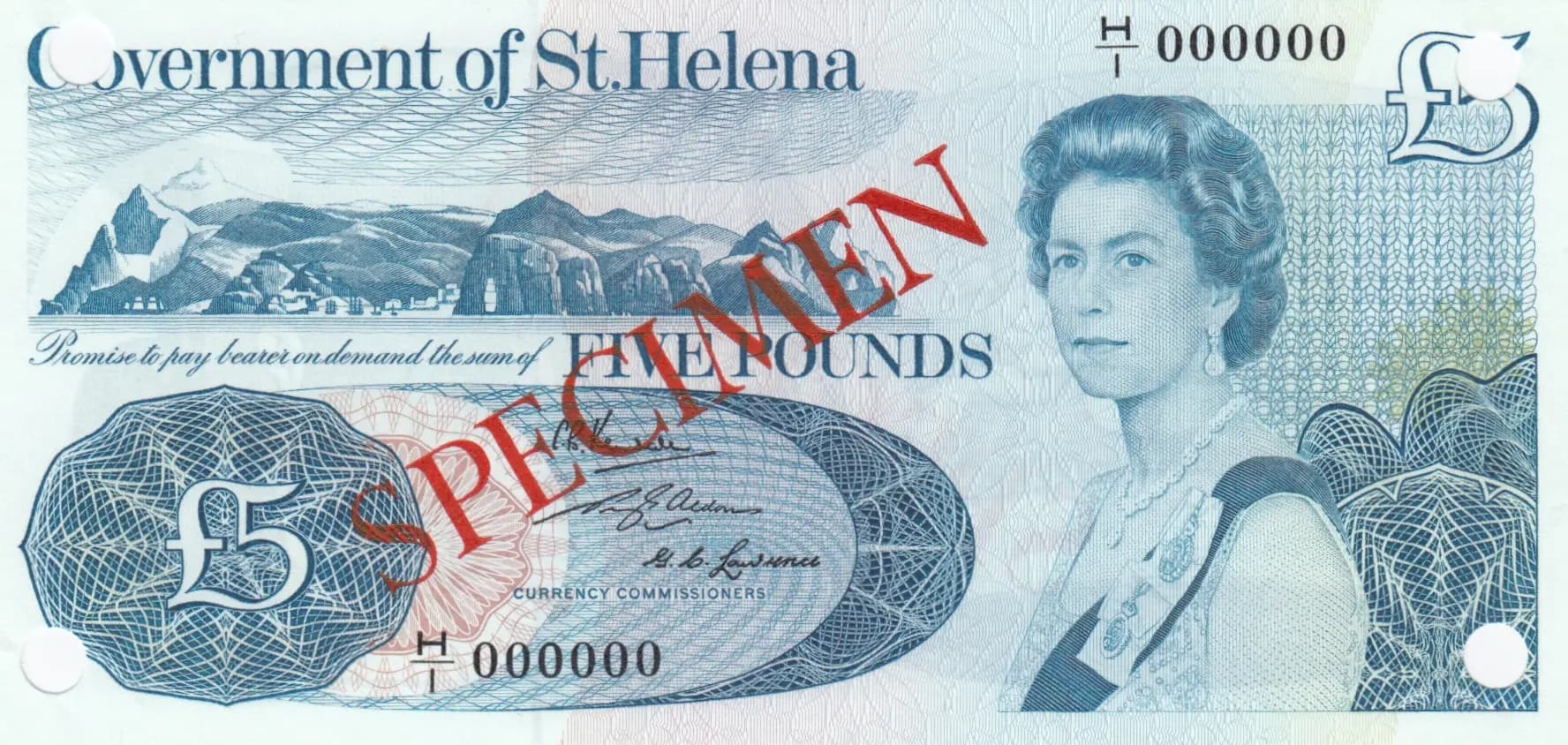
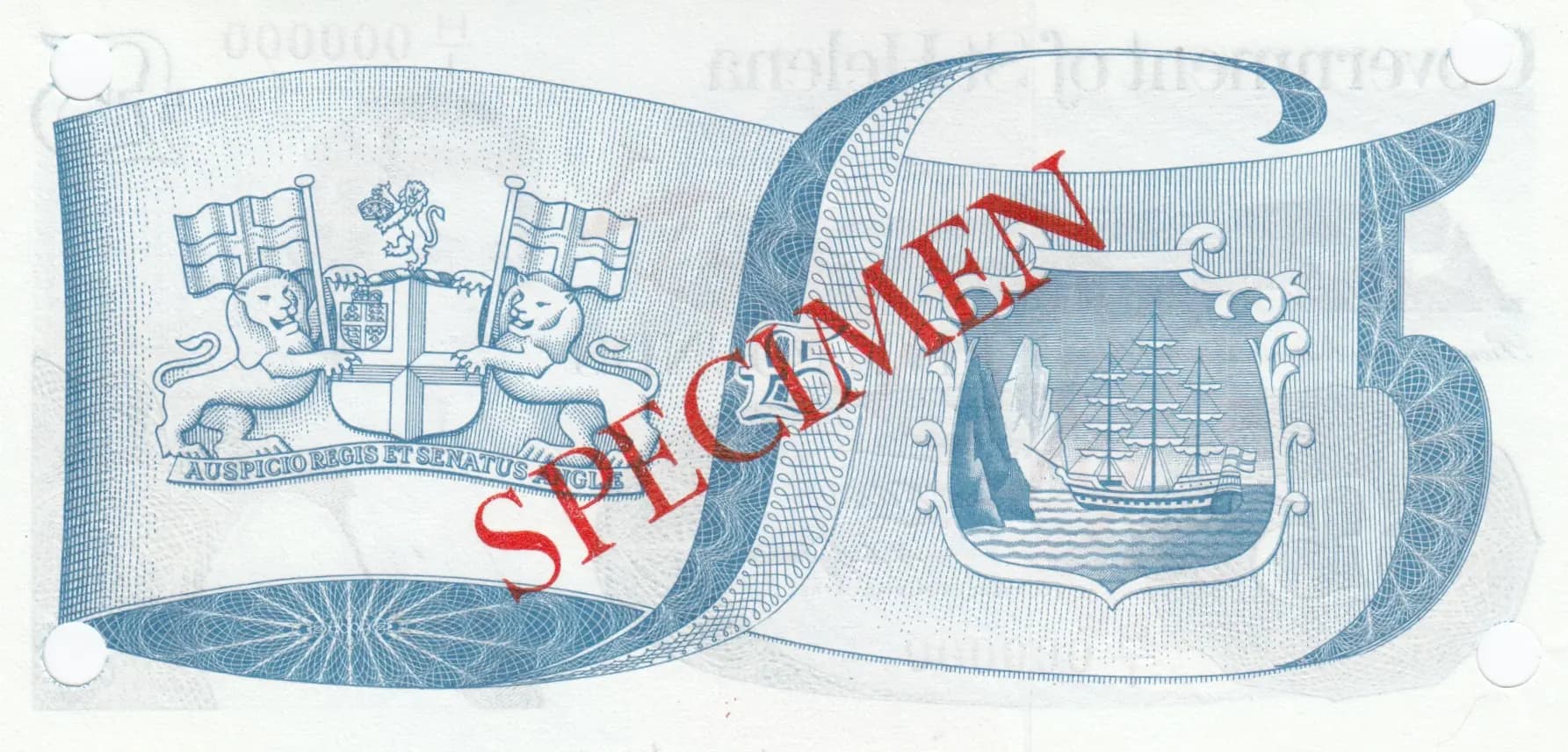
This is a specimen note of the Saint Helena 5 Pounds from 1976 (Pick P-7s), presented in uncirculated condition with crisp, sharp detail throughout. The note features a striking blue-teal color scheme with a portrait of Queen Elizabeth II on the obverse and the island's coat of arms with heraldic lions and a period sailing ship on the reverse, both marked with red 'SPECIMEN' overprint. As a specimen/proof issue, this note represents the original design trials from the Government of Saint Helena's currency commission and is highly valued by collectors of Commonwealth banknotes and specimens.
Uncommon. While specimen notes are generally produced in smaller quantities than circulation issues, the 1976 Saint Helena 5 Pounds series was part of a long-running standard currency issue (with variants documented through 1981 and beyond). Specimen examples (P-7s designation) are more scarce than circulation versions but not truly rare. The uncirculated condition and specimen overprint make it more desirable to collectors than worn circulated examples, but the note remains available to serious collectors of Commonwealth specimens at moderate premiums over face value.
Saint Helena, a remote British Overseas Territory in the South Atlantic, issued this series in 1976 under the authority of the Government of Saint Helena's Currency Commissioners. The note's design reflects the island's historical identity—the scenic landscape vignette and maritime imagery depicting a sailing ship approaching rocky cliffs reference Saint Helena's colonial maritime heritage and its role as a strategic waypoint for naval vessels. The coat of arms with the Latin motto 'Auspicio Regis et Senatus' ('By the Auspices of the King and Senate') reinforces the island's governance under British sovereignty during this period.
The obverse features a three-quarter profile portrait of Queen Elizabeth II facing right, rendered in elegant line-work typical of 1970s Commonwealth currency design. The upper left vignette depicts the rugged landscape of Saint Helena island with mountainous terrain, coastal hills, and settlement buildings, emphasizing the island's geographical isolation and natural features. The reverse displays the Saint Helena coat of arms with two heraldic lions as supporters flanking a shield, holding flags, with the Latin national motto inscribed above. The right side of the reverse showcases a detailed maritime scene of a large multi-masted sailing vessel approaching dramatic rocky coastal cliffs, representing Saint Helena's historical importance as a maritime port and its connection to 18th-19th century naval exploration. Fine-line engraving and intricate cross-hatching patterns provide security detailing throughout both sides.
Front side: 'Government of St. Helena' (issuing authority); 'Promise to pay bearer on demand the sum of' (standard banknote promise clause); 'FIVE POUNDS' (denomination); 'CURRENCY COMMISSIONERS' (authorizing body); 'H 000000' (specimen serial number format); 'SPECIMEN' (red overprint indicating this is a trial/proof note). Back side: 'AUSPICIO REGIS ET SENATUS' (Latin: 'By the Auspices of the King and Senate', the island's official motto); 'SPECIMEN' (red overprint).
Intaglio engraving (line engraving), the standard security printing method for Commonwealth banknotes of this era. The specimen note exhibits the characteristic sharp detail, fine cross-hatching, and dimensional quality indicative of intaglio printing. This Pick number was likely produced by a British security printer such as De La Rue or Bradbury, Wilkinson & Company, which commonly handled Commonwealth currency production in the 1970s.
This is cataloged as P-7s, the specimen variety of the base Pick-7 design. The PMG population data indicates eight documented varieties for this Pick number (P-7a, P-7ap, P-7as, P-7b, P-7br, P-7bs, P-7pp1, P-7s), differentiated by signature combinations and remainder/proof designations. The 'H 000000' serial number format shown is typical of specimen issues. No date is printed on the note face (ND = no date), though it is cataloged as 1976. The catalog reference notes that later similar notes (P-11) feature four signatures versus the three signatures on this variant.