5 pounds 1976
About This Note
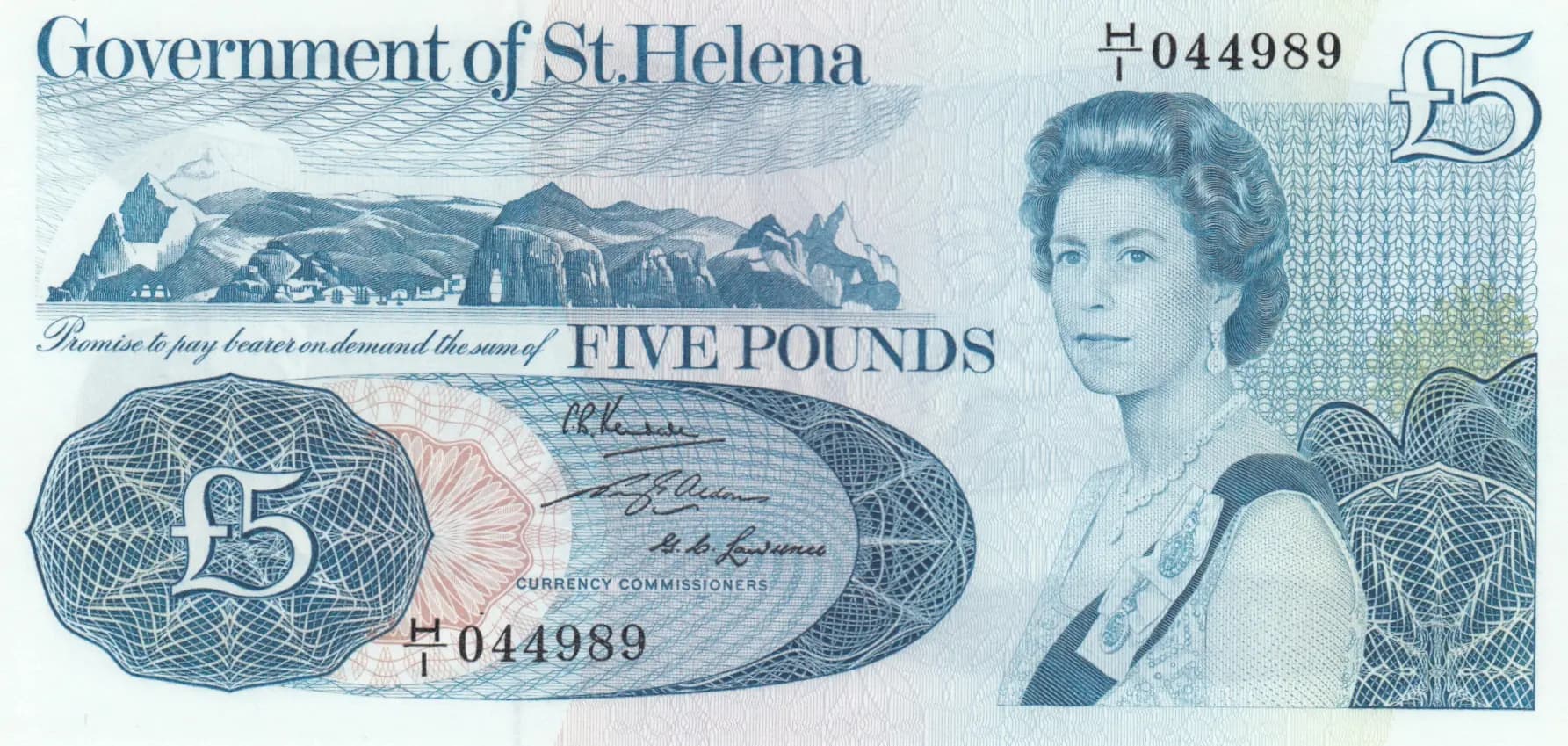
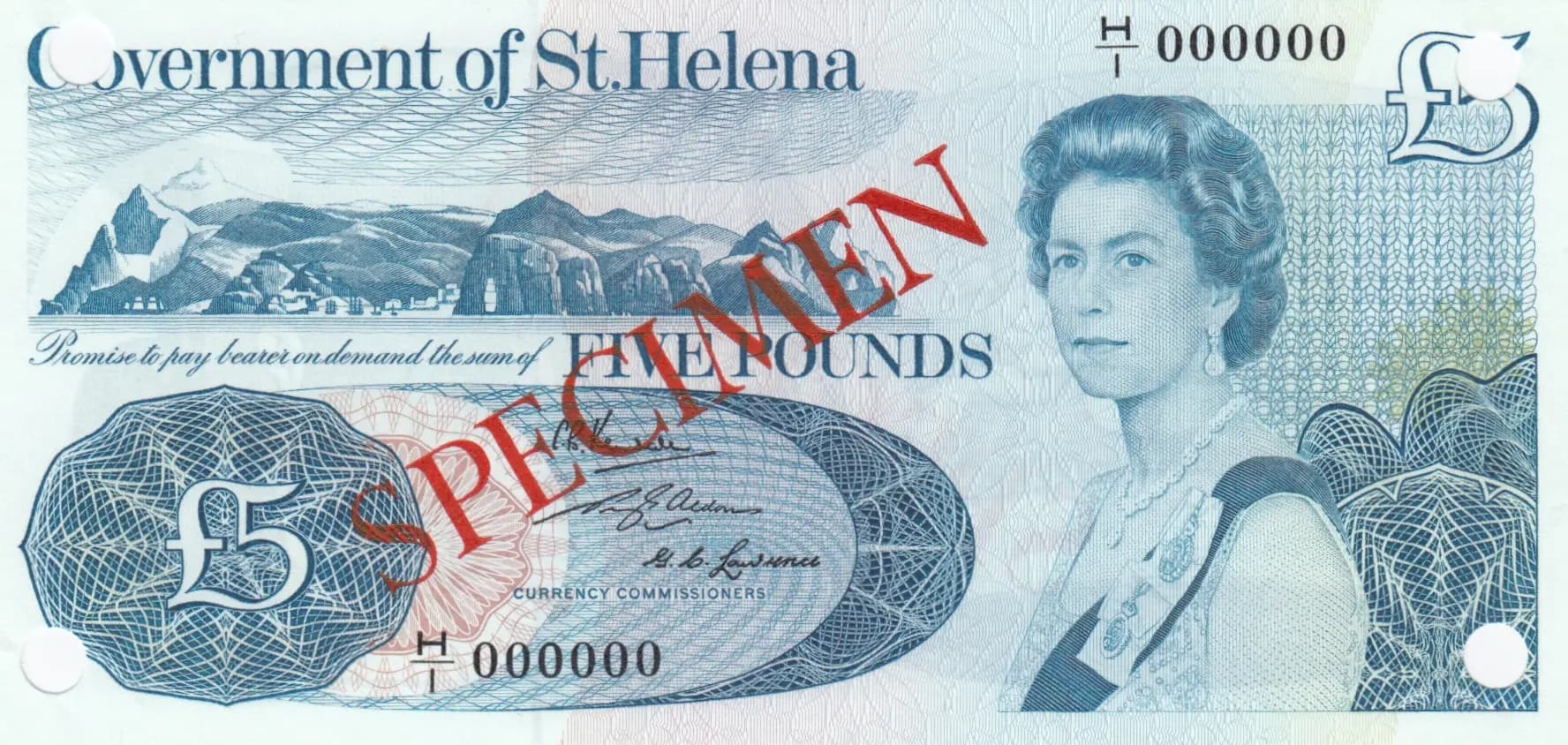
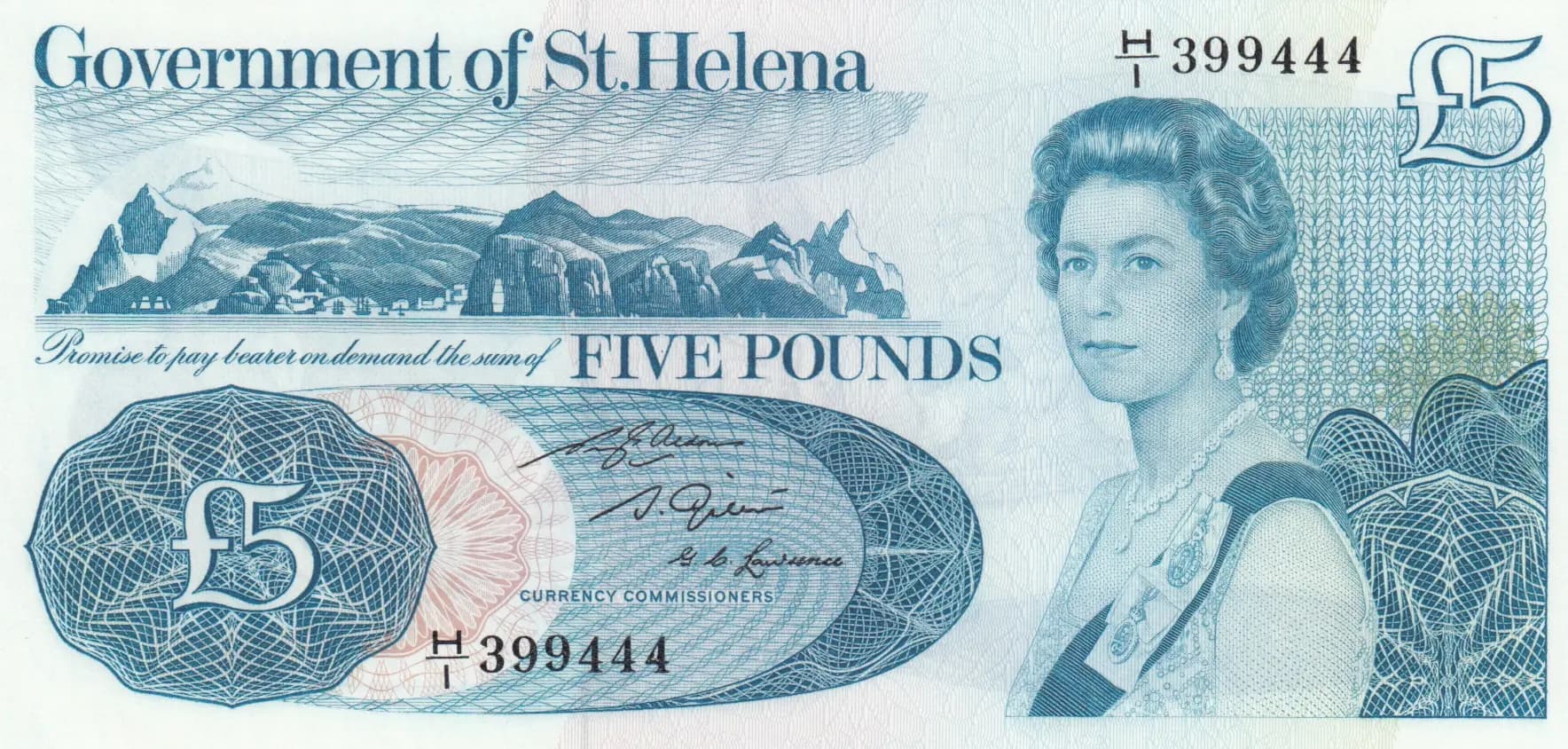
This is an uncirculated 1976 Saint Helena £5 note (Pick P-7a) featuring Queen Elizabeth II in portrait on the obverse and the island's heraldic coat of arms on the reverse. The note exhibits pristine condition with no visible wear, creases, or circulation marks, displaying crisp, well-defined intaglio engraving throughout with intricate mesh and geometric security patterns rendered in blue and teal tones. The combination of excellent preservation and classic Commonwealth design makes this a desirable example of Saint Helena's mid-1970s currency issue.
Common. The Saint Helena £5 note (P-7a) from 1976 was part of a standard circulation issue by the Government of St. Helena and remains readily available in the numismatic market. With a straightforward design, no documented print run restrictions, and ongoing availability of uncirculated examples, this Pick number is classified as common. Secondary market pricing for similar specimens typically ranges $15-30 USD, consistent with common Commonwealth currency of moderate age.
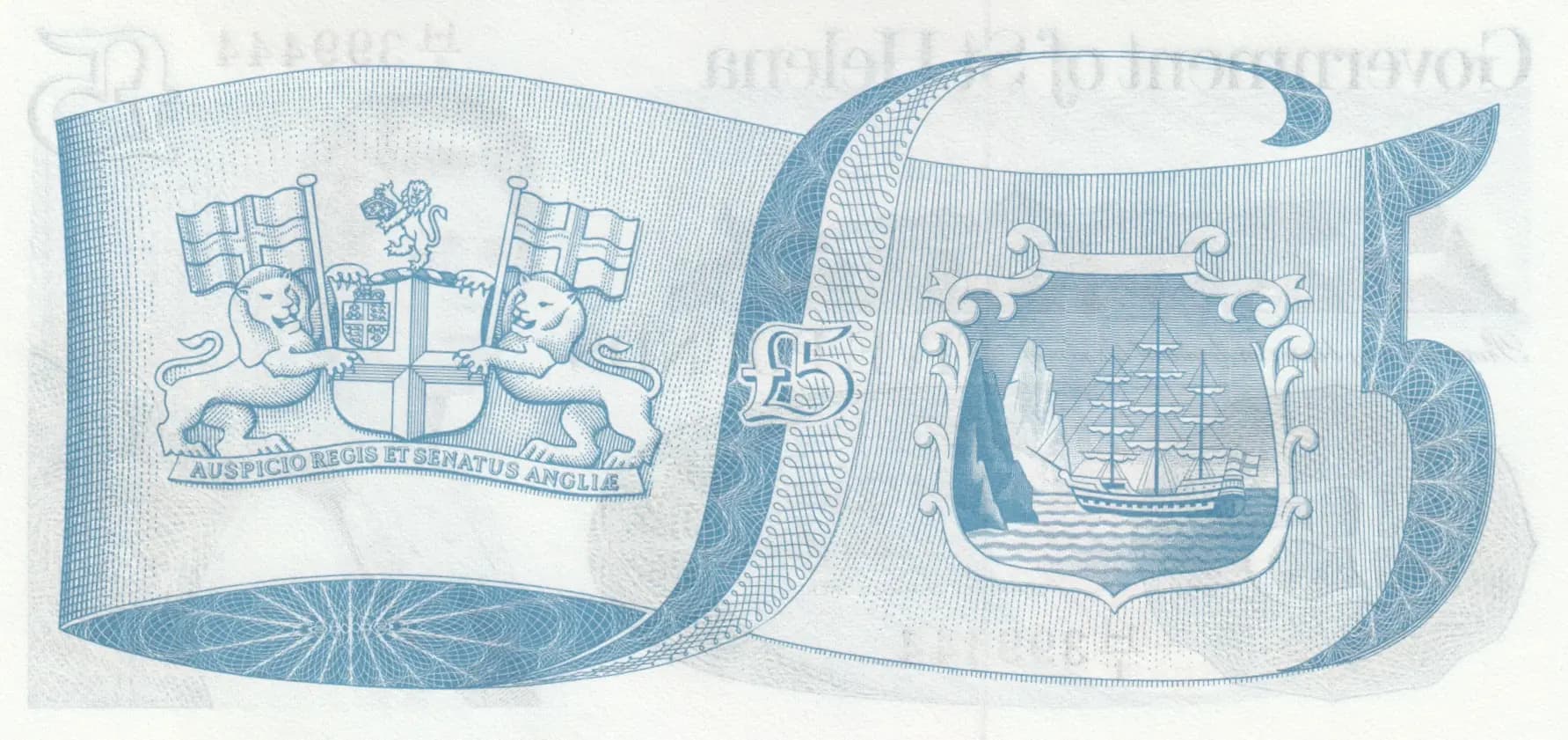
This 1976 issue represents Saint Helena's monetary independence period under the Government of St. Helena Currency Commissioners, during an era when the remote South Atlantic island maintained its own distinct currency despite British sovereignty. The obverse portrait of Queen Elizabeth II and the reverse bearing the Latin motto 'Auspicio Regis et Senatus Angliae' (Under the auspices of the King and Senate of England) reflect Saint Helena's historical ties to the British Crown and colonial administration. The depicted sailing ship and rocky coastal landscape on the reverse evoke the island's maritime heritage and geographic isolation.
The obverse features a three-quarter portrait of Queen Elizabeth II positioned on the right side, rendered in the formal style typical of Commonwealth currency of the 1970s, with her characteristic wavy hair and serene forward-facing expression. The left side displays an ornamental frame containing the large numeral '5' in classical style, above which a landscape vignette depicts Saint Helena's distinctive rocky cliffs and rugged terrain. The reverse is dominated by the heraldic coat of arms of Saint Helena featuring two lions as supporters flanking a central shield, beneath which flows a Latin inscription banner. To the right, an ornate circular frame contains an engraved sailing ship positioned against coastal cliffs, symbolizing the island's maritime significance and geographic character. Throughout both sides, fine mesh patterns and geometric backgrounds serve as anti-counterfeiting measures.
Front side: 'Government of St. Helena' — issuing authority; 'FIVE POUNDS' — denomination; 'Promise to pay bearer on demand the sum of' — standard promise clause; 'CURRENCY COMMISSIONERS' — issuing body designation; Serial number 'H 399444' appears twice. Back side: 'AUSPICIO REGIS ET SENATUS ANGLIAE' (Latin) — translates to 'Under the auspices of the King and Senate of England,' reflecting historical colonial governance; Numeral '5' — denomination marker.
Intaglio engraving (recess printing), the standard security printing method for Commonwealth banknotes of this era. The note demonstrates fine line engraving with high detail definition, intricate mesh work backgrounds, complex geometric patterns, and carefully executed decorative borders characteristic of professional security printing. The precise registration and crisp impression visible in the uncirculated specimen indicate production by a specialized banknote security printer, likely Bradbury Wilkinson & Co. or similar Commonwealth contract printer, though specific attribution requires additional documentation.
This specimen is cataloged as Pick P-7a, the primary 1976 variety with three signatures. The PMG population report indicates eight variants exist within this Pick number base, including P-7ap and P-7as (with prefix/suffix designations), and the later P-7b series (1981 variant with four signatures). The serial number prefix 'H' and the three-signature configuration confirm this as P-7a rather than the later four-signature P-7b or P-11 variants. No overprints or unusual features are apparent in this example.