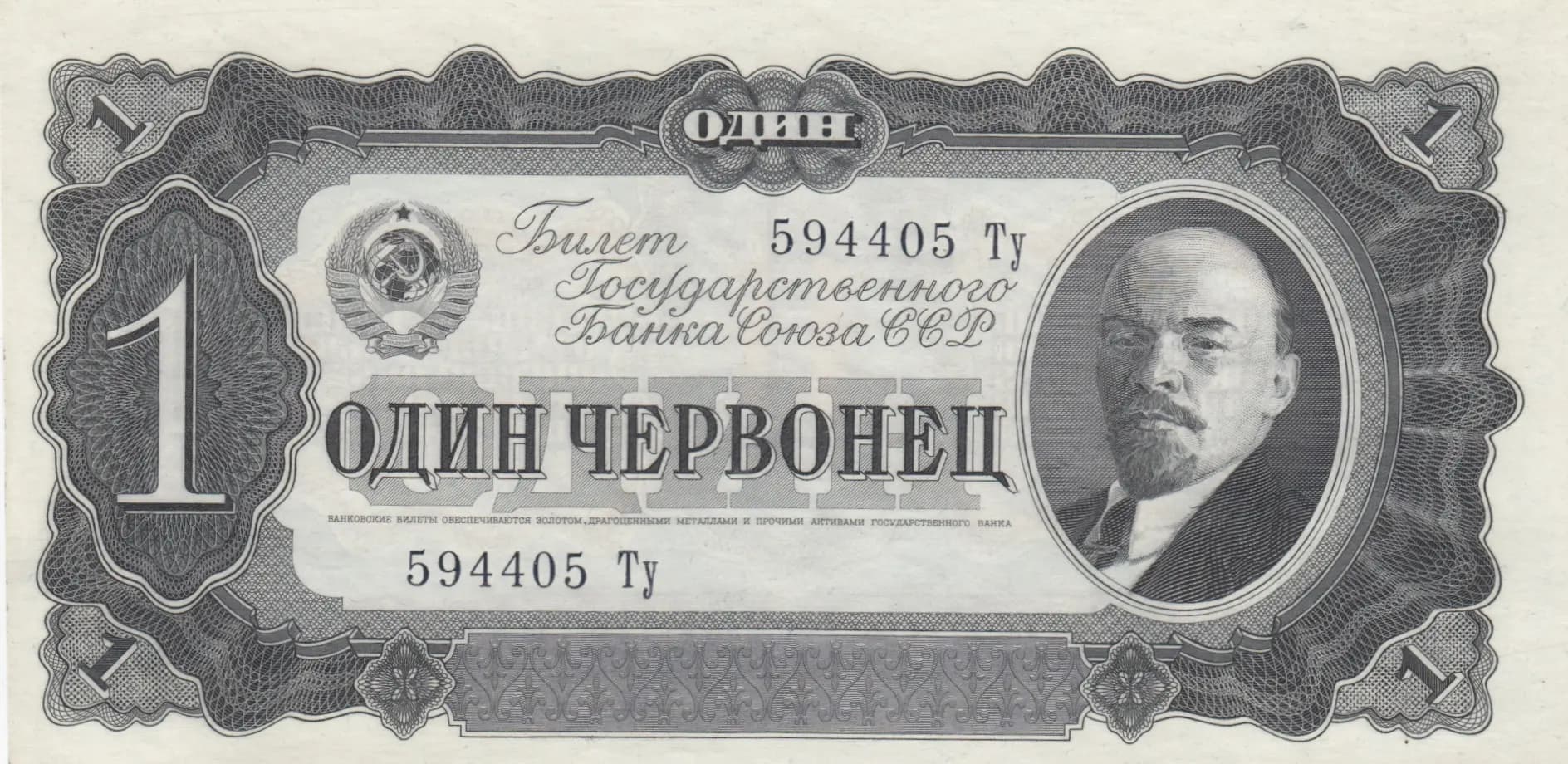
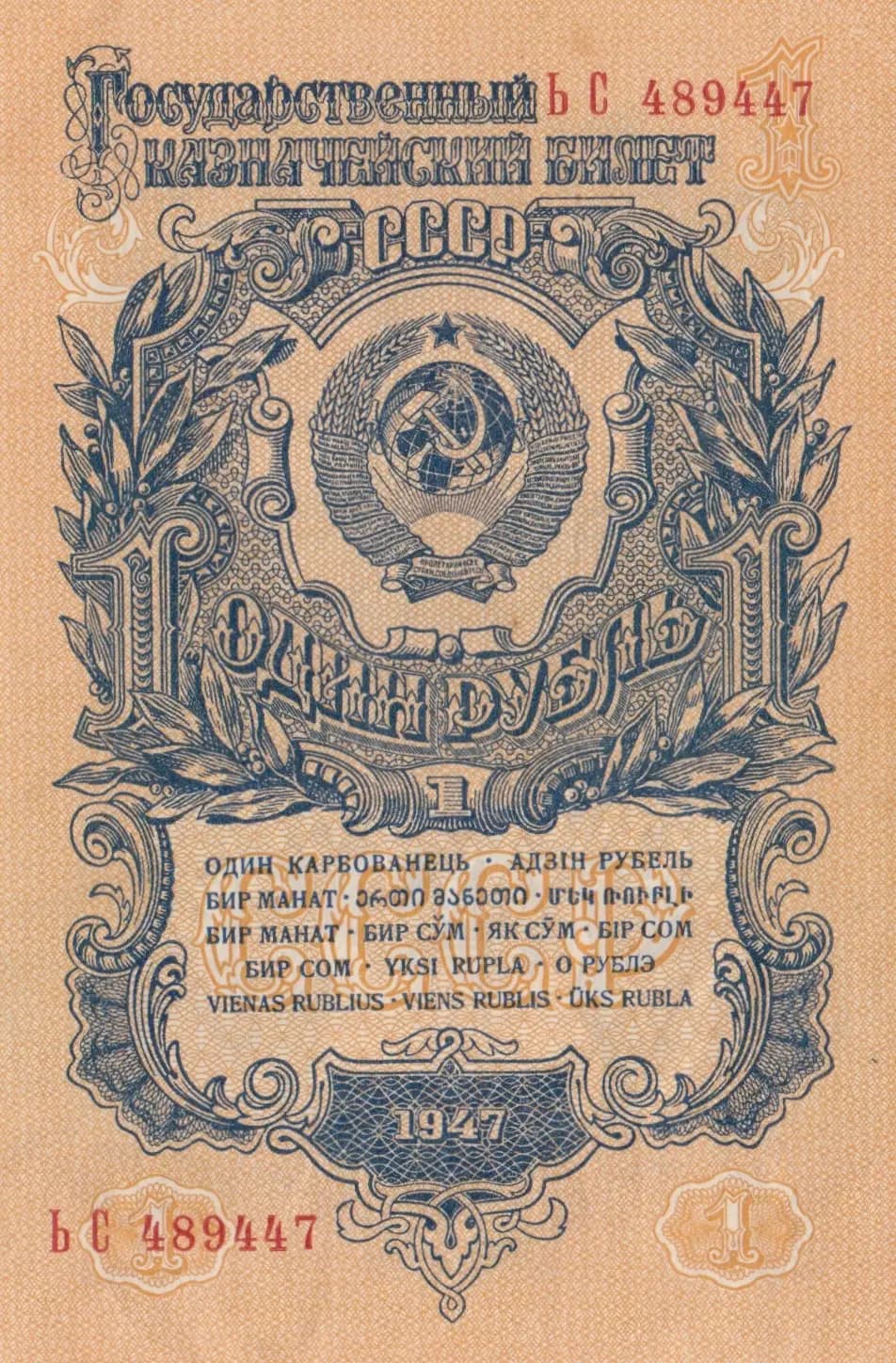
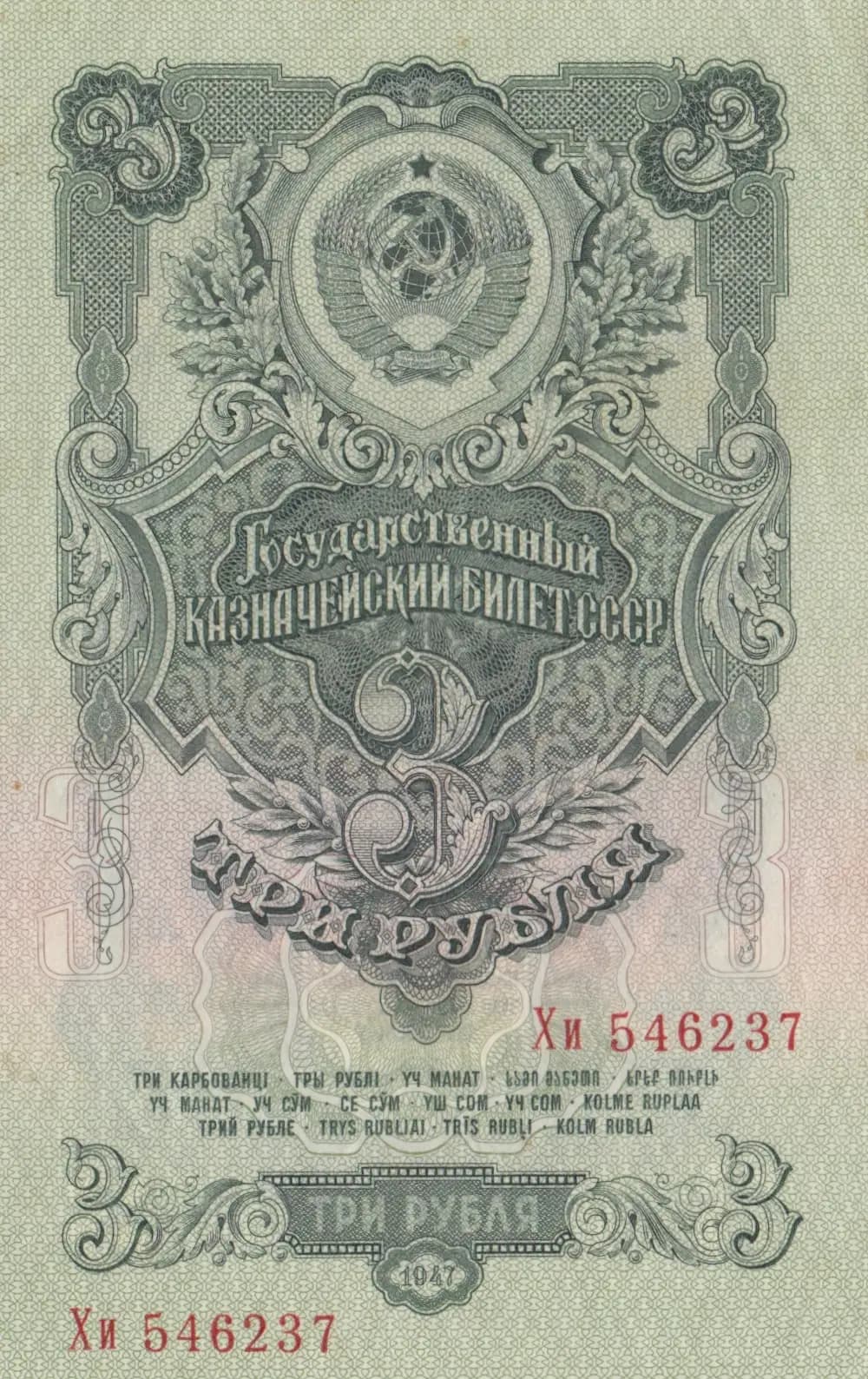
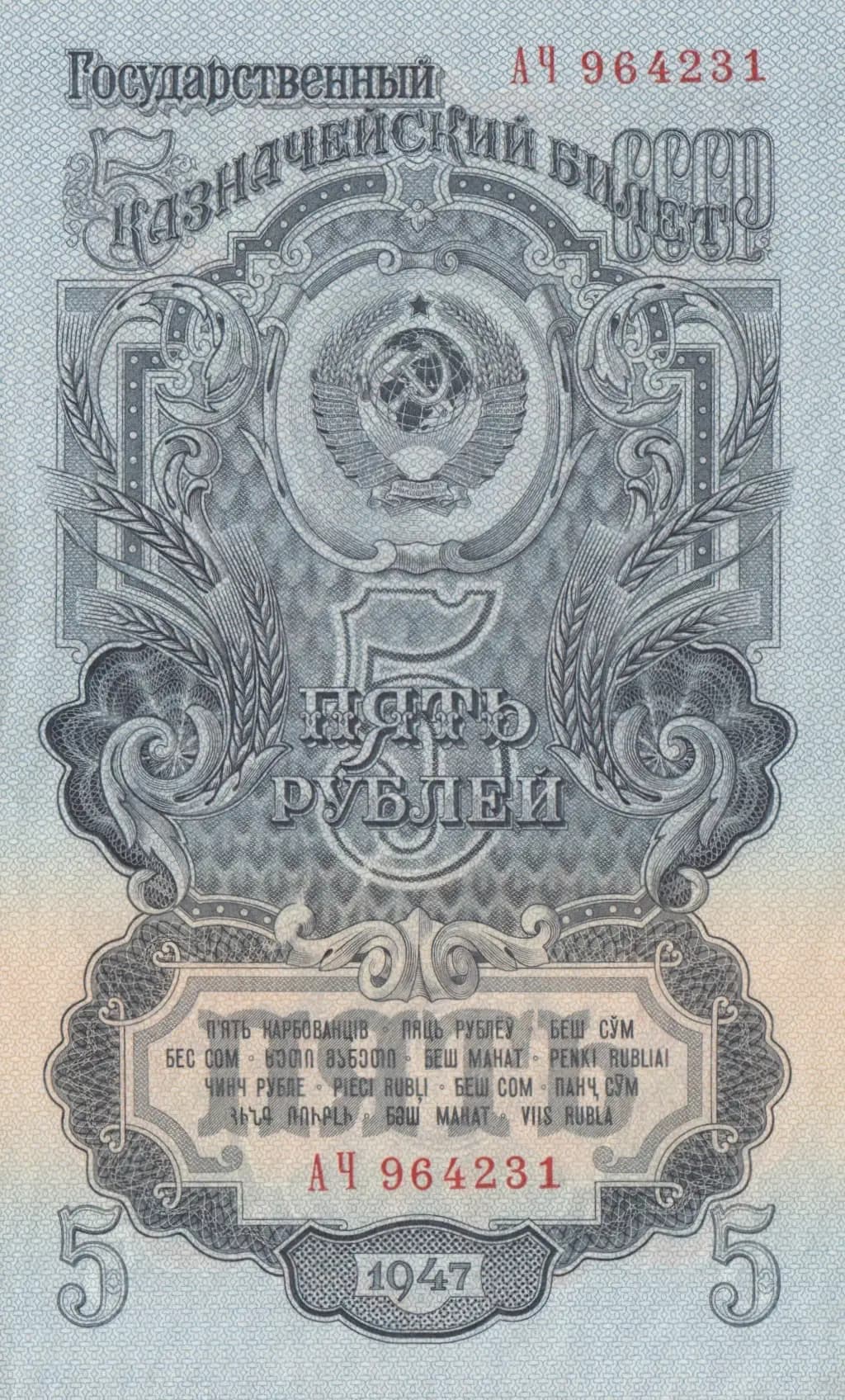
50 rublei 1947 (1957)


About This Note
This is a Soviet 50 rublei banknote from the 1947 design series, issued in 1957 by the State Bank of the USSR (Pick-230). The note is in AU (About Uncirculated) condition with crisp printing, no visible wear, and even coloring throughout. It features an ornate classical design with fine line engraving, a portrait of a bearded statesman in formal attire within an elaborate oval frame, and the iconic Soviet state emblem (hammer and sickle) prominently displayed, making it a representative example of mid-Soviet numismatic design.
Common. The 1947 design series 50 rublei notes (Pick-230) were issued continuously through the late 1950s and represent a standard denomination in the Soviet currency system. The serial number ВГ 531663 and the AU condition suggest this is a collector-grade example, but the note itself was produced in large quantities and remains readily available on the numismatic market at modest prices.
This banknote reflects the Soviet Union's monetary system during the height of the Cold War, when the 1947 design series continued in circulation through the late 1950s. The note's imagery—including the hammer and sickle emblem, the assertion that notes are 'secured by gold, precious metals, and other property of the State Bank,' and the multilingual text representing Soviet republics—underscores the ideological centrality of communist iconography and the assertion of Soviet economic stability during this period. The continued use of the 1947 design in 1957 demonstrates the relative stability of Soviet currency design during the Khrushchev era.
The front features a formal portrait of a bearded gentleman—likely a Soviet statesman or revolutionary figure—rendered in profile within an ornate oval frame adorned with laurel wreaths, positioned on the left side of the note. The Soviet state emblem (hammer and sickle within a decorative wreath) dominates the top center, symbolizing communist authority. The denomination 'ПЯТЬДЕСЯТ РУБЛЕЙ' (Fifty Rubles) is prominently displayed in the center in Cyrillic script. The reverse displays the formal designation 'БИЛЕТ ГОСУДАРСТВЕННОГО БАНКА СССР' (State Bank of the USSR Ticket) at the top, with the denomination repeated and extensive multilingual text representing all Soviet socialist republics. Both sides employ classical ornamental frames, geometric patterns, scrollwork, and fine line engraving throughout. The color palette consists of green, blue, pink/beige, gray, and black, typical of Soviet currency design of this era. The legal warning regarding counterfeiting appears on the front.
FRONT SIDE: 'ПЯТЬДЕСЯТ РУБЛЕЙ' (Fifty Rubles) / '50' (50) / 'РУБ' (RUB - Rubles abbreviation) / 'ПОДДЕЛКА БИЛЕТОВ ГОСУДАРСТВЕННОГО БАНКА СССР ПРЕСЛЕДУЕТСЯ ПО ЗАКОНУ' (Counterfeiting of State Bank of the USSR tickets is prosecuted by law). BACK SIDE: 'БИЛЕТ ГОСУДАРСТВЕННОГО БАНКА СССР' (State Bank of the USSR Ticket) / 'ПЯТЬДЕСЯТ РУБЛЕЙ' (Fifty Rubles) / '50' (50) / 'БАНКОВСКИЕ БИЛЕТЫ ОБЕСПЕЧИВАЮТСЯ ЗОЛОТОМ, ДРАГОЦЕННЫМИ МЕТАЛЛАМИ И ПРОЧИМ ИМУЩЕСТВОМ ГОСУДАРСТВЕННОГО БАНКА' (Bank notes are secured by gold, precious metals, and other property of the State Bank) / '1947' (1947 - design date) / 'ВГ 531663' (Serial number: VG 531663) / Multilingual denomination text in Russian, Ukrainian, Belarusian, Georgian, Armenian, Azerbaijani, Lithuanian, Latvian, Estonian, and other Soviet republic languages.
Intaglio printing (line engraving) combined with lithography, which was the standard security printing technique for Soviet banknotes. The fine line engraving is evident in the intricate geometric patterns, ornamental frames, and portrait work. The multilayered color application suggests multiple print passes. Soviet State Security Printing Works (GOZNAK) was responsible for producing Soviet banknotes of this period, though specific printer attribution for this note would require documentary evidence beyond the visual analysis.
This note exhibits the 1957 reprint of the 1947 design series (hence the designation '1947 (1957)' in the catalog). The serial number prefix 'ВГ' and the specific number sequence '531663' help identify this as part of the later printing series. Varieties within Pick-230 can include different serial number prefixes and potential minor printing differences between early 1947 issuances and later 1950s reprints, though without additional comparative examples or documentation, specific variety attribution is limited. The multilingual text on the reverse is consistent with all Soviet notes from this period representing the multinational Soviet state.