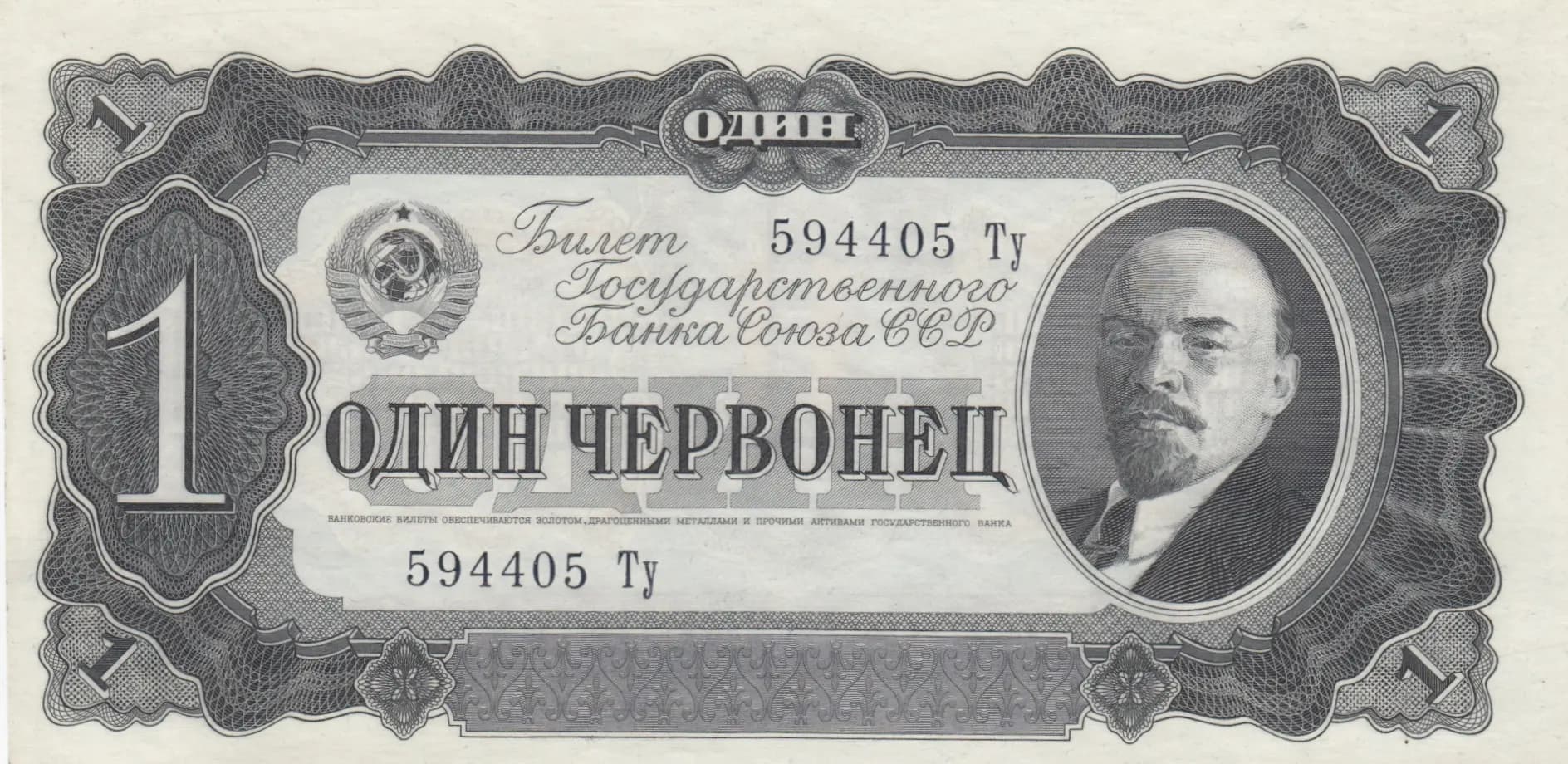
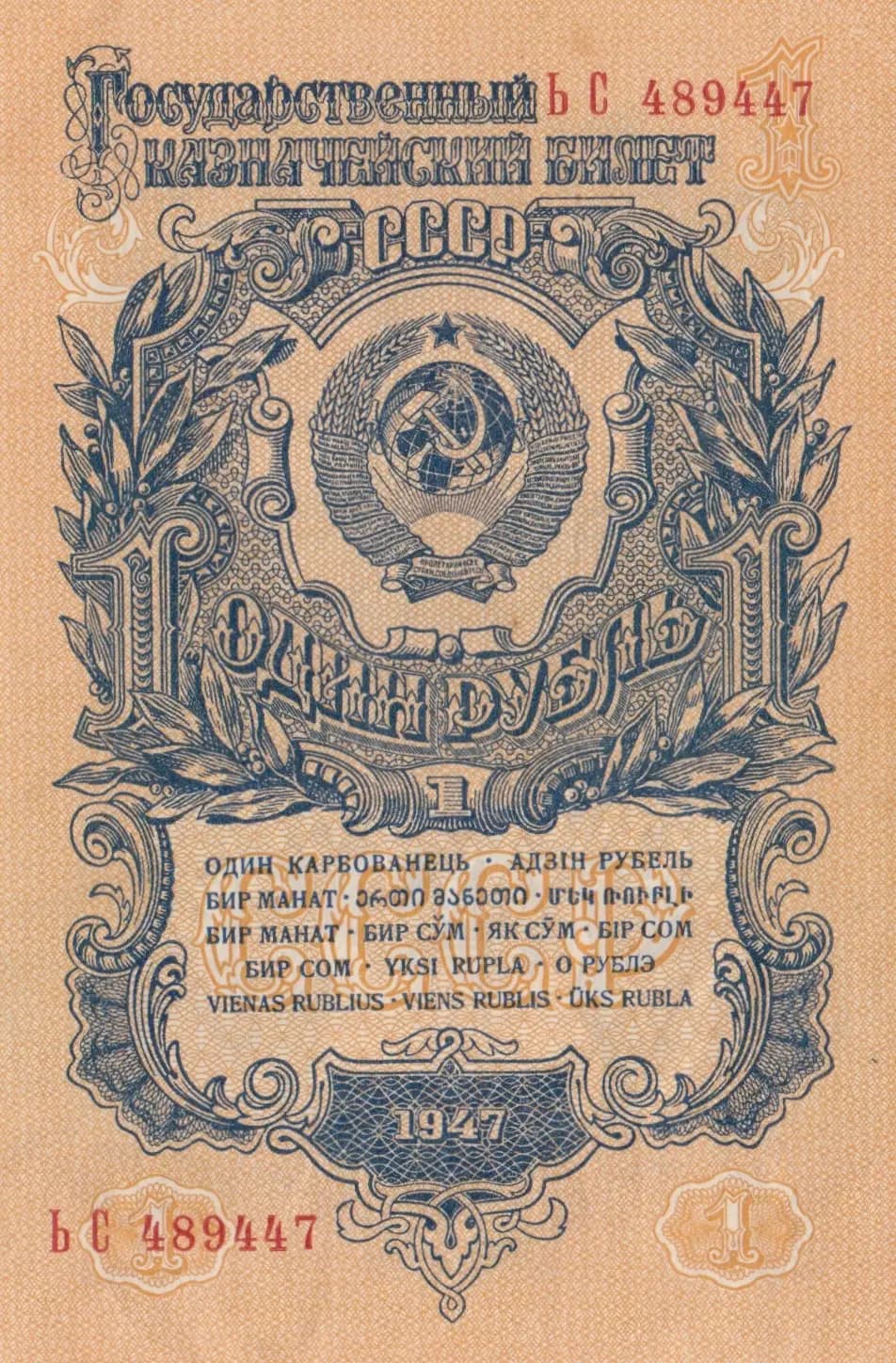
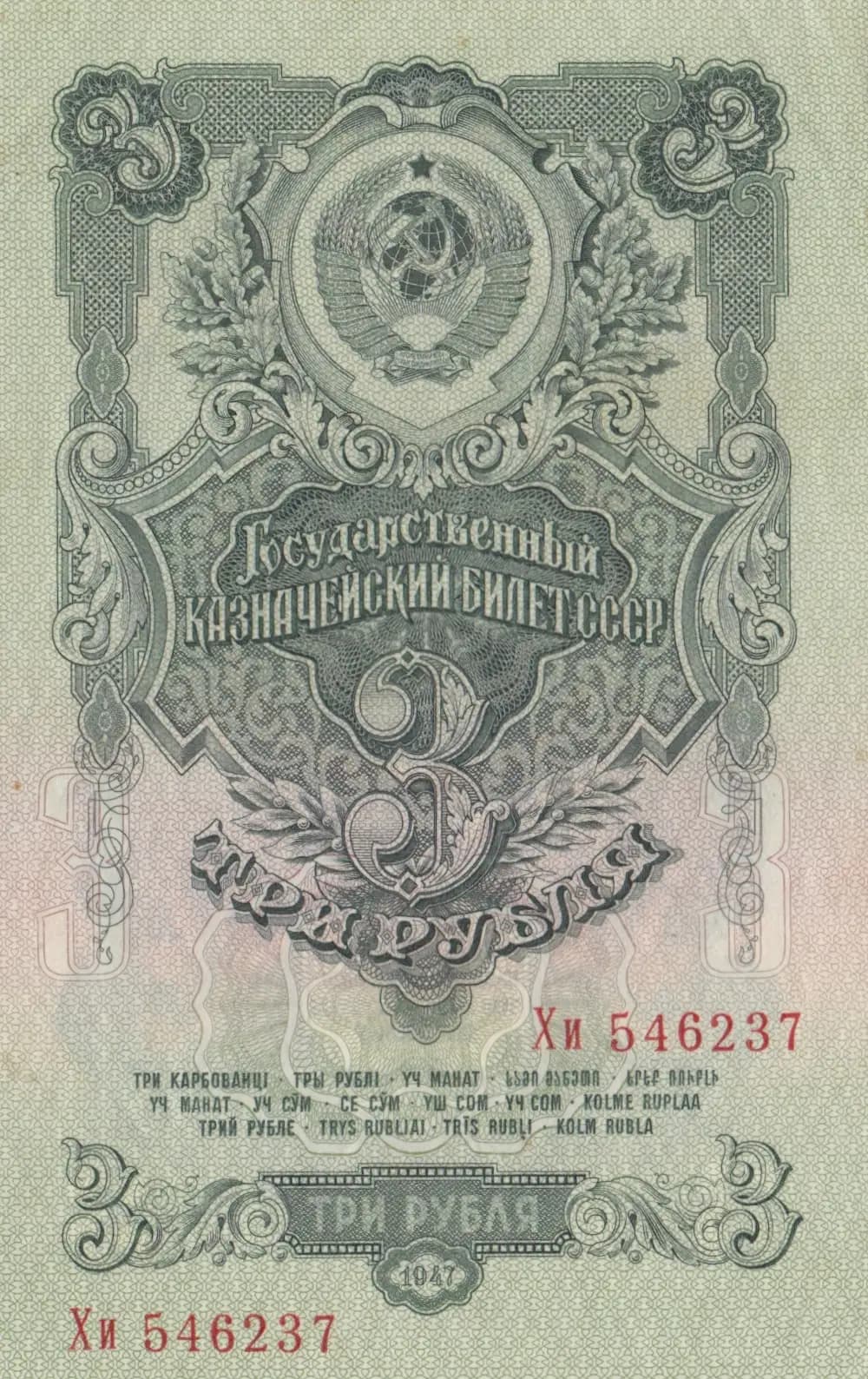
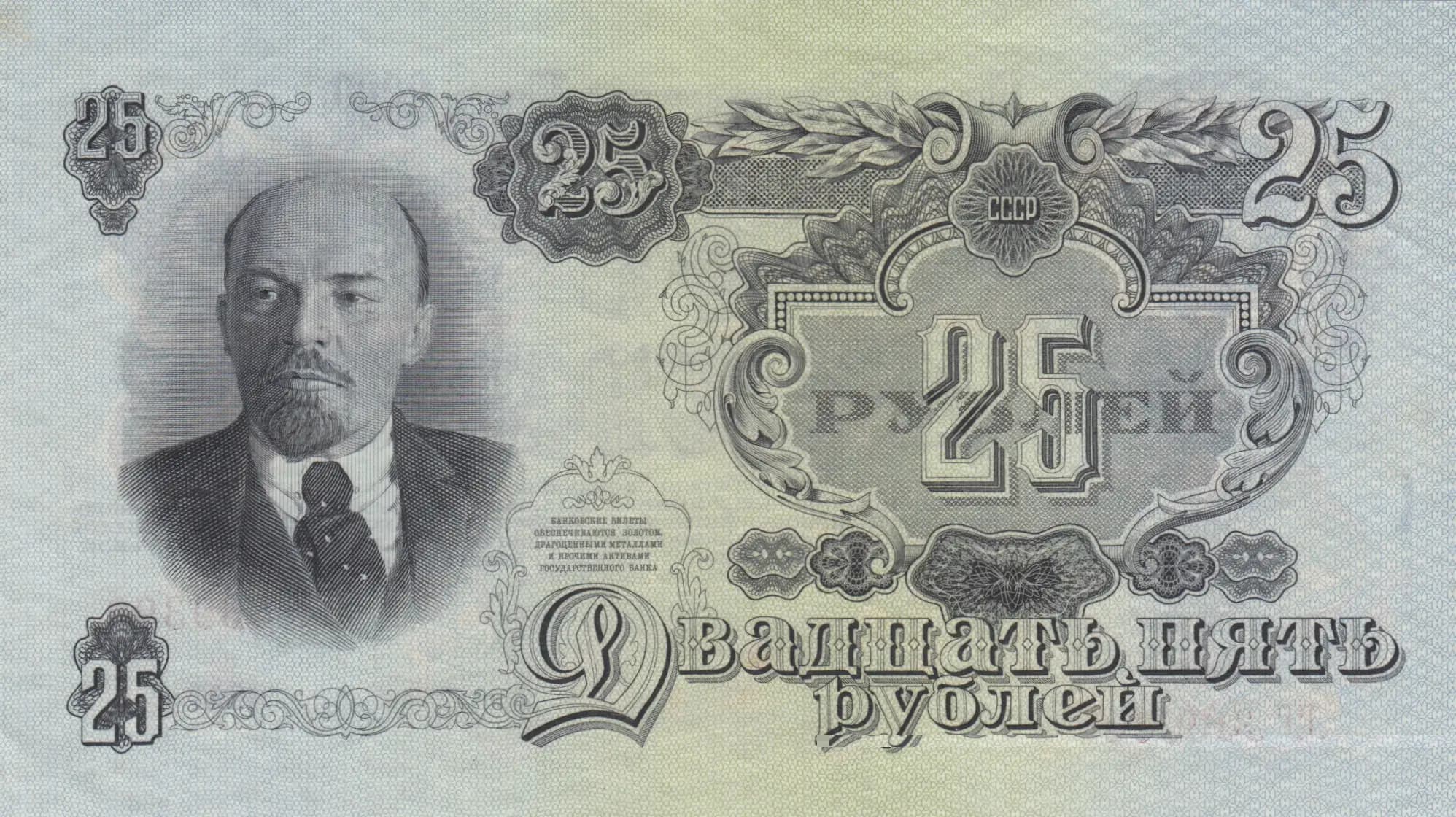
5 rublei1947
About This Note
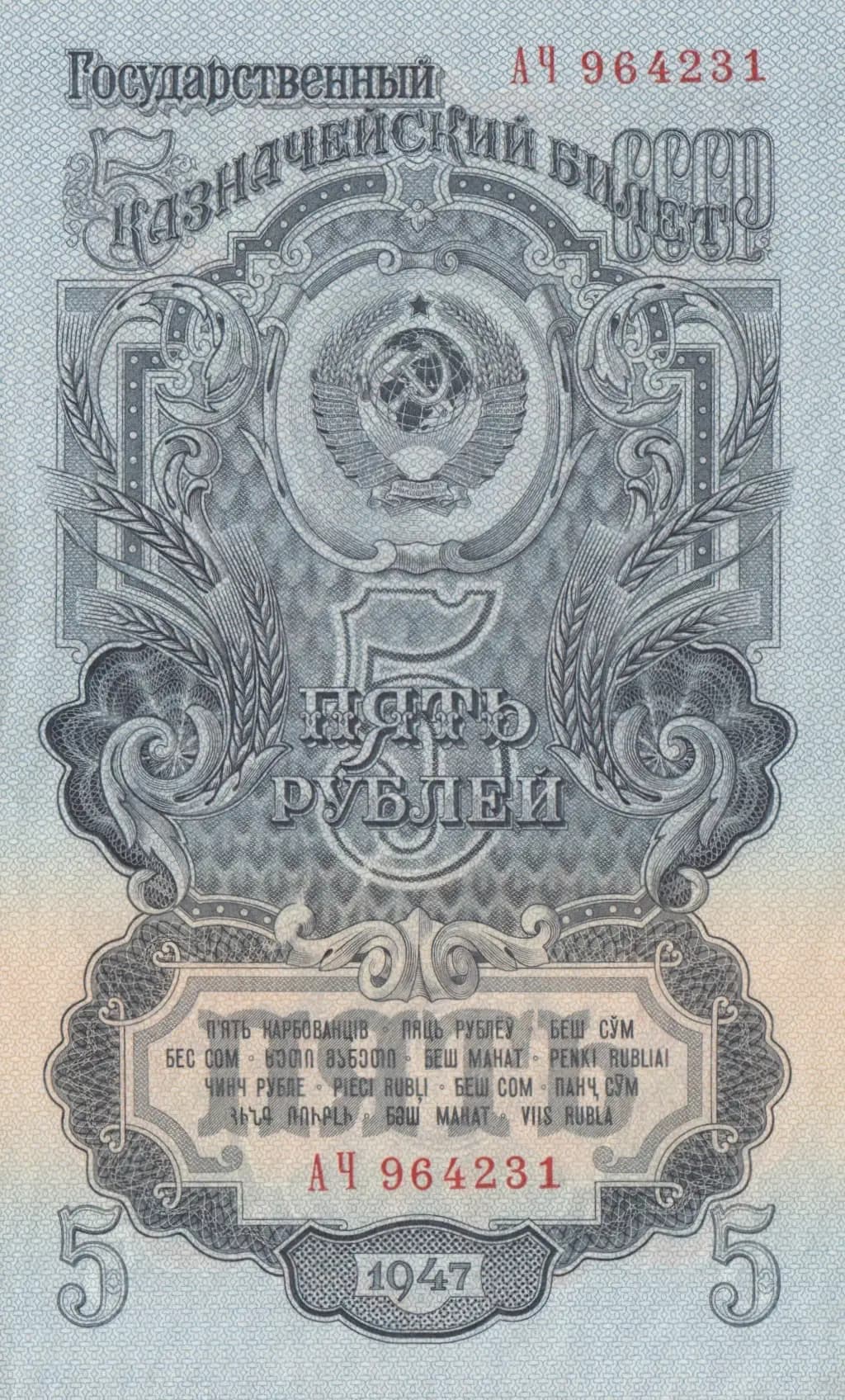
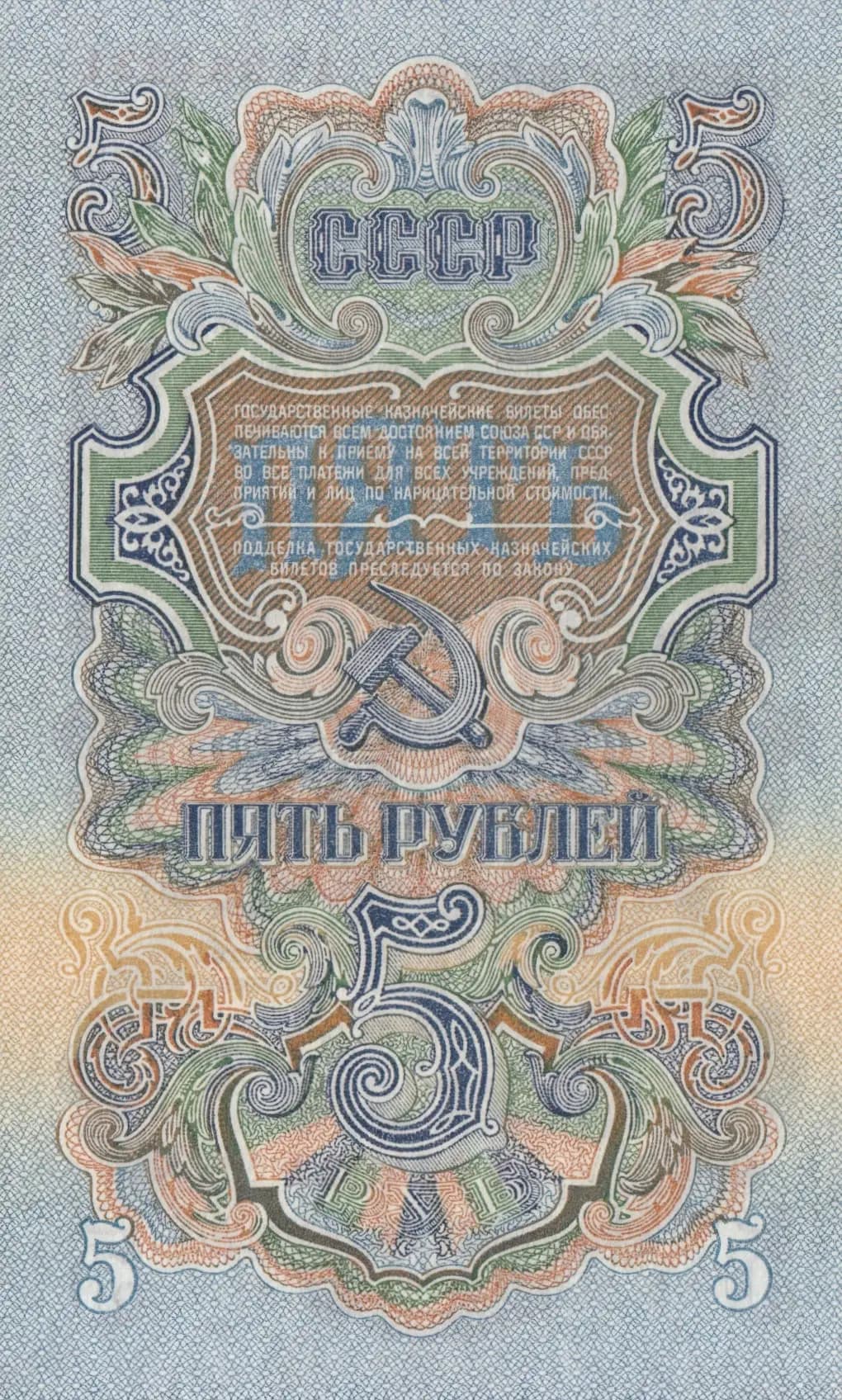
This is a Soviet 5 ruble State Treasury Note from 1947 (Pick P-221) in uncirculated condition, featuring the classic ornate design characteristic of early post-WWII Soviet currency. The note displays pristine condition with sharp, clear printing throughout and no visible wear, creases, or damage. The front showcases the Soviet state emblem with hammer and sickle in a baroque-style frame, while the reverse features vibrant multi-color printing with decorative floral elements and the USSR guarantee inscription, making it an excellent example of Soviet monetary design and engraving craftsmanship.
Common. The 1947 Soviet 5 ruble note is a standard post-war issue with substantial print runs. No evidence of limited production, recall, or short-lived issuing authority exists for this Pick number. Soviet currency from the 1947 series circulated widely throughout the USSR and significant quantities survive today. Notes in uncirculated condition are readily available on the numismatic market, typically commanding modest premiums over circulated examples but remaining affordable and obtainable for most collectors.
Issued in 1947 by the State Bank of the Soviet Union, this banknote was part of the post-World War II currency stabilization effort following the tumultuous 1930s-1940s period. The prominent Soviet state emblem (hammer and sickle within a wreath) and the inscription guaranteeing the note's value 'by all the wealth of the USSR' reflected the Soviet government's assertion of economic stability and state authority in the immediate post-war years. The ornate baroque design and fine engraving techniques demonstrated Soviet pride in their monetary production and served as visual propaganda for the strength of the Soviet state during the early Cold War era.
This 5 ruble note features an elaborate classical baroque design with no portraits or specific landmarks, instead emphasizing symbolic and heraldic elements. The front displays the Soviet state emblem—the hammer and sickle within a circular wreath—positioned prominently in the upper center, flanked by decorative laurel wreaths on both sides. Double-headed eagle motifs appear in the corners, a design element that harkens back to Russian imperial tradition while being recontextualized within the Soviet framework. The reverse presents a more colorful composition with vibrant orange-brown, green, and blue inks, featuring stylized floral ornaments and architectural scrollwork. The reverse also displays the USSR state emblem with the hammer and sickle, emphasizing state authority. The entire design employs fine line engraving (guilloché) patterns as background security elements, creating an intricate visual texture throughout both sides.
FRONT SIDE: 'Государственный Казначейский Билет' (State Treasury Ticket); 'ПЯТЬ РУБЛЕЙ' (Five Rubles); Serial number 'АЧ 964231'; Year/series identifier '1047'. BACK SIDE: 'СССР' (USSR); 'ПЯТЬ РУБЛЕЙ' (Five Rubles); 'ГОСУДАРСТВЕННЫЕ КАЗНАЧЕЙСКИЕ БИЛЕТЫ ОБЕСПЕЧИВАЮТСЯ ВСЕМ ДОСТОЯНИЕМ СОЮЗА ССР И ОБЭ ГАРАНТИРУЮТСЯ СОВЕТСКИМ ГОСУДАРСТВОМ' (State Treasury Notes are secured by all the wealth of the Union of Soviet Socialist Republics and are guaranteed by the Soviet State); 'ПОДДЕЛЬКИ ГОСУДАРСТВЕННЫХ КАЗНАЧЕЙСКИХ БИЛЕТОВ ПРЕСЛЕДУЮТСЯ ПО ЗАКОНУ' (Counterfeiting of state treasury notes is prosecuted by law); denomination '5' in corners.
This banknote was produced using intaglio printing (engraved plate printing), which is evident from the fine line patterns, detailed guilloché work, and sharp engraving visible throughout both sides. The multi-color reverse was likely produced using multiple intaglio passes or a combined technique. Soviet banknotes of this era were typically printed by the State Security Printing Works (Goznak) in Moscow, which operated the most advanced engraving facilities in the USSR and produced all Soviet currency with considerable security and artistic detail.
The observed serial number 'АЧ 964231' represents one of many serial number combinations produced for this issue. Soviet banknotes of this period employed Cyrillic letter prefixes followed by numeric sequences. The specific serial prefix ('АЧ') and number may indicate a particular printing batch or series, but without comprehensive Soviet production records, the exact significance cannot be definitively determined. The notation '1047' on the front may represent a series or date identifier. No overprints, signatures, or other distinguishing variety markers are evident on this specimen.