500 rublei 1918
“North Russia”
About This Note
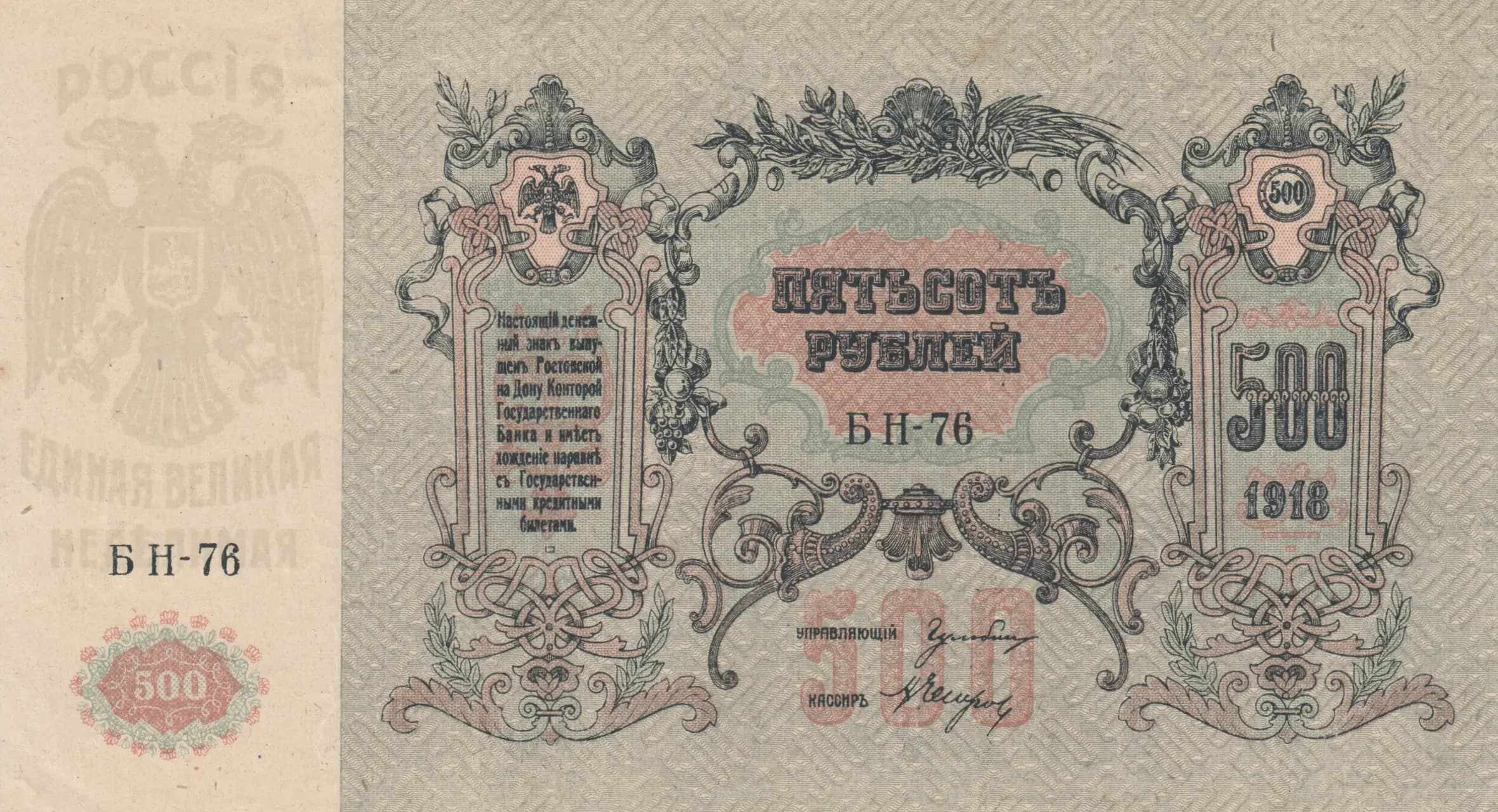
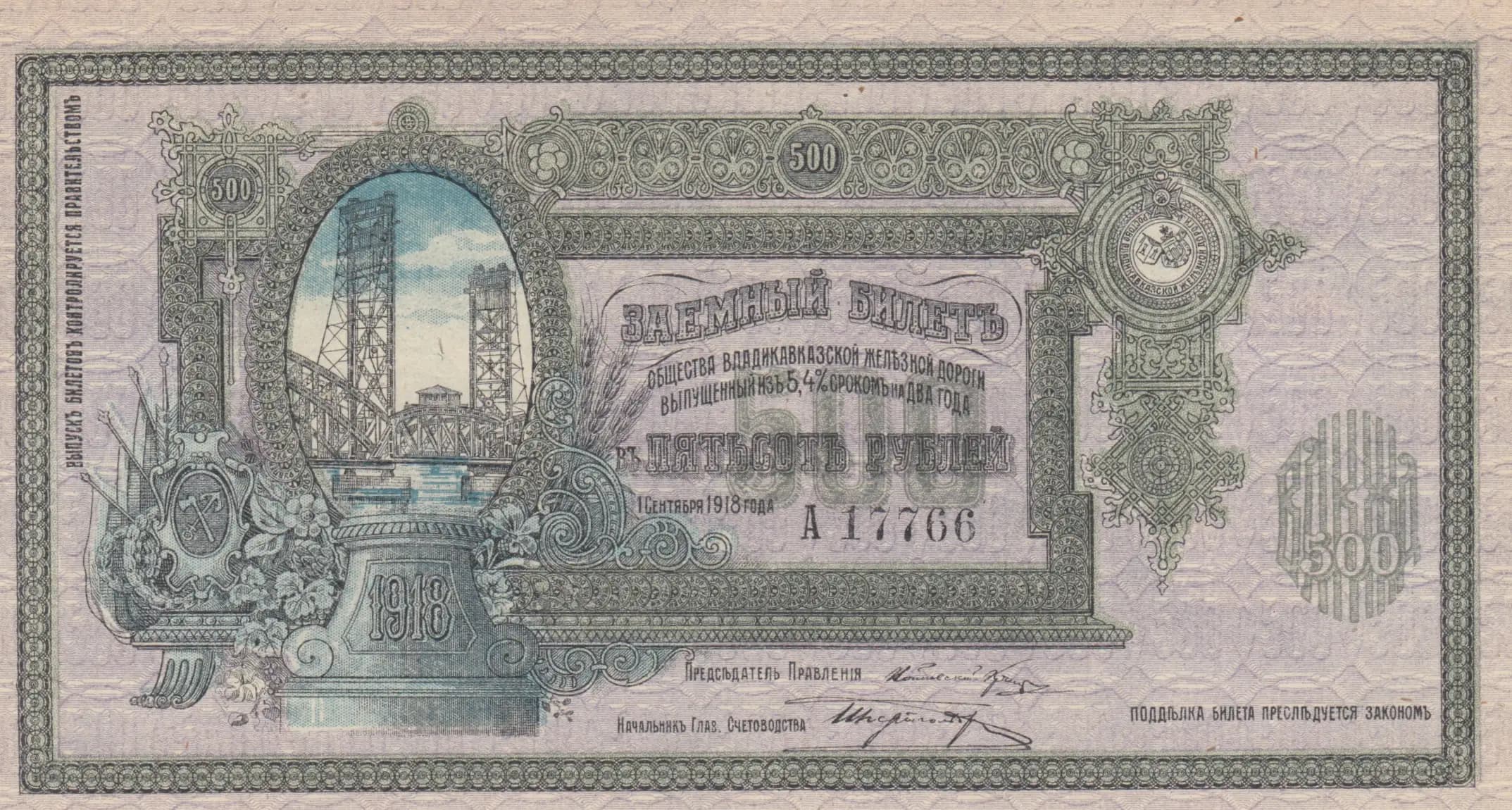
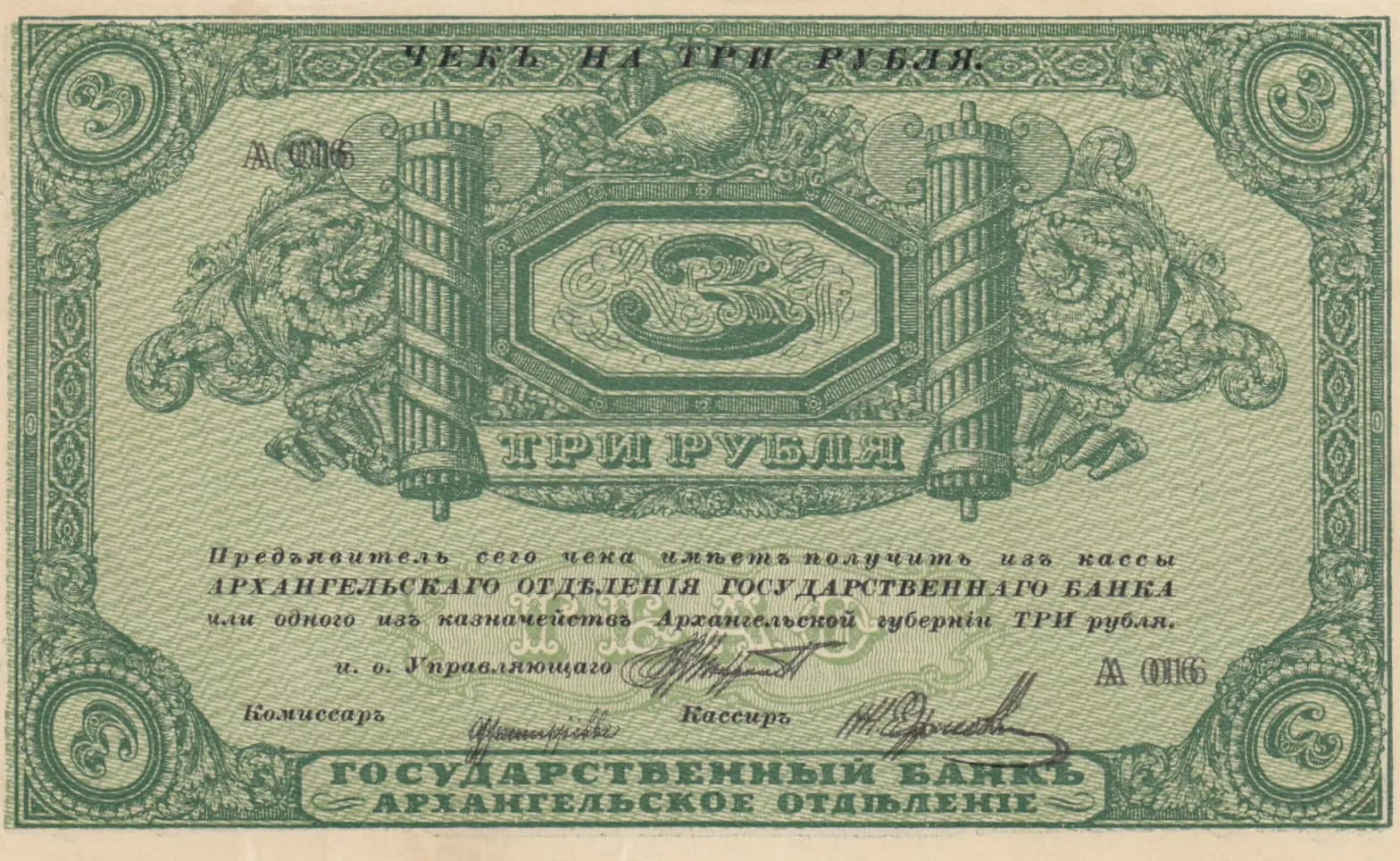
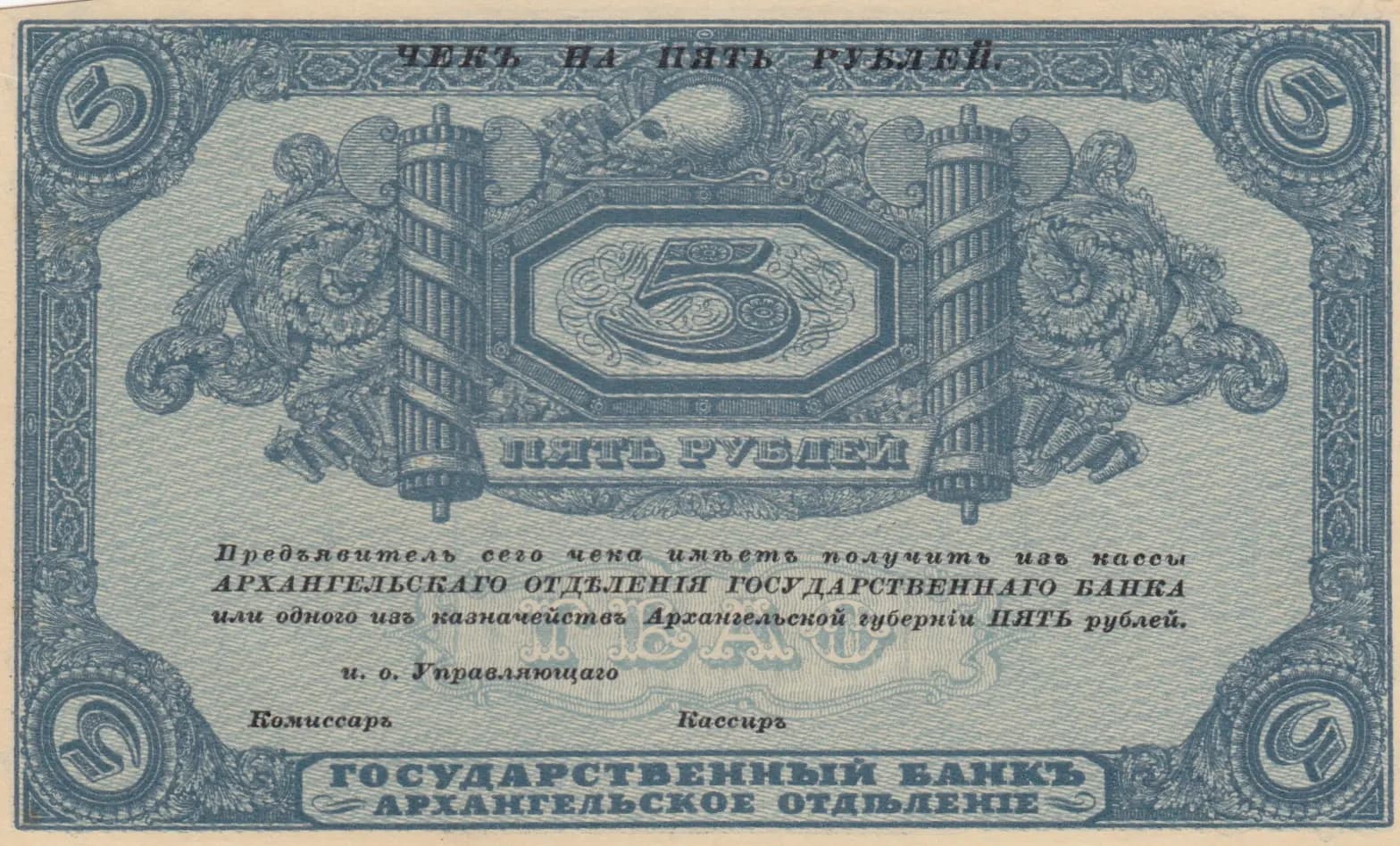
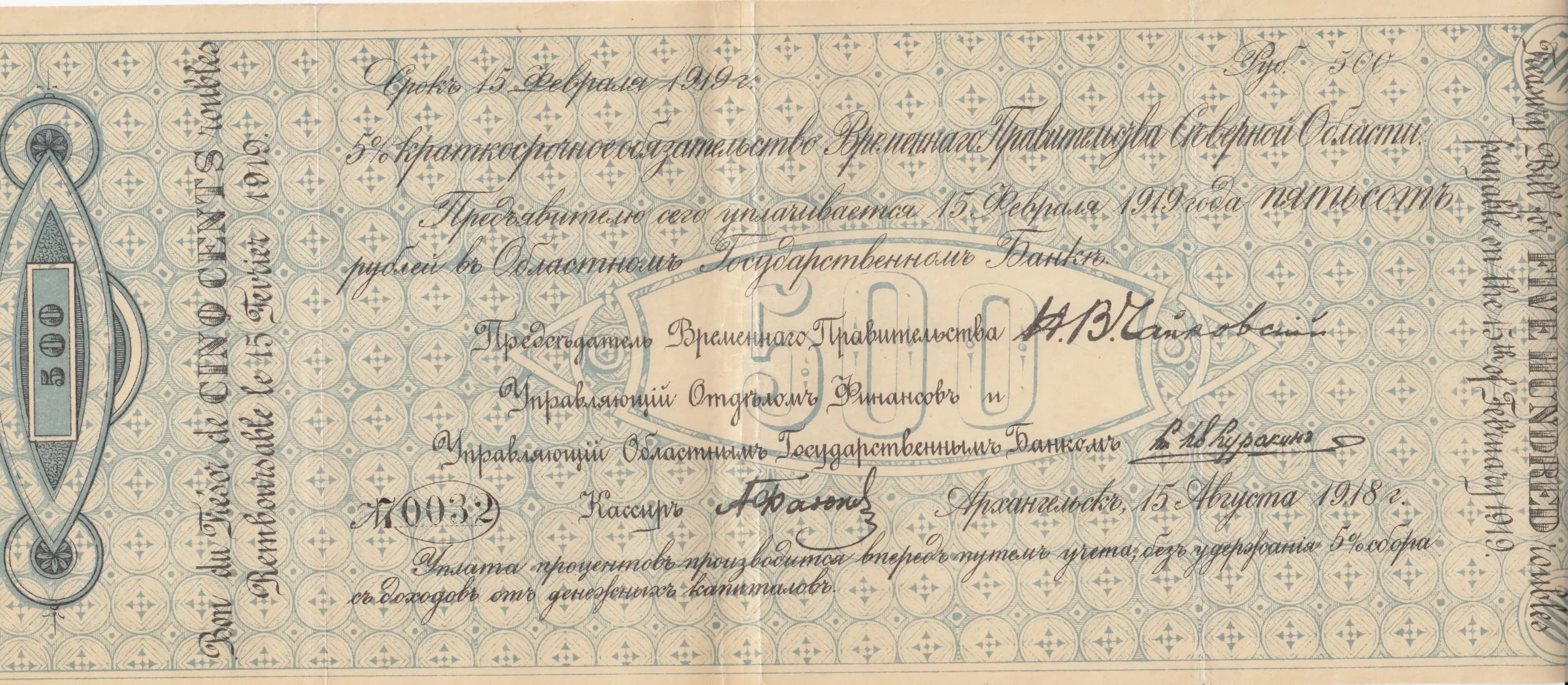
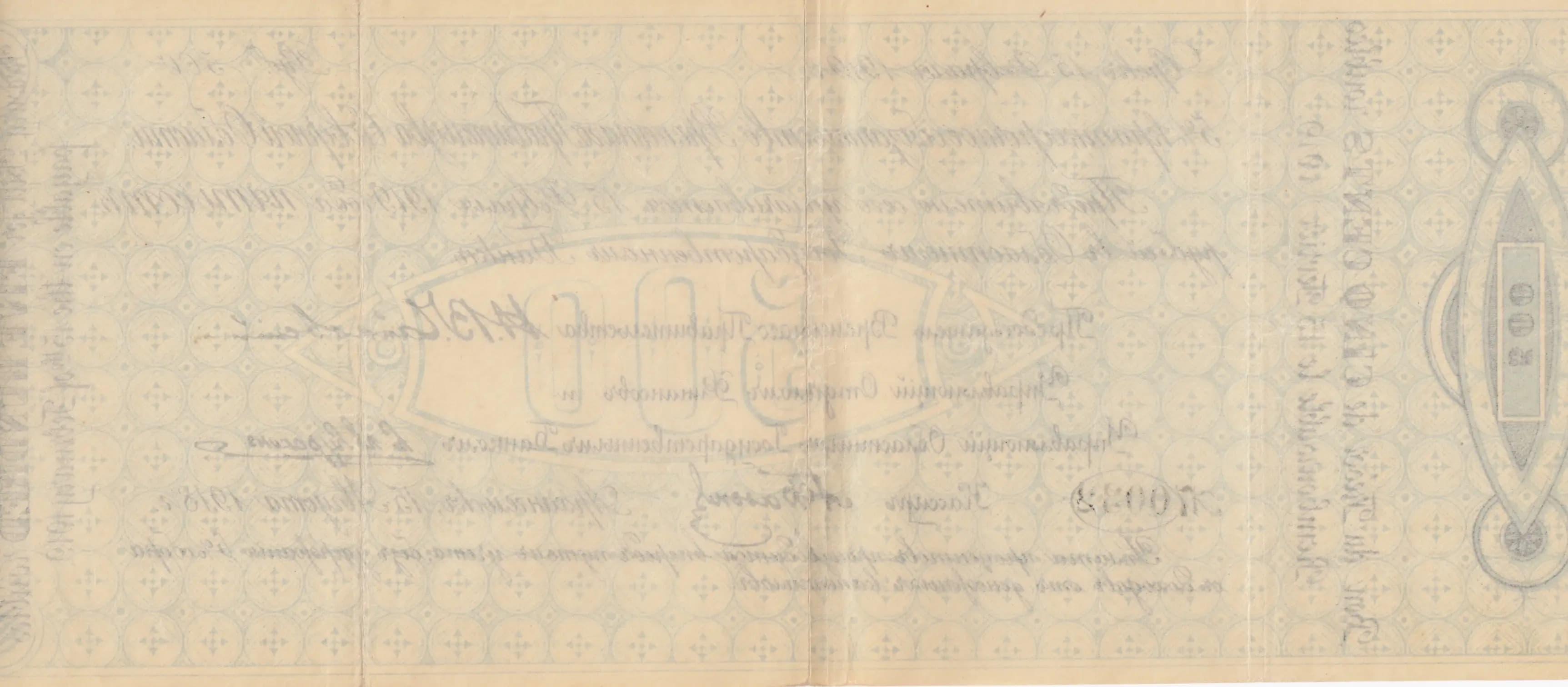
This 500 Rublei note from 1918 represents an important emission from the Provisional Government of the North Region, issued during Russia's Civil War period. The front displays characteristic geometric ornamental borders and security features including a circular watermark design, with extensive handwritten administrative annotations in Cyrillic script overlaid on the printed design. The note exhibits typical VF condition with age-related yellowing, browning, and creasing, while the reverse shows heavy deterioration with largely illegible faded impressions—a common characteristic of notes from this tumultuous period that saw limited circulation and poor storage conditions.
Uncommon to scarce. The Provisional Government of the North Region issued currency for only a limited territorial area and short duration (1918-1920), with notes intended primarily for local circulation in Arkhangelsk and surrounding regions. While not extremely rare, surviving examples are considerably scarcer than mainstream Russian Imperial or early Soviet issues due to: (1) limited original print runs for a regional emergency issuer, (2) poor preservation conditions during the Civil War period, (3) eventual invalidation when territory fell to Soviet forces, and (4) lower collector focus compared to Imperial or Soviet mainstream emissions. VF condition examples are notably scarcer than lower grades, as the harsh storage environment of Civil War era resulted in significant deterioration; this specimen's legible front and documented provenance add to its appeal.
This note was issued from Arkhangelsk on March 15, 1918, during the chaotic period of the Russian Civil War when the White Army and Allied forces controlled North Russia. The inscriptions referencing the Order of St. Vladimir, Imperial authority, and State Bank procedures reflect the Provisional Government's attempt to maintain continuity with Imperial Russian financial institutions while establishing legitimacy in the territories under their control. The handwritten administrative notations and signatures indicate this was an emergency currency issue with limited formal production capabilities, typical of regional governments operating outside Bolshevik-controlled territory.
The note features a classical Russian Imperial design with symmetrical geometric ornamental borders composed of interlocking diamond and circular motifs in blue-gray ink on a cream/beige background. The primary design element is a circular oval ornamental vignette positioned on the left margin of the obverse (visible as a security feature) and echoed on the reverse's right margin. The background demonstrates fine detailed geometric line patterns typical of Imperial-era security printing. No portraits or specific landmarks are depicted; instead, the design relies on abstract ornamental elements serving both aesthetic and security functions. The printed design is overlaid with extensive handwritten Cyrillic text including administrative routing instructions and dated signatures from Arkhangelsk officials, transforming the note into a document of administrative transmission rather than a standard currency issue.
FRONT SIDE: 'Order of St. Vladimir' / 'Established with the Highest Approval of His Imperial Majesty the State Emperor' / '1919 year' [note: date reference despite 1918 issue] / 'Practiced according to the State Bank' / 'To the Chairman of the Financial Administration' / 'Departments of Separate Finance and Departments of Regional State Banks' / 'Cashier' / 'Arkhangelsk, March 15, 1918' / Production and directional notations from monetary treasury / Serial number notation '500:32' / BACK SIDE: [Text illegible due to severe fading and deterioration; original printed inscriptions cannot be reliably translated from visual evidence]
The base note appears to be produced by intaglio (engraved) printing, evidenced by the fine geometric line work and detailed ornamental borders characteristic of Imperial Russian security printing standards. The circular watermark-like security features and background pattern consistency suggest production by a professional security printer maintaining Imperial standards, likely a St. Petersburg or Moscow facility, though production may have been hastily completed or transferred during wartime disruption. The handwritten additions in dark ink were executed with pen or brush after printing, representing administrative manuscript annotations rather than additional presswork.
Pick catalog P-S128a(1) represents the first variety of the 500 Rublei note from this issuer. The specific variety markers include: (1) Issue date of March 15, 1918 from Arkhangelsk, (2) Handwritten administrative annotations and signatures characteristic of this emission's manuscript routing procedures, (3) Serial number notation '500:32' visible on obverse, (4) References to 1919 in printed text despite 1918 issue date, indicating possibly pre-prepared forms or administrative dating conventions. The manuscript nature and specific routing authority signatures (including 'Кассир'/Cashier designation) are identifying characteristics of this particular printing and distribution batch. No major overprints or secondary printings are evident on this specimen.