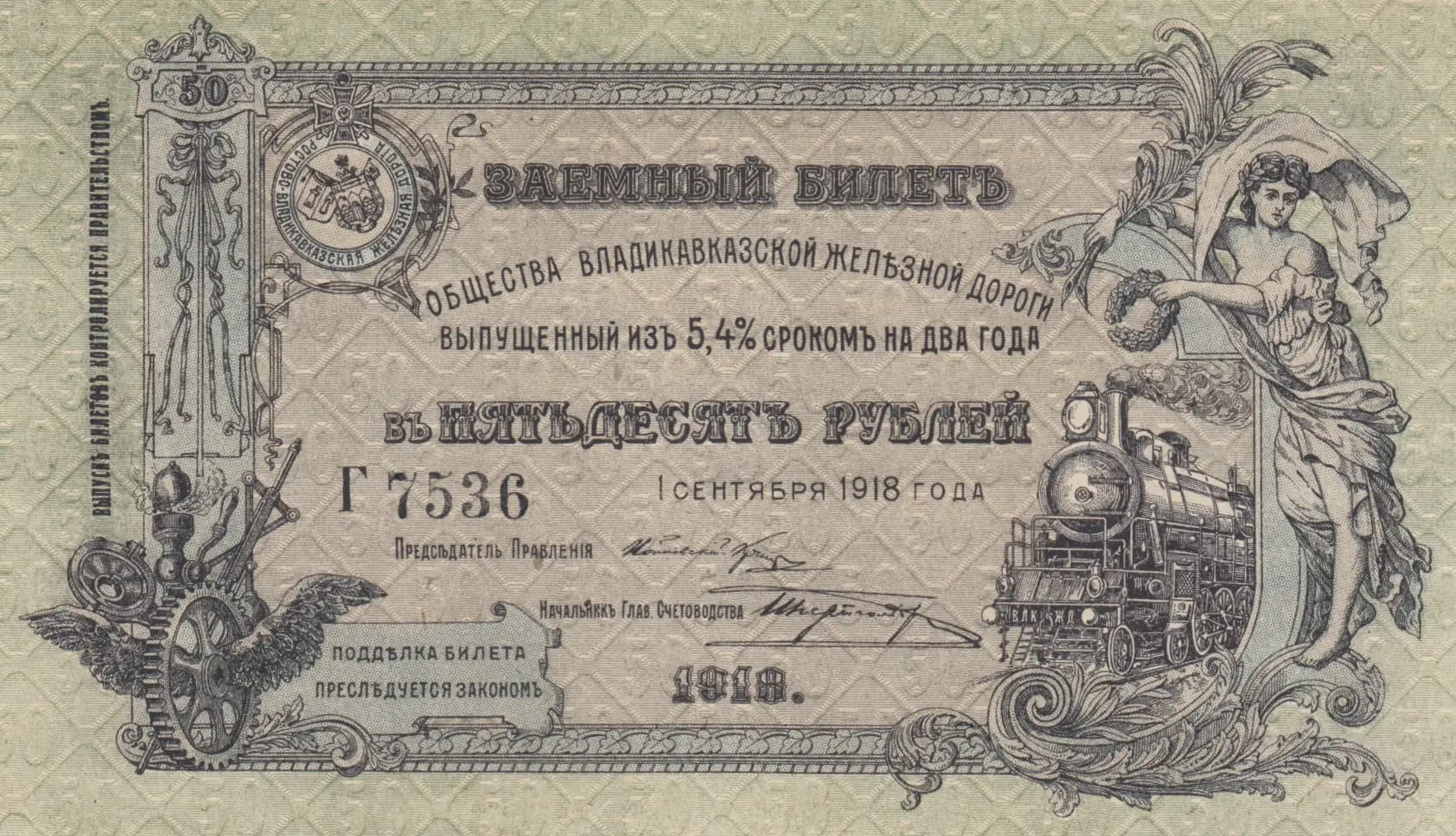
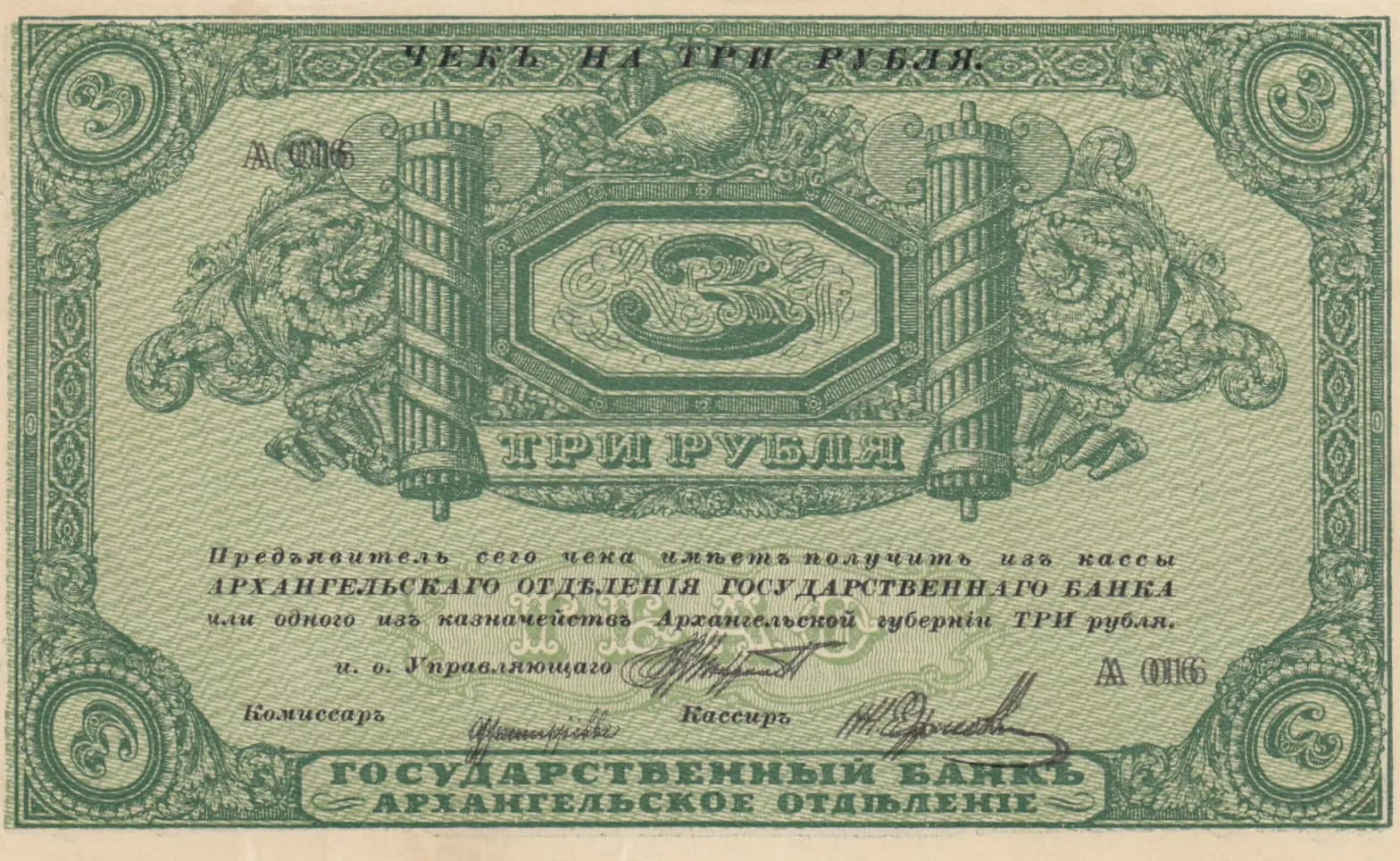
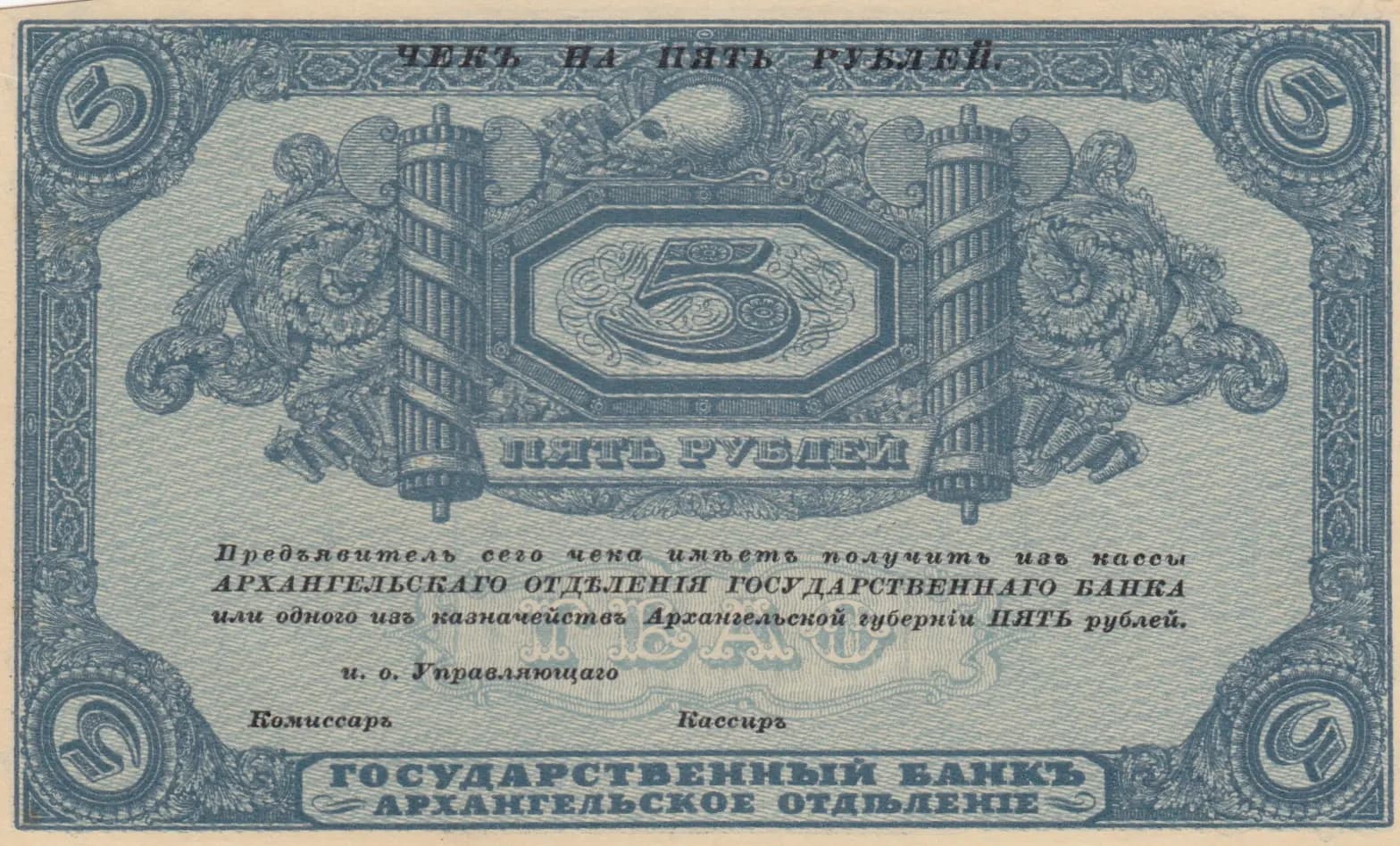
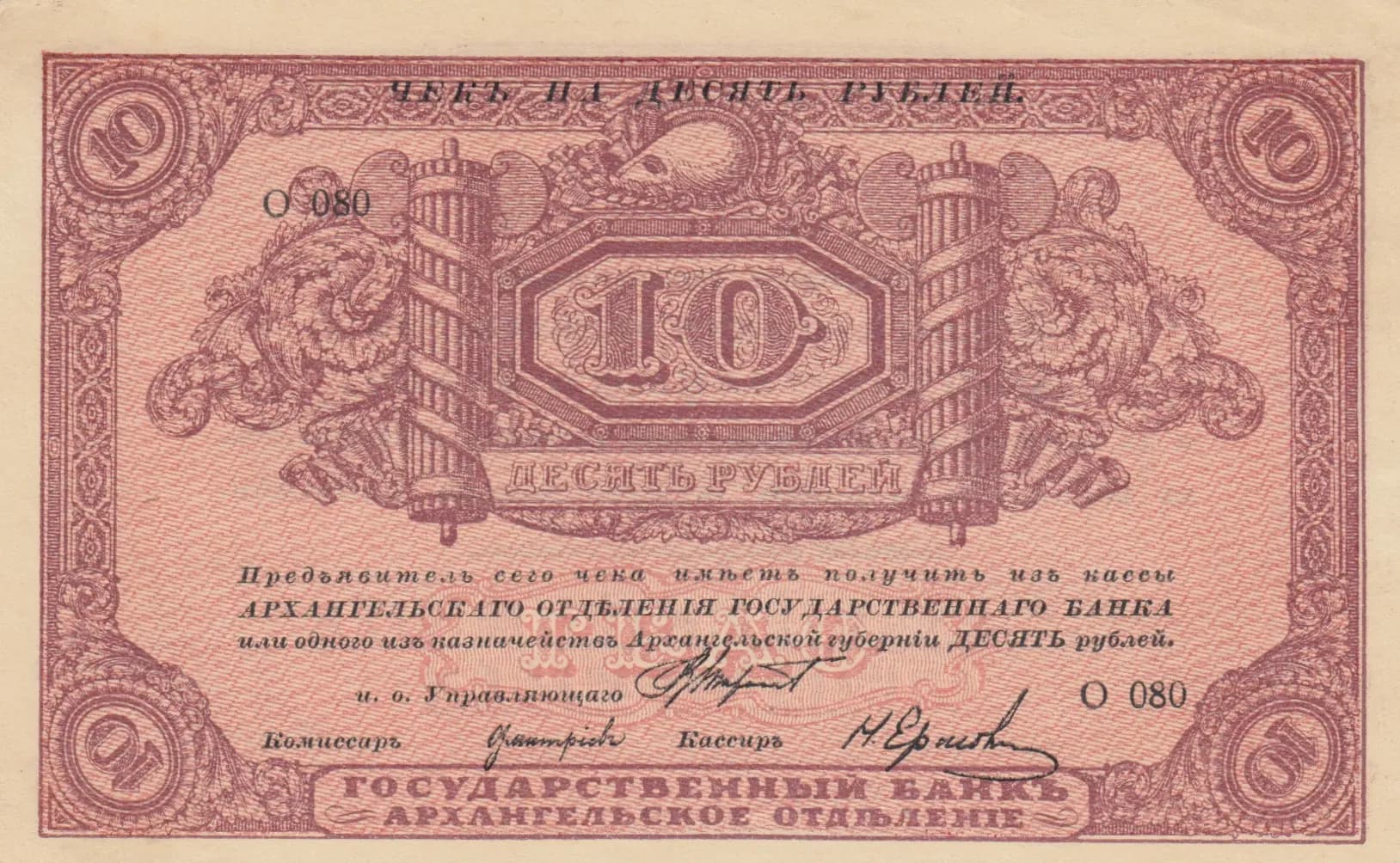
50 rublei 1918
About This Note
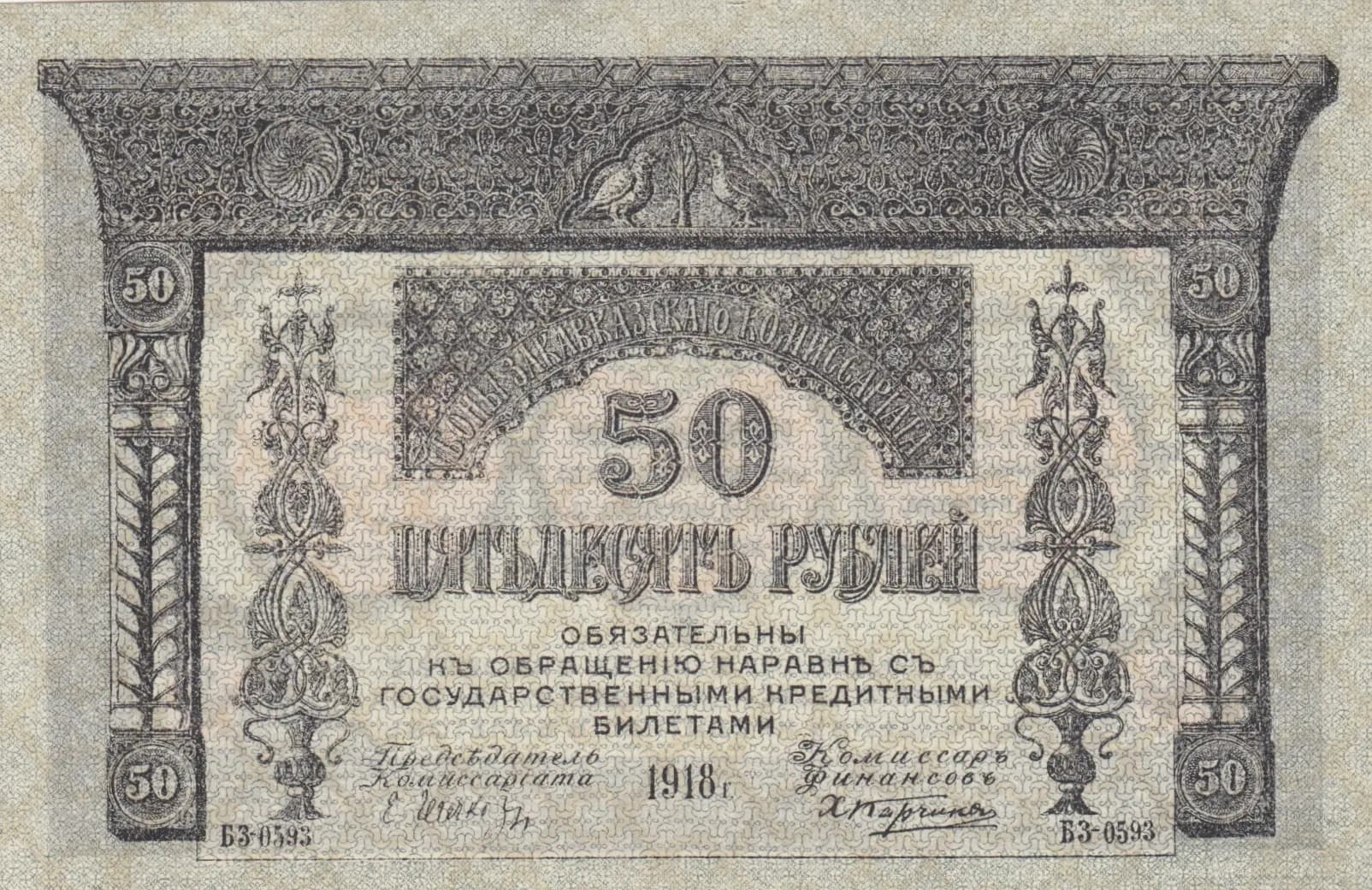
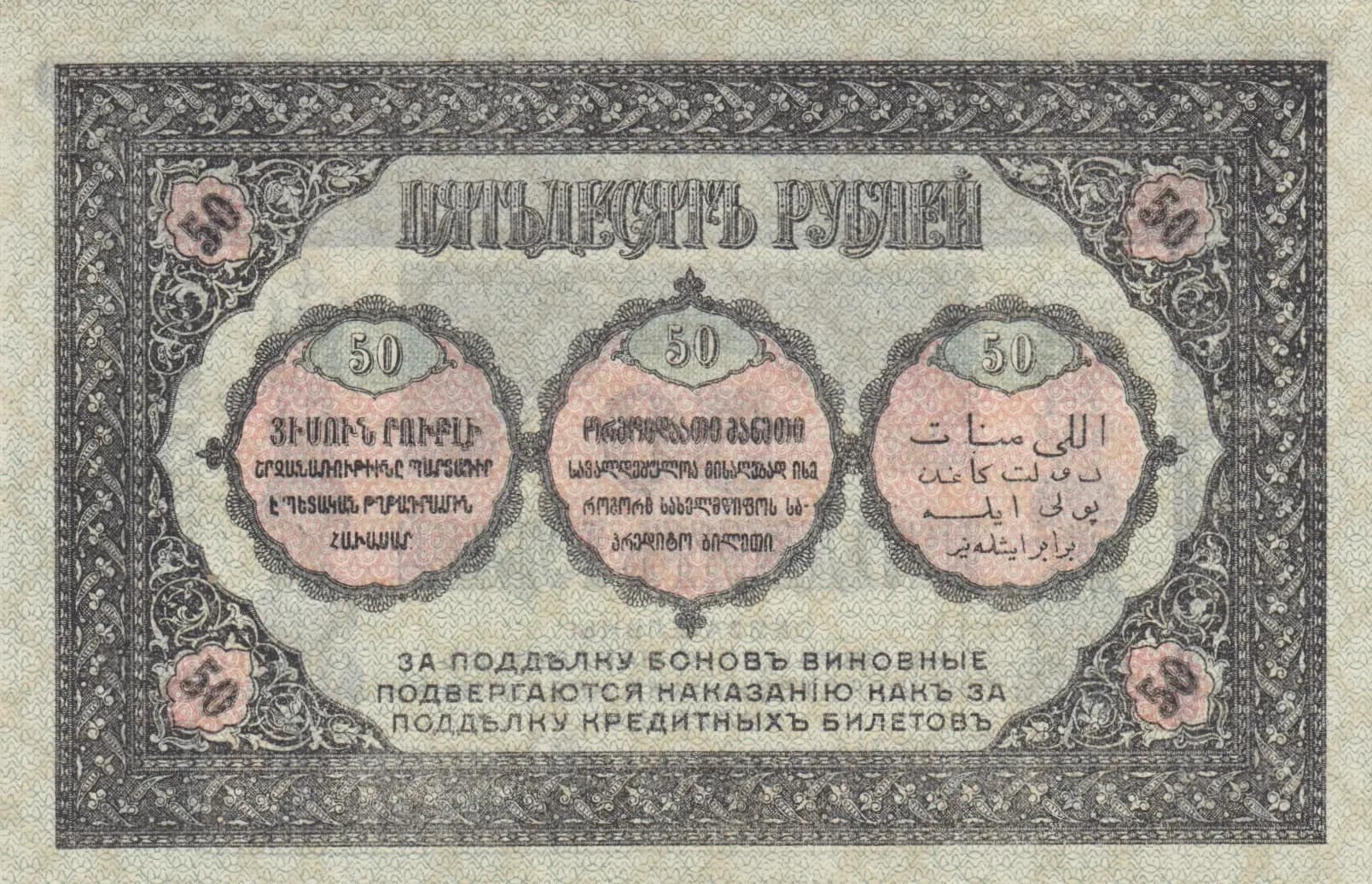
This is an exceptionally well-preserved 1918 50 Rublei note issued by the Transcaucasian Commissariat, presented in UNC condition with crisp, clear printing throughout. The note showcases elaborate Art Nouveau-influenced ornamental design work featuring intricate filigree borders, floral motifs, and circular denomination frames on the obverse, while the reverse displays three distinctive circular medallions incorporating Armenian, Georgian, and Arabic scripts alongside Russian Cyrillic—a rare multilingual design reflecting the diverse territories under Transcaucasian administration. The fine preservation and complex security features incorporating multiple script systems make this a notable example of early Soviet-era regional currency.
Common. While the Transcaucasian Commissariat had a limited geographic and temporal scope (1917-1921), this particular 50 Rublei denomination with Pick catalog number P-S605(2) does not have documented evidence of an exceptionally restricted print run. The note's availability in UNC condition suggests adequate surviving quantities in the numismatic market. Early Soviet regional issues from this period, while historically significant and collectible, are generally available to collectors without extreme scarcity premiums. The multilingual design and historical importance make it desirable, but supply appears sufficient to classify it as common within its category.
This note was issued during the brief period of the Transcaucasian Commissariat (1917-1921), a short-lived Soviet administrative entity encompassing the Caucasus region including present-day Georgia, Armenia, and Azerbaijan. The deliberate inclusion of Armenian, Georgian, and Arabic inscriptions on the reverse demonstrates the commissariat's attempt to establish legitimacy across the ethnically and linguistically diverse territories it governed, while the Russian-language front and references to government credit obligations reflect Soviet monetary policy during the early Revolution. The 1918 date places this within the transitional period when various regional Soviet authorities were establishing competing currency systems before centralization under Moscow.
The obverse features an ornate Imperial-style decorative composition typical of early 20th-century Russian currency design, with elaborate filigree borders incorporating scrollwork, floral elements, and geometric patterns in black and cream tones. Large circular frames in the upper corners prominently display the denomination '50,' while the central text area contains official obligation language and commissariat identification. Eagle or bird figures appear within the top decorative border, adding heraldic gravitas. The reverse presents a striking tripartite design with three substantial circular medallions arranged horizontally across the center, each framed with ornamental borders and featuring different colored backgrounds (predominantly pink/light red with dark decorative frames). These medallions contain inscriptions in Armenian, Georgian, and Arabic scripts respectively, surrounding a central Russian text area declaring the note's legal status and counterfeiting penalties. The multilingual, multiscript design is exceptional among Russian imperial and early Soviet currency, reflecting the Transcaucasian Commissariat's multinational composition.
FRONT SIDE: '50' (denomination numeral); 'ПЯТЬДЕСЯТ РУБЛЕЙ' (Fifty rubles); 'ОБЯЗАТЕЛЬНЫ КЪ ОБРАЩЕНИЮ НАРАВНЬ СЪ ГОСУДАРСТВЕННЫМИ КРЕДИТНЫМИ БИЛЕТАМИ' (Obligatory in circulation equal with government credit notes); 'Председатель' (Chairman); 'Комиссариате' (Commissariat); '1918' (year); 'Комиссаров' (Commissioners); 'Финансов' (Finance); 'БЗ-0593' (serial number designation). BACK SIDE: 'ПЯТЬДЕСЯТ РУБЛЕЙ' (Fifty rubles); '50' (denomination numeral); Armenian script inscription (exact text unclear); Georgian script inscription (exact text unclear); Arabic script inscription (exact text unclear); 'ЗА ПОДДЕЛКУ ОСНОВНЫЕ ВИНОВНЫЕ ПОДВЕРГАЮТСЯ НАКАЗАНИЮ НАКАЗ ЗА ПОДДЕЛКУ КРЕДИТНЫХ БИЛЕТОВ' (Counterfeiting is punishable by law; punishment for counterfeiting credit notes).
The note exhibits characteristics consistent with intaglio printing (engraving and/or steel plate printing), evidenced by the crisp definition of fine line work, the depth and precision of the ornamental borders, the complexity of the interlocking geometric patterns, and the detailed filigree security features visible throughout both sides. The fine parallel lines and microprinting effects within decorative margins are hallmarks of intaglio security printing. This production method was standard for high-security currency printing during the Soviet transition period. The specific printer for this Transcaucasian Commissariat issue is not definitively identified in standard catalogs, though Russian state printing facilities were employed for such regional issues.
This example is identified as P-S605(2) variant per the Pick catalog, indicating it is the second listed variety of this 50 Rublei type. The serial number visible as 'БЗ-0593' provides specific identification. Variations in this series may relate to signature positions, serial number formats, or minor design alterations typical of period printings. The multilingual reverse with Armenian, Georgian, and Arabic scripts in this specific arrangement constitutes the defining characteristic distinguishing this note from other Transcaucasian Commissariat issues. No significant overprints or alterations are evident on this specimen.