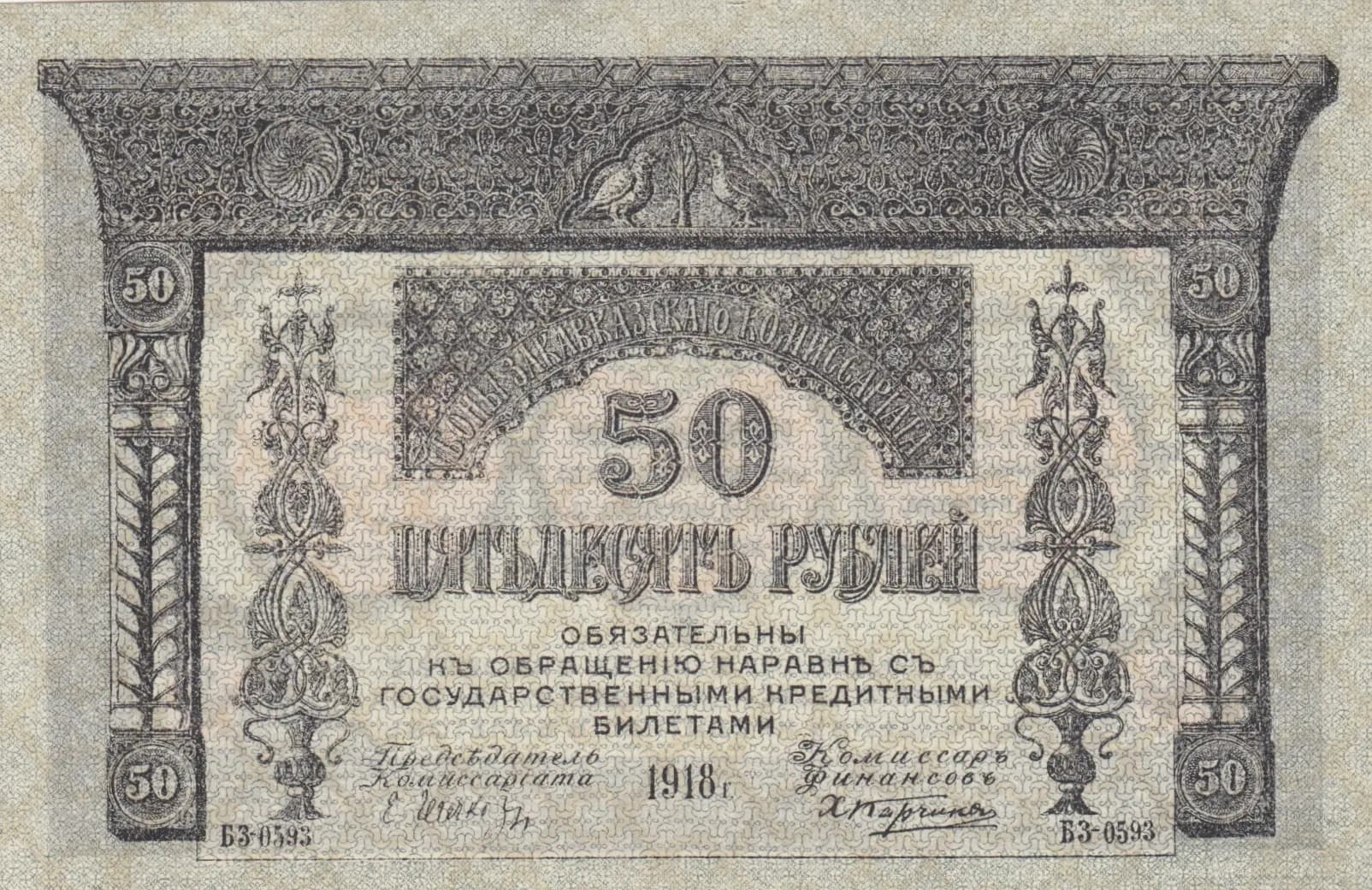
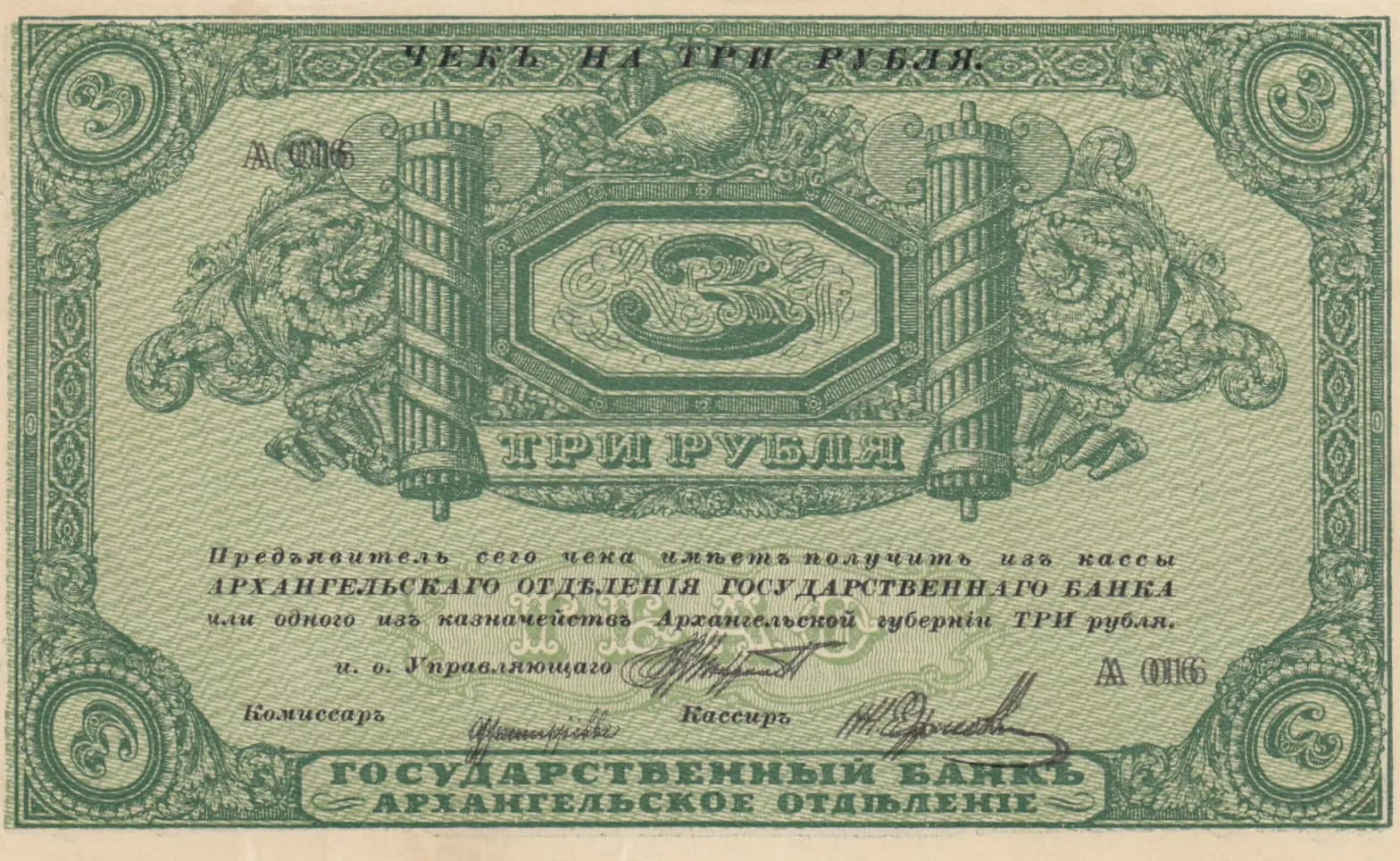
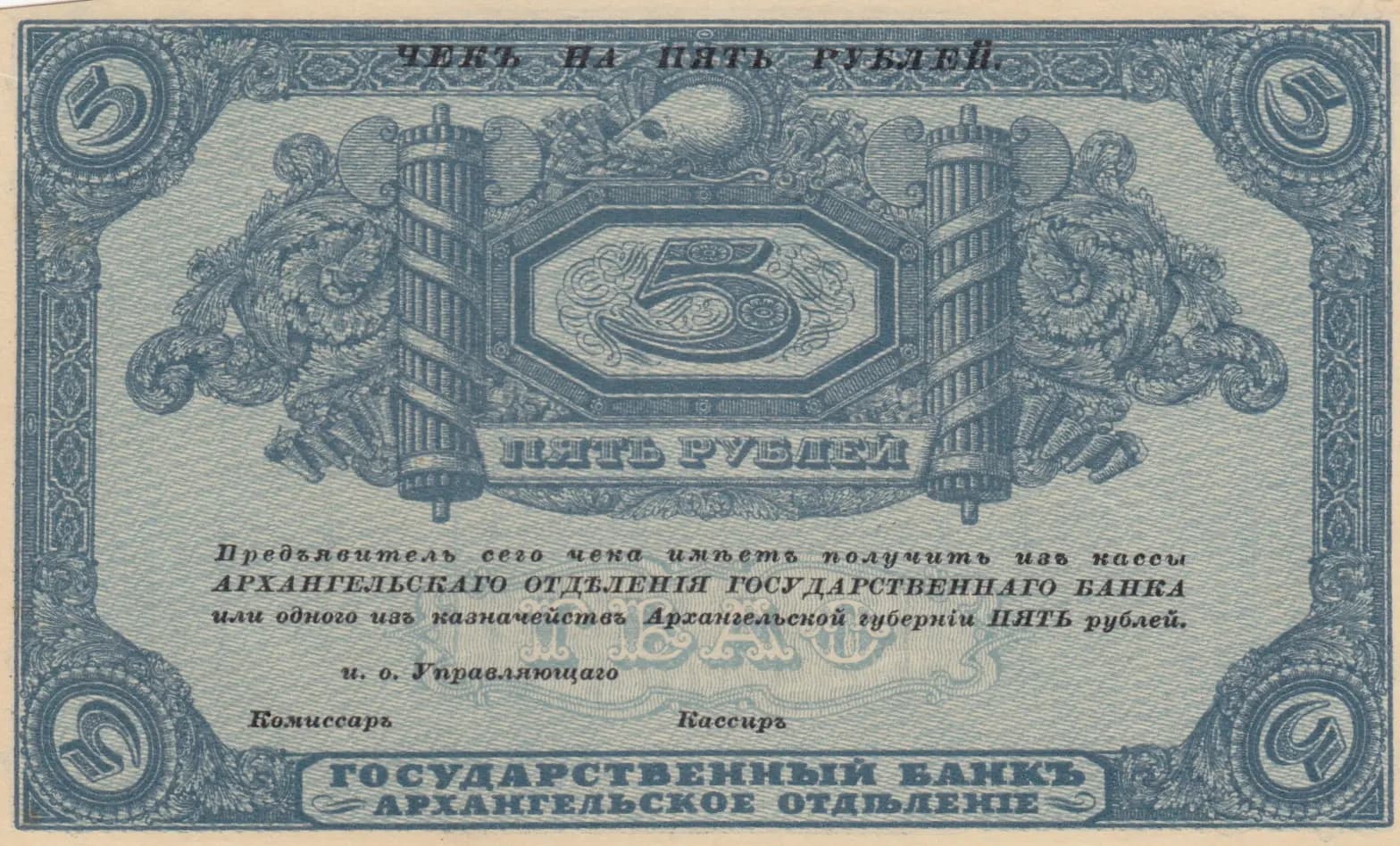
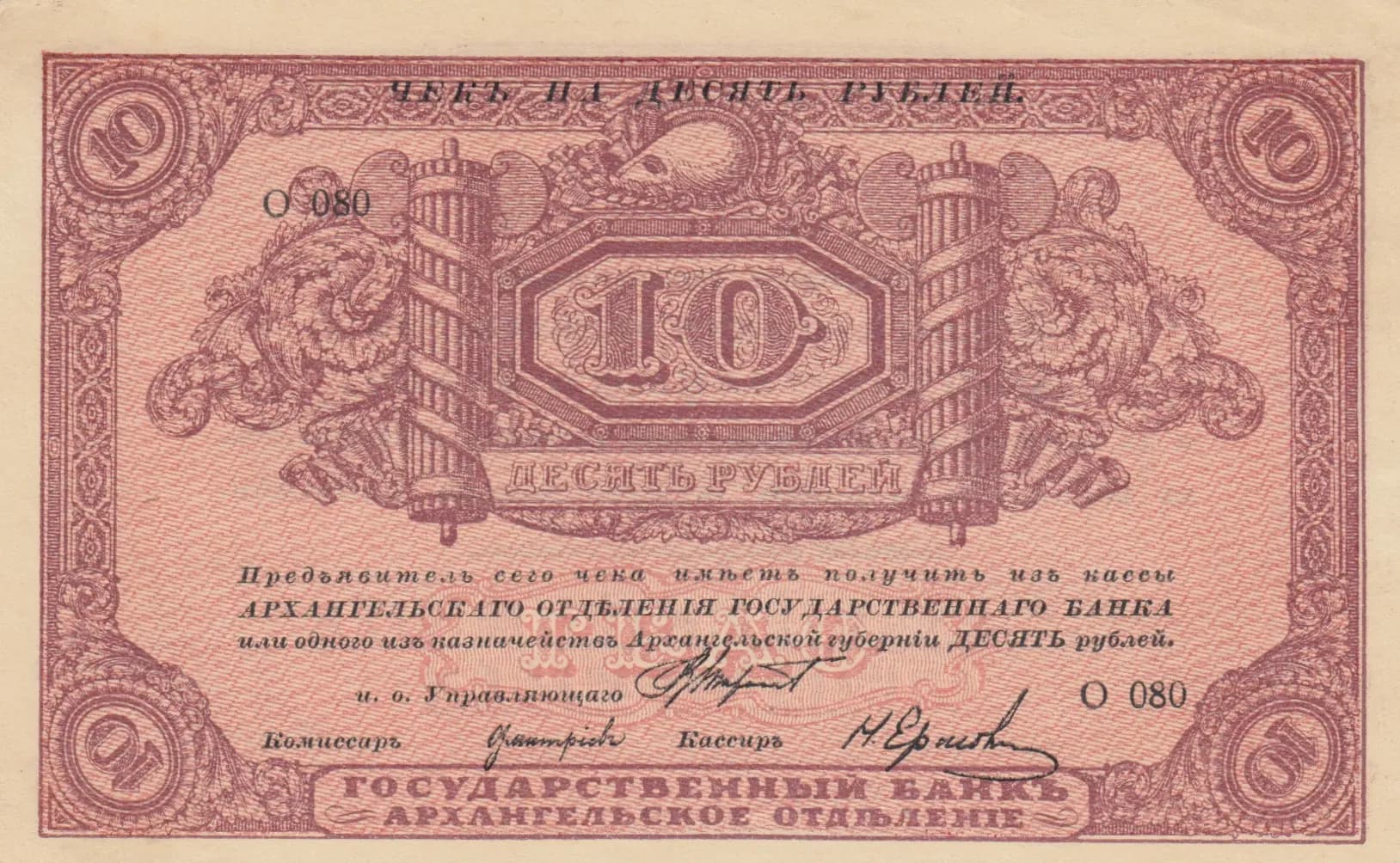
50 rublei 1918
About This Note
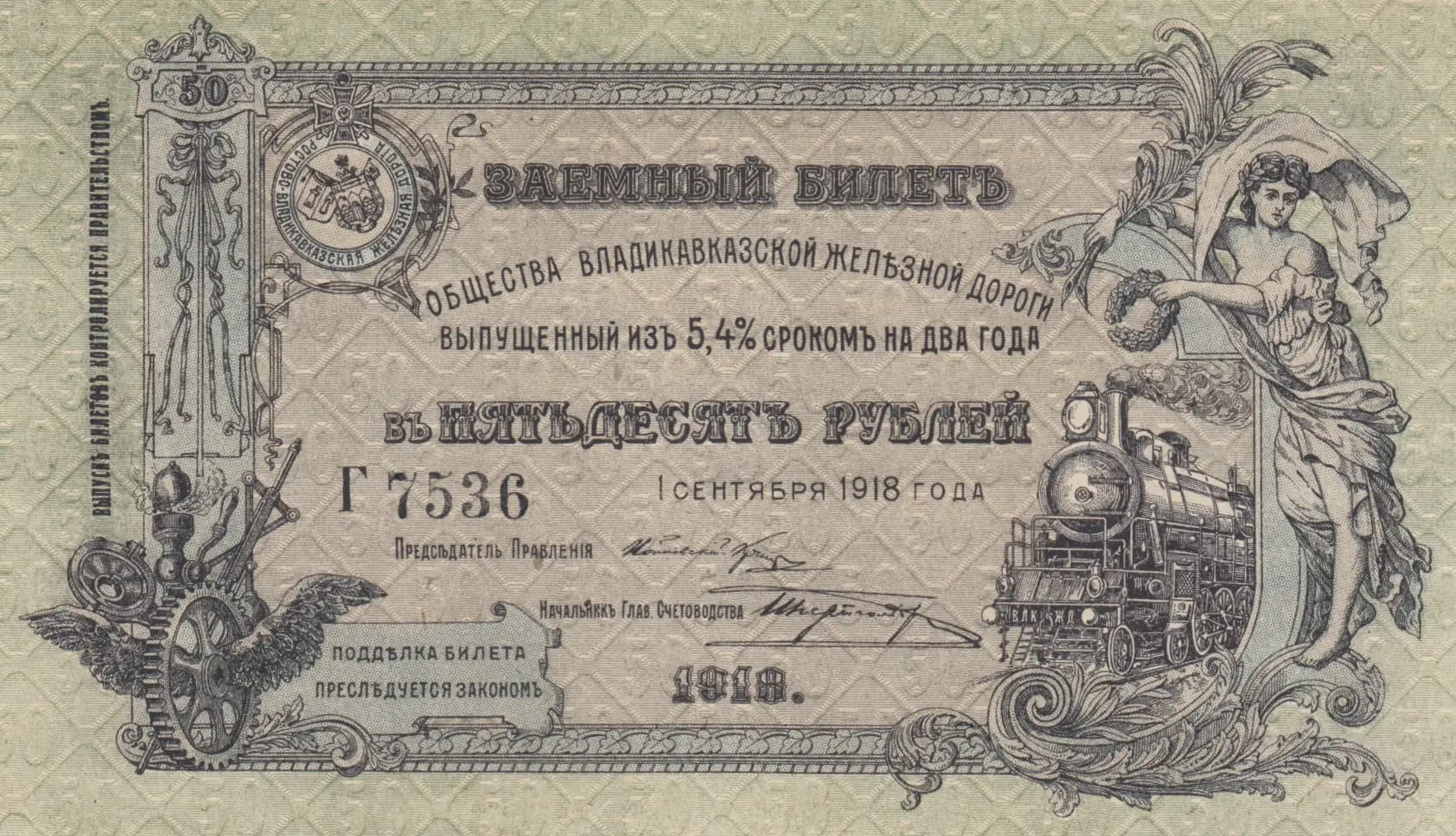
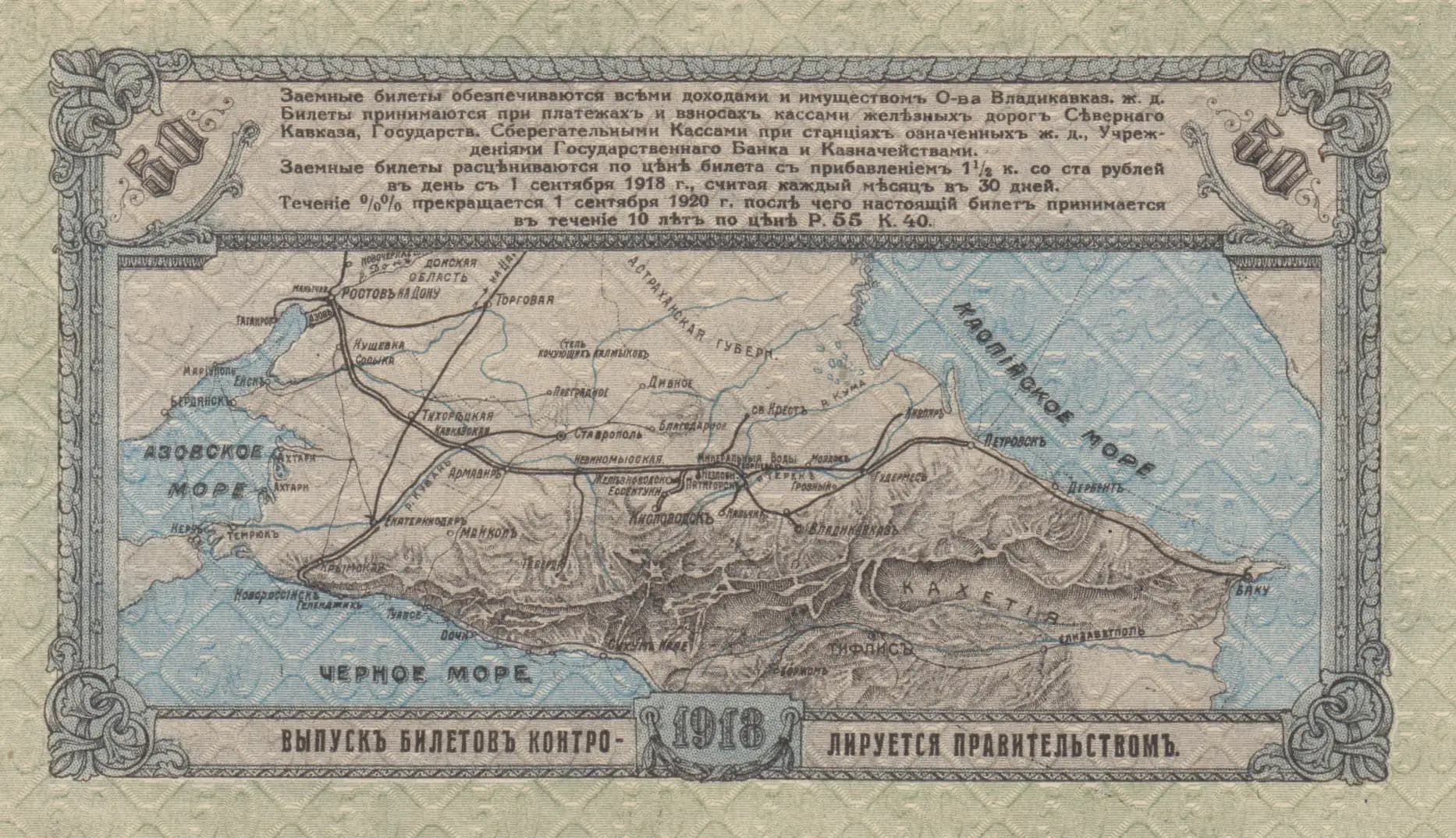
This is an exceptional example of a 50 Rublei loan ticket issued by the Vladikavkaz Railroad Company in September 1918, graded EF (Extremely Fine). The note features ornate baroque-style borders, an allegorical female figure representing Russia or prosperity, imperial heraldry including the double-headed eagle, and importantly, a detailed map of the Caucasus region on the reverse showing the Vladikavkaz Railway route across the Azov, Black, and Caspian Seas. The condition is remarkable with uniform coloring, sharp printing, and no significant wear, creases, or stains visible.
Common. While the Vladikavkaz Railroad Company notes are historical curiosities from the Russian Civil War period, the 50 Rublei denomination in this series was issued in substantial quantities as a working currency substitute. The Pick catalog designation (P-S593) indicates it is well-documented within the standard philatelic reference system. No evidence of small print runs, recalled issues, or extreme scarcity is present in numismatic literature. These notes, though historically interesting, regularly appear in collections and trade circulation, particularly among Russian currency specialists.
This railroad bond was issued during the tumultuous final months of the Russian Empire and the subsequent civil war period, when the Vladikavkaz Railway Company needed to raise capital through this 5.4% two-year loan instrument. The note's sophisticated design with imperial symbols (double-headed eagle, ornamental crowns) reflects the company's attempt to maintain legitimacy and value during the collapse of Tsarist authority in the Caucasus region. The reverse map documenting the railway's extensive network across three major seas underscores the strategic and commercial importance of this transportation corridor during a period of political and economic chaos in Russia.
The obverse features an elaborate composition with a left vertical pillar incorporating imperial Russian symbolism, central Cyrillic text in varying sizes announcing the denomination and terms, and on the right side an allegorical female figure in classical robes (personifying Russia or commercial prosperity) accompanied by decorative scrollwork and flourishes. A steam locomotive is prominently depicted on the right side, emphasizing the note's connection to railway commerce. The upper left contains a circular seal with the Imperial Russian double-headed eagle and an ornamental imperial crown. The entire design is framed by baroque-style ornamental borders with wreaths and heraldic elements. The reverse displays a geographically accurate map of the Caucasus region and the Vladikavkaz Railway route, with blue coloring indicating the Azov Sea, Black Sea, and Caspian Sea, while black lines show the railway network and station names. Extensive fine-print legal and financial terms appear above and below the map. Decorative corner ornaments appear in all four corners of the reverse.
FRONT: 'Loan Ticket of the Vladikavkaz Railway Society, Issued at 5.4% for a Term of Two Years' / 'Fifty Rubles' / 'September 1918' / Serial number: GG536 / 'Chairman of the Board' and 'Head of Accounting Department' (signature lines) / 'Counterfeiting of Tickets is Prosecuted by Law' / '1918'. BACK: Detailed terms stating 'Loan tickets are secured by all income and property of the Vladikavkaz Railway Society. Tickets are accepted in payments and deposits by cashiers of the railways of the North Caucasus, Government, Savings Banks at stations of the aforementioned railways, District offices of the State Bank and Treasury.' / 'Loan tickets are valued at the price of the ticket plus 1½ kopeks per hundred rubles per day from September 1, 1918, counting each month as a full 30 days.' / 'The accrual of 9% ceases on September 1, 1920, after which this ticket is accepted at face value.' / 'Azov Sea' / 'Black Sea' / 'Issue of Tickets Controlled by the Government' / '1918'.
This note was produced using intaglio engraving and letterpress printing, typical of high-security financial instruments of the 1918 period. The fine detail work visible in the baroque ornamental borders, allegorical figure, and especially the map on the reverse demonstrates skilled engraving. The multiple colors (black, gray, and light blue for water features) indicate separate printing passes. The sharp definition of all text and imagery observed in the EF condition specimen suggests excellent plate maintenance and professional security printing practices, consistent with work executed by major Russian state security printers of the period.
Serial number GG536 is observed on this specimen. Vladikavkaz Railroad notes of 1918 are known to exist with various serial number prefixes (GG being typical for this series). The September 1918 date is standard for this issue. The signature lines are blank or contain authorized officer signatures which may vary by specimen. No overprints or significant varieties are evident on this particular example. The note represents the standard issued type as cataloged in Pick.