50 kopeek 1918
“Siberia”
About This Note
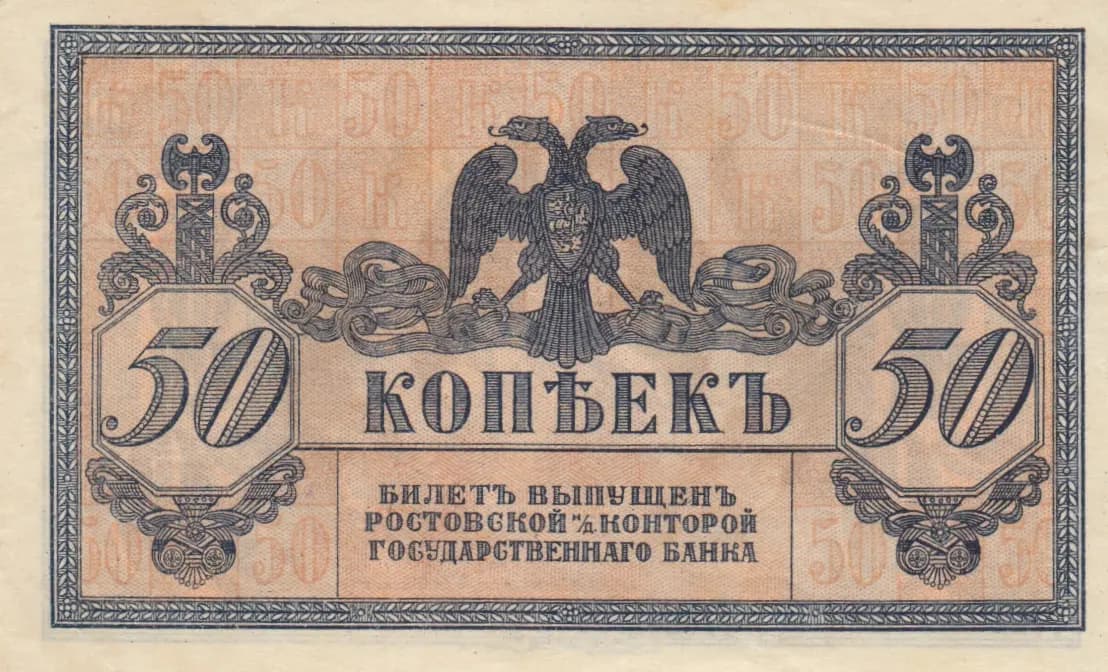
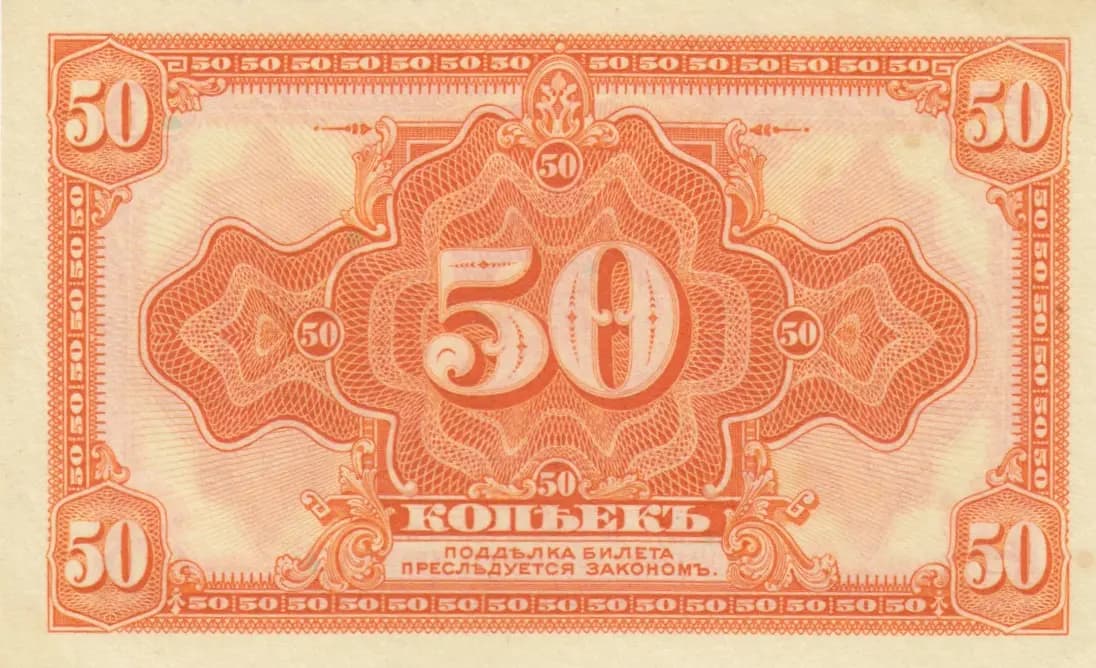
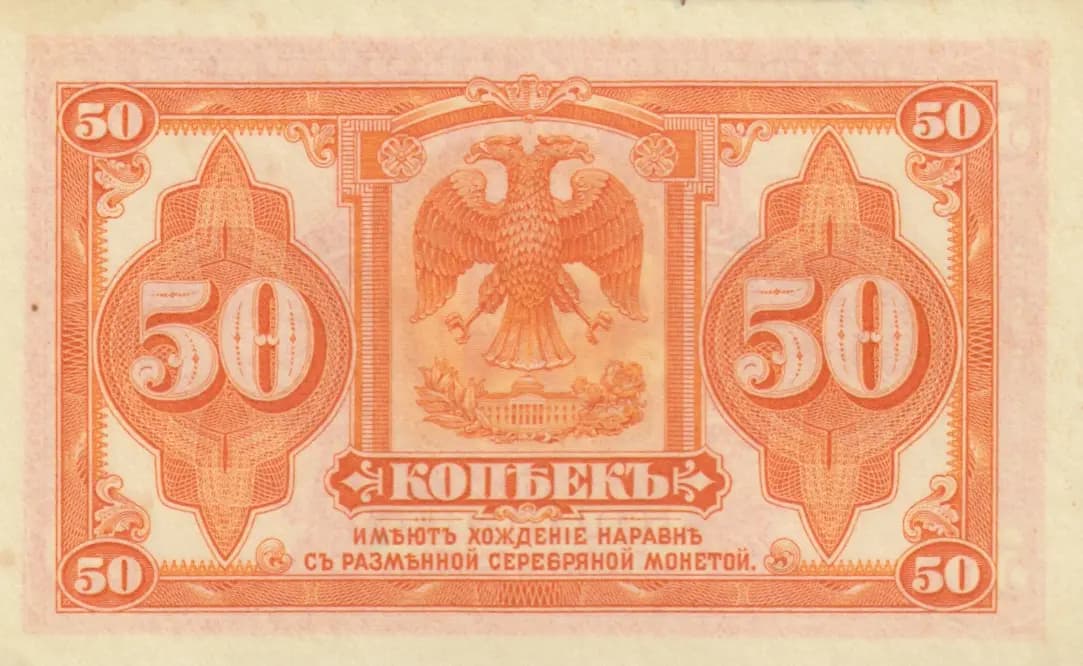
This is an outstanding UNC example of the Provisional Siberian Administration's 50 kopeck note from 1918, featuring beautifully preserved orange-red engraving on a cream background with no visible wear or damage. The note displays the characteristic Imperial Russian double-headed eagle and ornate baroque design elements with denomination markers in multiple locations, representing a fascinating piece of Russian Civil War-era currency from an autonomous regional government. The exceptional condition and historical significance of Siberian Administration currency make this a noteworthy addition to any Russian banknote collection.
Common. While Siberian Administration notes are historically significant and somewhat specialized, the 50 kopeck denomination from 1918 was issued in substantial quantities to meet local circulation demands during the Civil War period. The widespread availability of this note in various collections and the lack of documented evidence of severely restricted print runs or early recall supports a common assessment. UNC examples command modest premiums over circulated specimens but remain accessible to collectors at reasonable prices, consistent with common banknote market patterns.
The Provisional Siberian Administration (Vremennoe Sibirskoe Pravitel'stvo) issued this note during the Russian Civil War period (1918-1922), when various regional governments maintained separate currencies as central authority collapsed. The retention of the Imperial double-headed eagle and laurel wreath symbolism reflects the non-Bolshevik, anti-communist orientation of the Siberian Administration, which sought to preserve traditional Russian state symbolism while maintaining regional autonomy. This denomination and design exemplify the transitional monetary crisis of 1918, when paper kopeck denominations proliferated due to severe metal coin shortages.
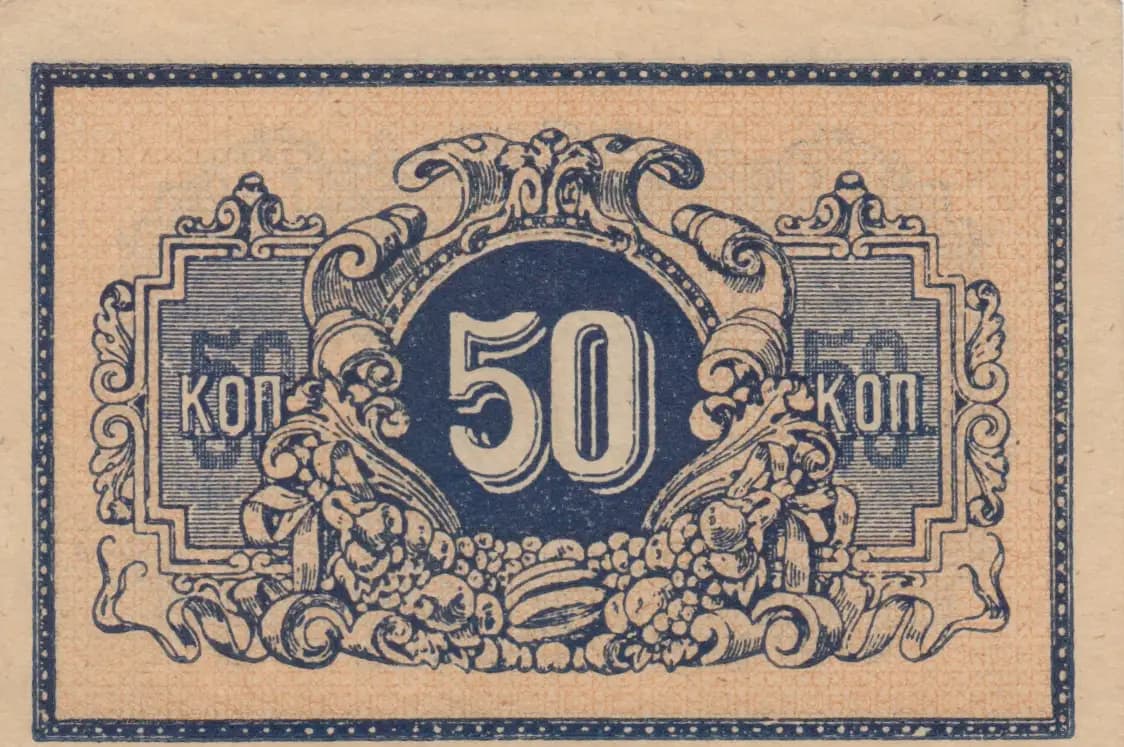
Both sides of this note feature a symmetrical baroque-rococo design centered on the Imperial Russian State Seal—the double-headed eagle. On the obverse, the crowned eagle is positioned at top center with a laurel wreath beneath, symbolizing authority and legitimacy. The denomination '50' appears in ornate circular frames flanking the eagle horizontally and in hexagonal medallions in all four corners. The reverse maintains the same structural framework but features an elaborate central medallion with geometric cross patterns and ornate scrollwork, with the denomination repeated in matching corner medallions. The entire composition employs fine-line engraving throughout to create complex geometric and floral patterns serving as both aesthetic and anti-counterfeiting elements.
Front side: '50' (numeric), 'КОПЬЕКЪ' (kopeck), 'ИМЬЮТЪ ХОЖДЕНИЕ НАРАВНЬ СЬ РАЗМЬННОЙ СЕРЕБРЬНОЙ МОНЕТОЙ' (Have currency equal to silver coin of the same denomination). Back side: '50' (numeric), 'КОПЬЕКЪ' (kopeck), 'ПОДДЪЛКА БИЛЕТА ПРЕСЛЪДУЕТСЯ ЗАКОНОМ' (Counterfeiting of banknotes is prosecuted by law). Note: Inscriptions use pre-revolutionary Russian orthography (Cyrillic script with obsolete letter forms including ѣ and ъ).
Intaglio engraving (line engraving) on paper, evidenced by the fine linear detail throughout the design, ornate baroque flourishes, and the characteristic appearance of complex geometric patterning and scrollwork. The precision of the line work and security pattern complexity suggest professional central printing facilities, likely those inherited from the Imperial Russian printing establishment or produced by competent regional printers under Siberian Administration authority. The consistent quality and execution across denomination markers and frames indicates skilled engraving work typical of early 20th-century banknote production.
The specific variety characteristics for this Pick S828 note include the 1918 date of issue and the Provisional Siberian Administration watermark and printer identification. No signature varieties, date varieties, or significant overprints have been observed in the visual analysis. The note exhibits consistent design elements throughout suggesting a standard printing run without known major varieties. Collectors should note the pre-revolutionary orthography (use of ѣ and ъ characters) as a distinguishing feature of 1918-dated issues versus later Soviet printings.