50 kopeek 1918
“Rostov”
About This Note
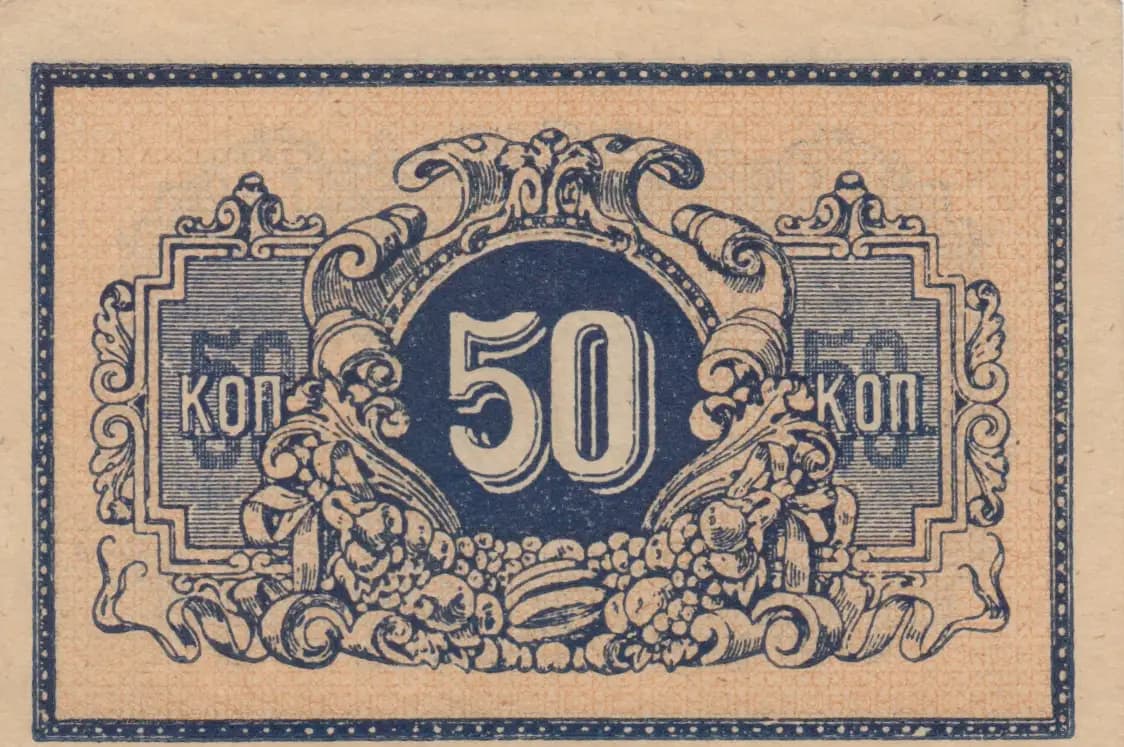
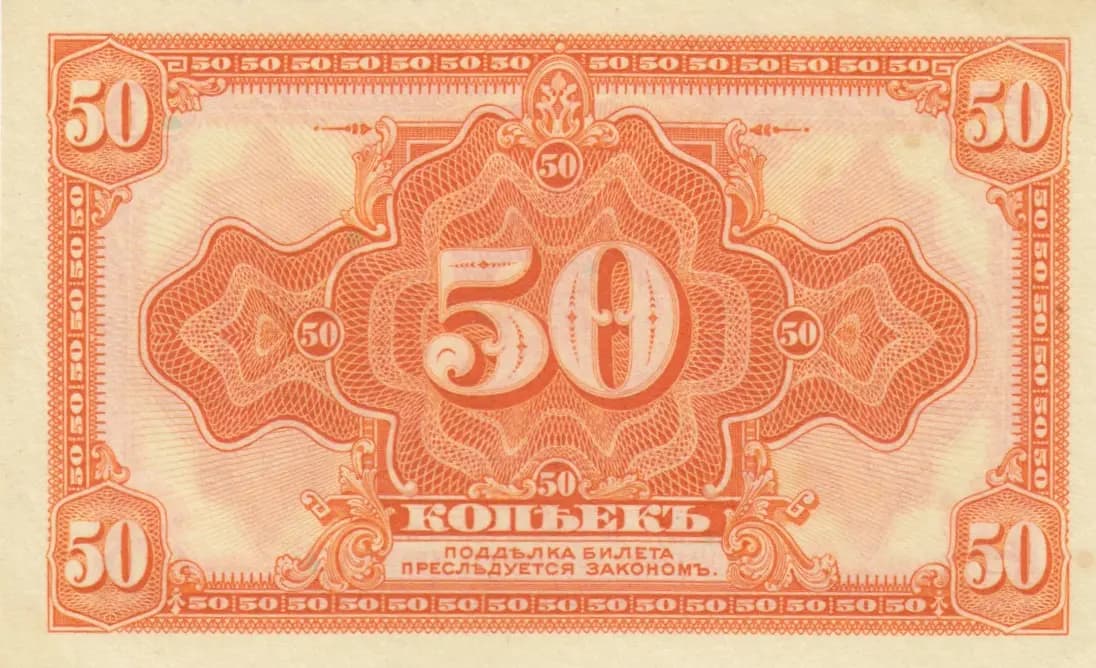
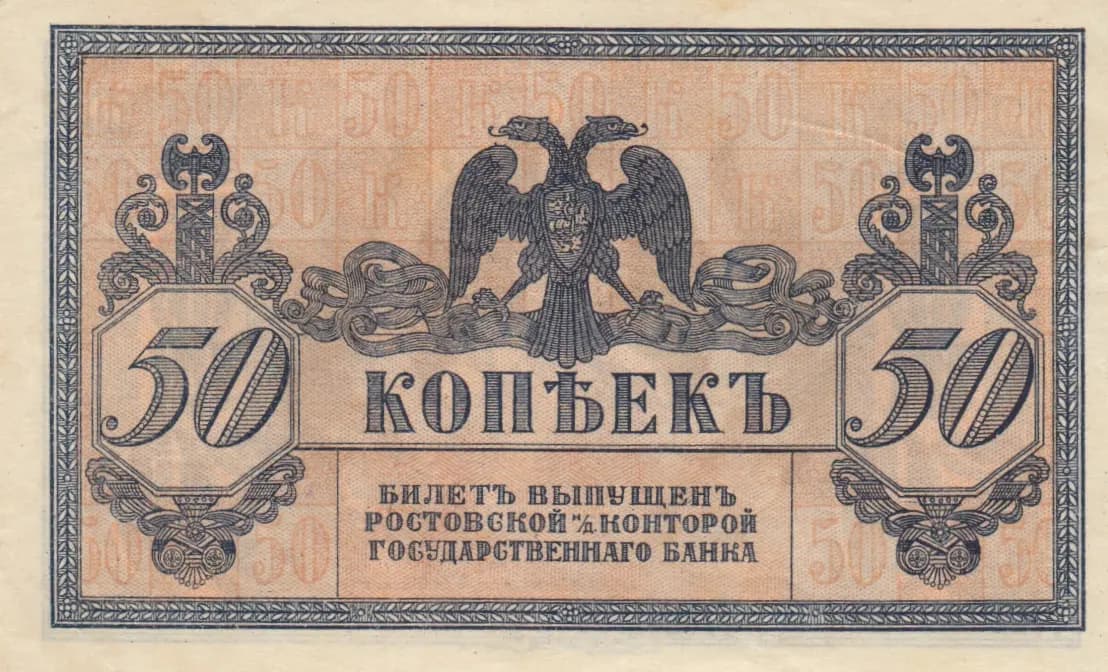
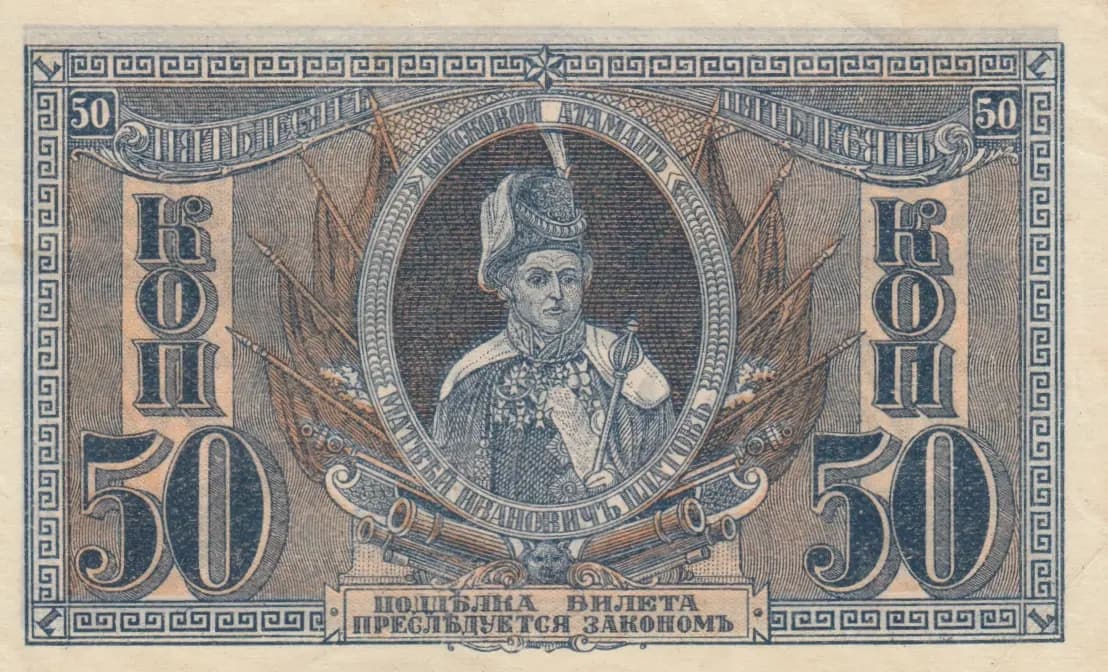
This AU-grade 50 kopeck note from the Rostov State Bank Branch (1918) exemplifies the refined classical design aesthetic of early Soviet-era regional currency. The obverse displays an impressive double-headed eagle flanked by ornate decorative cartouches, while the reverse features a distinguished military portrait in formal dress with medals and a tall plumed headdress, all executed in sharp, clean engraving with excellent preservation showing minimal age-related wear. This Rostov-specific issue represents an important transitional banking document from the tumultuous post-revolutionary period when regional branches maintained their own note issuance authority.
Common. The 50 kopeck denomination was a standard mid-value note issued in substantial quantities by the State Bank and its regional branches during 1918. While regional branch issues carry slightly more collector interest than central printings, the Rostov branch was a major banking center ensuring healthy print runs. The AU condition grade, while desirable, does not significantly elevate scarcity; these notes were printed on durable stock and many examples survive in comparable condition. Pick catalog listing confirms this as an established, documented issue without reported scarcity.
Issued in 1918 by the Rostov branch of the State Bank during the Russian Civil War and early Bolshevik period, this note bridges Tsarist iconography with emerging Soviet monetary practices. The retention of the imperial double-headed eagle on the obverse reflects the institutional continuity of State Bank operations even as political upheaval transformed the nation, while the military portrait on the reverse likely commemorates a significant military or state figure relevant to the Rostov region during this critical transitional moment. Regional branch notes like this became increasingly important as Moscow's central authority faced challenges in maintaining consistent currency distribution across the vast Russian territory.
The 50 kopeck note exhibits a sophisticated two-sided composition typical of early 20th-century Russian State Bank currency. The obverse centers on the Imperial Russian double-headed eagle—the traditional symbol of state authority—positioned above the denomination in large Cyrillic characters, framed by ornamental cartouches featuring classical scrollwork and floral motifs. The reverse presents a military dignitary (identity dependent on historical records for this specific Rostov issue) depicted in formal military regalia with decorative medals and a distinctive tall military headdress, enclosed within a circular portrait frame and flanked by crossed military insignia (possibly swords or ceremonial batons). Both sides employ Greek key pattern borders and fine ornamental detailing characteristic of classical numismatic engraving.
FRONT: The central inscription reads '50 КОПЬЕКЪ' (50 kopeck). The lower text reads 'БИЛЕТЪ ВЕЩШЦВЕН РОСТОВСКОЙ ФАКТОРОЙ ГОСУДАРСТВЕННАГО БАНКА' (Ticket/Note of the Rostov accounting branch of the State Bank). BACK: Vertical denominational text reads 'КОП' and '50' (Kop/kopeck and 50). The warning inscription states 'ПОДДЕЛЬКА БИЛЕТА ПРЕСЛЕДУЕТСЯ ЗАКОНОМ' (Counterfeiting of this note is prosecuted by law).
The note was produced using intaglio engraving and letterpress printing, evidenced by the fine line work, intricate shading in the portrait, complex border patterns, and crisp impressions throughout. The printing quality and security features suggest production by a specialized state security printer, likely the State Bank's own printing facility in St. Petersburg/Petrograd or a contracted master engraver workshop. The sharp detail preservation visible in this AU specimen confirms high-quality plate preparation and careful printing oversight.
This Pick S407 represents the standard Rostov State Bank Branch 50 kopeck issue of 1918. Varieties within this issue may include differences in signature combinations (State Bank officials' signatures typically appear on notes from this period, though not prominently visible in the provided images), serial number prefixes indicating different printing runs, or minor overprint variations common to regional branch issues. Without clear visibility of signature blocks or serial number prefixes in the image analysis, specific variety identification cannot be definitively established; however, collectors should examine signatures, serial numbers, and any overprints to determine if this represents a standard or variant printing.