5 rublei 1920
About This Note
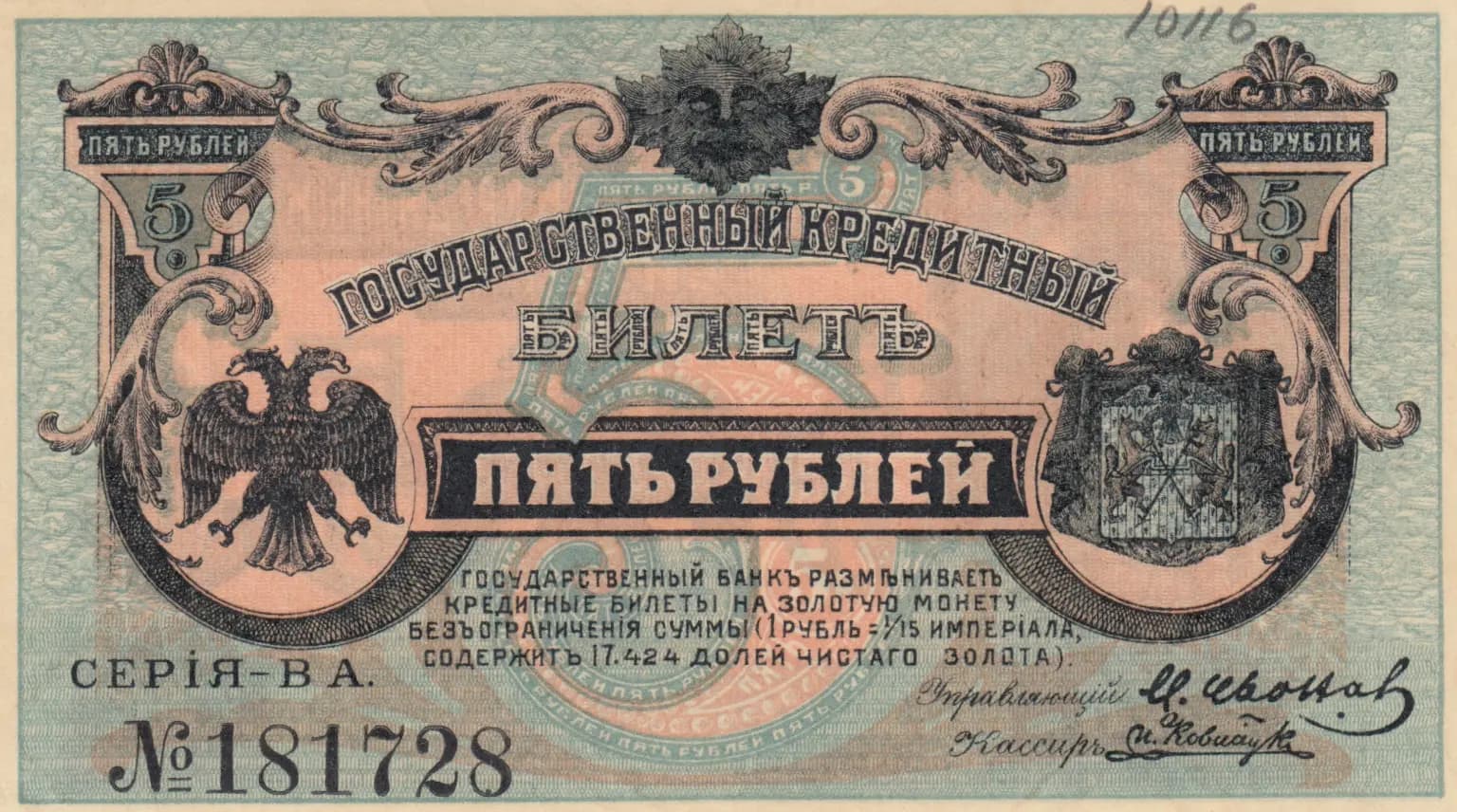
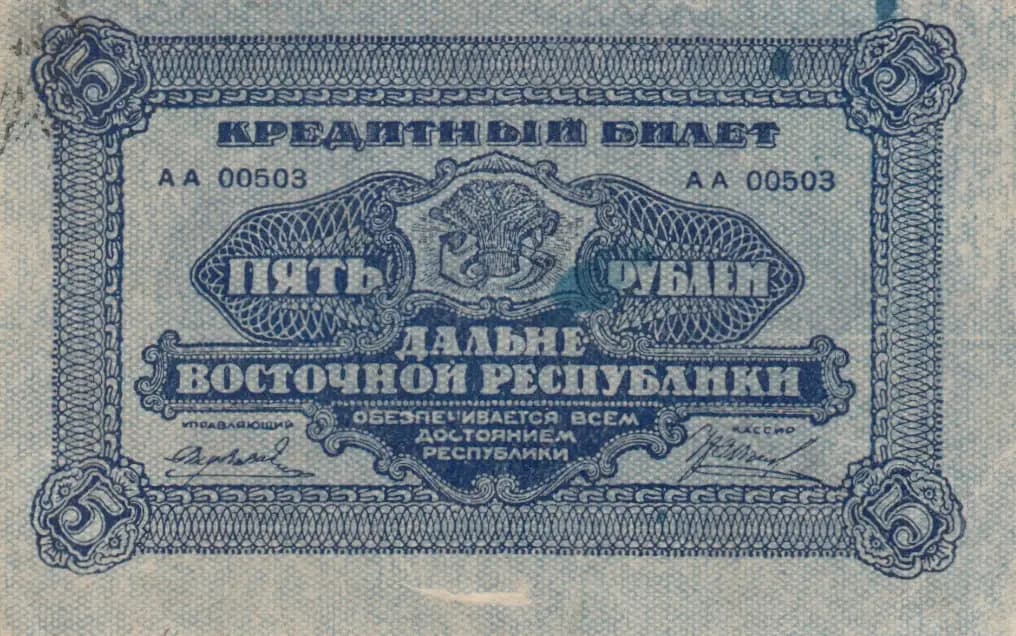
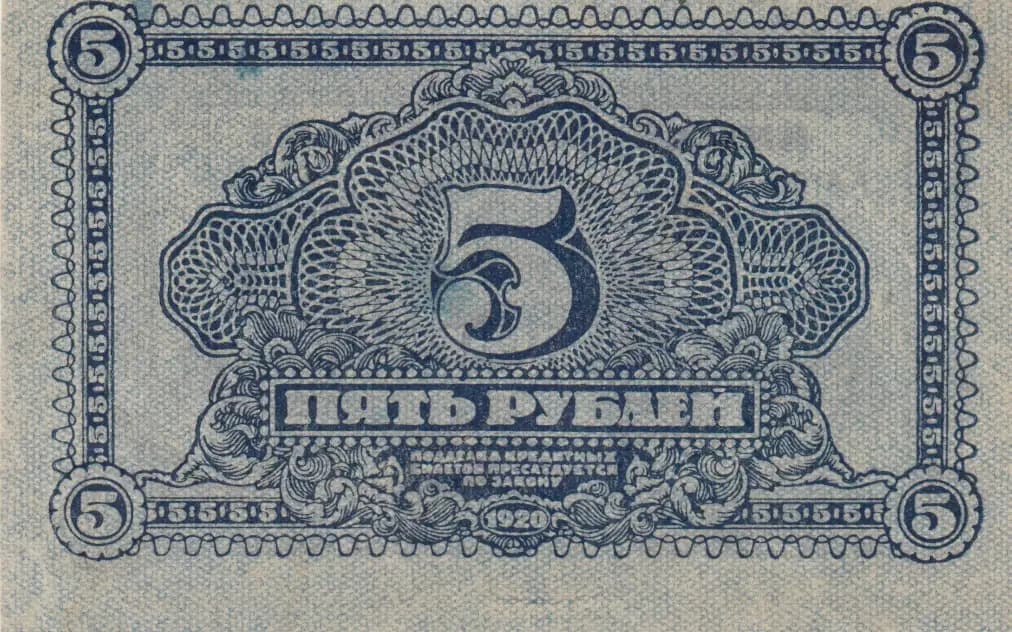
This is an AU-graded 5 Rublei note from the Far Eastern Republic (1920), a short-lived far-eastern Russian polity that issued its own currency during the Russian Civil War period. The note displays excellent preservation of its intricate engraved design, featuring a distinctive double-headed eagle coat of arms on the obverse and an elaborate ornamental numeral 5 cartouche on the reverse, all rendered in blue and cream tones. Despite moderate aging with visible yellowing and creasing consistent with early 20th-century paper currency, the fine-line engraving details remain sharp and legible, making this a desirable example of a historically significant regional Russian emission.
Common. The Far Eastern Republic issued currency during 1920-1922 before its absorption into the Soviet Union, and while its notes are historically interesting and represent a short-lived political entity, they were produced in sufficient quantities for circulation and remain relatively available to collectors today. Notes from this issuer appear regularly in numismatic sales and dealer inventories, and even in AU condition this denomination does not command premium prices typical of genuinely scarce issues.
The Far Eastern Republic (1920-1922) was a brief political entity established during the Russian Civil War as a buffer state between Soviet Russia and Japanese-occupied territory in the Far East. This 1920 credit note (кредитный билет) represents one of the earliest currency emissions of this short-lived republic and bears the security inscription promising backing by gold and foreign currency reserves—a common assurance on post-revolutionary Russian notes despite chronic shortages of actual reserves. The ornate baroque-style design reflects late Imperial Russian banknote aesthetics, connecting it to pre-revolutionary numismatic traditions even as it served a revolutionary-era polity.
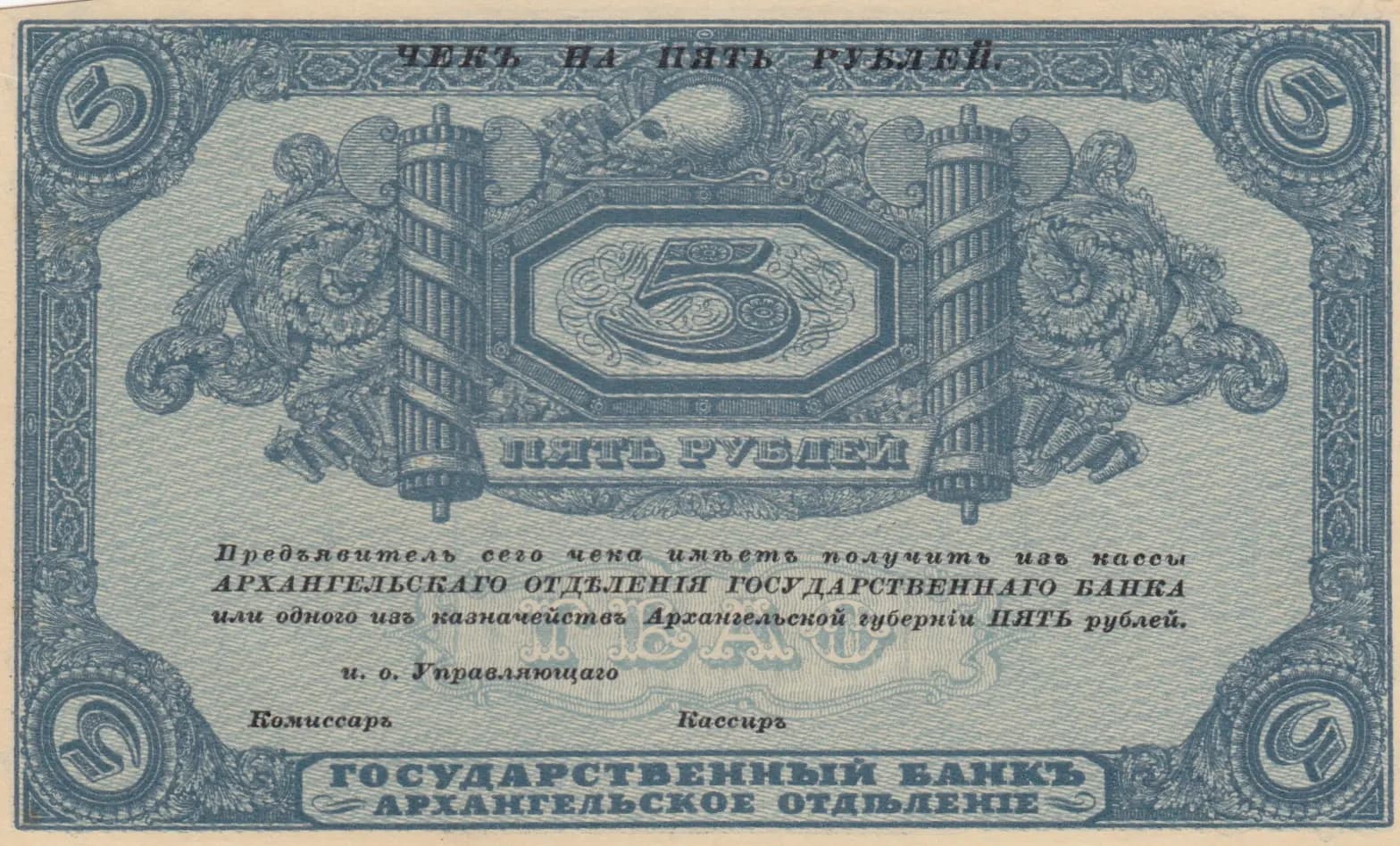
The obverse features a classical symmetrical layout dominated by the Russian Imperial double-headed eagle coat of arms centered on the note, flanked by ornamental rosettes in all four corners and framed by an elaborate decorative chain-like border pattern. The reverse maintains similar baroque symmetry with a large ornamental shield or cartouche displaying the numeral 5 as the dominant central element, surrounded by elaborate scrollwork and floral flourishes characteristic of high-denomination note design. Four circular corner ornaments each contain the numeral 5. The entire design employs intricate fine-line engraving with repetitive geometric and floral border patterns throughout, creating a visually complex and security-conscious aesthetic typical of early Soviet-era regional currency issues.
FRONT SIDE: КРЕДИТНЫЙ БИЛЕТ (Credit Note); ПЯТЬ РУБЛЕЙ (Five Rubles); ДАЛЬНЕ ВОСТОЧНОЙ РЕСПУБЛИКИ (Far Eastern Republic); ОБЕСПЕЧИВАЕТСЯ ВСЕМ ЗОЛОТЫМ И ИНОСТРАННОЙ ВАЛЮТОЙ РЕСПУБЛИКИ (Secured by all the gold and foreign currency of the Republic); Serial number АА 00503. BACK SIDE: ПЯТЬ РУБЛЕЙ (Five Rubles); 1920 (year of issue); Multiple instances of numeral 5 in corner ornaments.
Intaglio engraving (line engraving/recess printing). The intricate fine-line patterns, elaborate scrollwork, and sharp detail visible throughout both sides are characteristic of traditional hand-engraved intaglio work, which was the standard security printing technique for Russian banknotes during this period. The specific printer for Far Eastern Republic notes of this issue is not definitively documented in standard catalogs, but production likely occurred at a regional Russian printing facility rather than a major metropolitan center.
This specimen carries serial number AA 00503, suggesting it is from an early printing run. The AA prefix indicates the first serial series. No major varieties (such as different signatures, dates, or significant overprints) are documented for the 5 Rublei 1920 of the Far Eastern Republic under Pick S1203. Collectors should note serial number ranges as a method of distinguishing between different printing batches, though individual serial numbers themselves do not typically affect numismatic value for this common note type.