3 rublja 1905
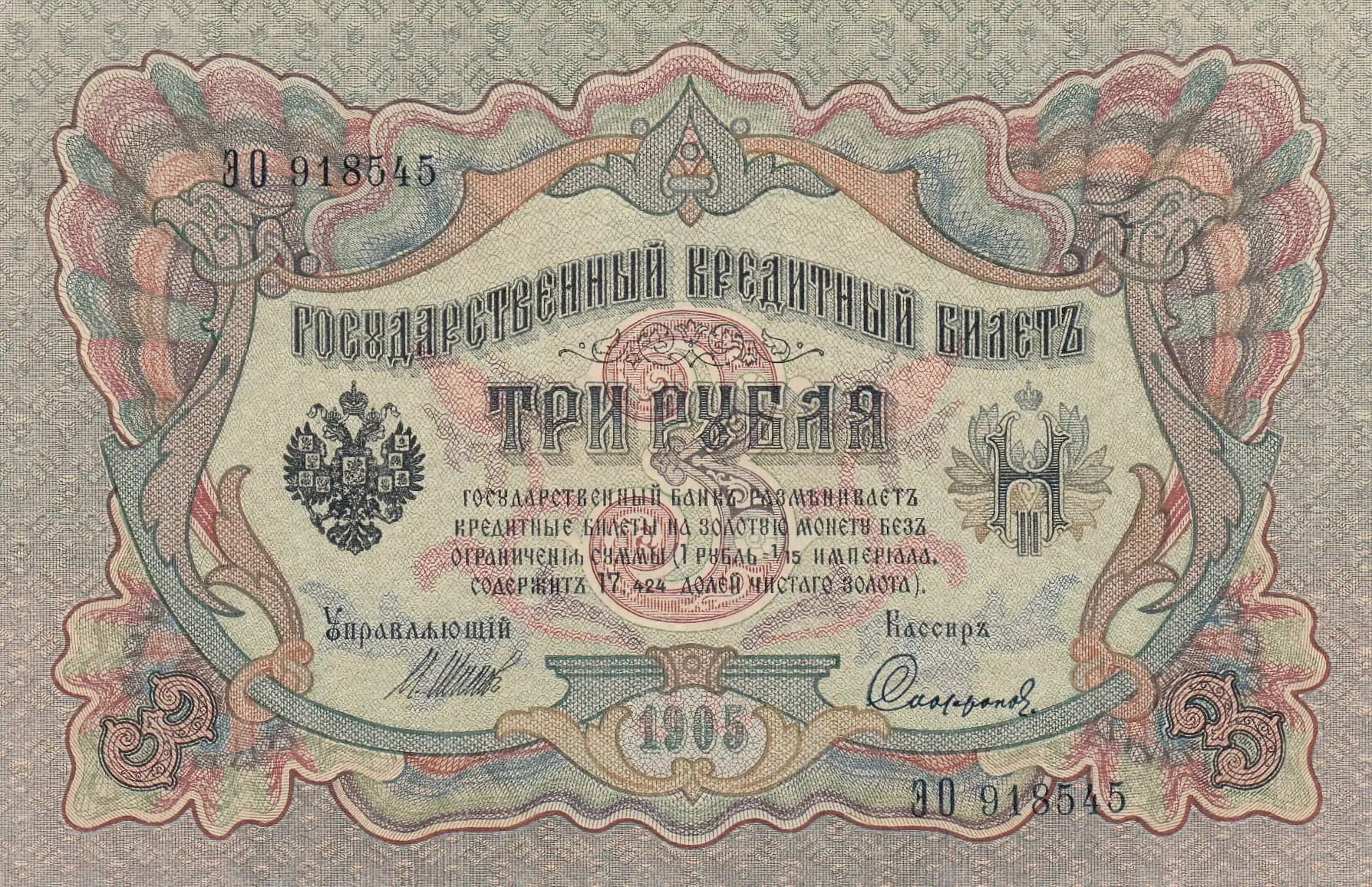
“Sig.Sofronov”
About This Note
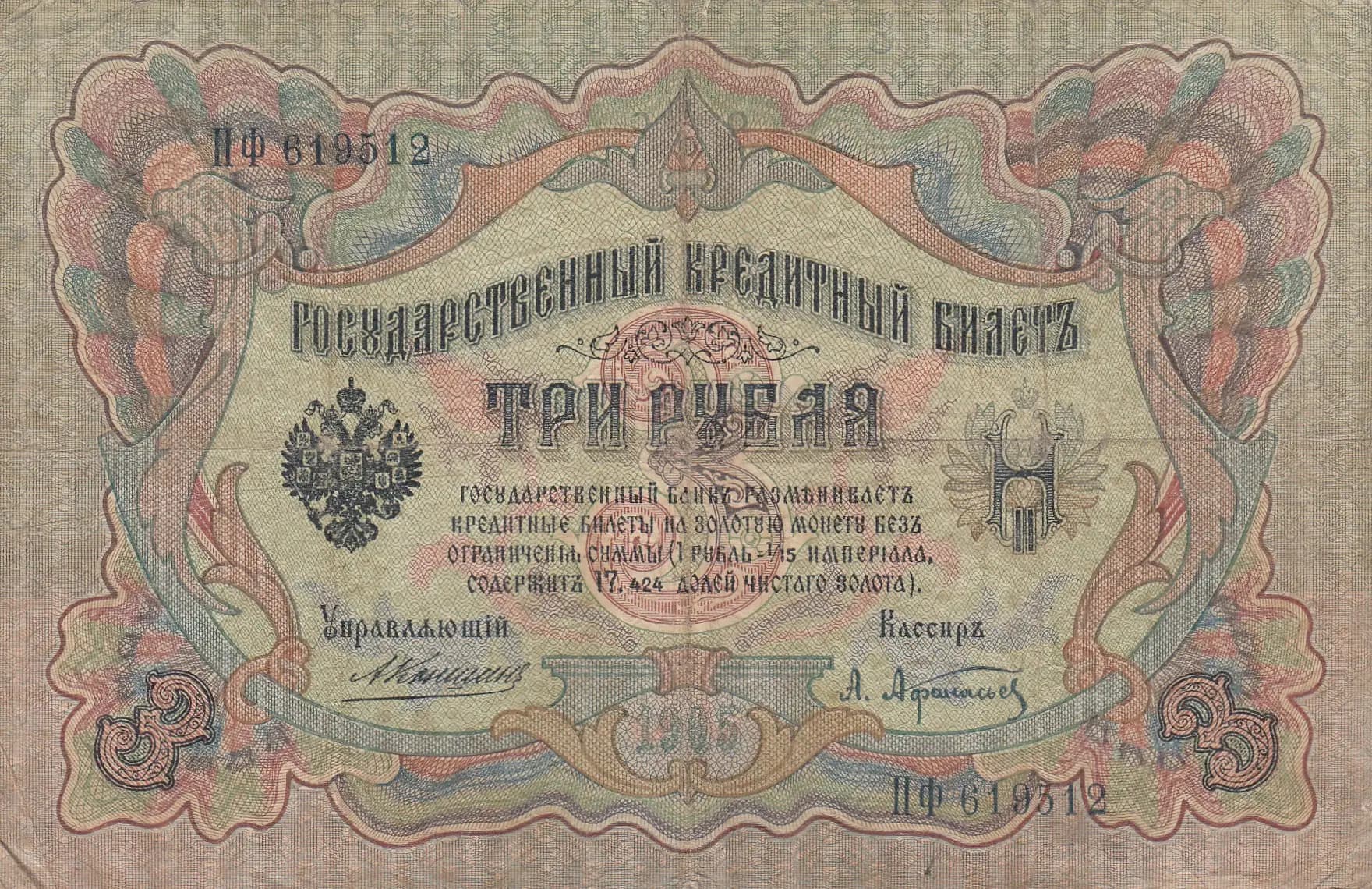
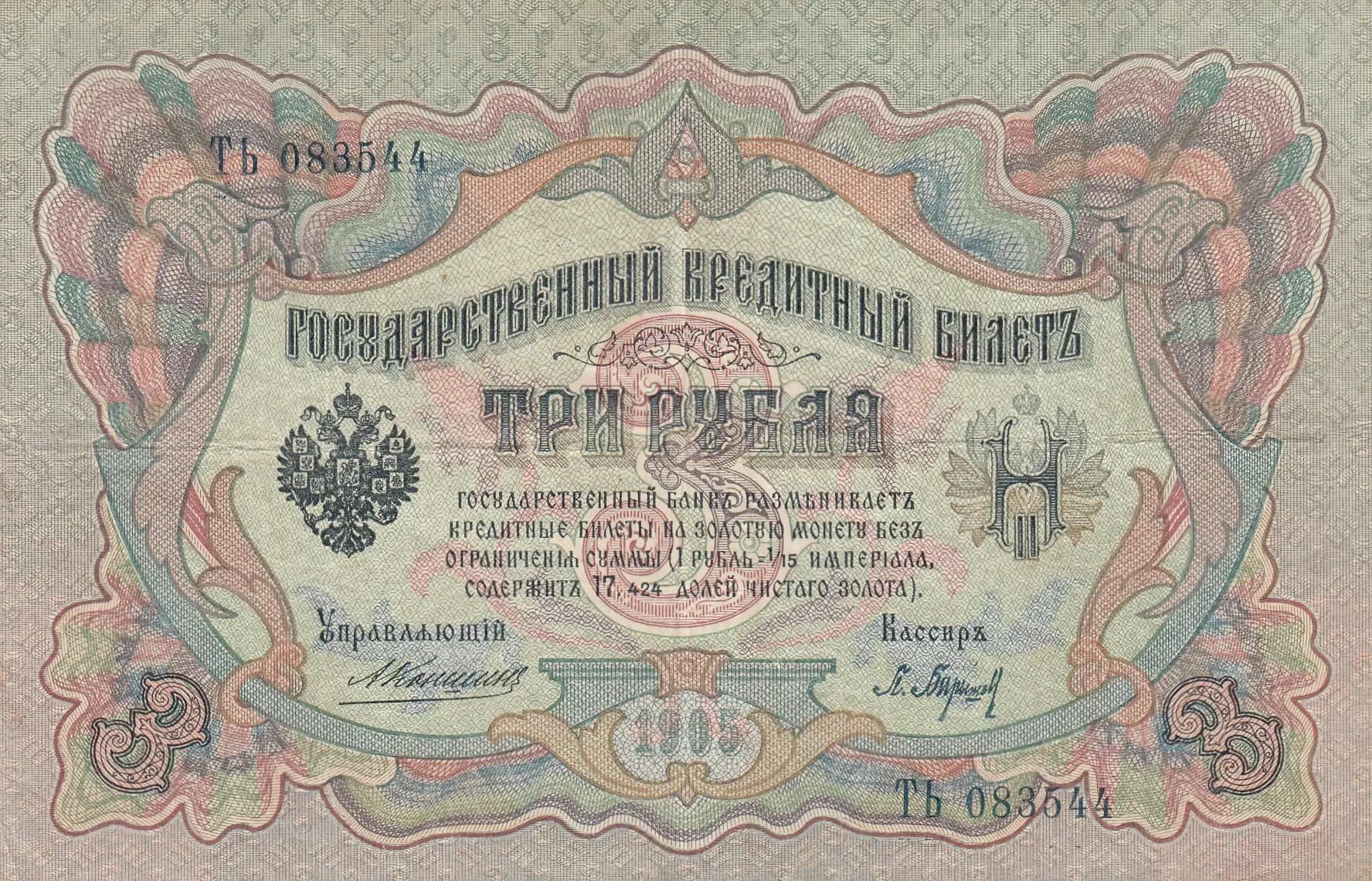
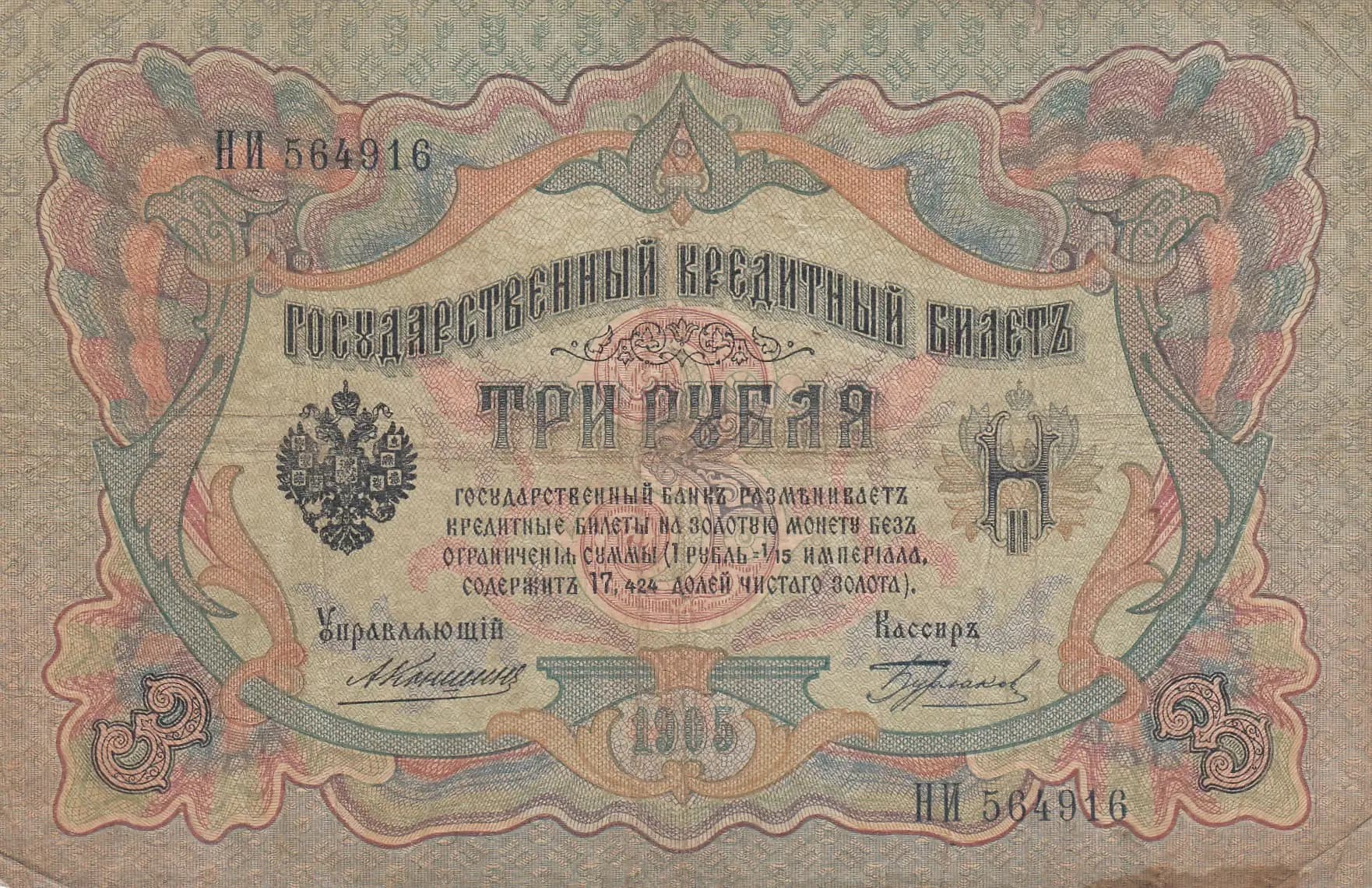
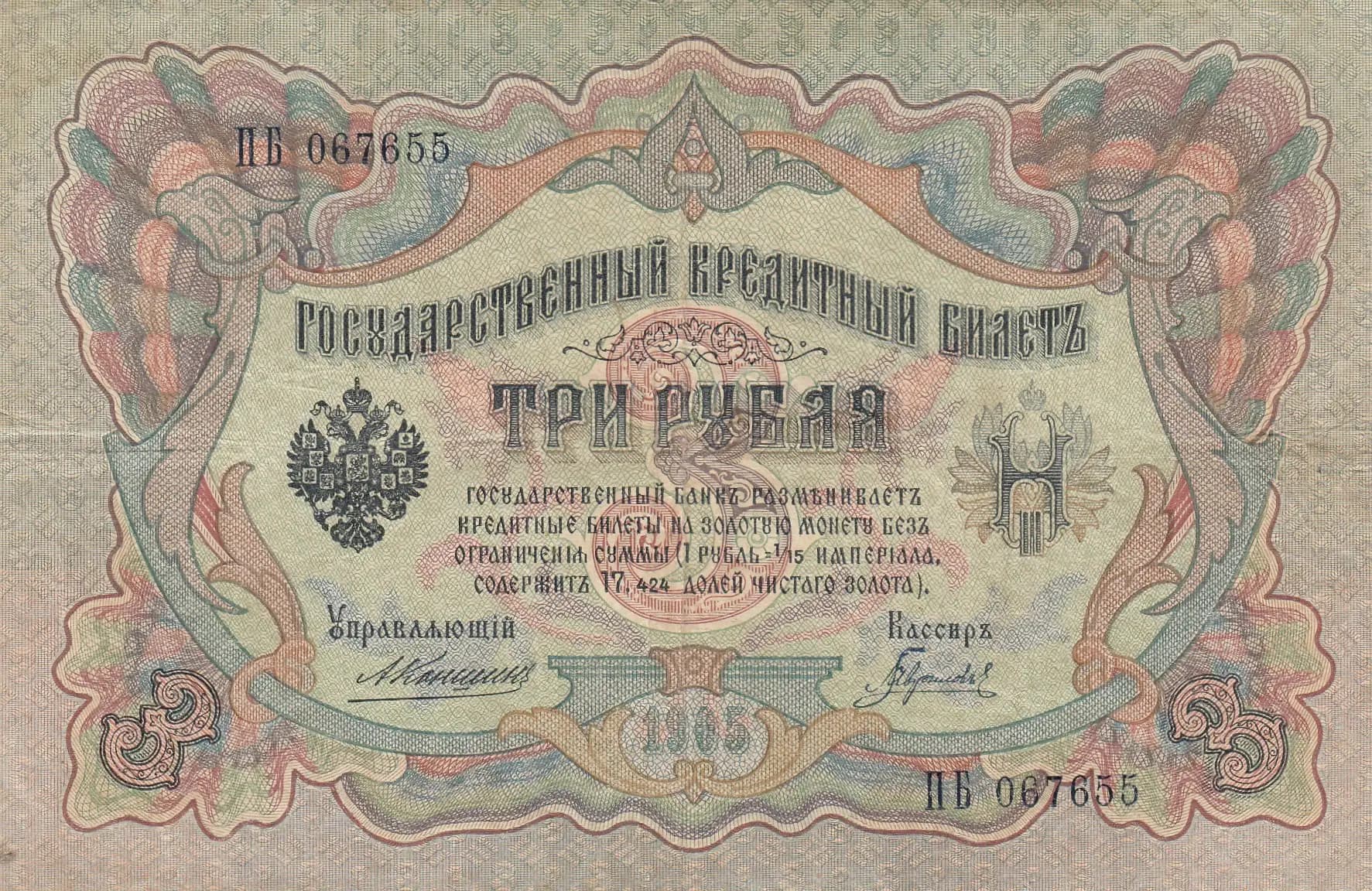
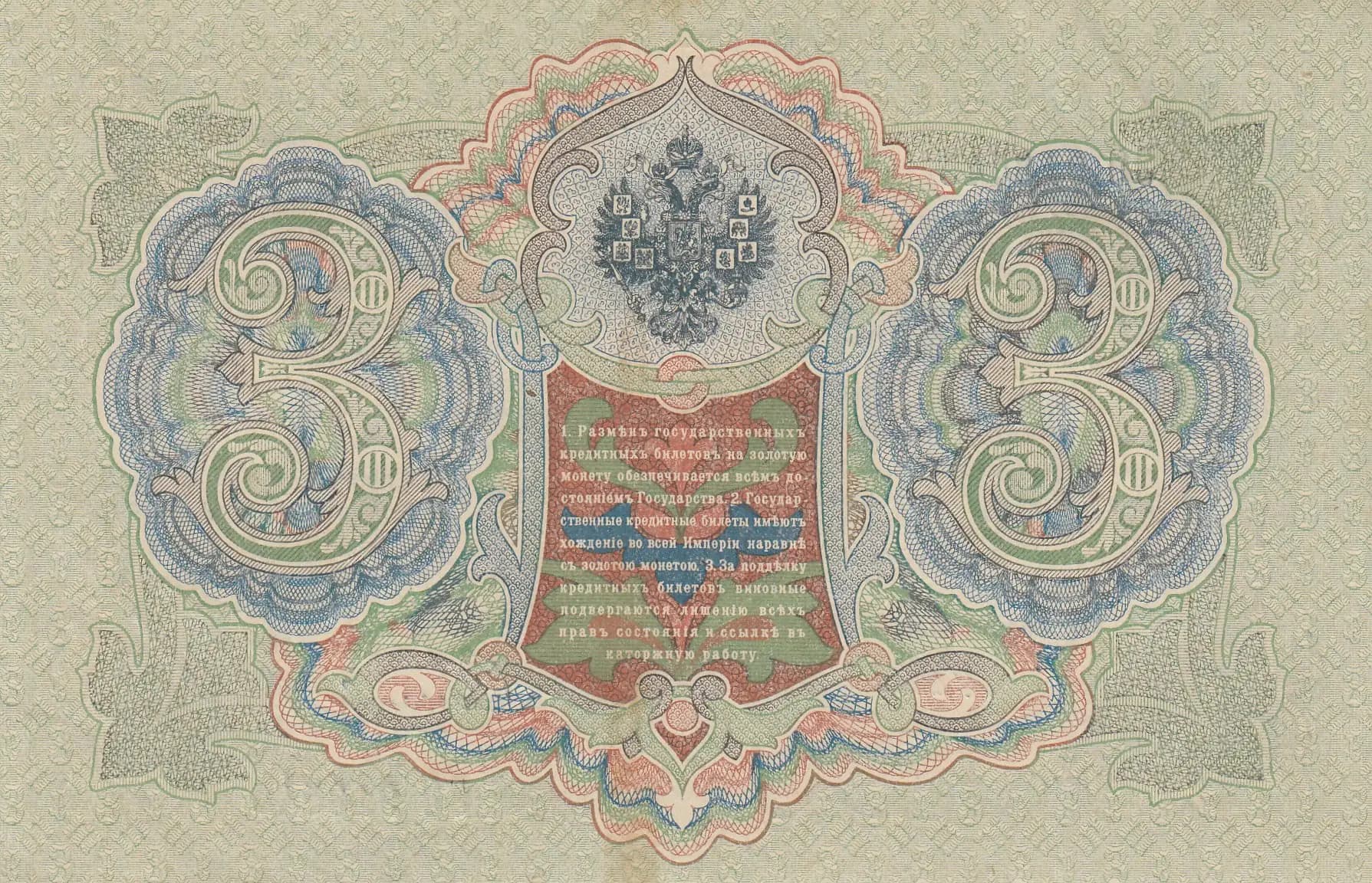
This is a well-preserved example of a Russian Imperial 3 Ruble State Credit Note from 1905, graded AU. The banknote displays the characteristic ornate design of early 20th-century Russian currency, featuring dual Imperial double-headed eagles, elaborate scrollwork borders in cream, pink, and green on the obverse with complementary blue and green tones on the reverse. The note exhibits light creasing but no significant tears, stains, or foxing, with all fine engraving details remaining crisp and clearly visible—a testament to careful preservation.
Common. The 1905 3 Ruble note (Pick-9c) was issued in substantial quantities by the Russian Imperial State Bank and circulated widely throughout the Empire. While this particular specimen in AU condition with the noted Sofronov signature represents a well-preserved example, the denomination and date are neither scarce nor rare in numismatic markets. Such notes typically command modest prices ($15-50 USD depending on condition and signature varieties) and are readily available to collectors, indicating robust original print runs and good survival rates.
This 1905 State Credit Note was issued during a tumultuous period in Russian Imperial history, just after the Russo-Japanese War and preceding the 1905 Revolution. The note's prominent double-headed eagle coat of arms, crown, scepter, and references to the State Bank of the Russian Empire underscore the imperial authority backing the currency. The inscriptions emphasize convertibility to gold and circulation throughout the Empire, reflecting the gold standard monetary system that characterized late Imperial Russian finance.
The 3 Ruble note features a sophisticated symmetrical design centered on the Russian Imperial coat of arms—the double-headed eagle wearing a crown and holding scepter and orb—appearing prominently on both obverse and reverse. The obverse displays a scalloped border frame with intricate floral and scrollwork medallions in the corners and along the margins, rendered in cream, pink, and green. The reverse maintains similar ornamental sophistication with larger circular decorative medallions containing scrollwork patterns flanking the central eagle vignette, rendered in blue, green, pink, and cream tones. Fine line engraving throughout creates a complex anti-counterfeiting design with multiple layers of detail work and geometric precision. Signature lines for both the Manager (Управляющий) and Cashier (Кассир) appear on the obverse, affirming official authorization. The note's text consistently references the gold standard backing and imperial authority, with serial numbers repeated for verification purposes.
FRONT SIDE: "ГОСУДАРСТВЕННЫЙ КРЕДИТНЫЙ БИЛЕТ" (State Credit Note); "ТРИ РУБЛЯ" (Three Rubles); "ГОСУДАРСТВЕННЫЙ БАНК РОССИЙСКОЙ ИМПЕРИИ" (State Bank of the Russian Empire); "содержит 1 1/4 сибирского золота" (contains 1 1/4 of Siberian gold); "Управляющий" (Manager); "Кассир" (Cashier); Serial numbers: 00 918545 and 00 918645. BACK SIDE: Extended legal text regarding the exchange of state credit notes for gold coins and their circulation throughout the Empire on equal footing with gold coinage, affirming the state treasury's backing and the notes' validity for taxation and secondary circulation.
Steel plate engraving (intaglio/recess printing), the standard security printing method for Russian Imperial banknotes. The fine line engraving visible throughout—particularly in the scrollwork, floral medallions, and geometric borders—is characteristic of the high-security intaglio process employed by the Russian Imperial State Bank printing facilities. The multi-color design was achieved through separate plate passes for each color (cream, pink, green, blue, and black), typical of the chromatic intaglio techniques used for Russian currency of this period.
This note is identified as Pick-9c(9) with signature of Sofronov noted by the collector. The catalog designation suggests this is the ninth recorded variety of the Pick-9c type, likely distinguished by signature combinations or serial number prefix variations. The signatures of the Manager and Cashier are key identifying features for Imperial Russian banknote varieties, as multiple officials served during this period and their combinations help establish specific issue variants and date ranges within the 1905 printing year.