3 rublja 1905
“Sig.Afanasev”
About This Note
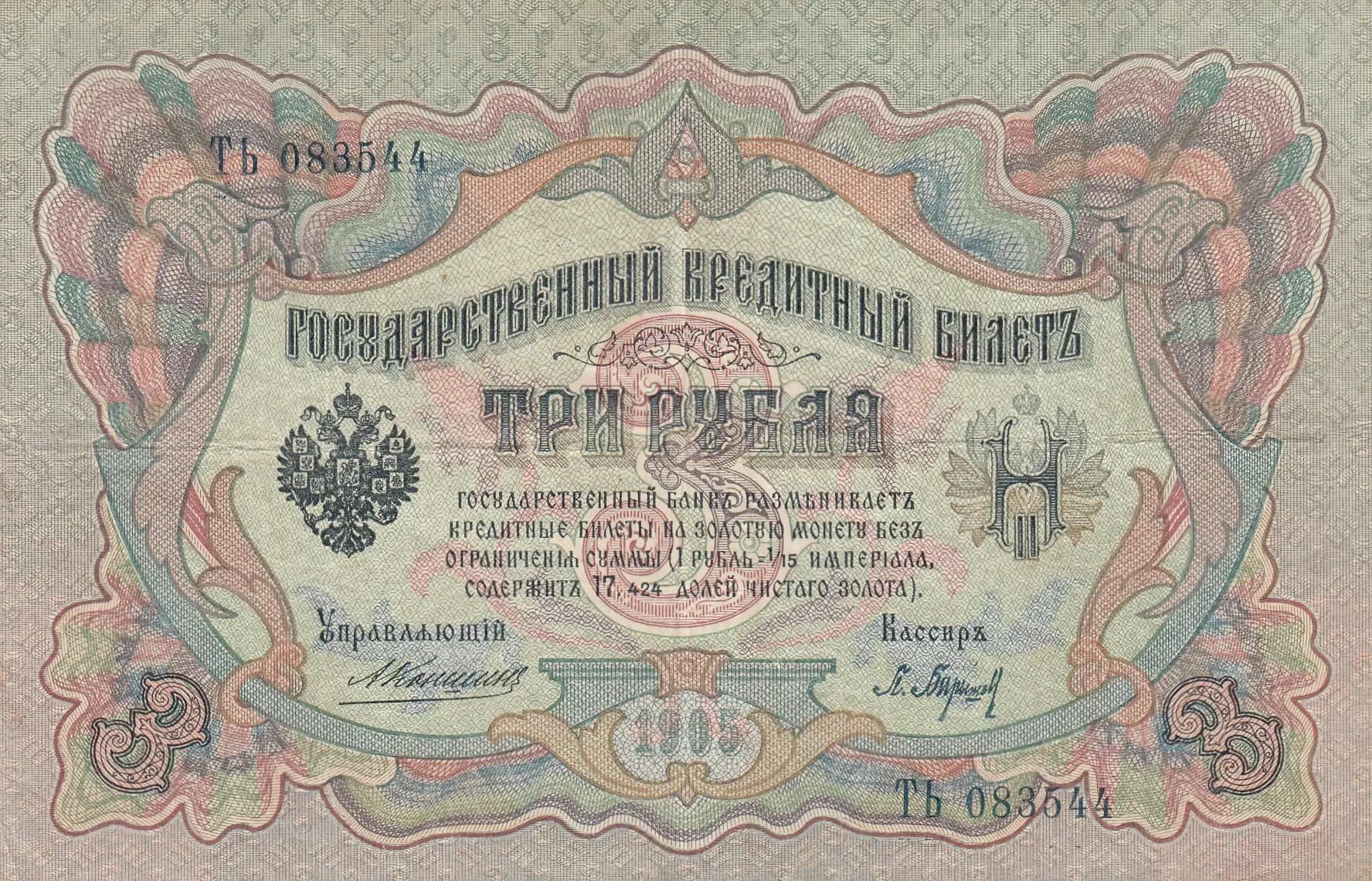
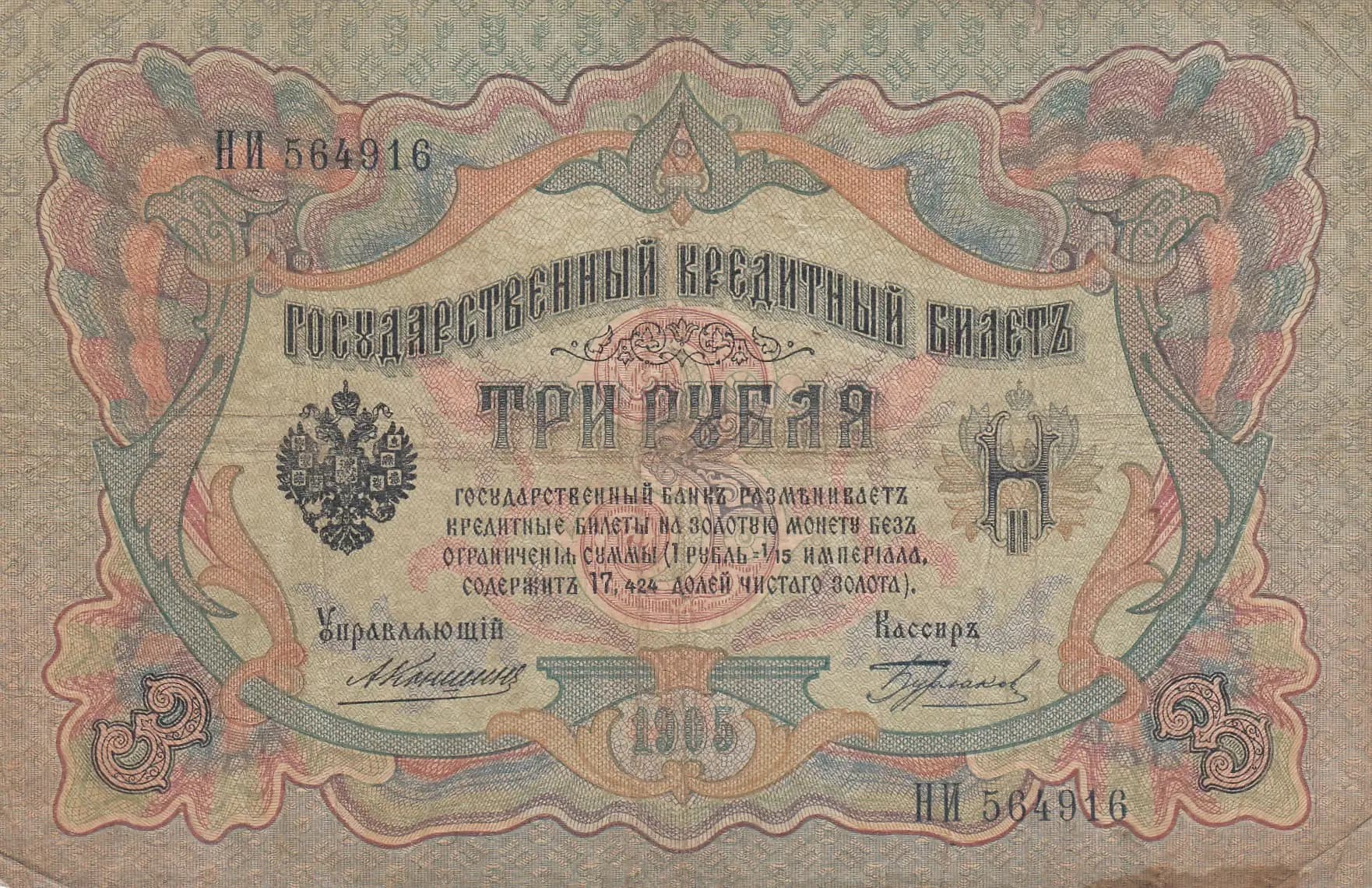
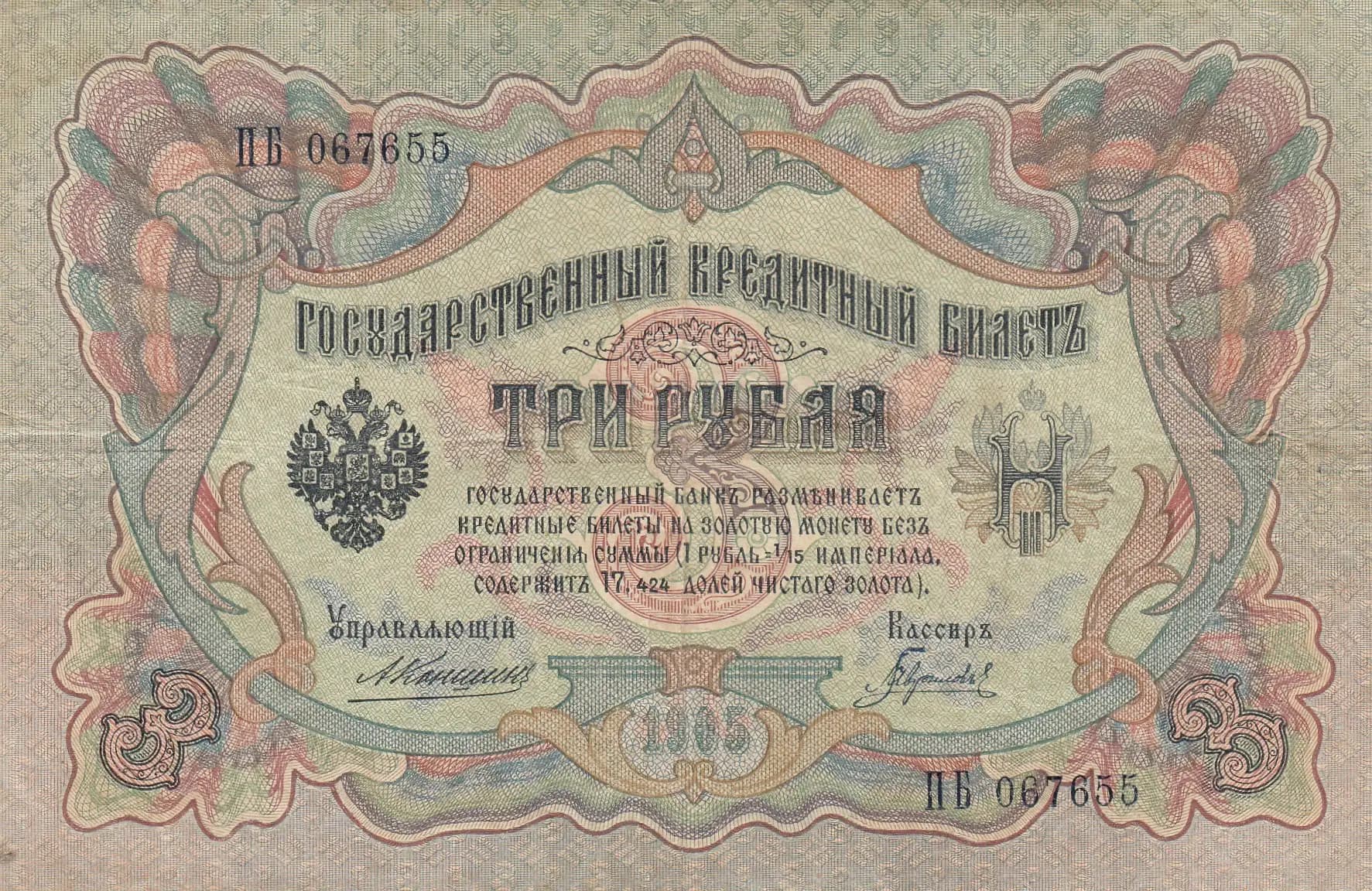
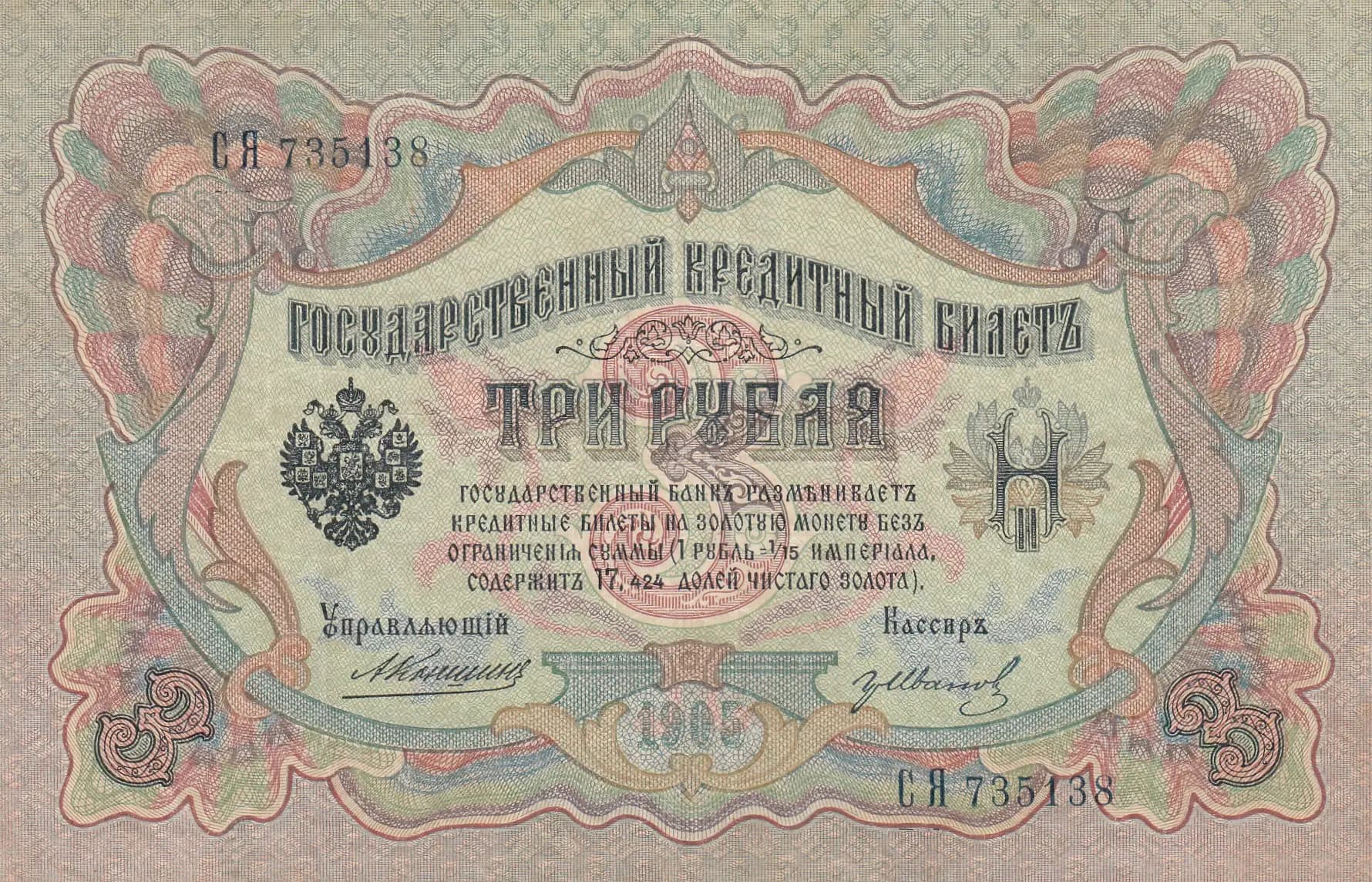
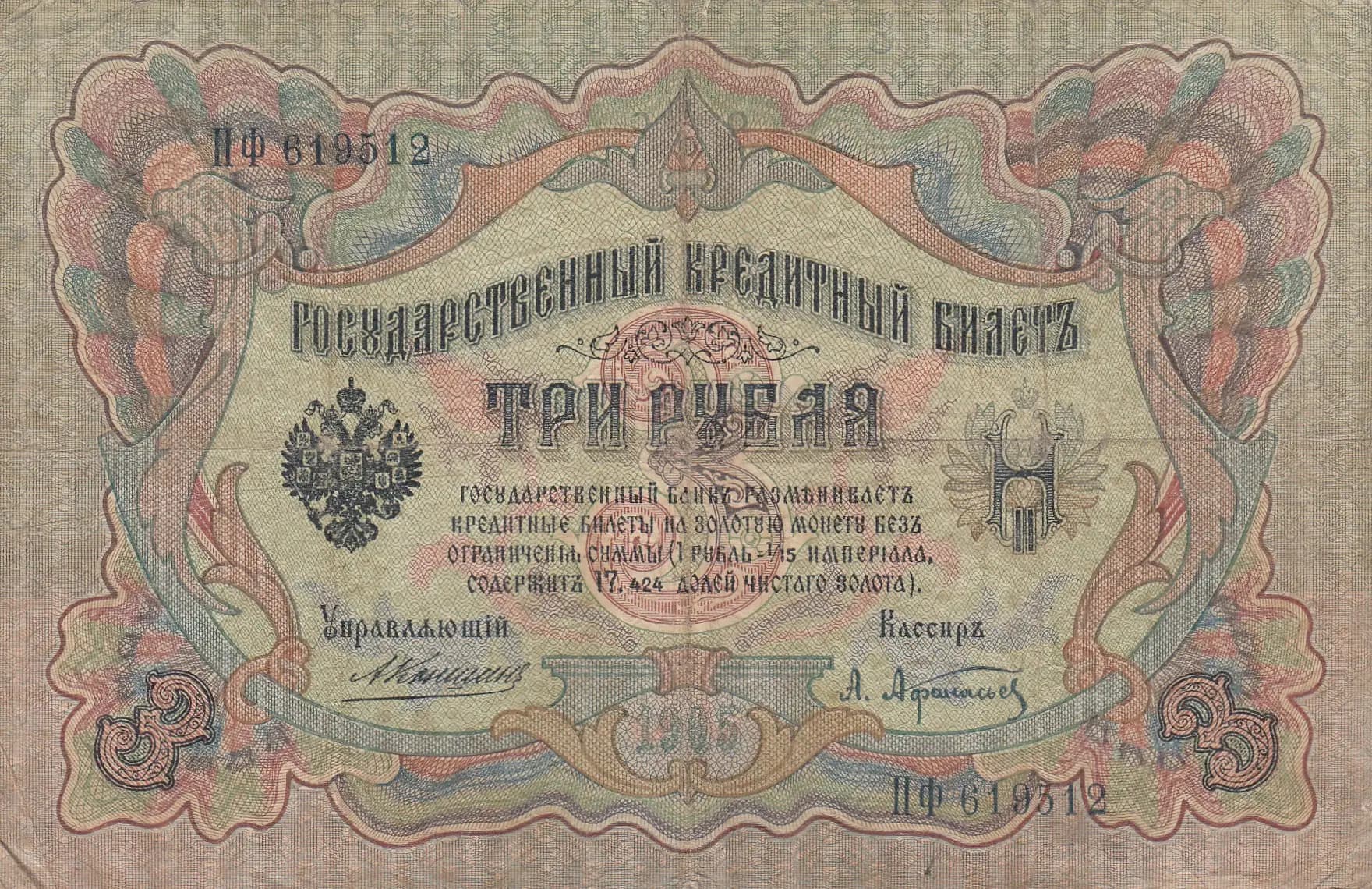
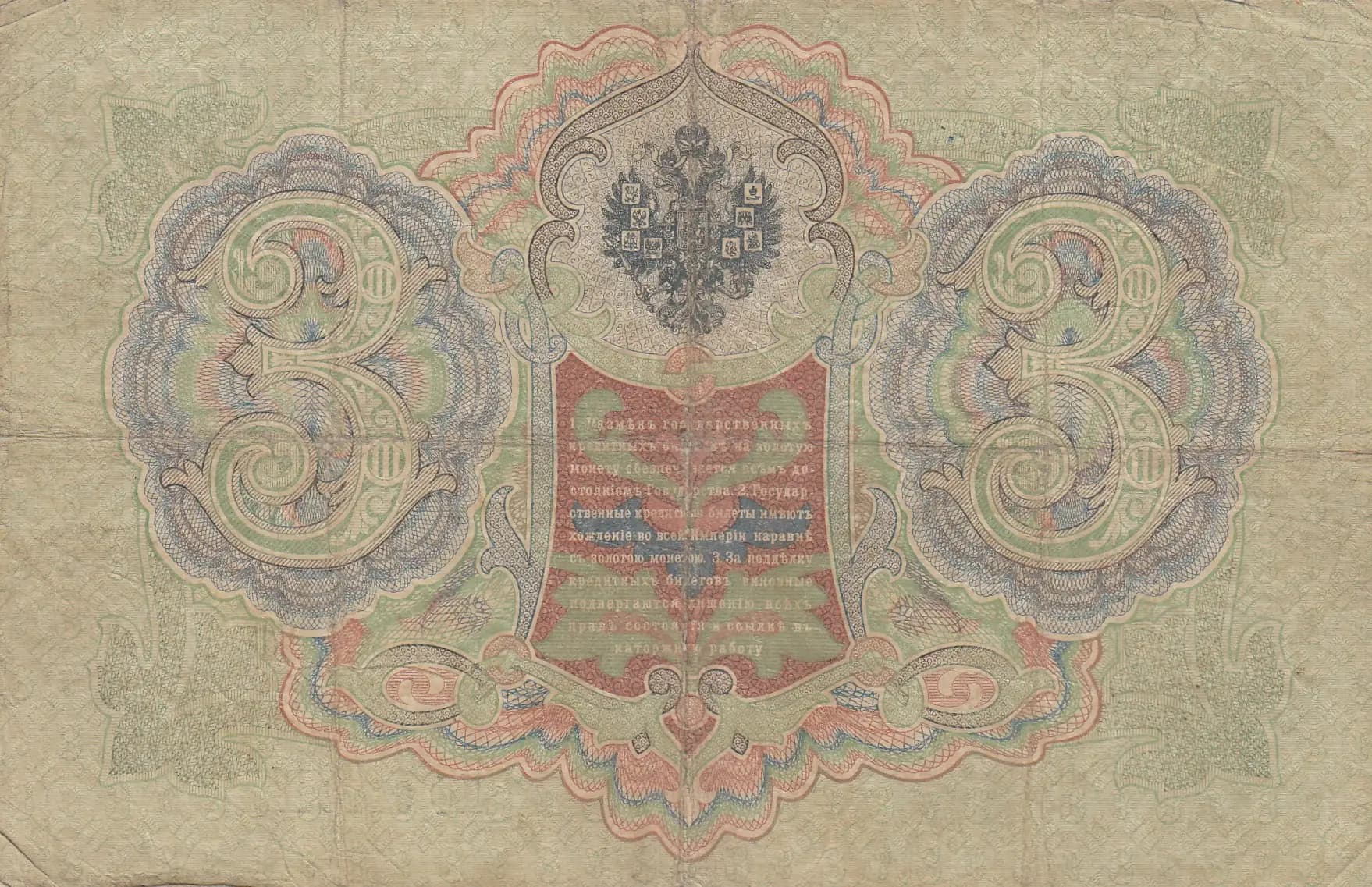
A Russian Imperial State Credit Note for 3 Rubles from 1905, issued following the November 17th gold standard decree. The note displays exceptional ornamental engraving with vibrant pink and green coloring on both sides, featuring symmetrical imperial double-headed eagles and intricate filigree borders characteristic of high-security Imperial currency design. In Fair condition, the note shows honest age-related wear with creasing and yellowing consistent with circulation, yet maintains excellent structural integrity and legibility of all inscriptions.
Common. The 1905 3-ruble notes represent a substantial portion of surviving Imperial currency from this denomination and period. While these notes are now over 115 years old and show significant age wear, the original print run was sufficiently large that Fair-grade examples remain readily available to collectors. There is no evidence of extreme scarcity, short print runs, or recall that would elevate this to rare status.
This 3-ruble note was issued by the State Bank of the Russian Empire during a critical monetary reform period, specifically following the November 17, 1905 decree establishing gold backing for credit notes. The prominent double-headed imperial eagles with crowns visible on both obverse and reverse, along with the Ministry of Finance attribution on the reverse, reflect the formal state authority behind the Imperial monetary system during the twilight years of the Romanov regime.
The obverse features a symmetrical layout with the State Bank's formal title and denomination prominently displayed within an ornate cartouche. Twin Imperial double-headed eagles with crowns flank the central text area on left and right sides—these are the official Russian Imperial coat of arms symbolizing state authority. The border comprises elaborate filigree patterns and floral designs in intricate engraved detail. The reverse demonstrates mirror-image composition with a centered double-headed eagle in the upper portion and two large circular ornamental medallions featuring complex spiral and geometric patterns flanking a central red/pink cartouche. The Ministry of Finance attribution appears on the reverse, establishing governmental authority over the issuance. All design elements employ fine-line engraving to create anti-counterfeiting security through complexity and detail.
FRONT SIDE: Serial number: ПФ 613512 | 'ГОСУДАРСТВЕННЫЙ КРЕДИТНЫЙ БИЛЕТ' (State Credit Note) | 'ТРИ РУБЛЯ' (Three Rubles) | 'ГОСУДАРСТВЕННЫЙ БАНК РОССИЙСКОЙ ИМПЕРИИ КРЕДИТНЫЕ БИЛЕТЫ НА ЗОЛОТО МОНЕТУ БЕЗ ОГРАНИЧЕНИЯ СУММЫ РУБЛЕЙ НА ЗОЛОТО МОНЕТУ НАЧАЛО 17 ДНЕ НОЯБРЯ 1905 ГОДА' (State Bank of the Russian Empire. Credit Notes backed by gold coinage without limitation of sum [in] rubles in gold coin. Beginning November 17, 1905) | 'Управляющий' (Manager/Director) | 'Кассир' (Cashier) | BACK SIDE: 'МИНИСТЕРСТВО ФИНАНСОВ' (Ministry of Finance) | Central red panel contains regulatory/legal text regarding the banknote (partially legible in image).
Intaglio engraving (steel plate engraving) executed with exceptional precision and fine-line work throughout. The intricate filigree patterns, spiral medallions, and ornamental borders showcase multi-layered engraved detail characteristic of Imperial Russian security printing from this period. The note was produced by the State Printing Works (Государственная Печатня) under the Ministry of Finance, utilizing the advanced security engraving techniques standard for high-denomination Imperial credit notes.
This note is identified as Pick P-9b(1), corresponding to the 1905 gold-backed issue. The serial number prefix 'ПФ' (likely indicating a specific printing series or authorization mark) and number 613512 identify this as one specimen within the broader 1905 emission. The specific signatures of the Manager (Управляющий) and Cashier (Кассир) are present but not clearly legible in the image; such signature varieties are documented in detailed catalogs but do not significantly impact common circulation examples. The November 17, 1905 date appears consistently across all notes of this type and series.