3 rublja 1905
“Sig.G.Ivanov”
About This Note
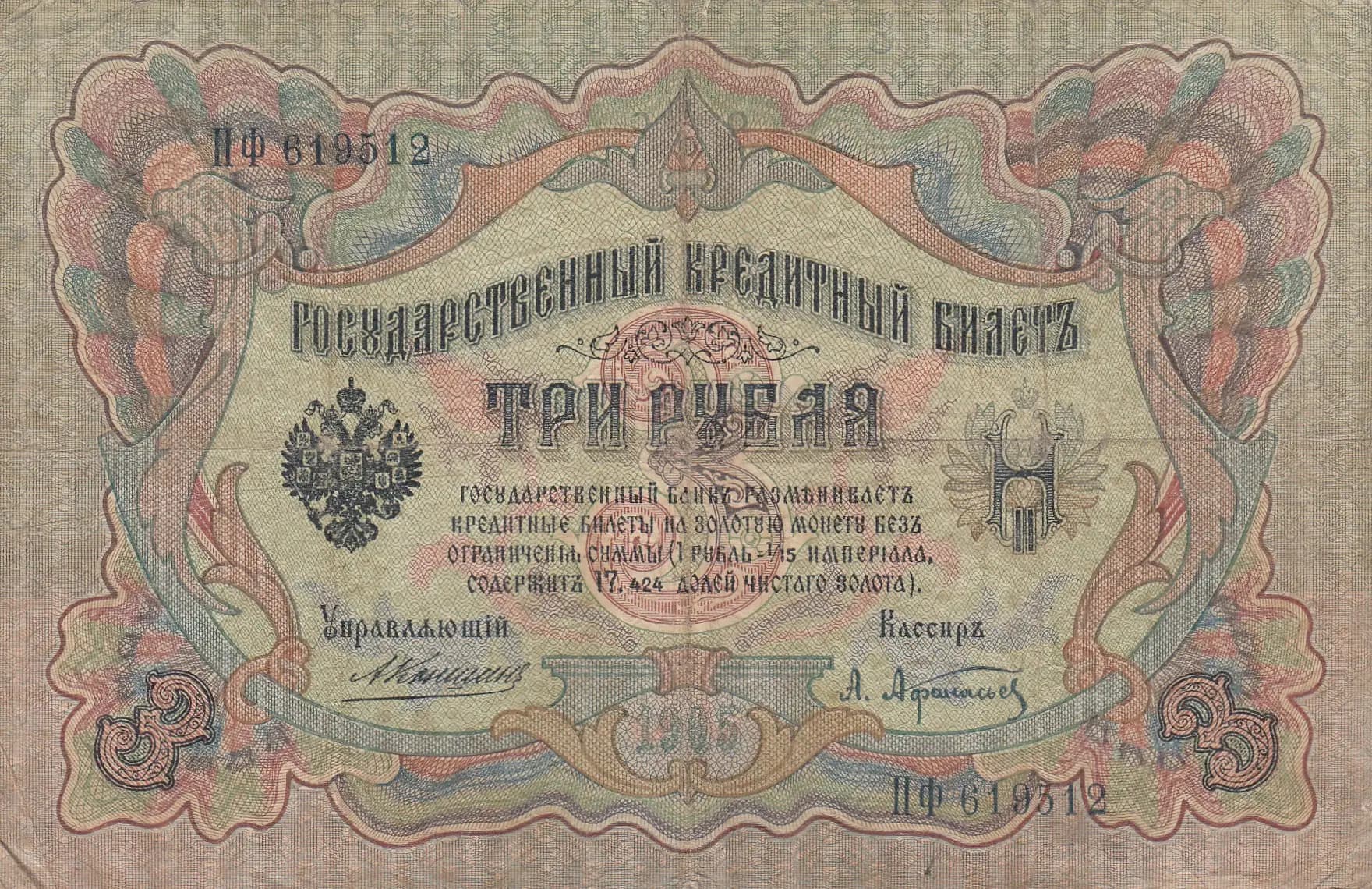
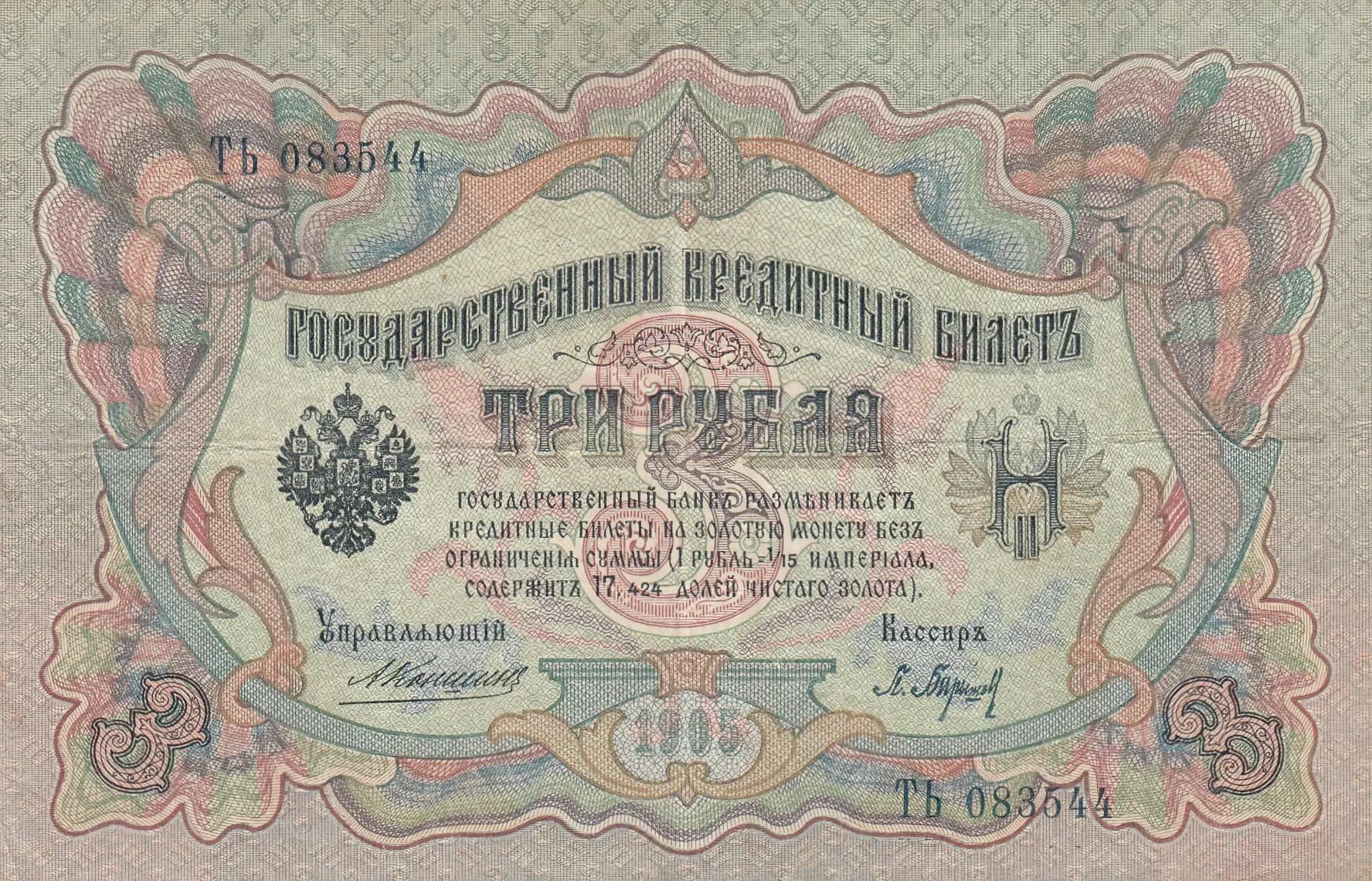
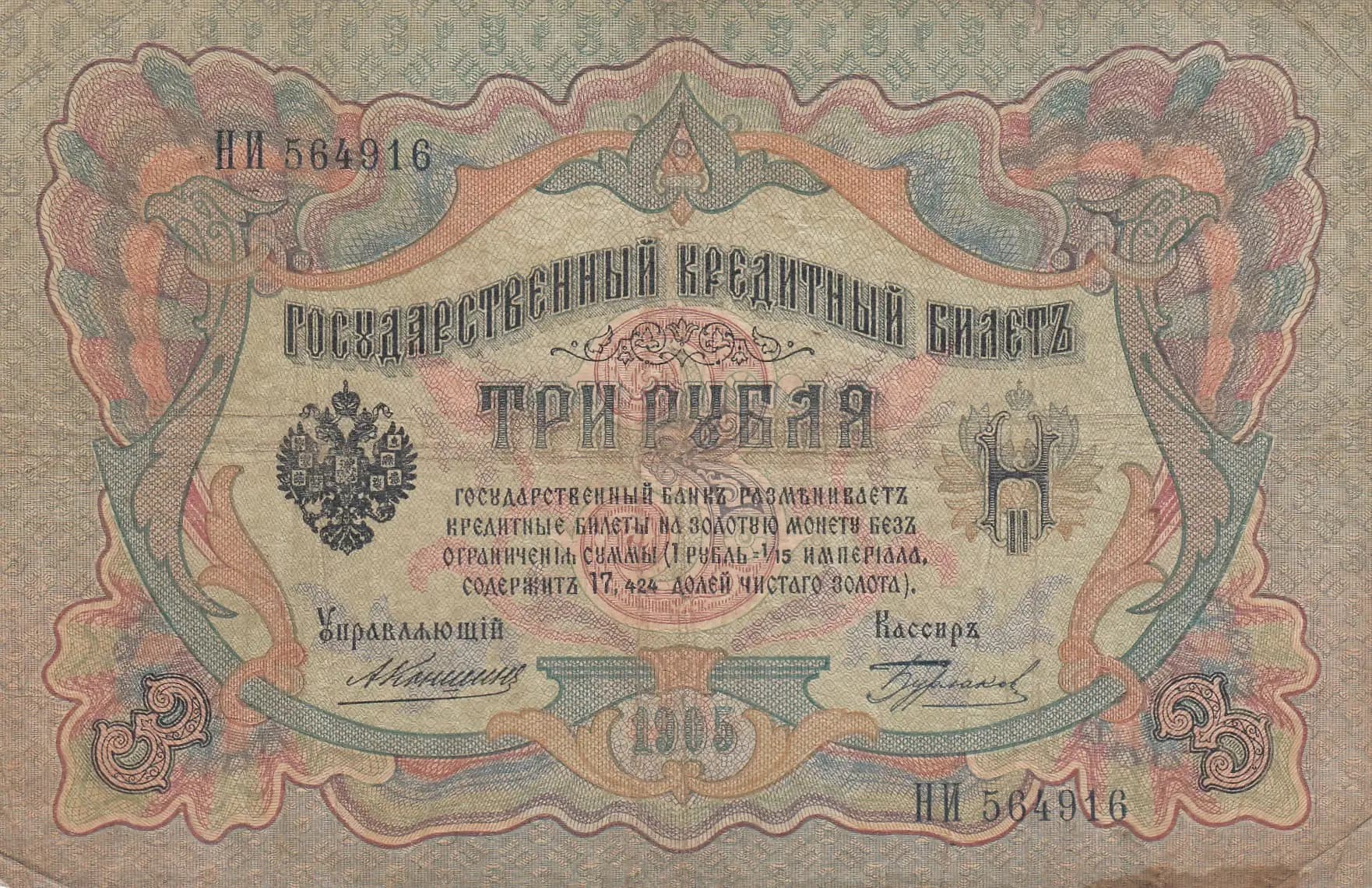
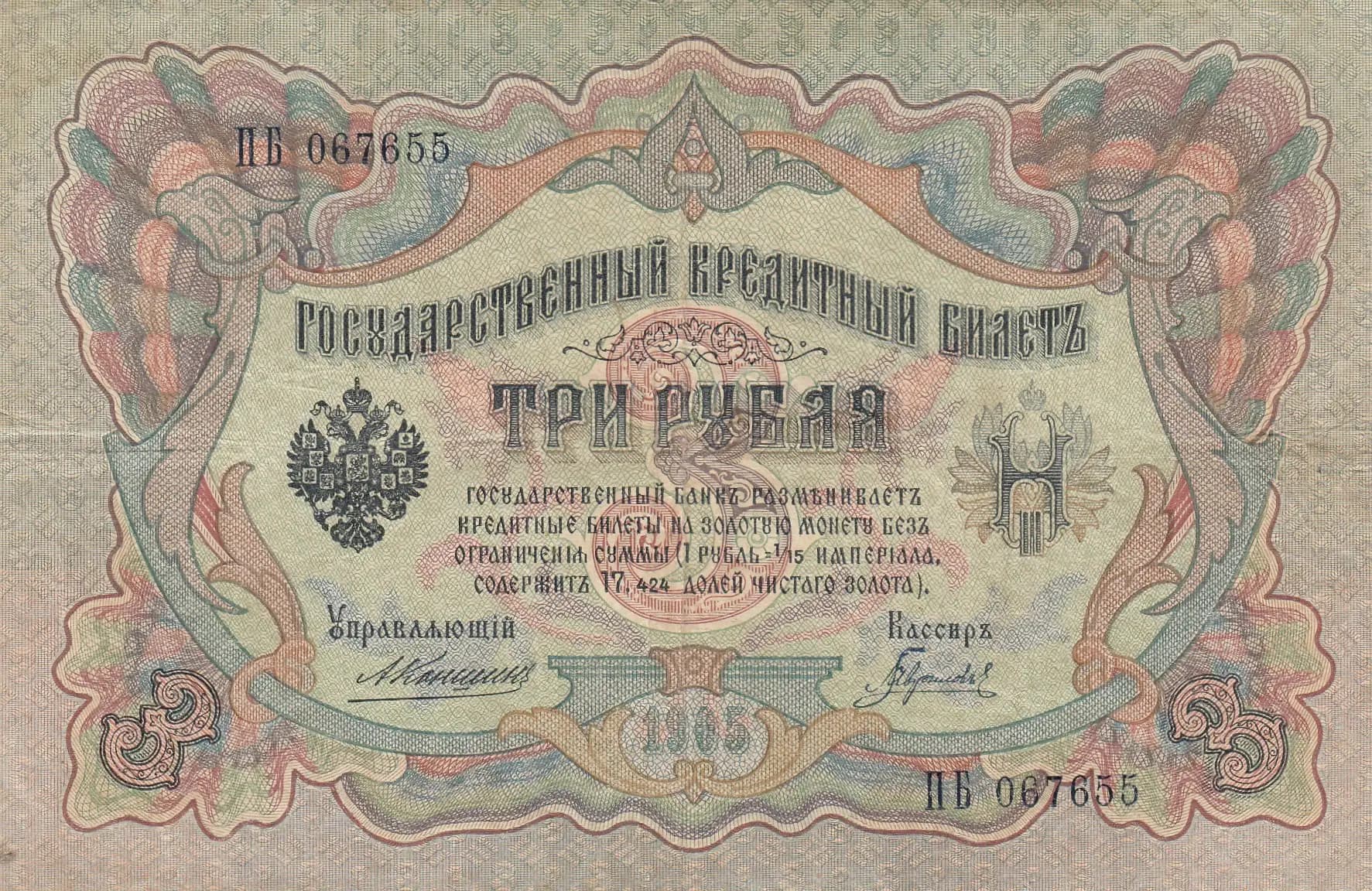
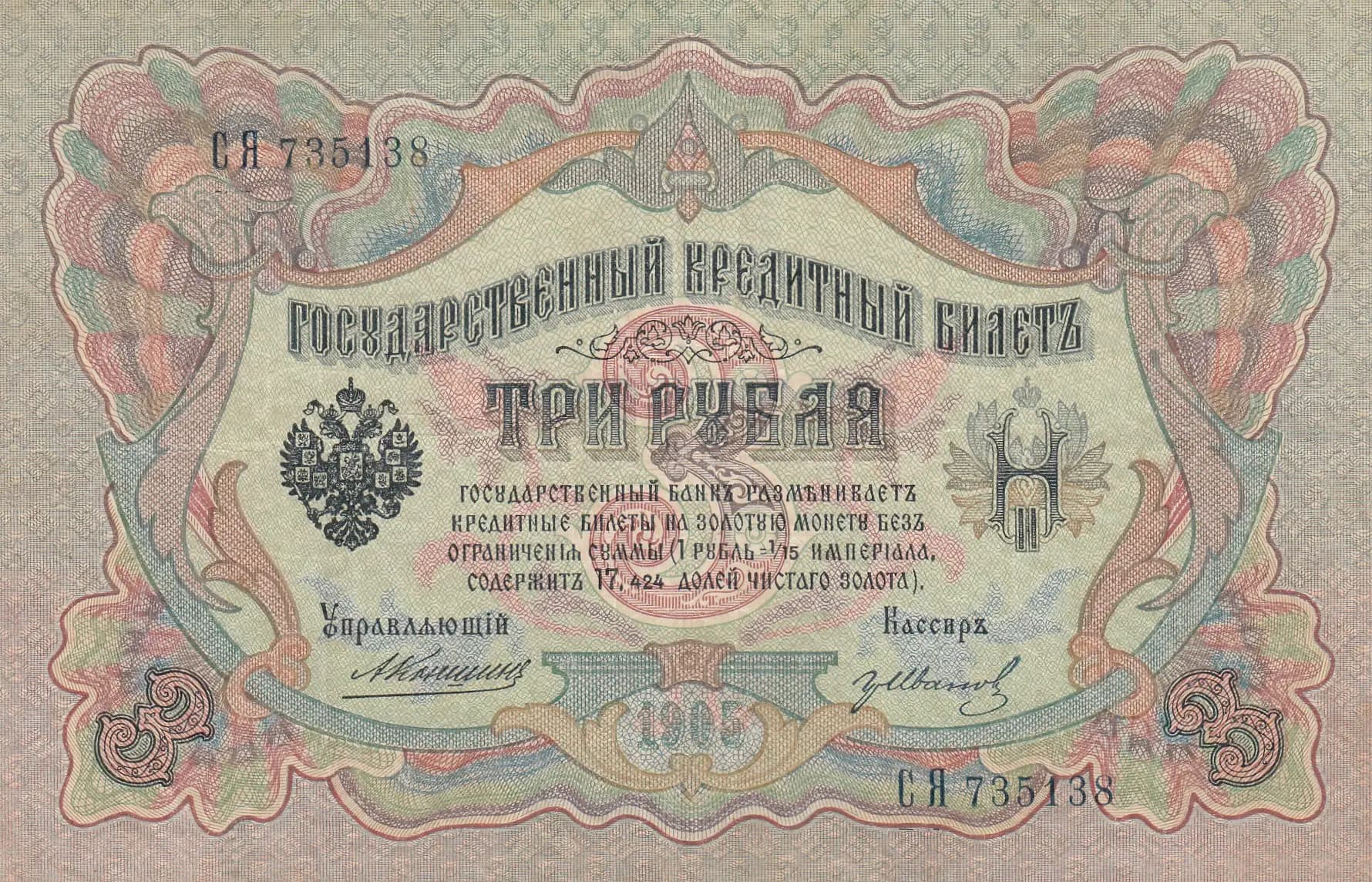
A superb example of the 1905 Russian Imperial 3 Rubles State Credit Note (Pick-9b(7)), presented in VF condition with exceptional visual clarity. The note displays the characteristic ornate Art Nouveau aesthetic of early 20th-century Russian currency, featuring the Imperial double-headed eagle and elaborate decorative borders in pink, green, and cream. The pristine state of preservation and clear signatures of G. Ivanov make this a noteworthy collectible representing the final years of Tsarist financial instruments before the 1917 Revolution.
Common. While these 1905 Imperial 3 Ruble notes are from the early 20th century and represent now-defunct currency, they were produced in substantial quantities by the Russian state and have survived in reasonable numbers. The Pick-9b(7) variety remains readily available in the collector market, typically trading at modest premiums over face value adjusted for scarcity. The VF condition grade and clear signature of G. Ivanov represent collector preferences but do not substantially elevate the rarity status. These notes are frequently encountered in Russian currency collections and remain affordable for most numismatists interested in Tsarist-era finance.
Issued during the reign of Tsar Nicholas II, this 3 Ruble note belongs to the 1905 State Credit Note series, a period of significant monetary reform following the Russo-Japanese War. The note's prominent declaration that it was exchangeable for gold coin at a fixed rate (1 Ruble = 1/5 Imperial, containing 17.424 parts pure gold) reflects the Russian Empire's commitment to the gold standard during this era. The ornate Imperial imagery, including the crowned double-headed eagle and elaborate state emblems, reinforced the authority and stability of the Tsarist regime's financial system, which would collapse just twelve years later.
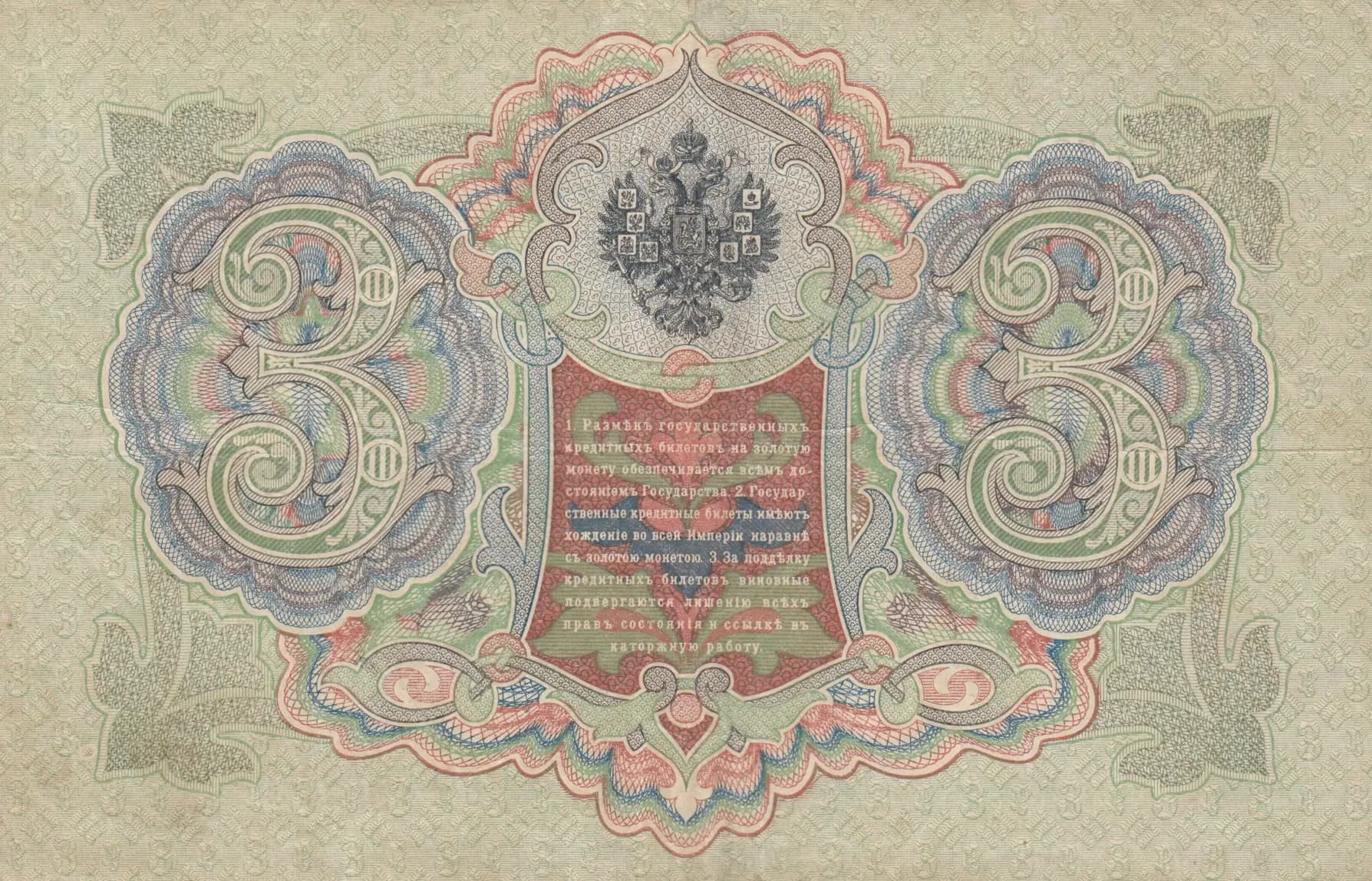
This 1905 Russian Imperial 3 Ruble note exemplifies the refined engraving standards of late Tsarist currency design. The obverse features a symmetrical composition centered on the Imperial Russian double-headed eagle (the coat of arms of the Russian Empire), positioned on the left side with crown and regalia, balanced by an ornamental crowned emblem on the right. The denomination 'ТРИ РУБЛЯ' appears in large, elegant Cyrillic typography within the central cartouche. The reverse displays a more elaborate ornamental treatment with two large matching medallions containing spiral and geometric patterns with the numeral '3', flanking a centered Imperial eagle within a decorative cartouche. The entire note is framed by intricate floral, scrollwork, and geometric borders executed in pink, green, blue, and cream. No portraits appear on this issue, consistent with the State Credit Note series design philosophy which emphasized symbols of state authority rather than individual likenesses. Multiple signatures appear at the bottom of the obverse, indicating the various officials authorizing the note's issuance.
FRONT SIDE: 'ГОСУДАРСТВЕННЫЙ КРЕДИТНЫЙ БИЛЕТ' (State Credit Note) - the primary designation of the instrument. 'ТРИ РУБЛЯ' (Three Rubles) - the denomination in large ornamental text. 'ГОСУДАРСТВЕННЫЙ БАНК РАЗМЕНИВАЕТ КРЕДИТНЫЕ БИЛЕТЫ НА ЗОЛОТУЮ МОНЕТУ БЕЗ ОГРАНИЧЕНИЯ СУММЫ. 1 РУБЛЬ = 1/5 ИМПЕРИАЛА, СОДЕРЖИТ 17.424 ДОЛИ ЧИСТОГО ЗОЛОТА.' (The State Bank exchanges credit notes for gold coin without limit on amount. 1 Ruble = 1/5 Imperial, contains 17.424 parts pure gold.) - the gold redemption guarantee. 'Справляющий' (Authorized Official) and 'Кассир' (Cashier) - signature line designations. Serial numbers 'ЦЗ 738138' (top left) and 'СЯ 735138' (bottom right). BACK SIDE: Extended text regarding the arrangement of state credit notes on gold coin backing and their circulation status throughout the Empire with full legal tender status equivalent to gold coins.
The note exhibits characteristics of steel engraving (intaglio printing), the standard security printing method for high-value Russian Imperial currency of this period. The exceptionally fine line engraving visible throughout the design—particularly in the intricate border work, spiral medallions, and decorative patterns—is typical of notes produced by the Russian state printing facilities. The sharp, clear impression of all design elements and the precise registration of multiple colors (cream, pink, green, blue, and black) indicate professional-grade security printing operations. The complexity of the ornamental patterns and the absence of visible printing defects suggest production by the primary Russian Imperial printing authority responsible for State Credit Notes during this era.
This note is identified as Pick-9b(7), indicating it represents one of the documented varieties within the 1905 3 Ruble State Credit Note series. The signature of G. Ivanov visible on this example suggests it was processed during his tenure as an authorizing official. Serial number variants (evidenced by the 'ЦЗ' and 'СЯ' prefixes visible on this specimen) are known for this series. The specific variety designation (9b(7)) indicates this represents a particular printing or signature combination within the broader 1905 issue; collectors of Russian Imperial currency should consult specialized Pick catalogs or RBCC references for precise identification of other known varieties with different official signatures or serial number characteristics.