3 rublja 1905
“Sig.Afanasev”
About This Note
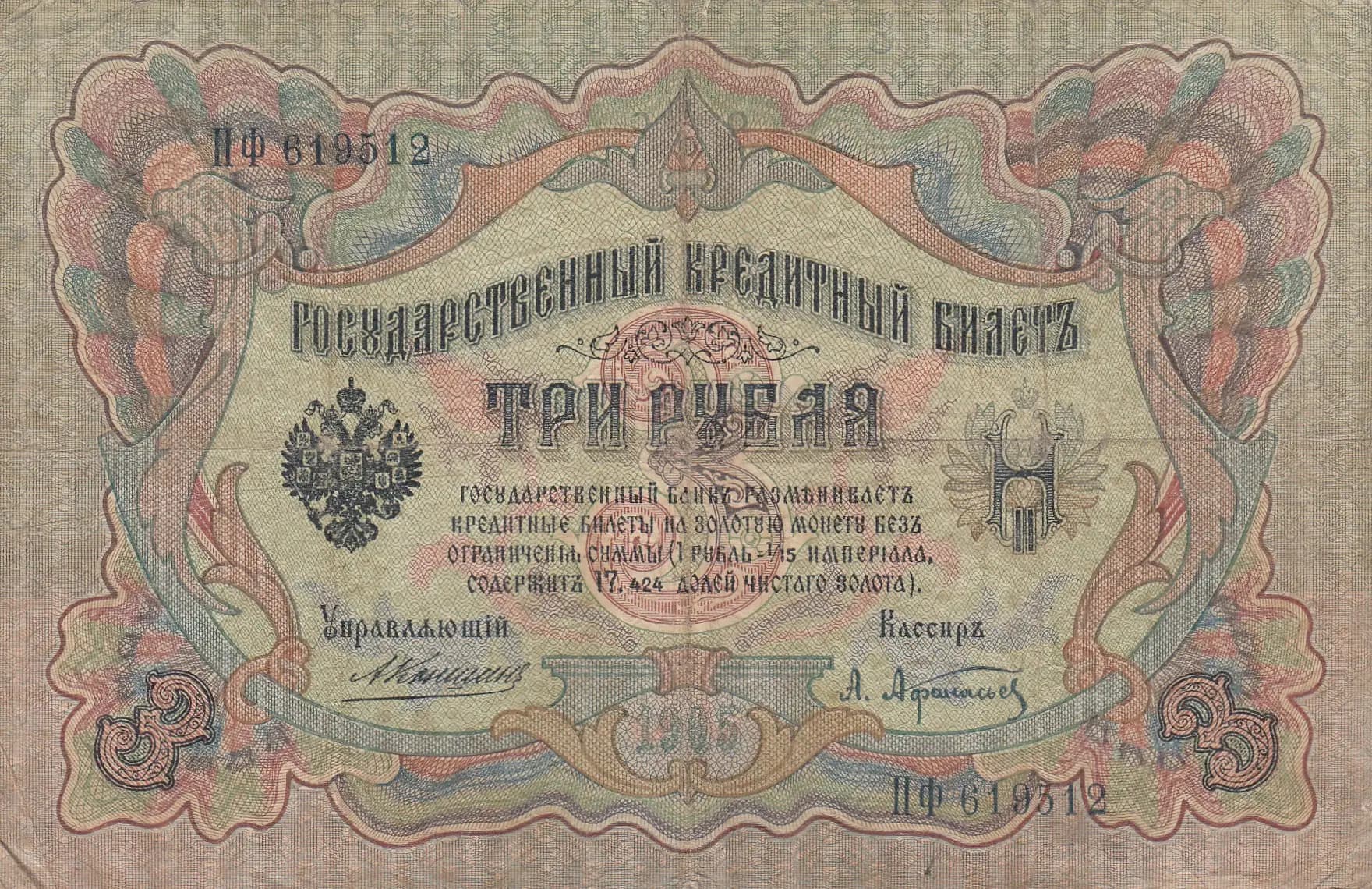
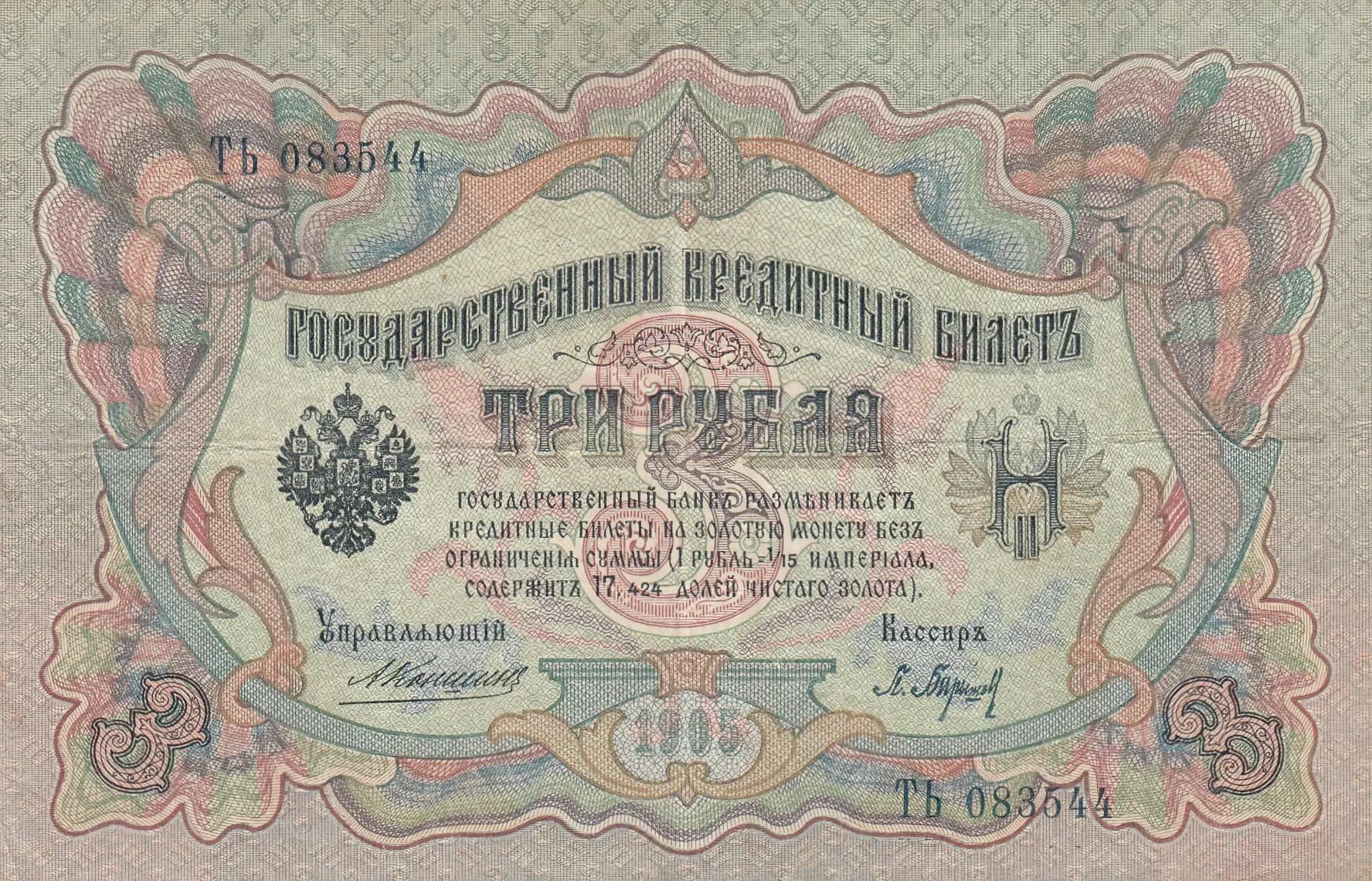
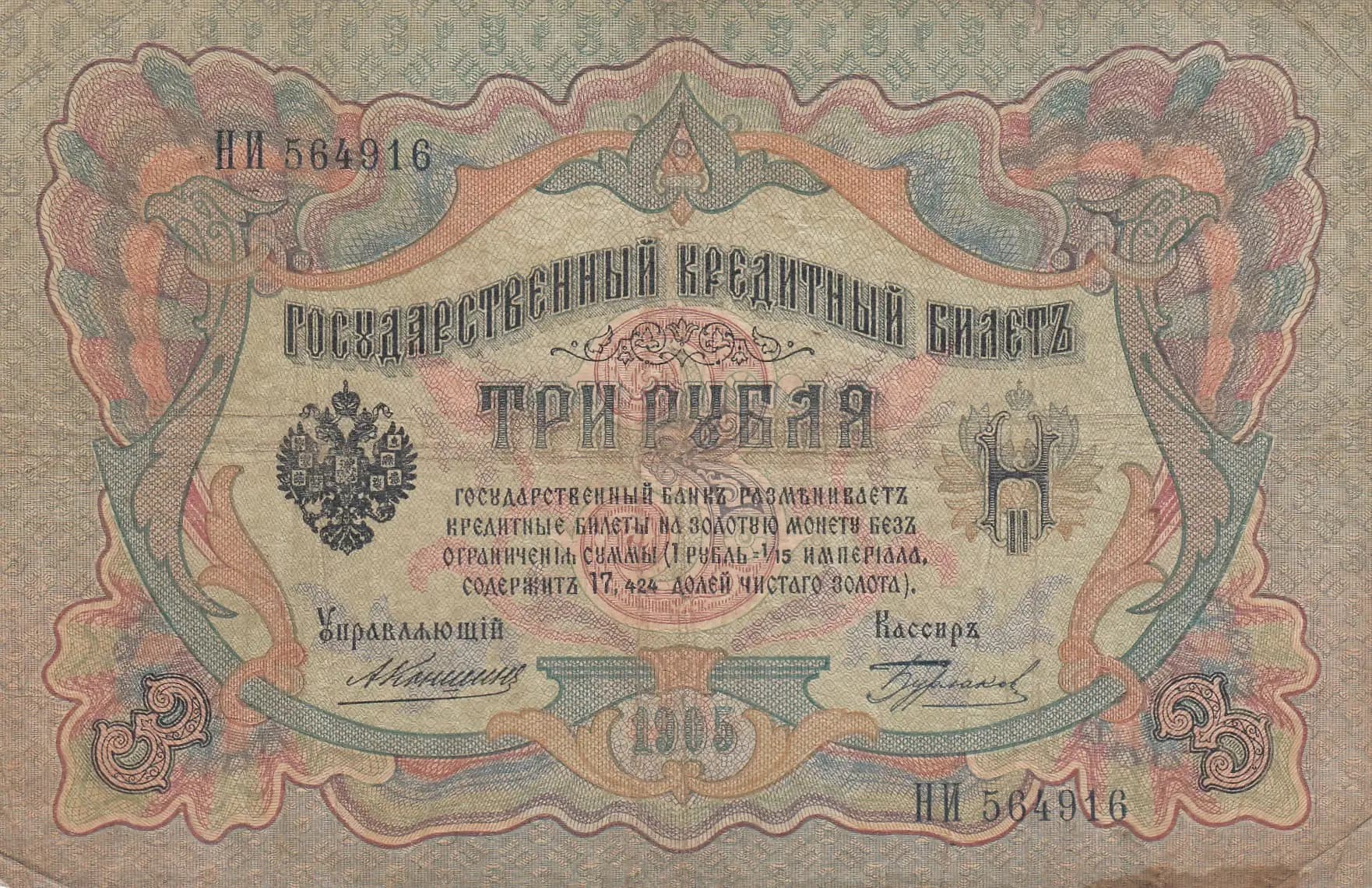
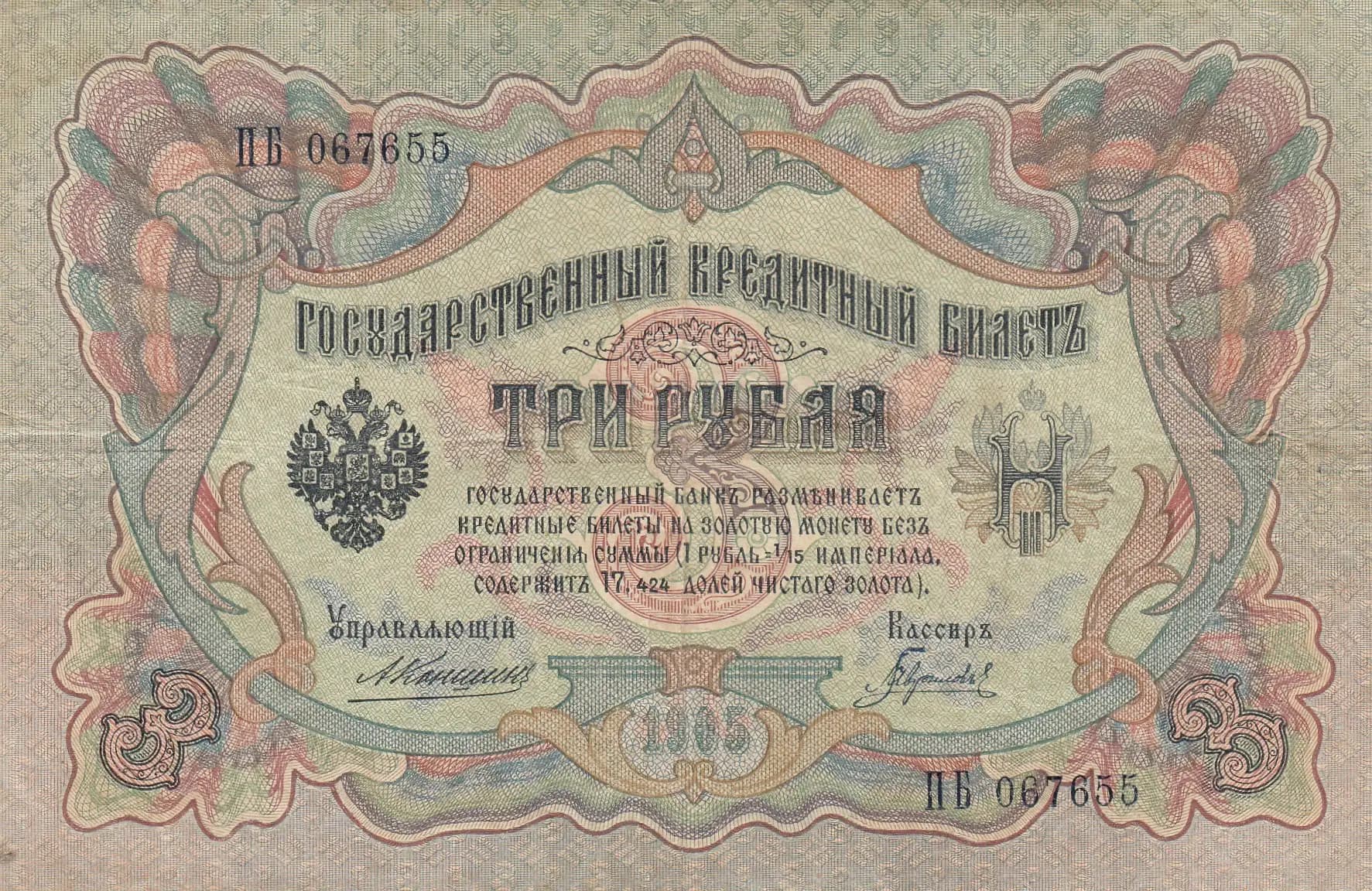
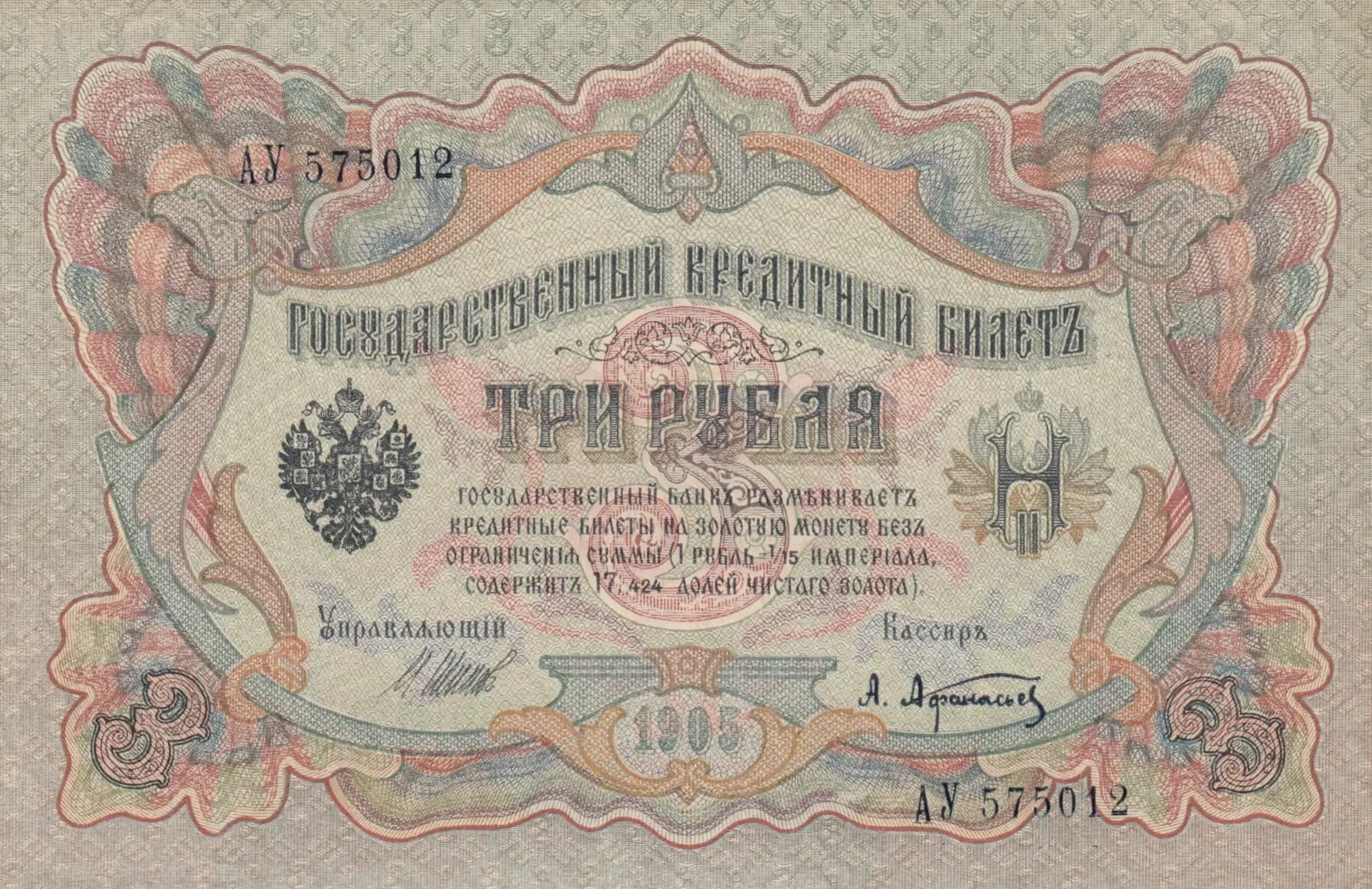
An exceptionally well-preserved example of the Russian Imperial 3 Rubles State Credit Note from 1905, graded AU with virtually no signs of handling or wear. The note displays vibrant multi-color printing with ornate Victorian-style ornamentation, double-headed eagles, and intricate engraved security patterns in pink, green, and tan tones. This specimen exhibits the crisp printing and sharp detail characteristic of Imperial Russian currency from the final years before the 1917 Revolution, making it a desirable piece for collectors of Russian Imperial banknotes.
Common. The 3 Rubles denomination from 1905 (Pick-9c) was issued in substantial quantities throughout the Russian Empire and remained in circulation until the Revolution. While individual notes in AU condition are increasingly difficult to locate, the Pick-9c variety itself was not limited in print run and examples continue to appear regularly in the collector market. The signature Afanasev (Afanasiev) referenced in the collector notes indicates a documented official signature, which is typical rather than exceptional for this series.
Issued during the twilight of the Russian Empire under the State Credit Note system established following the 1897 monetary reform, this 1905 note represents the period when the ruble was backed by the gold standard. The double-headed eagle and crown symbols prominently featured throughout the design affirm Imperial sovereignty, while the printed declaration of gold-backed convertibility reflects the Tsarist government's commitment to monetary stability during an era of significant political and social upheaval.
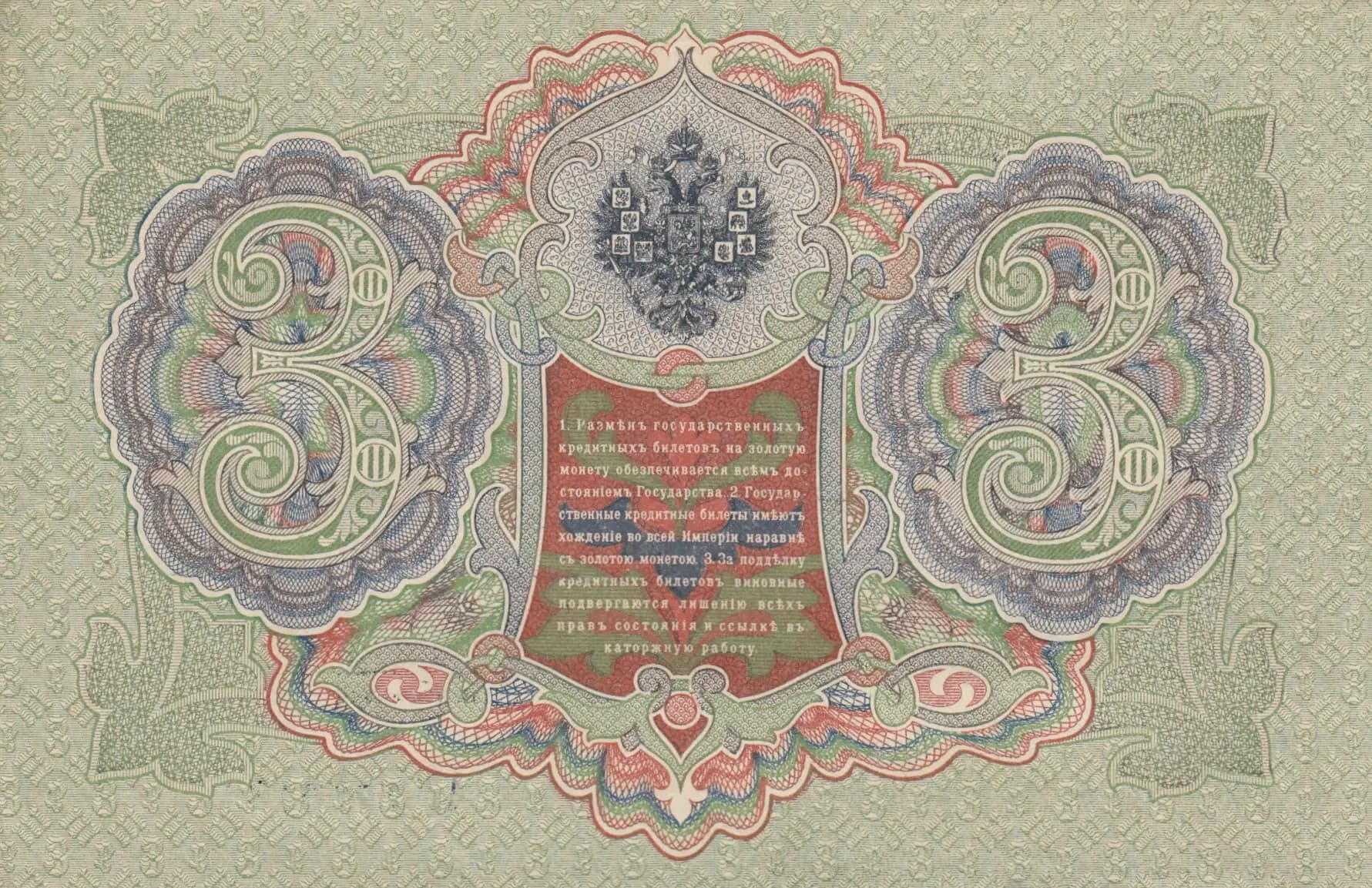
The note features the Imperial Russian coat of arms—the double-headed eagle wearing a crown—prominently on both the front (left side) and back (center). The front displays an ornamental imperial crown or emblem at top center with decorative heraldic shields flanking the sides. The back is dominated by a large, centered double-headed eagle surrounded by elaborate circular ornamental medallions with intricate spiral and geometric patterns on either side. The entire composition employs highly symmetrical Victorian-style ornamentation with scrollwork and floral borders throughout. The color palette of pink, sage green, tan, beige, and accents of orange and red creates a sophisticated, official appearance befitting Imperial currency. The fine cross-hatching and geometric background patterns serve as anti-counterfeiting measures.
FRONT SIDE: Serial Number (upper left and lower right): 'AY 575012' | Main Text: 'ГОСУДАРСТВЕННЫЙ КРЕДИТНЫЙ БИЛЕТ' (State Credit Note) | Denomination: 'ТРИ РУБЛЯ' (Three Rubles) | Gold Backing Declaration: 'ГОСУДАРСТВЕННЫЙ БАНК РАЗМЕЩИВАЕТ КРЕДИТНЫЕ БИЛЕТЫ НА ЗОЛОТУ МОНЕТУ БЕЗ ОГРАНИЧЕНИЙ СУММЫ. (1 РУБЛЬ = 1/2 ИМПЕРИАЛА, СОДЕРЖИТ 17.424 ДОЛЕЙ ЧИСТОГО ЗОЛОТА).' (The State Bank places credit notes on gold coin without limitations of sum. One ruble equals one-half imperial and contains 17.424 dolls of pure gold.) | Signature Titles: 'Справляющий' (Managing Director) and 'Кассир' (Cashier) | Date: '1905' | BACK SIDE: Long text regarding state credit development and circulation rights: '1. Развитие государственнаго кредита означает увеличение количества обращающихся кредитных билетов. Государство. 2. Государственные кредитные билеты имеют хождение во всей Империи наравне с золотою монетою...' (1. The development of state credit signifies an increase in the quantity of circulating credit notes. The State. 2. State credit notes circulate throughout the entire Empire on equal footing with gold coins...)
Multiple-color intaglio engraving (letterpress/relief printing combined with engraved security elements). The note exhibits the characteristic fine line work, cross-hatching, and detailed geometric patterns typical of high-security Imperial banknotes produced by the Russian Imperial Print Works. The precision of the multi-color layering and the sharpness of impressions suggest state-of-the-art printing technology for the early 20th century, with separate plates for different color applications.
This specimen is identified as Pick-9c(1), representing the first variety of the 9c designation. The serial number prefix 'AY' and the specific signature combination of Afanasev should be verified against Russian Imperial State Bank signature records to confirm the exact series and issuing period within 1905. The note's exceptional AU condition and vibrant color preservation suggest it may have been part of a held archive or collection rather than circulated currency, which is consistent with known collector preservation patterns for Imperial Russian banknotes.