3 rublja 1905
“Sig.Schmidt”
About This Note
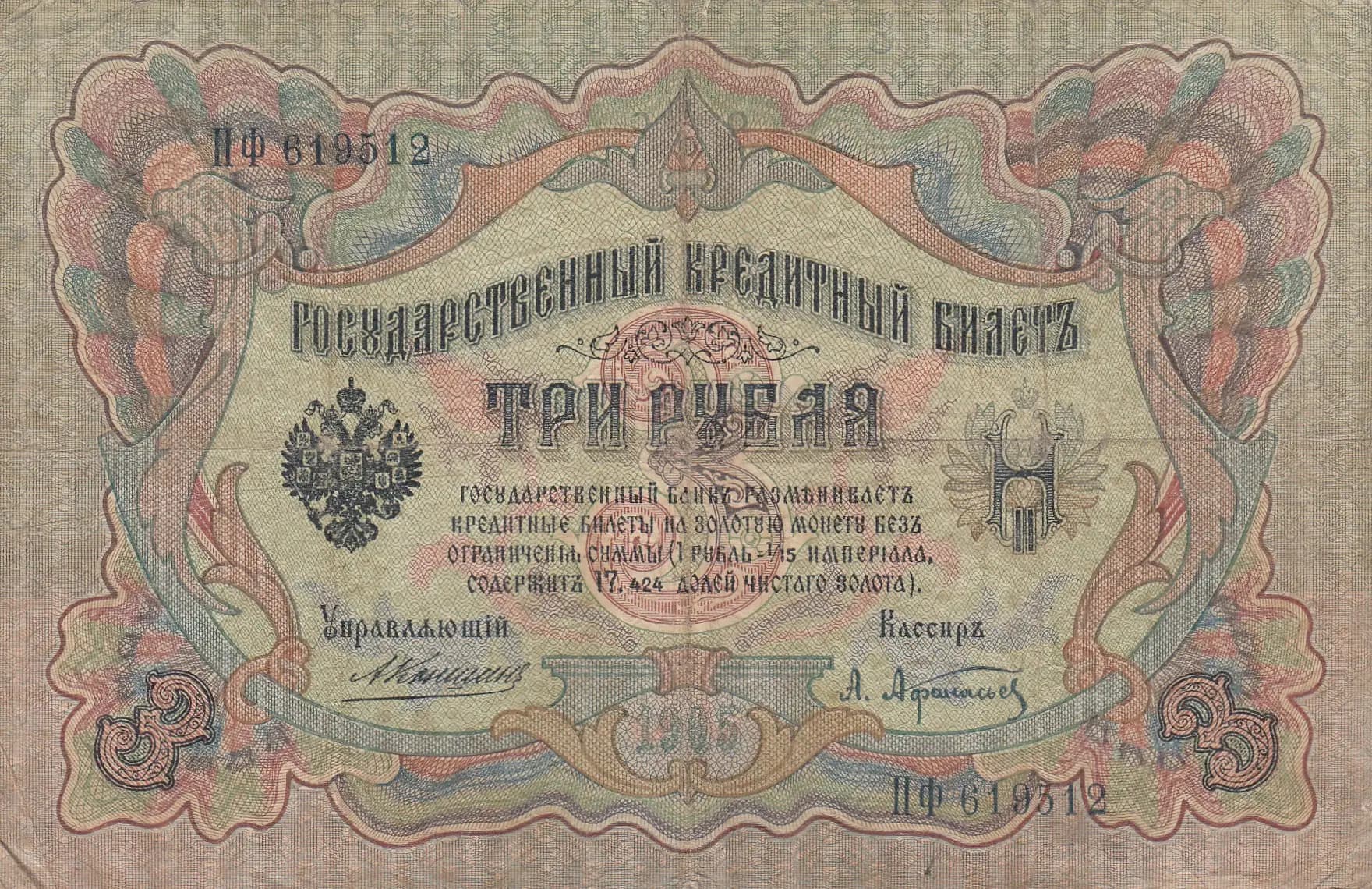
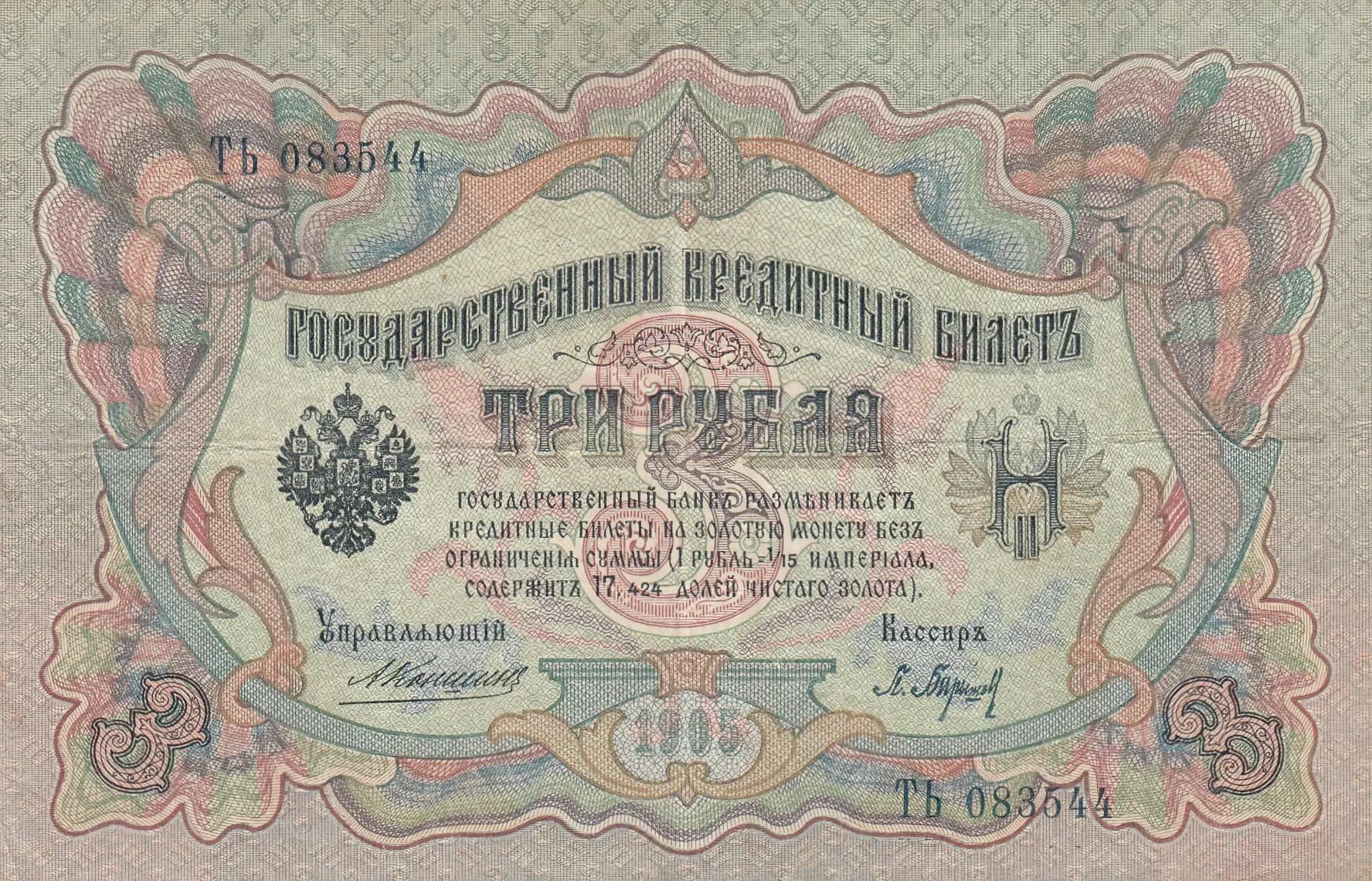
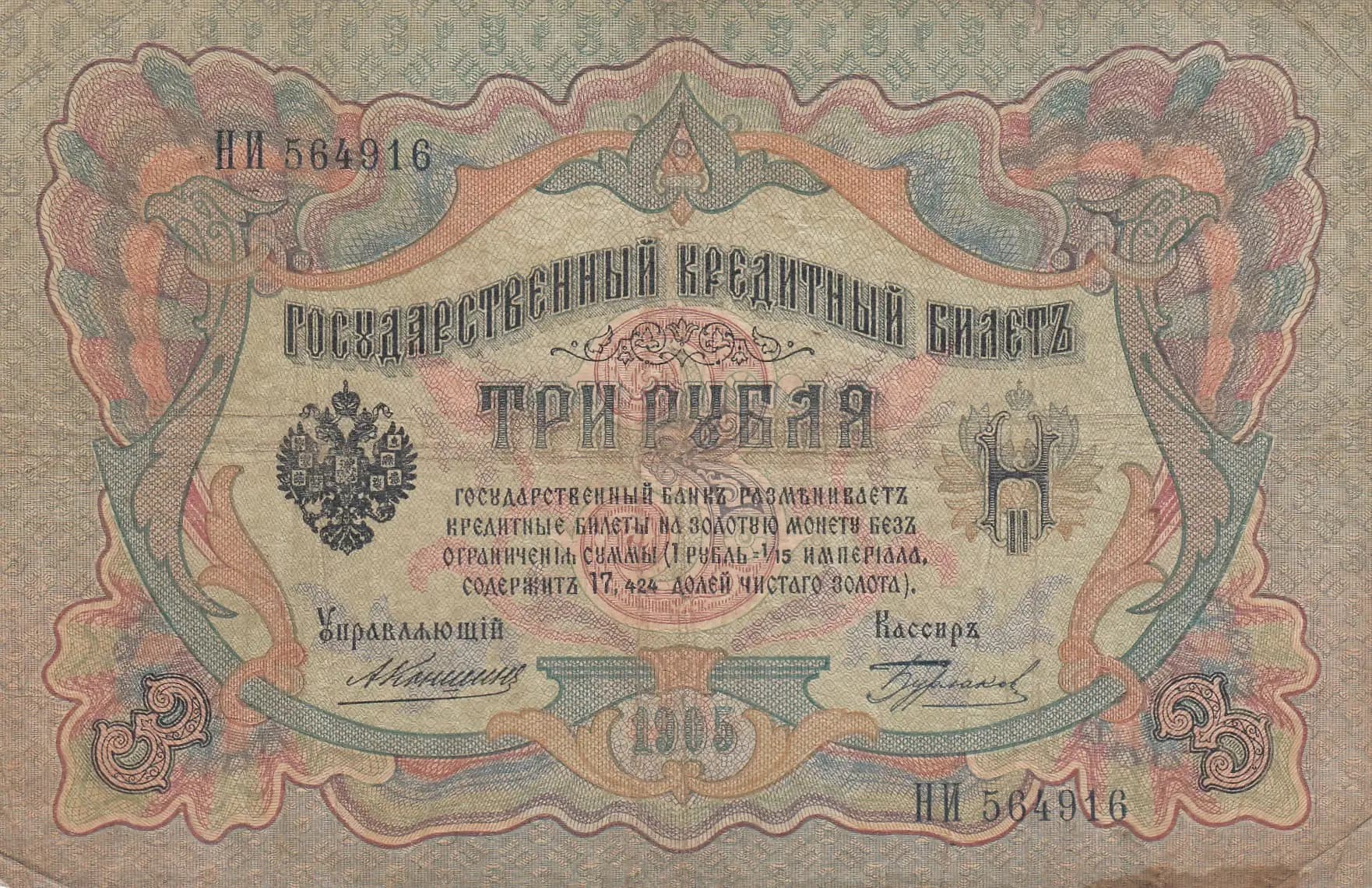
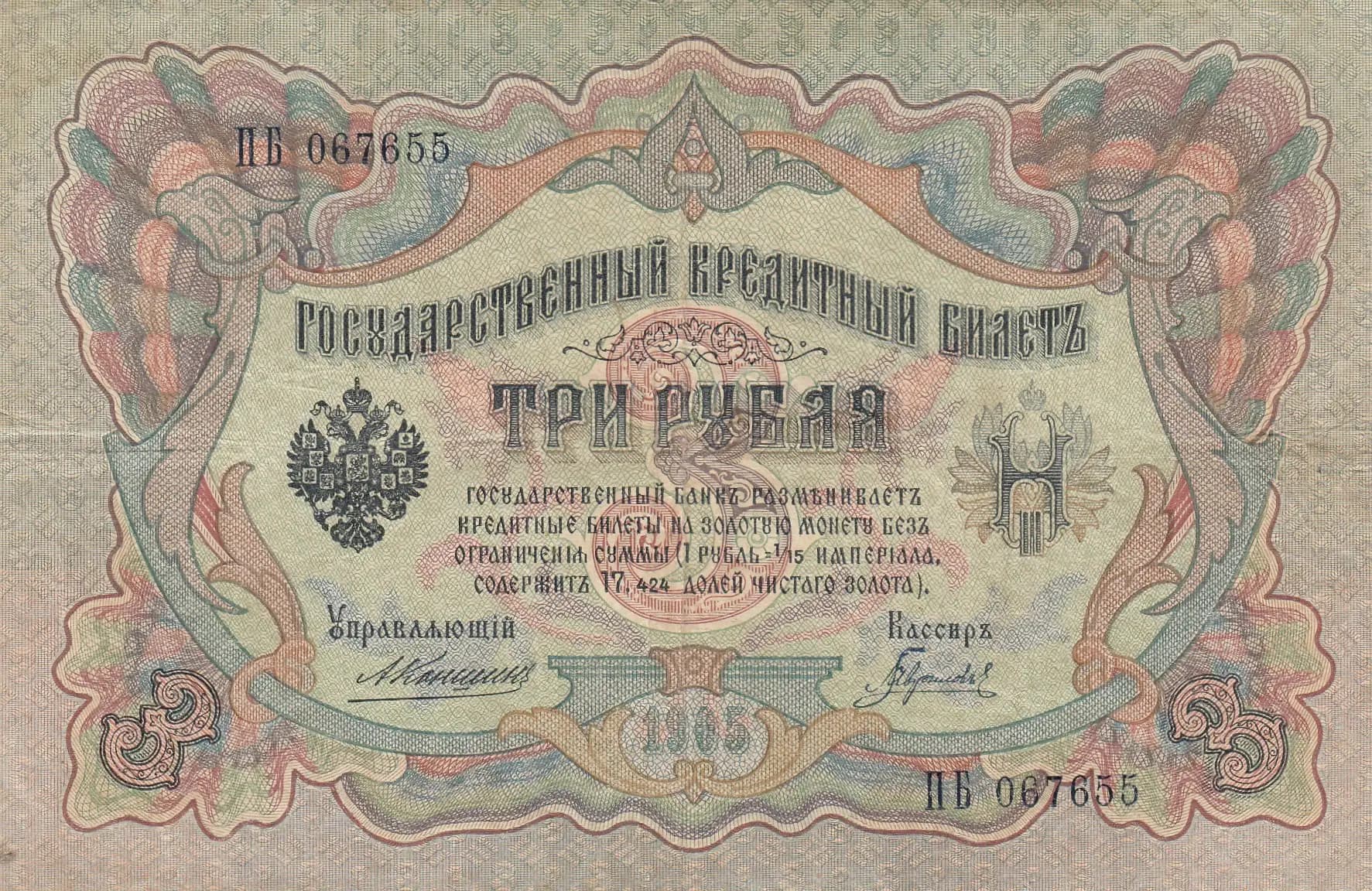
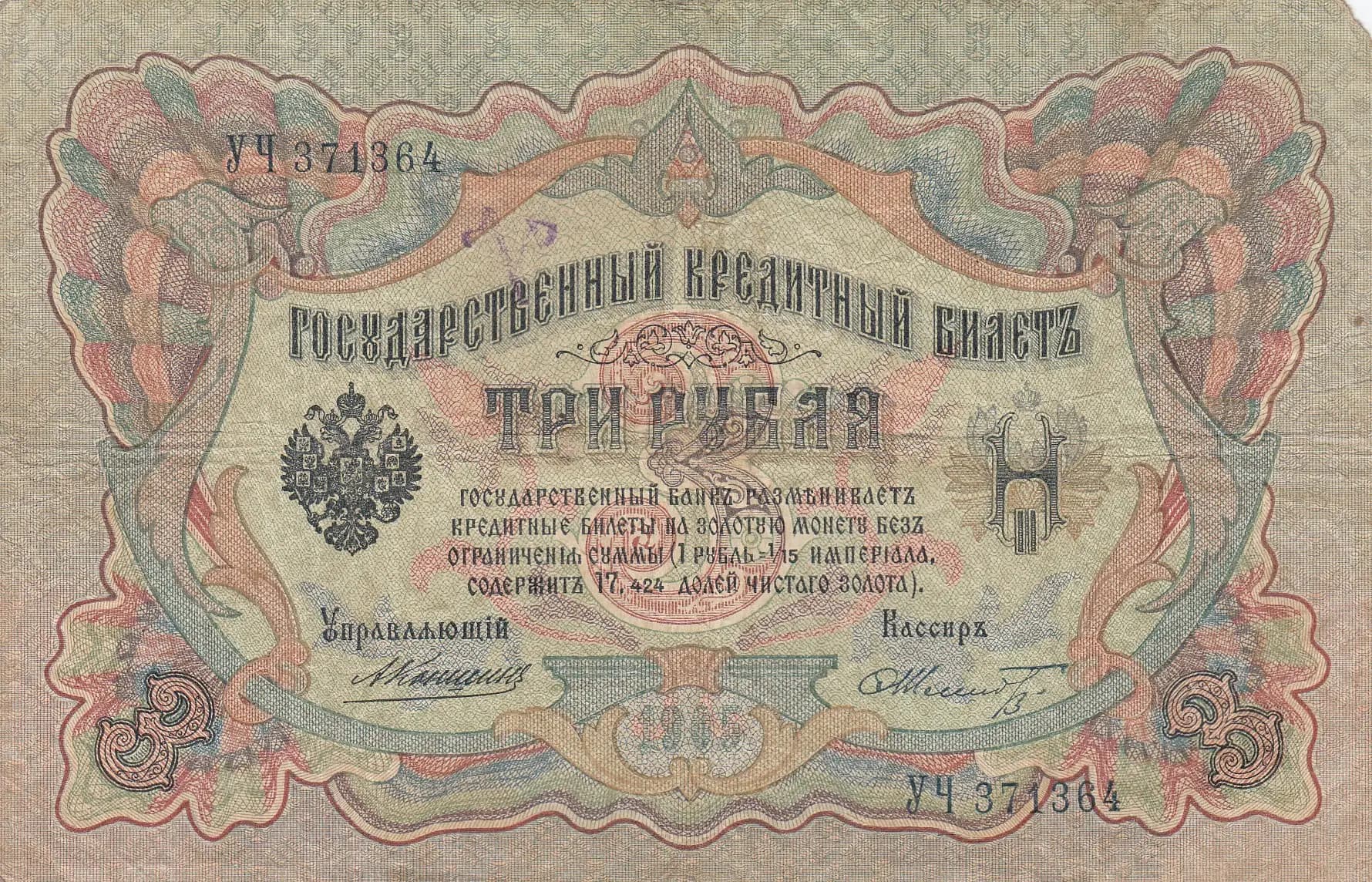
A striking example of the Russian Imperial 3 Ruble State Credit Banknote from 1905, featuring the characteristic ornate design typical of early 20th-century Russian currency with pink, green, and tan coloring throughout. The note displays fine engraved detail work with elaborate scrollwork borders, double-headed imperial eagles, and decorative numerals in ornamental circles. In Fair condition (grade F), it shows moderate age-related wear including creasing and light discoloration consistent with circulation during the early Soviet transition period, making it a historically significant example of Tsarist-era monetary instruments.
Common. The 3 Ruble denomination of 1905 (Pick-9b) was issued in substantial quantities as a mid-range circulating denomination during a stable period of Imperial monetary policy. While individual examples in Fair condition show appropriate age-related wear, the Pick-9b variety is regularly encountered in the collector market. No evidence of small print runs, special recalls, or limited-issue status exists for this note type. Its historical significance and age generate collector interest, but market data and availability patterns indicate this is a commonly available note in typical circulated grades.
Issued during the twilight of Tsarist Russia in 1905—a year marked by the Russo-Japanese War and revolutionary unrest—this State Credit Banknote represented the Russian Empire's modern monetary system backed by gold reserves. The prominent inscriptions regarding gold convertibility reflect the gold standard framework that underpinned Imperial Russian finance, with specific reference to the ruble's gold content (7½ parts pure gold per imperial). The imperial double-headed eagle prominently featured on both sides symbolized the autocratic authority of Tsar Nicholas II and the legitimacy of the State Bank's credit instruments during a period of significant political and economic turbulence.
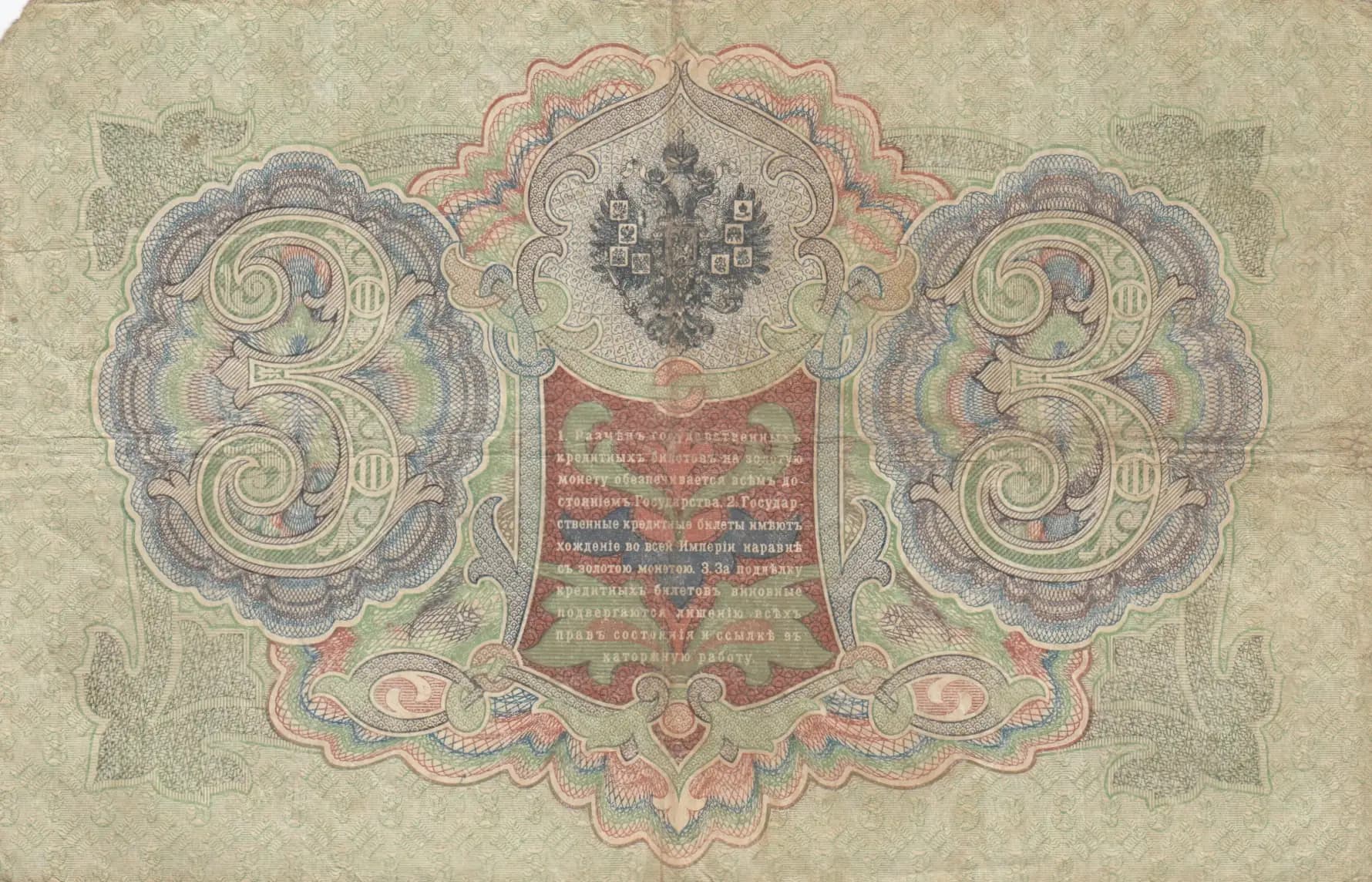
This 1905 Russian Imperial 3 Ruble note exemplifies the sophisticated security printing standards of the Russian State Bank during the late Tsarist period. The front features a symmetrical layout with dual ornamental cartouches containing the numeral '3' in decorative circular frames positioned in the lower corners, flanking a central oval cartouche containing the primary text designation. Two imperial double-headed eagles with crowns—representing the Russian Empire's coat of arms—appear prominently as security and legitimacy markers. The back side mirrors this symmetry with larger ornamental numeral cartouches and a central imperial eagle positioned above a red-background rectangular text box containing legal provisions. Throughout both sides, elaborate scrollwork, floral motifs, fine geometric patterns, and intricate crosshatching create a visually complex and counterfeit-resistant design. The color palette of pink/rose, sage green, blue, tan/beige, and black ink demonstrates sophisticated multi-color printing techniques typical of imperial-era state banknotes.
FRONT SIDE: Serial number ЧЧ 371864 (appears upper left and lower right); 'государственный кредитный билет' (State Credit Banknote); 'три рубля' (Three Rubles); 'государственный банк разменивает кредитные билеты золотом монеты без ограничения суммы (1 рубль = 1 империала содержит в себе 7 1/2 доли чистого золота)' (The State Bank exchanges credit bills for gold coins without limit of amount—1 ruble equals 1 imperial containing 7½ parts pure gold); 'справляющий' (Managing Director); 'кассир' (Cashier). BACK SIDE: Central text box contains legal provisions regarding the banknote's authenticity and gold convertibility, though the complete text in the red rectangular box is partially obscured. The design emphasizes the note's status as a legally binding financial instrument backed by imperial authority and precious metal reserves.
Steel plate engraving (intaglio printing) with multiple color passes, characteristic of Russian Imperial State Bank security printing. The fine-line engraving, intricate crosshatching, complex geometric patterns, and the use of three to four colors (pink, green, blue, tan, black) in distinct security printing indicate professional security printing work performed by the Russian State Bank's official printers. This technique was the international standard for high-security banknotes during the gold standard era and provided resistance to counterfeiting through the complexity of the engraved design and the precise multi-color registration required.
The note is identified as Pick-9b(16) with serial number ЧЧ 371864. The cataloging designation '(16)' likely refers to a specific signature variety, as Russian Imperial banknotes of this period feature varying combinations of manager (справляющий) and cashier (кассир) signatures. The 'ЧЧ' serial number prefix is standard for notes from this issue period. Without access to comprehensive Russian Imperial signature catalogs, specific identification of this signature combination's rarity cannot be determined, though signature varieties of common denominations typically remain common across varieties. The note's Fair condition grade (F) indicates moderate circulation wear but no significant damage, placing it within typical survivor populations for this issue.