3 rublja 1905
“Sig.Y.Metz”
About This Note
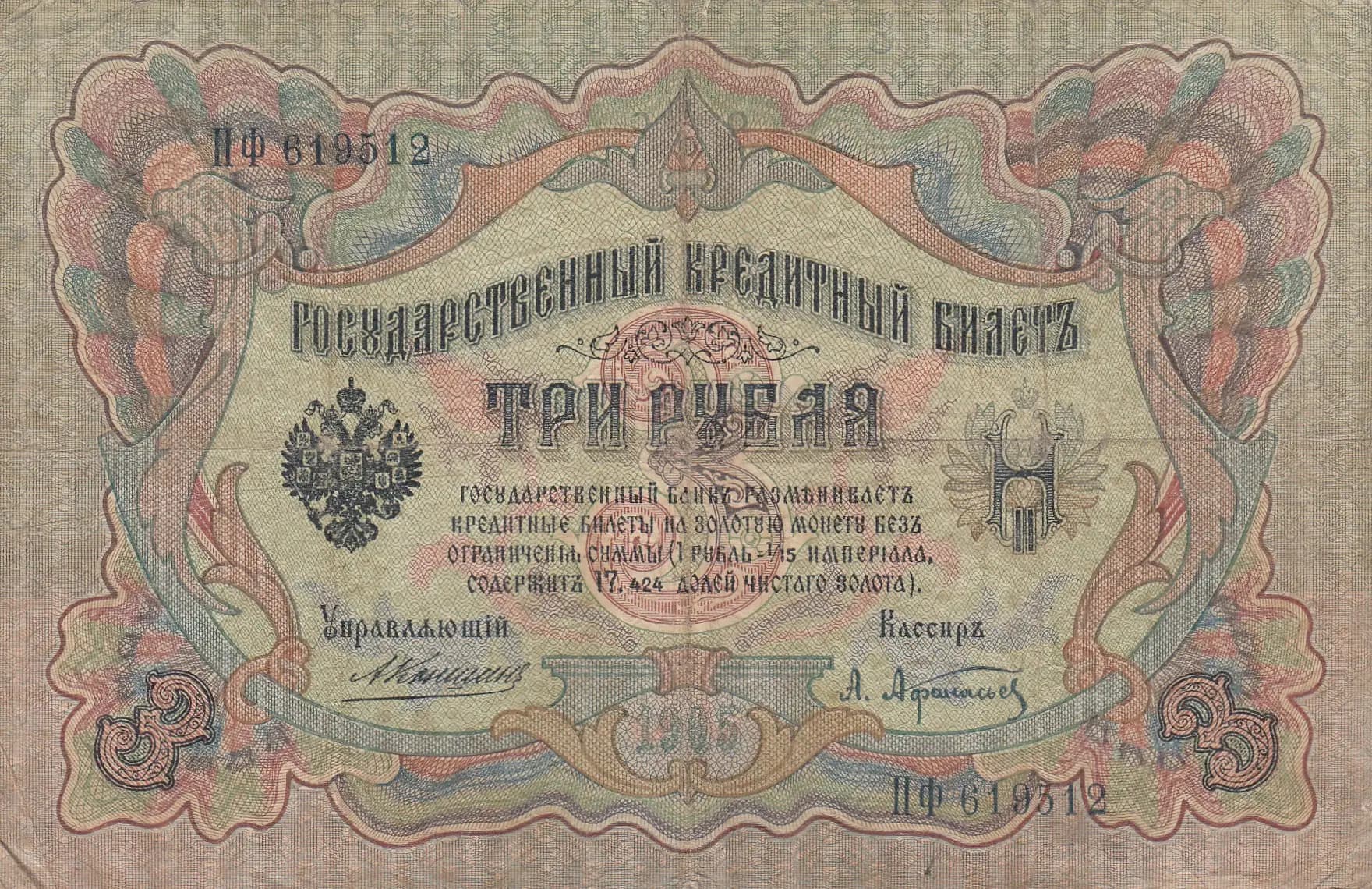
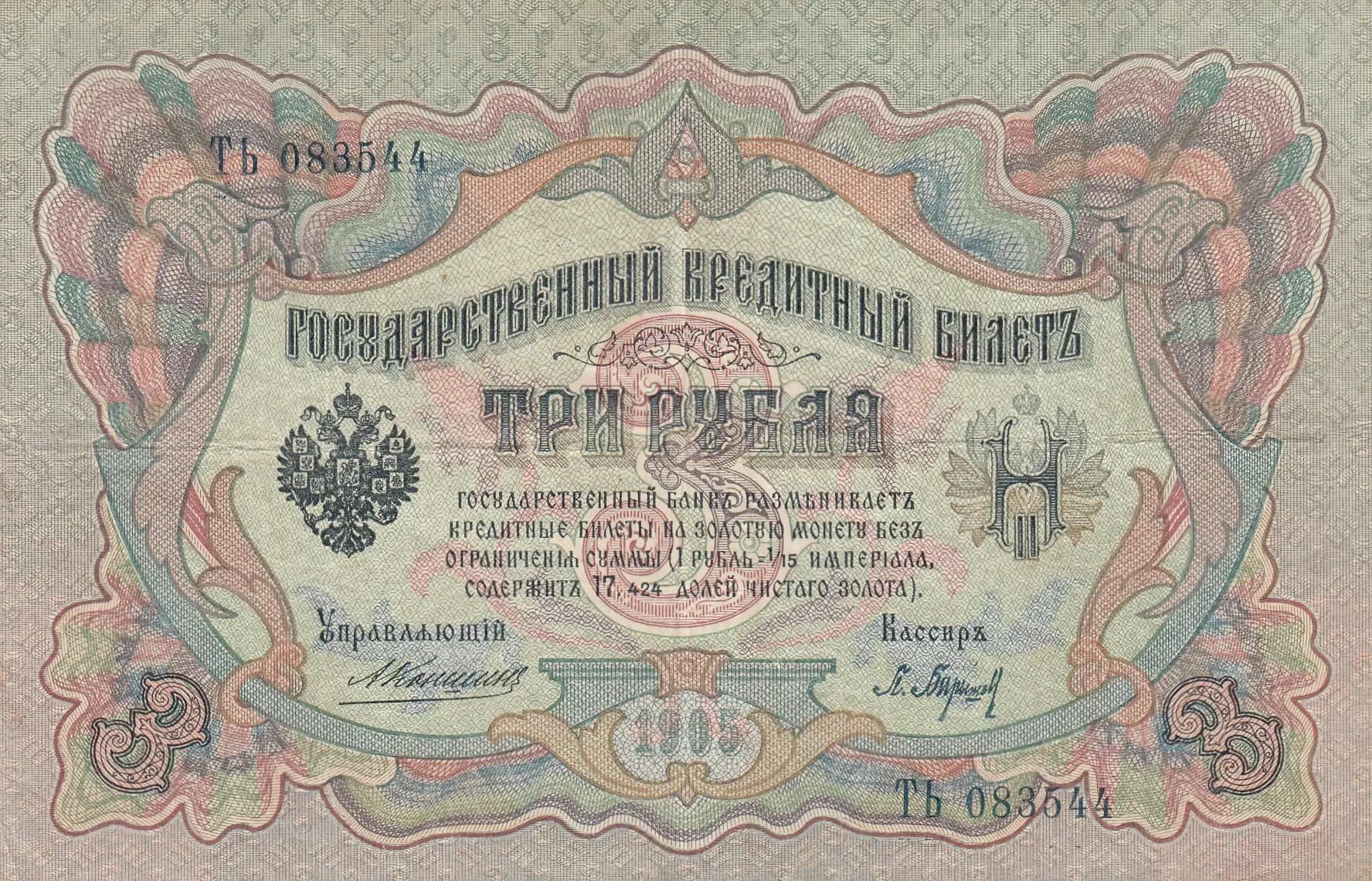
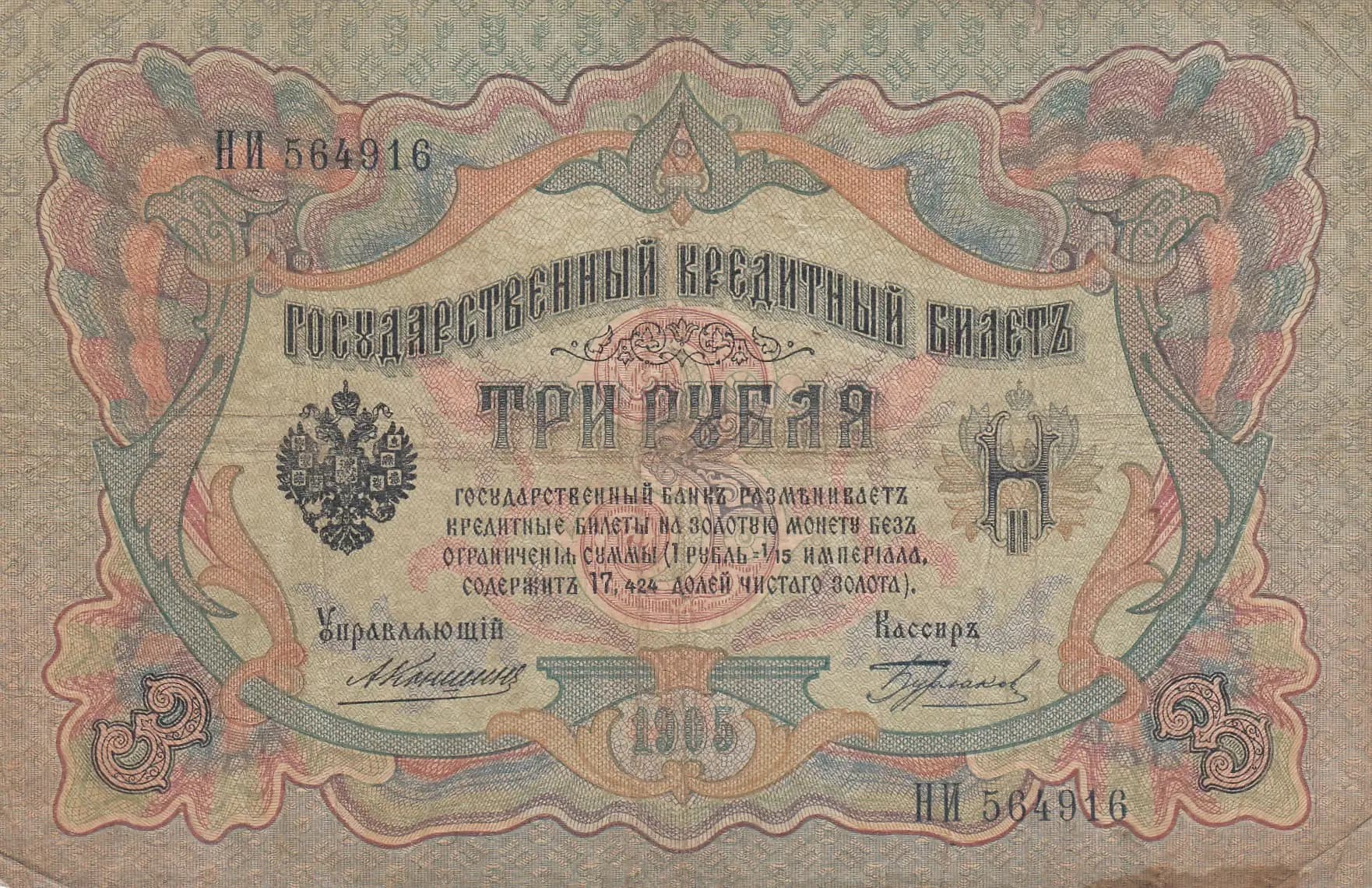
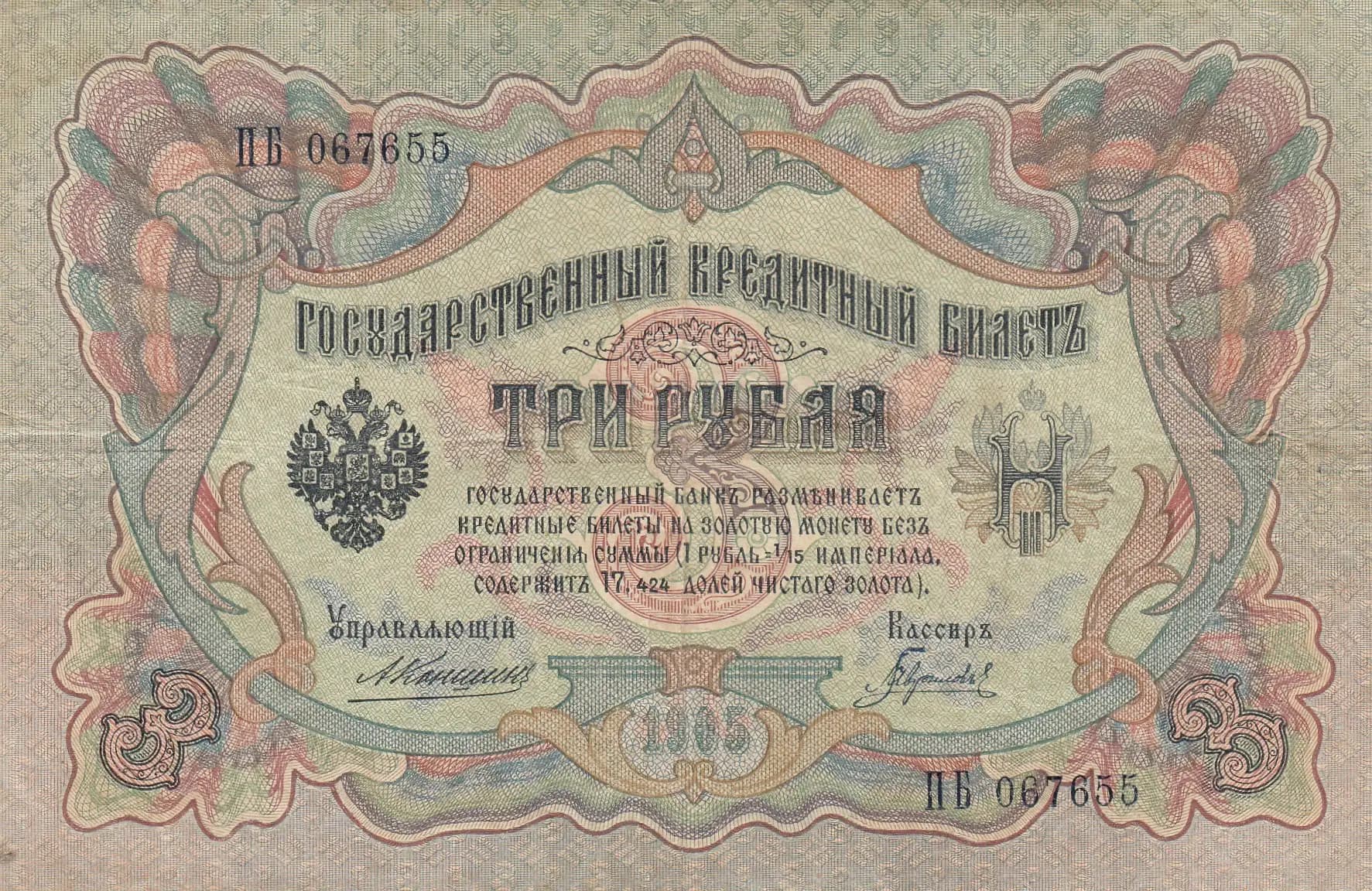
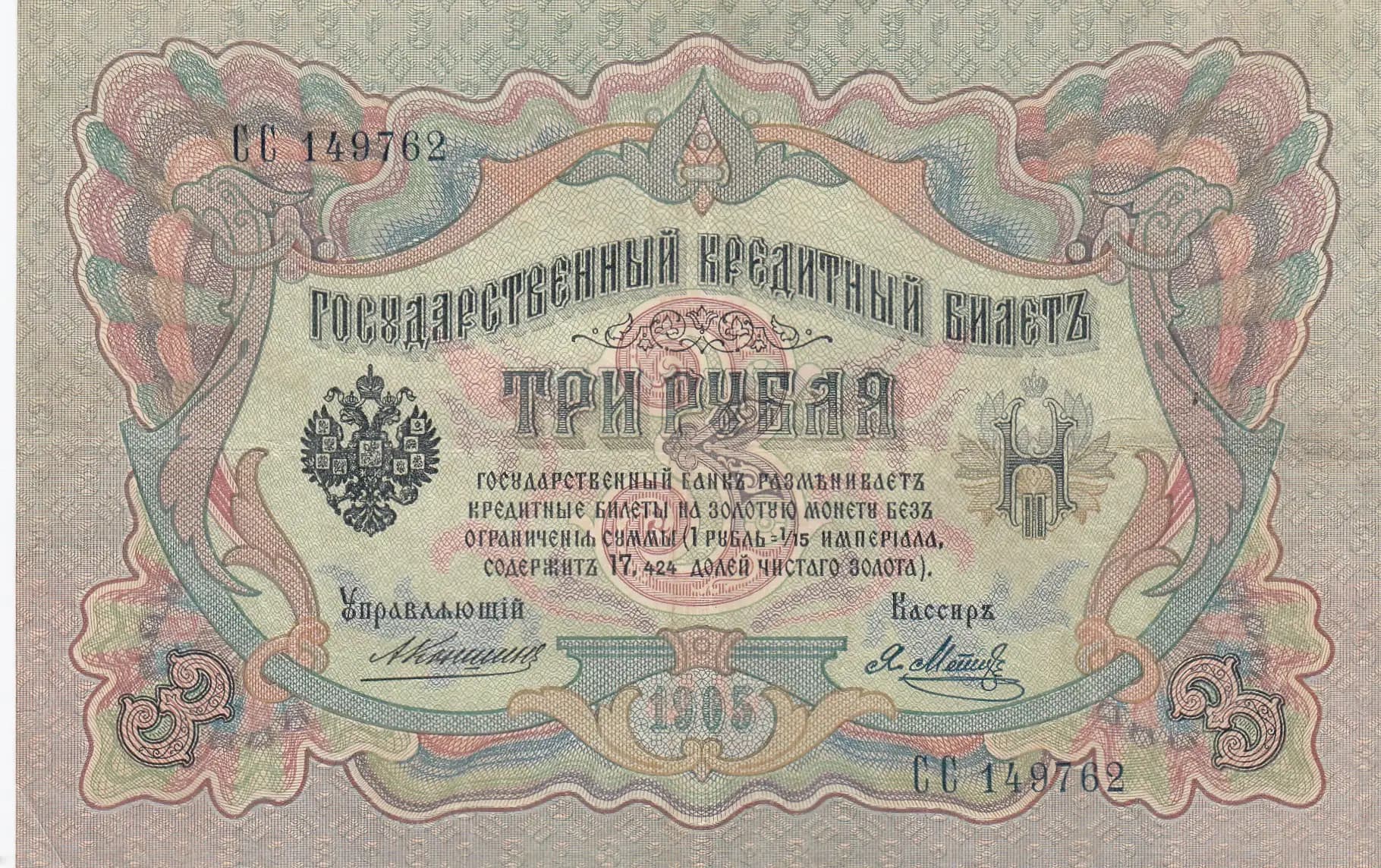
This is a Russian Imperial 3 Rubles State Credit Note from 1905, presented in excellent VF condition with vibrant, sharp printing throughout. The note features the iconic double-headed eagle coat of arms and intricate Art Nouveau-style decorative borders in pink, green, tan, and blue tones. The serial number СС 149762 and signatures of Y. Metz are visible, representing a well-preserved example of turn-of-the-century Russian monetary authority.
Common. The 3 Rubles denomination from 1905 was part of the standard circulating currency of the Russian Empire and represents a high print run issue. Pick P-9b varieties are generally available to collectors, and while nice condition examples like this VF specimen are always desirable, they do not command premium prices consistent with rare or scarce designations. The abundance of surviving examples in the collector market indicates this was a heavily issued note.
Issued during the twilight years of Tsarist Russia, this 1905 credit note represents the Imperial Russian State Bank's gold-backed currency system under the reformed monetary standard. The elaborate depiction of the double-headed eagle and official seals reflects the autocratic authority of the Russian Empire, while the printed guarantee of gold convertibility—stating the note's value in terms of pure gold content (17.424 parts per ruble)—demonstrates Russia's adherence to the gold standard during this period. This note predates the Russian Revolution by twelve years and represents the final era of Imperial monetary stability.
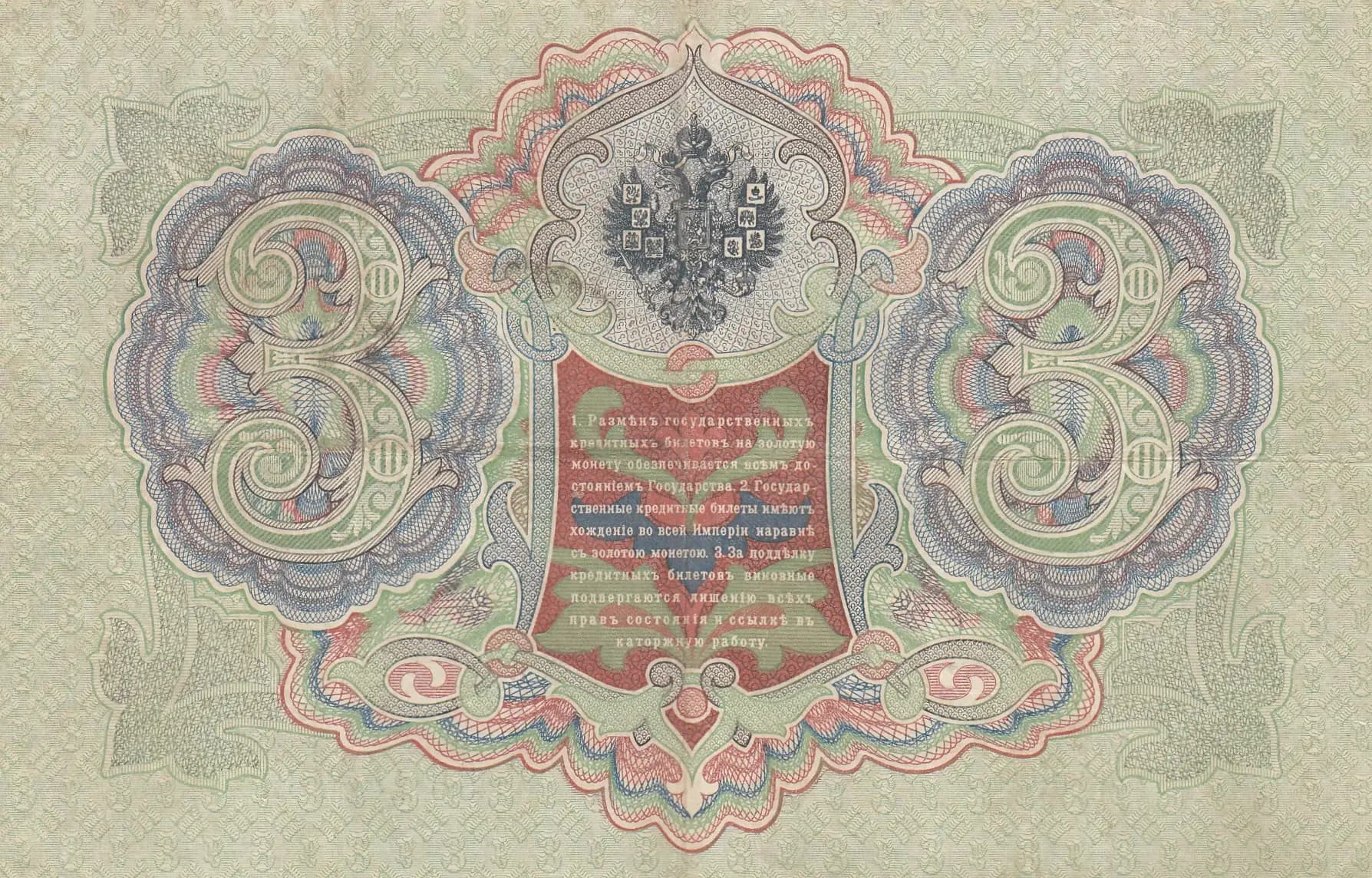
This banknote exemplifies the ornate design aesthetic of late Imperial Russian currency. The front features the Imperial double-headed eagle coat of arms positioned prominently on the left, representing supreme state authority, with an additional ornamental architectural crown element on the right side. The denomination 'ТРИ РУБЛЯ' (Three Rubles) is displayed centrally within an elaborate ornamental frame rendered in pink and cream tones. The reverse showcases two large circular spiral ornamental designs in the upper portion—characteristic Art Nouveau elements—rendered in blue, green, pink, and purple, with the Imperial eagle repeated in an ornamental cartouche at the top center. A red rectangular text panel containing white Cyrillic text occupies the center of the reverse. Throughout both sides, scalloped borders and intricate geometric patterns in pink, green, tan, and black create a sophisticated security design typical of high-denomination Imperial notes. The multicolor palette and complex linework served both aesthetic and anti-counterfeiting purposes.
FRONT SIDE: 'ГОСУДАРСТВЕННЫЙ КРЕДИТНЫЙ БИЛЕТ' (State Credit Note) | 'ТРИ РУБЛЯ' (Three Rubles) | 'ГОСУДАРСТВЕННЫЙ БАНК РАЗМЕНИВАЕТ КРЕДИТНЫЕ БИЛЕТЫ НА ЗОЛОТУЮ МОНЕТУ БЕЗ ОГРАНИЧЕНИЯ. СУММА (1 РУБЛЬ = 1/5 ИМПЕРИАЛА, СОДЕРЖИТ 17,424 ДОЛЕЙ ЧИСТОГО ЗОЛОТА).' (The State Bank exchanges credit notes for gold coins without limitation. Amount: 1 ruble = 1/5 imperial, contains 17.424 parts of pure gold.) | 'УПРАВЛЯЮЩИЙ' (Managing Director) | 'КАССИР' (Cashier) | Serial number: СС 149762. BACK SIDE: '1. Размен государственных кредитных билетов на золотую монету обеспечивается всеми кассами Государства. 2. Государственные кредитные билеты имеют хождение по всей Империи наравне с золотою монетою. 3. За похищение кредитных билетов виновные подвергаются лишению всех прав состояния и ссылке в каторжную работу.' (1. The exchange of state credit notes for gold coins is ensured by all state treasuries. 2. State credit notes circulate throughout the Empire on an equal basis with gold coins. 3. For the theft of credit notes, the guilty parties are subject to deprivation of all civil rights and exile to hard labor.)
Steel engraving and multicolor letterpress printing. The complexity of the decorative borders, fine linework, and the multiple distinct color layers (pink, green, tan, blue, purple, and black) indicate traditional intaglio engraving supplemented by multicolor lithographic or letterpress techniques. This was the standard security printing method for Russian Imperial banknotes during the early 1900s, combining deep intaglio work for the fine details with surface printing for color application. The sharp detail reproduction and vibrant color saturation visible in the noted excellent condition support this assessment.
This note is identified as Pick P-9b(10), indicating it belongs to the second major variety of the 1905 3 Rubles issue. The signature line attributes this specimen to Y. Metz (Мец), who served as a cashier or financial official during this period. The serial number СС 149762 with the Cyrillic prefix 'СС' indicates a standard issue from the Imperial Russian State Bank. No known major varieties such as overprints or date modifications are evident from the visual examination. The P-9b designation itself distinguishes this from earlier P-9a printings, likely reflecting minor design modifications or a later printing stage of the 1905 issue.