250 rublei 1918
About This Note
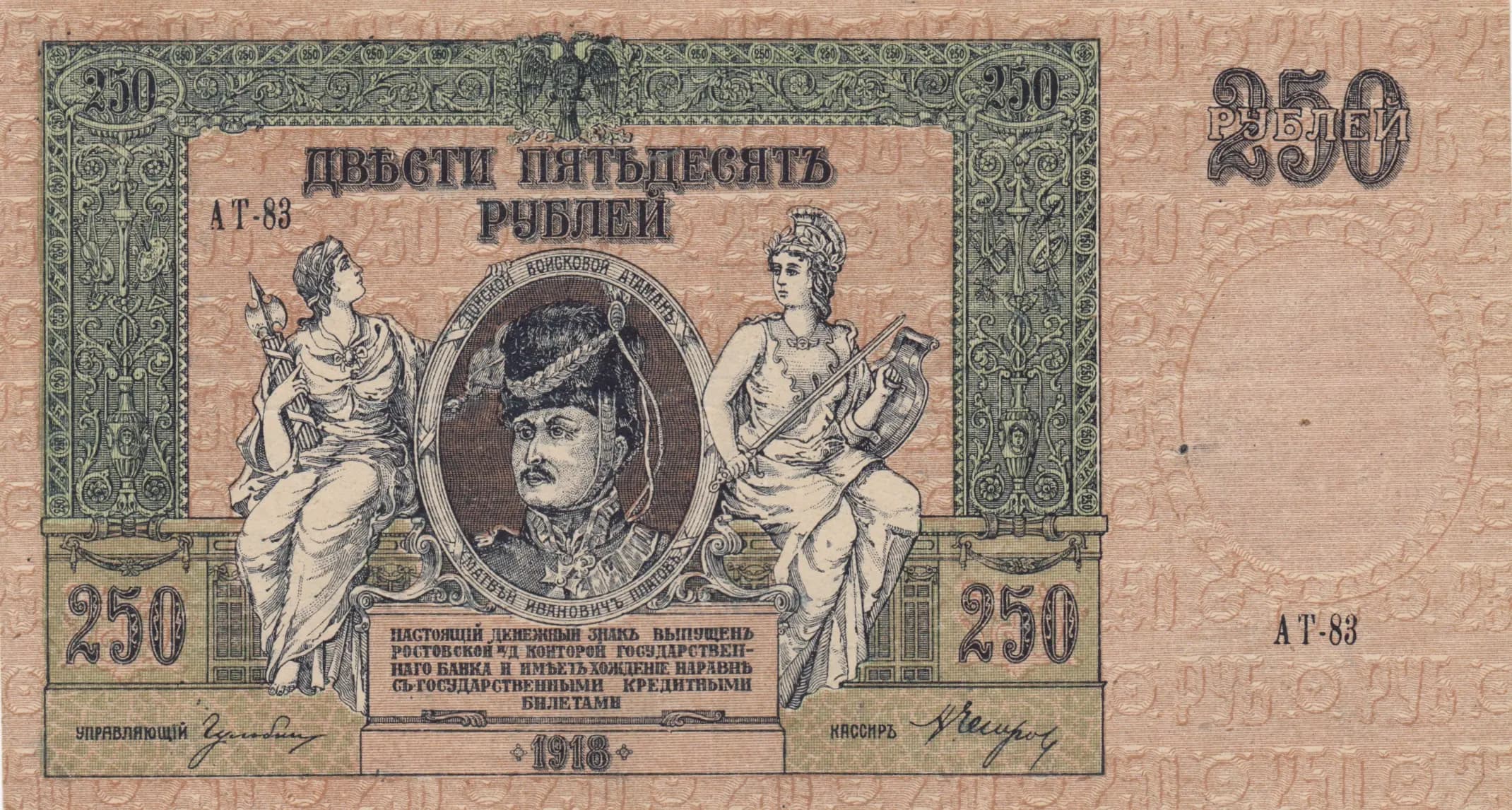
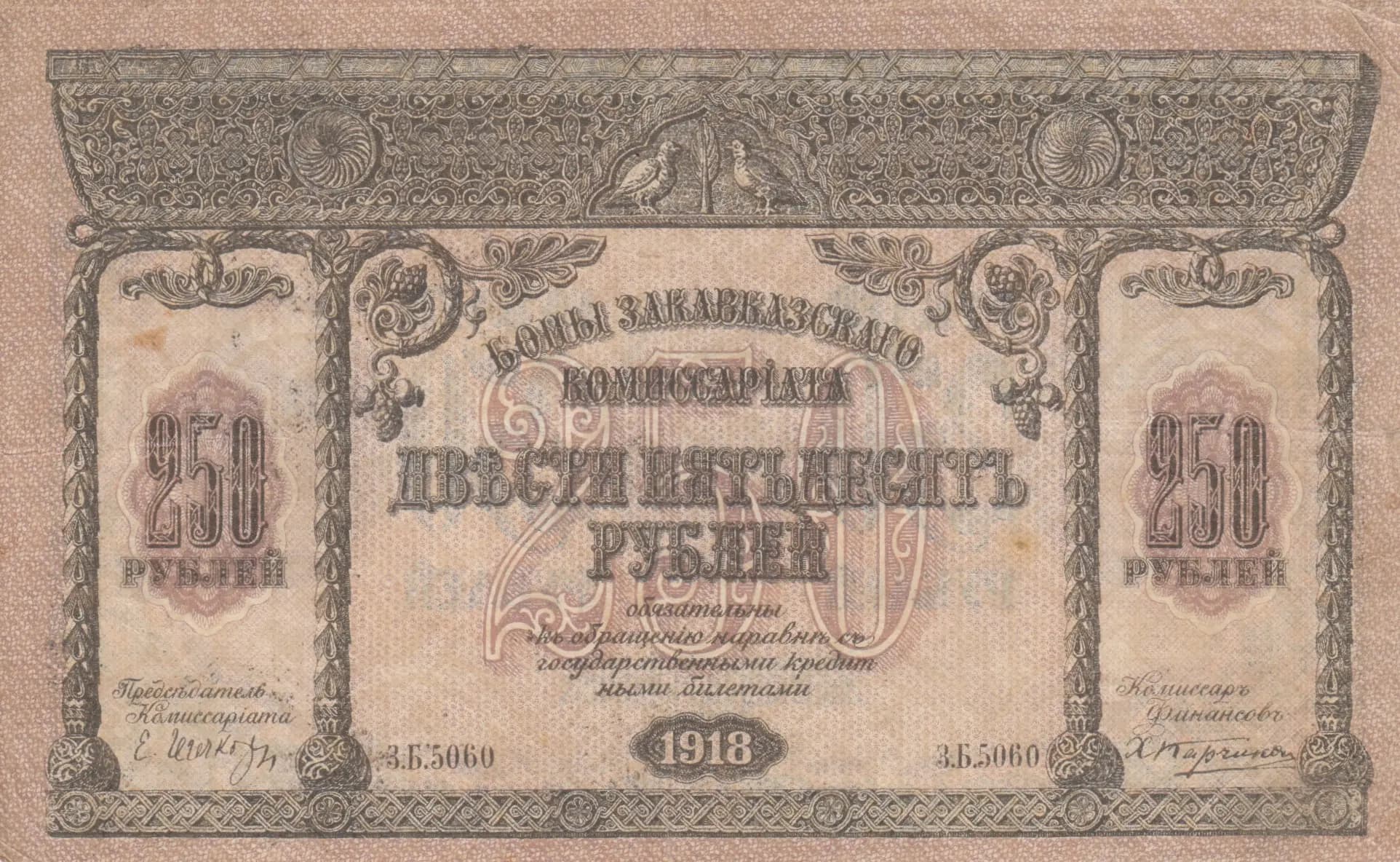
This 250 Rublei note from 1918 represents a fascinating piece of Transcaucasian monetary history, issued during the brief period of the Transcaucasian Commissariat. The note displays exceptionally ornate Art Nouveau-style decoration with elegant scrollwork, floral patterns, and dual-language design elements reflecting the region's cultural diversity. In VF condition, the note shows expected aging with tan patina and foxing, but retains excellent clarity of the intricate border design and multilingual inscriptions that make it historically significant.
Uncommon. The Transcaucasian Commissariat existed for only a brief period (1918-1921) and issued a limited quantity of bonds before its dissolution. However, this particular denomination (250 Rublei) with the specific serial prefix З.Б.5060 appears in catalog records, suggesting it was part of a documented issue run. Pick S607a is not a widely encountered note in collections, but surviving examples exist in various condition grades. The note is scarce rather than extremely rare, reflecting the modest but finite survival rate of these politically unstable-era bonds. Collector demand remains moderate due to the note's historical significance to Caucasian and Russian Revolution-period numismatics.
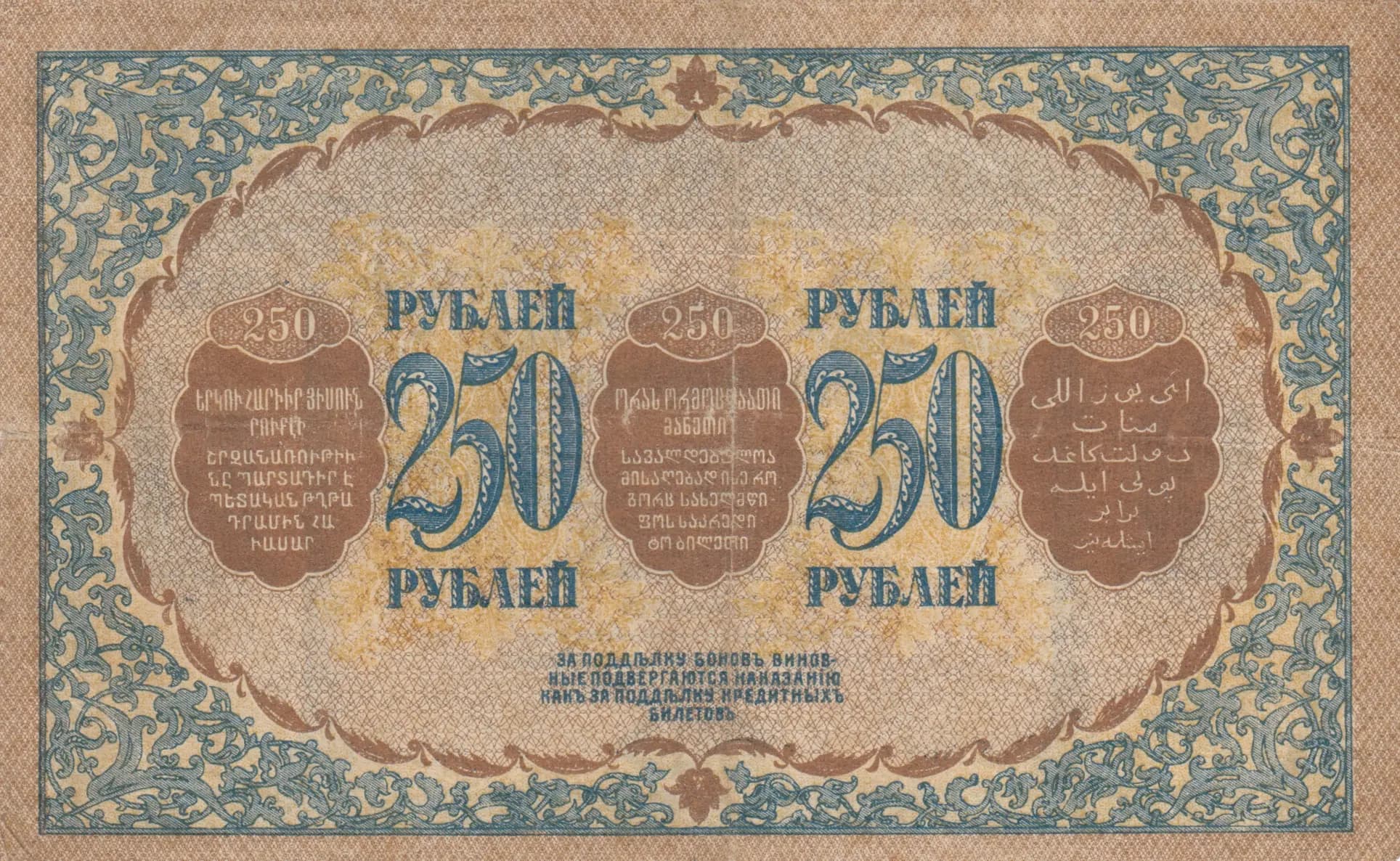
This bond was issued by the Transcaucasian Commissariat in 1918, a transitional government formed after the Russian Revolution in the South Caucasus region encompassing Georgia, Armenia, and Azerbaijan. The multilingual presentation on the reverse—featuring Armenian, Georgian, Arabic, and Russian text—directly reflects the Commissariat's attempt to establish authority over a religiously and ethnically diverse population. The note's legal warning against counterfeiting underscores the instability of this short-lived political entity, which collapsed by 1921.
This ornate bond certificate showcases Belle Époque-influenced decorative design characteristic of early 20th-century financial documents. The front features an elaborate beige and brown color scheme with symmetrical scrollwork framing, paired birds (likely eagles or heraldic birds) positioned at the apex of the ornamental border serving as a symbol of authority, and dual denomination cartouches on left and right sides. The reverse employs a blue and cream palette with five oval cartouches arranged hierarchically—three across the top and two below—containing the denomination in multiple scripts. The large '250' numerals in blue appear as a primary security element. The entire composition employs intricate foliate and geometric patterns typical of Central Asian and Caucasian design traditions, reinforcing the regional identity of the issuing authority. No portraits appear on either side, a design choice that may reflect the transitional and contested nature of the Commissariat's legitimacy.
FRONT SIDE: '250' (Arabic numerals) / 'РУБЛЕЙ' (Rubles) / 'ОДНА И ЧЕТВЕРТЬ РУБЛЕЙ' (One and a quarter rubles) / 'БОНДЫ ЗАКАВКАЗСКОГО КОМИССАРИАТА' (Bonds of the Transcaucasian Commissariat) / 'З.Б.5060' (Serial designation) / '1918' (year) / 'Председатель Комиссариата' (Chairman of the Commissariat) / 'Казначей Финансов' (Treasury Treasurer). BACK SIDE: '250 РУБЛЕЙ' (250 Rubles - repeated multiple times) / Armenian denomination text / Georgian denomination text / Arabic denomination text / 'ЗА ПОДДЕЛКУ БОНОВ ВИНОВНЫЕ ПОДВЕРГАЮТСЯ НАКАЗАНИЮ, КАК ЗА ПОДДЕЛКУ ГОСУДАРСТВЕННЫХ КРЕДИТНЫХ БИЛЕТОВ' (Counterfeiters of these bonds are subject to punishment as for counterfeiting state credit notes).
Lithography (chromolithography for the reverse's colored elements). The intricate detail of the scrollwork, the precision of the multiple color separations visible on the reverse, and the registration of the decorative borders are consistent with high-quality lithographic printing practices of the 1918 period. The color layering of blue and multiple earth tones suggests a multi-stone lithographic process. The printer for Transcaucasian Commissariat bonds is not definitively attributed in standard catalogs but likely involved Russian or local printing facilities.
Pick catalog P-S607a specifically. The serial designation 'З.Б.5060' appears on this specimen. Known varieties of Transcaucasian bonds may include different serial number prefixes and signature variations from different officials of the Commissariat. This particular note represents the standard lithographic issue without overprints. No other documented varieties with this exact Pick number classification are noted in major catalogs, though signature variety among officials authorizing the bonds may exist across the issue.