250 rublei 1918
“Rostov”
About This Note
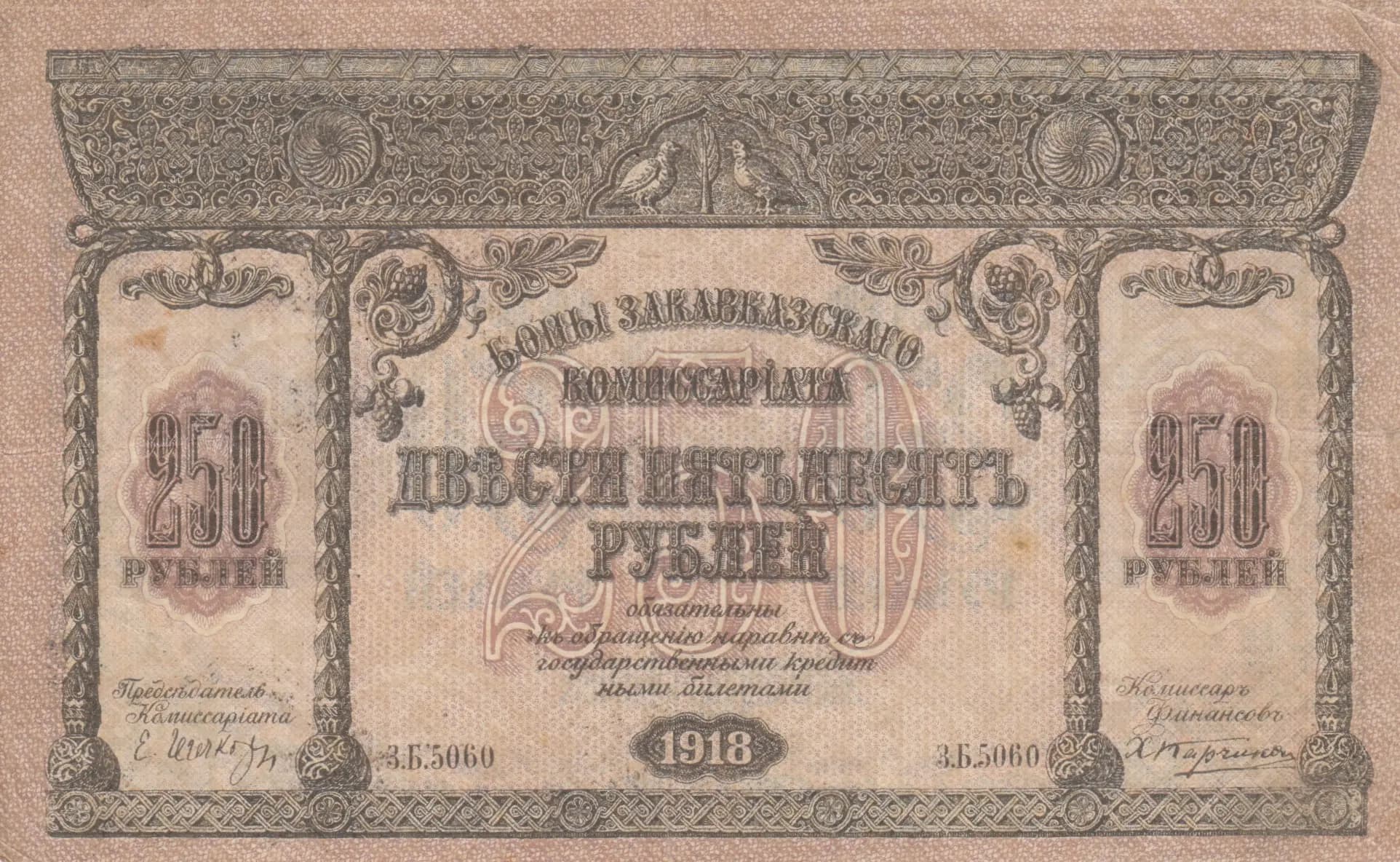
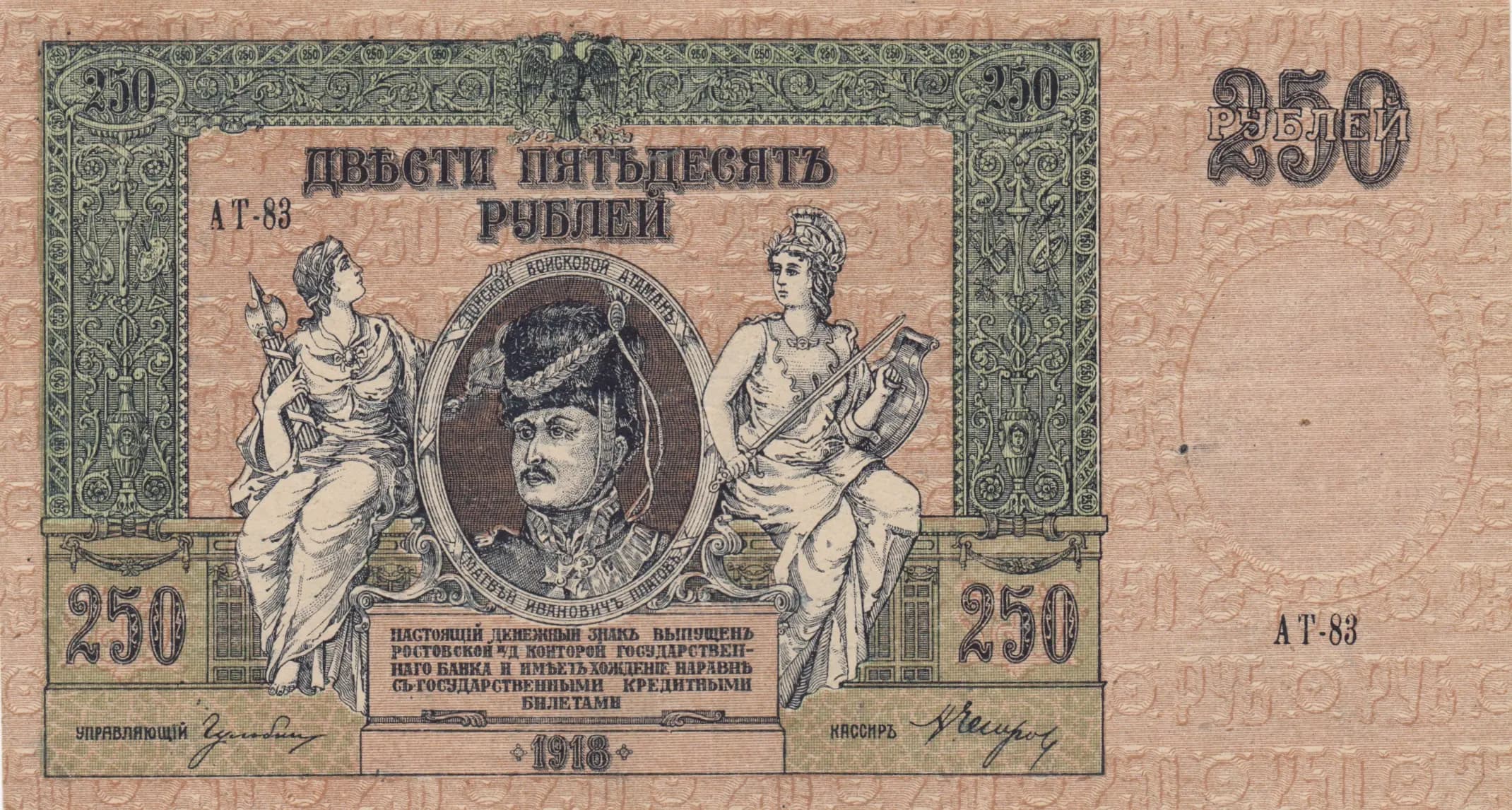
This 250 ruble note from the Rostov State Bank Branch (1918) presents a masterwork of Imperial Russian engraving with exceptional ornamental detail. The obverse features a distinguished military-uniformed portrait in a central medallion flanked by allegorical female figures representing classical virtues, all rendered in fine line work against a pinkish-beige ground with vibrant green decorative borders. In EF condition, the note displays the expected patina of age—visible creases and foxing—yet retains strong color saturation and crisp impression, making it a desirable example of Russian Civil War-era regional currency.
Common. The 250 ruble denomination from the Rostov State Bank Branch (Pick S414c) was part of a substantial issue during 1918 to support commerce in the Don region during the Civil War. No documentation indicates an exceptionally limited print run or subsequent recall that would elevate rarity. While Russian Civil War-era regional currency is certainly less common than Soviet issues of later decades, this particular note type remains readily available in the collector market. The EF condition grade adds value but does not fundamentally change the rarity assessment. Specimens in similar condition typically trade at modest prices reflective of common status.
Issued during the tumultuous Russian Civil War, this Rostov branch note represents the fragmented monetary system of 1918 when regional State Bank branches issued their own currency with equal legal tender status to central credit notes. The Imperial double-headed eagle and classical allegorical imagery reflect continuity with Tsarist design traditions, even as the political order collapsed; the inscription explicitly states this note's official parity with State Credit Notes. The Rostov branch operated in the Don region, a strategic zone contested between White and Red forces, making such regionally-issued notes historically significant artifacts of the conflict.
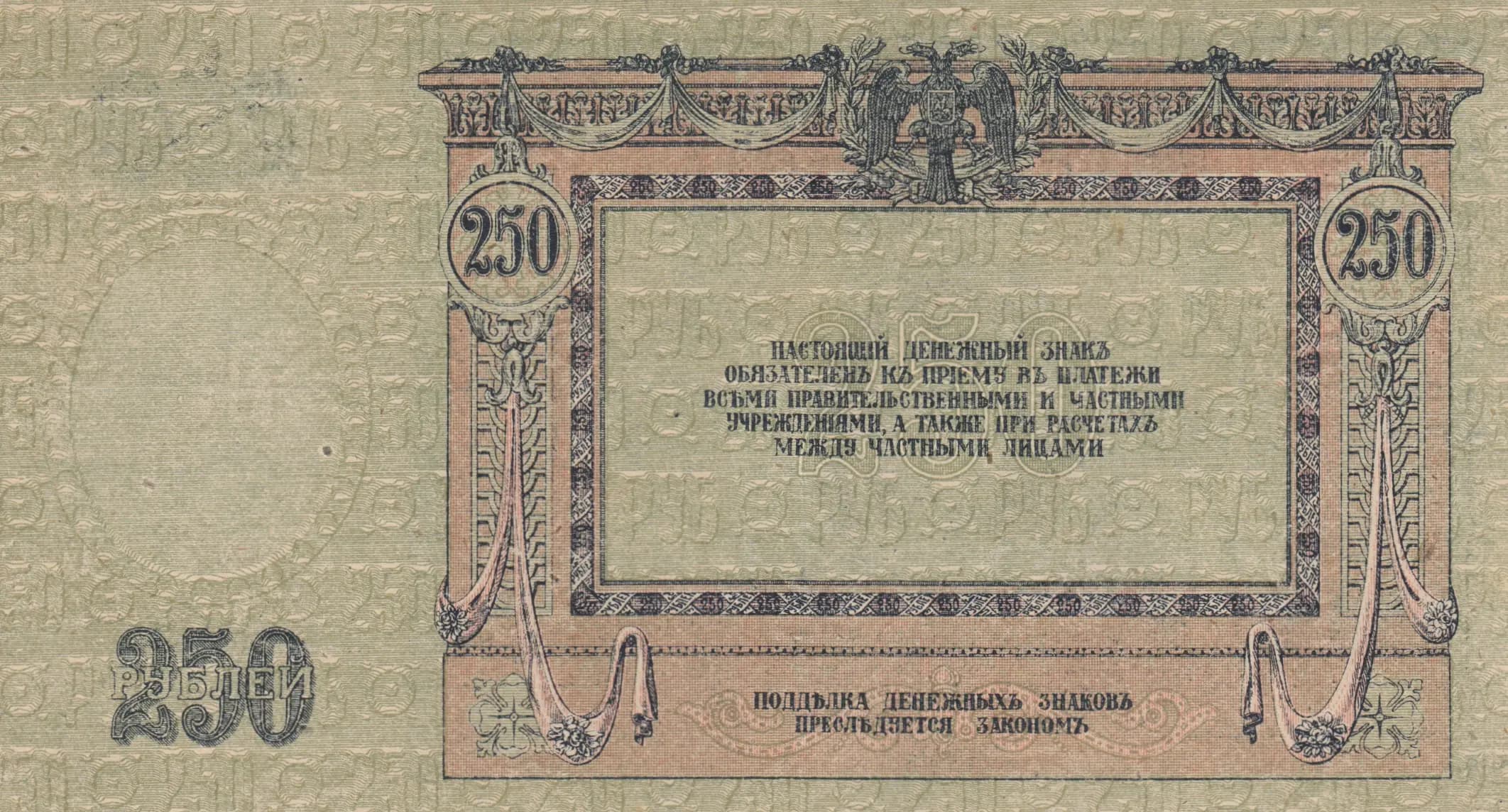
The obverse displays a refined Imperial Russian design centered on a circular medallion containing a portrait of a high-ranking military official with distinctive facial hair (likely a general or senior administrator of the period), rendered in classical engraving style. Flanking this portrait are two allegorical female figures in Greco-Roman dress: the left figure holds a staff or torch symbolizing authority and enlightenment, while the right figure holds a tablet or document representing law and governance. The entire composition is framed within ornate borders featuring elaborate scrollwork, floral motifs, and geometric patterns executed in dark green ink against a pinkish-beige background. The Imperial double-headed eagle appears prominently in the decorative border elements, along with laurel wreaths and classical ornamental devices. The reverse presents a symmetrical architectural composition with an ornate rectangular frame adorned with swags, tassels, and imperial eagles in the corners. The central area is blank, a characteristic feature of this denomination. The pale greenish-yellow background contrasts with dark green and pink ornamental detailing. Denomination numerals appear in ornamental circles in the upper corners, maintaining the classical aesthetic throughout.
FRONT SIDE: 'ДВЕСТИ ПЯТЬДЕСЯТ РУБЛЕЙ' (Two Hundred Fifty Rubles); '250' and 'РУБЛЕЙ' (250 / Rubles) — denomination markings in all four corners; 'НАСТОЯЩИЙ ДЕНЕЖНЫЙ ЗНАК ВЫПУЩЕН РОСТОВСКОЙ ОТКОНТОРОЙ ГОСУДАРСТВЕННОГО БАНКА И ИМЕЕТ ХОЖДЕНИЕ НАРАВНЕ СО ГОСУДАРСТВЕННЫМИ КРЕДИТНЫМИ БИЛЕТАМИ' (This monetary sign has been issued by the Rostov branch office of the State Bank and has circulation equal to State Credit Notes); '1918' (year of issue); 'УПРАВЛЯЮЩИЙ' (Manager/Director — signature line); 'КАССИР' (Cashier — signature line); 'АТ-83' (serial designation). BACK SIDE: '250' and 'РУБЛЕЙ' (250 / Rubles); 'НАСТОЯЩИЙ ДЕНЕЖНЫЙ ЗНАК ОБЯЗАТЕЛЕН К ПРИЕМУ В ПЛАТЕЖИ ВСЕМИ ПРАВИТЕЛЬСТВЕННЫМИ И ЧАСТНЫМИ УЧРЕЖДЕНИЯМИ, А ТАКЖЕ ПРИ РАСЧЕТАХ МЕЖДУ ЧАСТНЫМИ ЛИЦАМИ' (This monetary sign is obligatory for acceptance in payments by all government and private institutions, as well as in settlements between private individuals); 'ПОДДЕРЖКА ДЕНЕЖНЫХ ЗНАКОВ ПРЕСТИЖЕСТВУЕТ ЗАКОНОМ' (The support of monetary signs is governed by law).
Intaglio/engraved steel plate printing, evidenced by the exceptional fineness of line work, the precise gradations in shading, and the characteristic three-dimensional quality visible in the ornamental borders and portraiture. The fine line engraving technique was standard for Russian Imperial and early Soviet banknotes of this period, produced by specialized security printing facilities. The intricate detail work, multiple color separations (green, pink, and black inks), and the security features inherent in the ornamental design patterns are consistent with high-security intaglio production. The printer for Russian State Bank notes of this era was typically the State Printing Plant (Государственная типография) in St. Petersburg/Petrograd, though regional branches may have had limited involvement in production or distribution.
This note is classified as Pick S414c, the 'c' variant designation indicating a specific state of the design or signature combination within the 250 ruble Rostov issue. The serial designation 'АТ-83' is visible on the obverse; variations in serial prefixes and signatures of the Manager (Управляющий) and Cashier (Кассир) distinguish individual varieties within this Pick number. Collectors should note signature varieties, as different combinations represent distinct printings or issue dates within 1918. The specific signature combination on this specimen would determine its exact variety status within the P-S414c designation, though the core design remains consistent across the series.