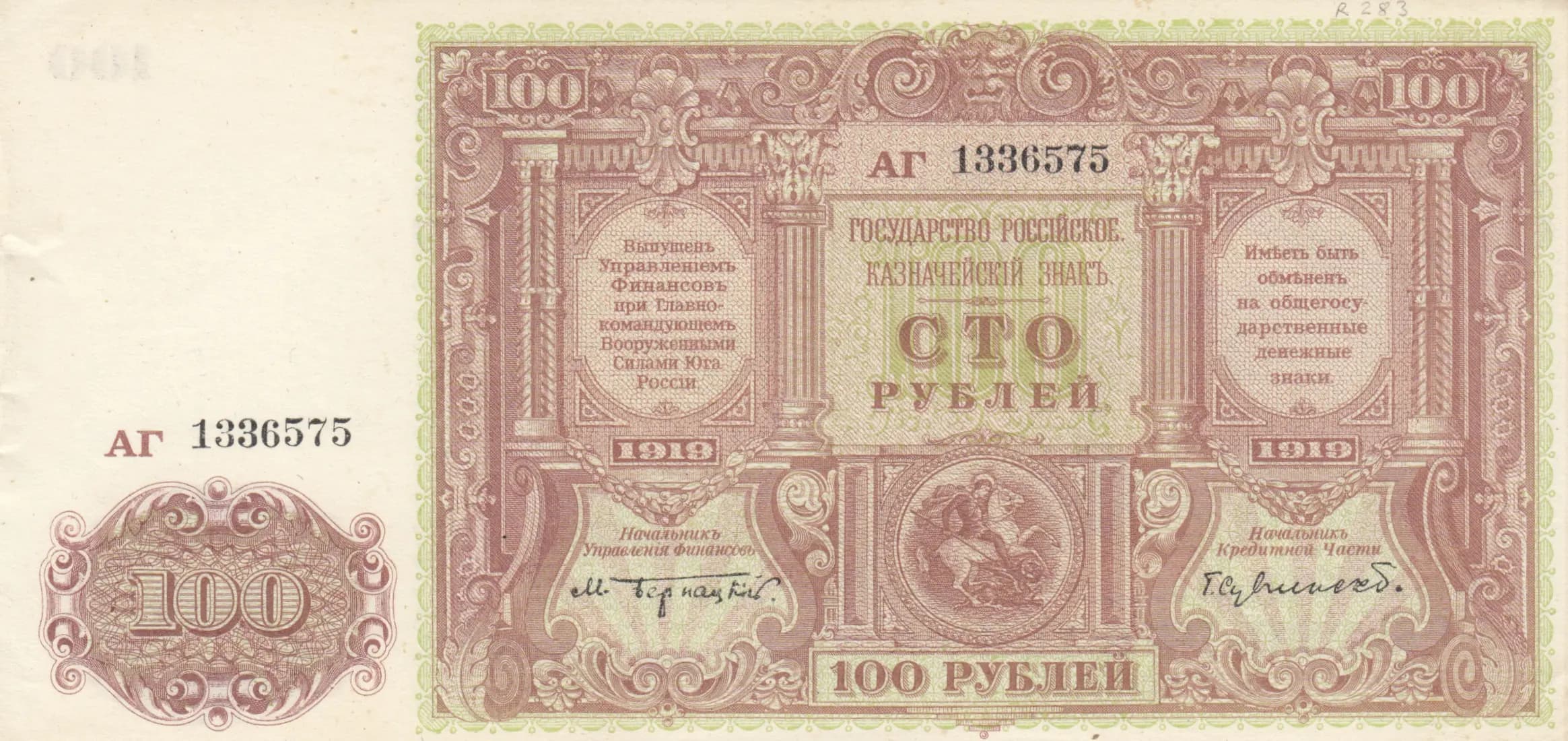
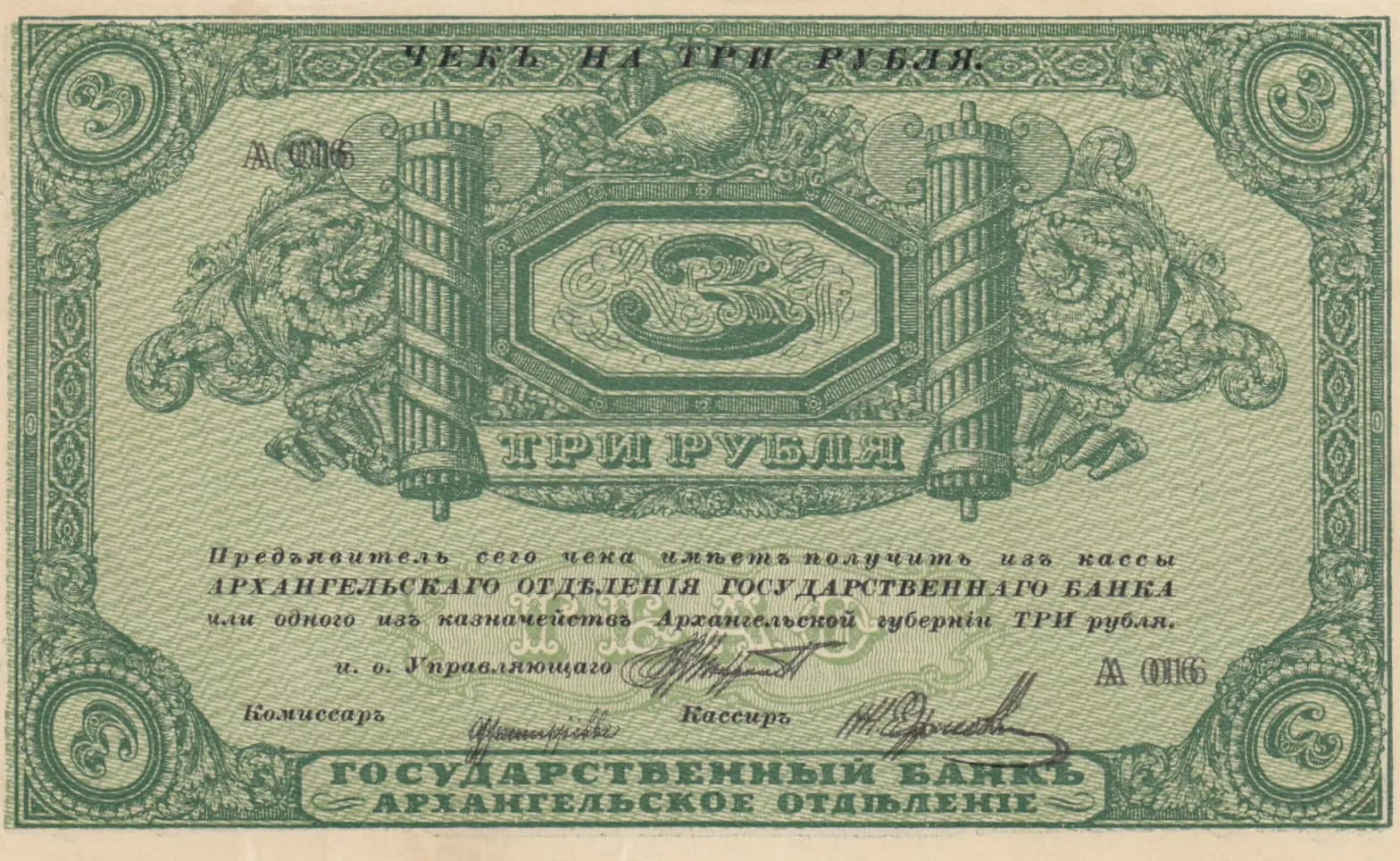
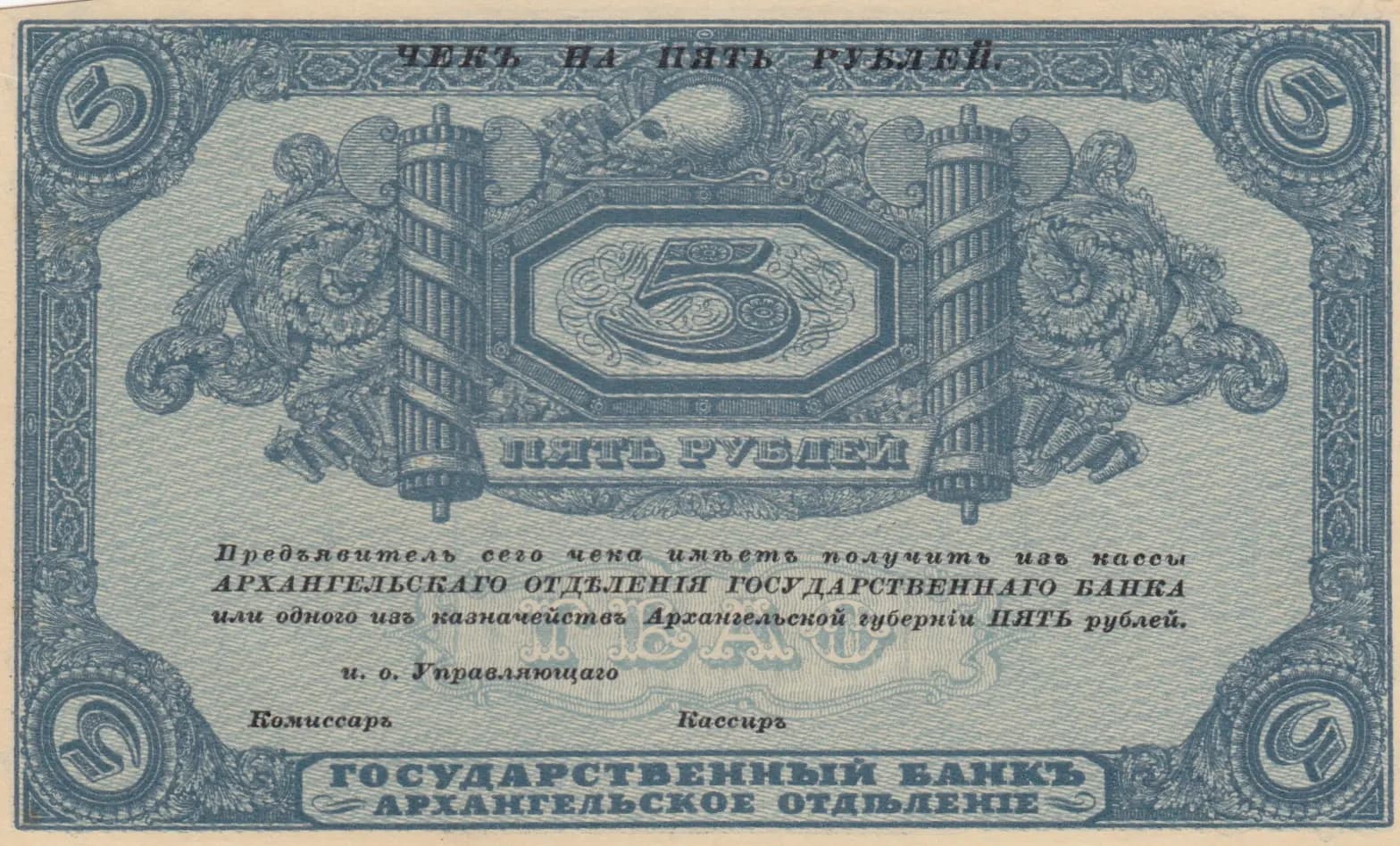
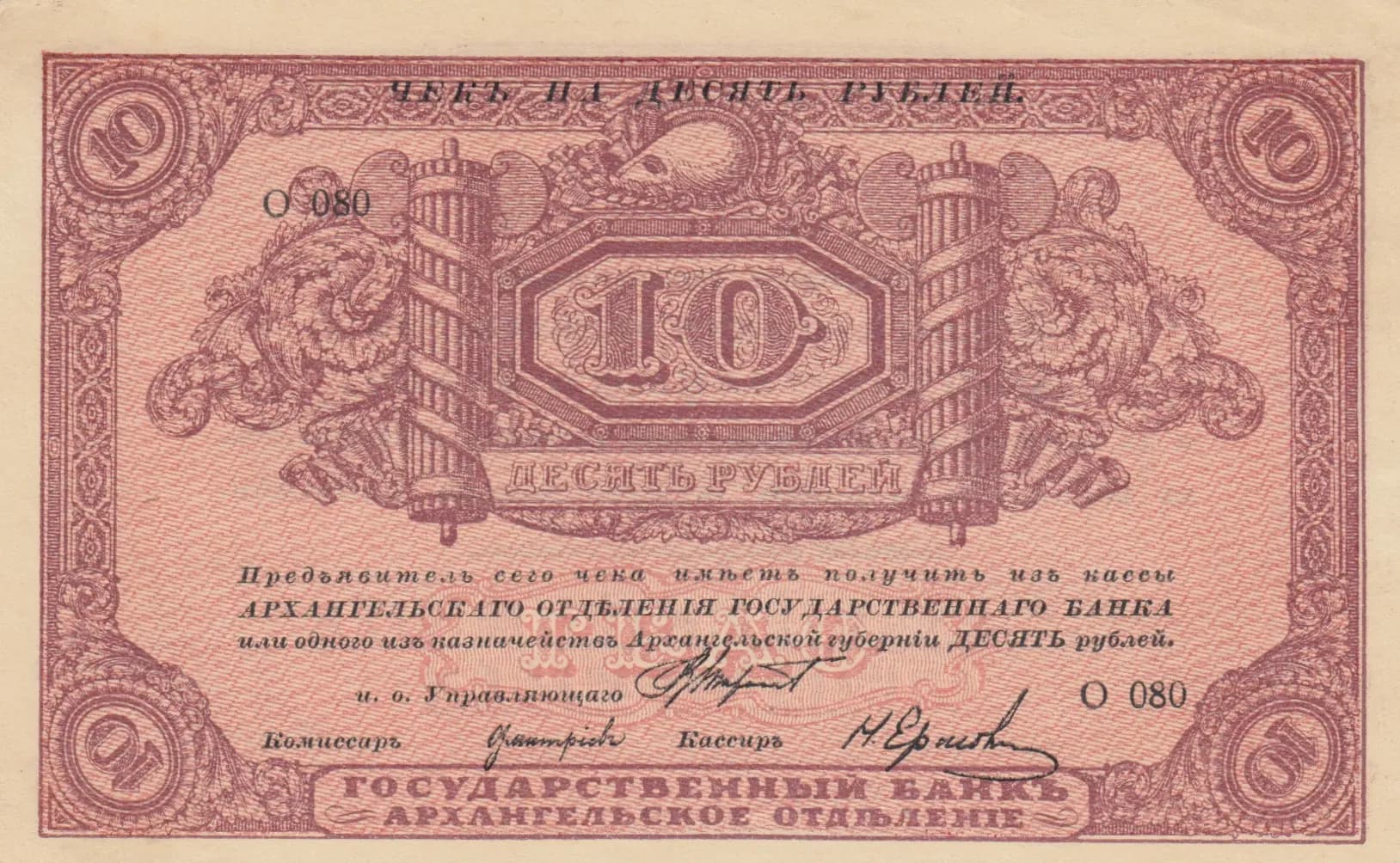
100 rublei 1920
About This Note
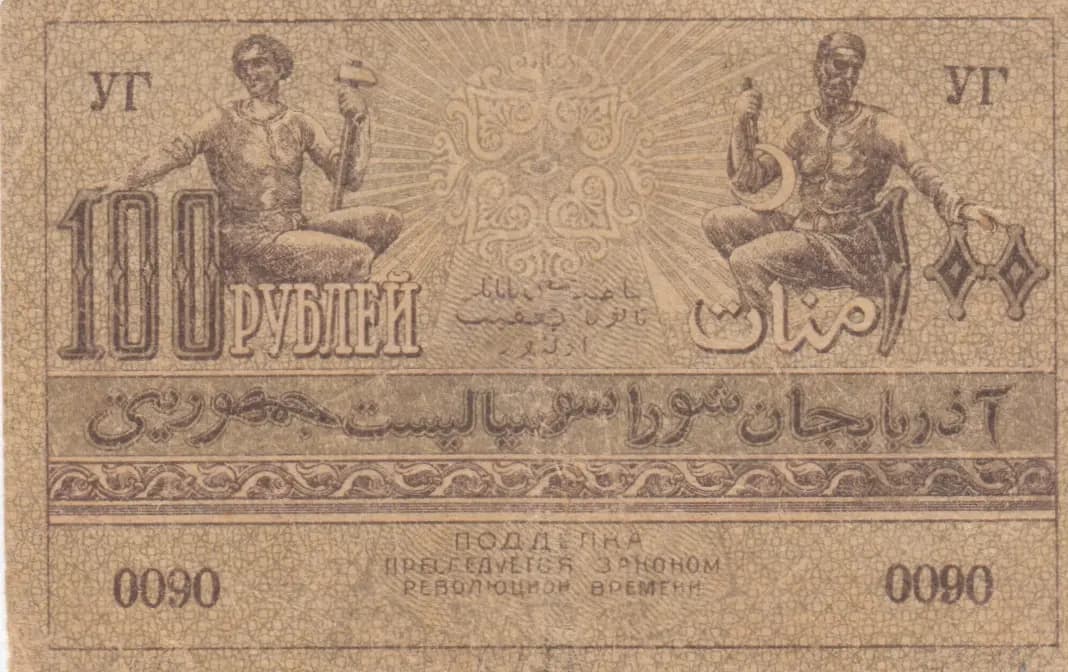
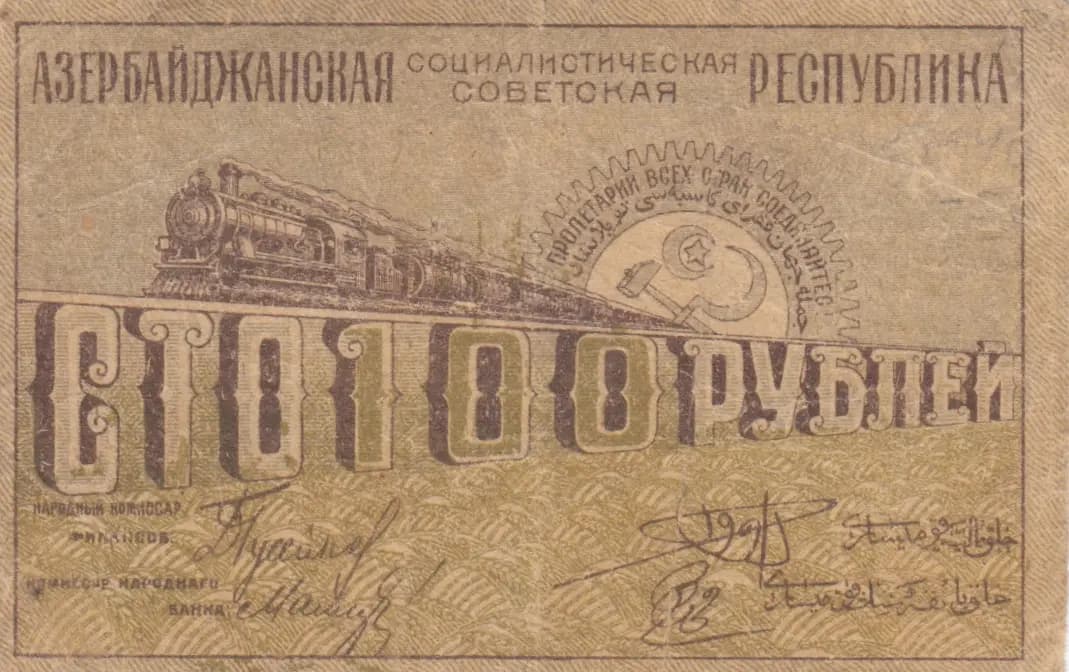
This is a 100 Rublei note issued by the Azerbaijan S.S.R. in 1920, presented in Fine condition with even coloring and well-preserved detail throughout. The obverse features classical allegorical figures flanking an ornate central medallion with radiating patterns, while the reverse displays a detailed engraving of a steam locomotive beneath a hammer and sickle emblem—powerful socialist iconography from the early Soviet period. The bilingual inscription in Cyrillic and Arabic scripts reflects Azerbaijan's unique position within the early Soviet republics and makes this a particularly interesting example of regional Soviet currency design.
Common. The Azerbaijan S.S.R. issued substantial quantities of this denomination during 1920 as part of standard currency distribution across the newly incorporated Soviet republic. Early Soviet regional notes, while historically significant, were produced in quantities sufficient to meet circulation demands and remain relatively obtainable today. The Fine condition grade is standard for surviving examples rather than exceptional.
This note was issued during the formative period of the Azerbaijan Soviet Socialist Republic, established in 1920 following the Bolshevik conquest of the Caucasus region. The imagery directly reflects Soviet revolutionary ideology: the classical allegorical figures on the obverse represent abstract virtues of the revolution, while the steam locomotive on the reverse symbolizes industrial progress and modernization—central themes of Bolshevik propaganda. The bilingual Cyrillic-Arabic presentation underscores the early Soviet commitment to incorporating indigenous cultures and languages within their multinational state structure, particularly in regions with significant Muslim populations.
The obverse features two classical allegorical female and male figures in neoclassical style positioned symmetrically on either side of an ornate central medallion. The left figure holds a torch or staff symbolizing enlightenment, while the right figure holds a curved object, possibly a cornucopia or scythe, representing prosperity and labor. Both figures display radiating halos characteristic of Soviet allegorical design. The reverse presents a meticulously engraved steam locomotive advancing leftward with billowing smoke, positioned beneath a circular hammer and sickle emblem—the fundamental symbol of Soviet state authority. Decorative ornamental borders frame both sides, featuring fine line work and scrollwork typical of high-security currency design of the period.
FRONT SIDE: '100 РУБЛЕЙ' (100 Rubles); 'УТ' and 'VI' (possibly indicating series or plate marks); '0090' (serial number); 'ДОД.ЗАКОНА "ВРЕМЕННЫХ ЗАКОНОДАТЕЛЬНОМ РЕВОЛЮЦИИ ВРЕМЕНИ"' (Under the law of the temporary legislative [authority] of the revolutionary period). BACK SIDE: 'АЗЕРБАЙДЖАНСКАЯ СОЦИАЛИСТИЧЕСКАЯ СОВЕТСКАЯ РЕСПУБЛИКА' (Azerbaijani Socialist Soviet Republic); '100 РУБЛЕЙ' (100 Rubles); 'НАРОДНЫЙ КОМИССАР ФИНАНСОВ' (People's Commissar of Finance); 'ПРЕДСЕДАТЕЛЬ СОВНАРКОМА' (Chairman of the Council of People's Commissars [signature line]).
Intaglio engraving (line engraving), the predominant security printing method for early Soviet currency. The fine line work visible in the radiating patterns, ornamental borders, and the detailed locomotive engraving are characteristic of intaglio production. The evenness of color and impression quality observed suggests professional state printing works, likely the Republican printing facility of the Azerbaijan S.S.R. or a central Soviet printing authority.
Serial number 0090 is visible on this example. Early Azerbaijan S.S.R. notes from 1920 may exist with various signature combinations reflecting different officials in the Commissar of Finance and Chairman positions, as these were signed documents reflecting the administrative structure of the period. The bilingual Cyrillic-Arabic inscription format is specific to Azerbaijan issues and distinguishes this from other early Soviet republics' currency. No major varieties (overprints, color variants, or reissues) are documented for Pick S710 in standard catalogs.