100 rublei 1918
About This Note
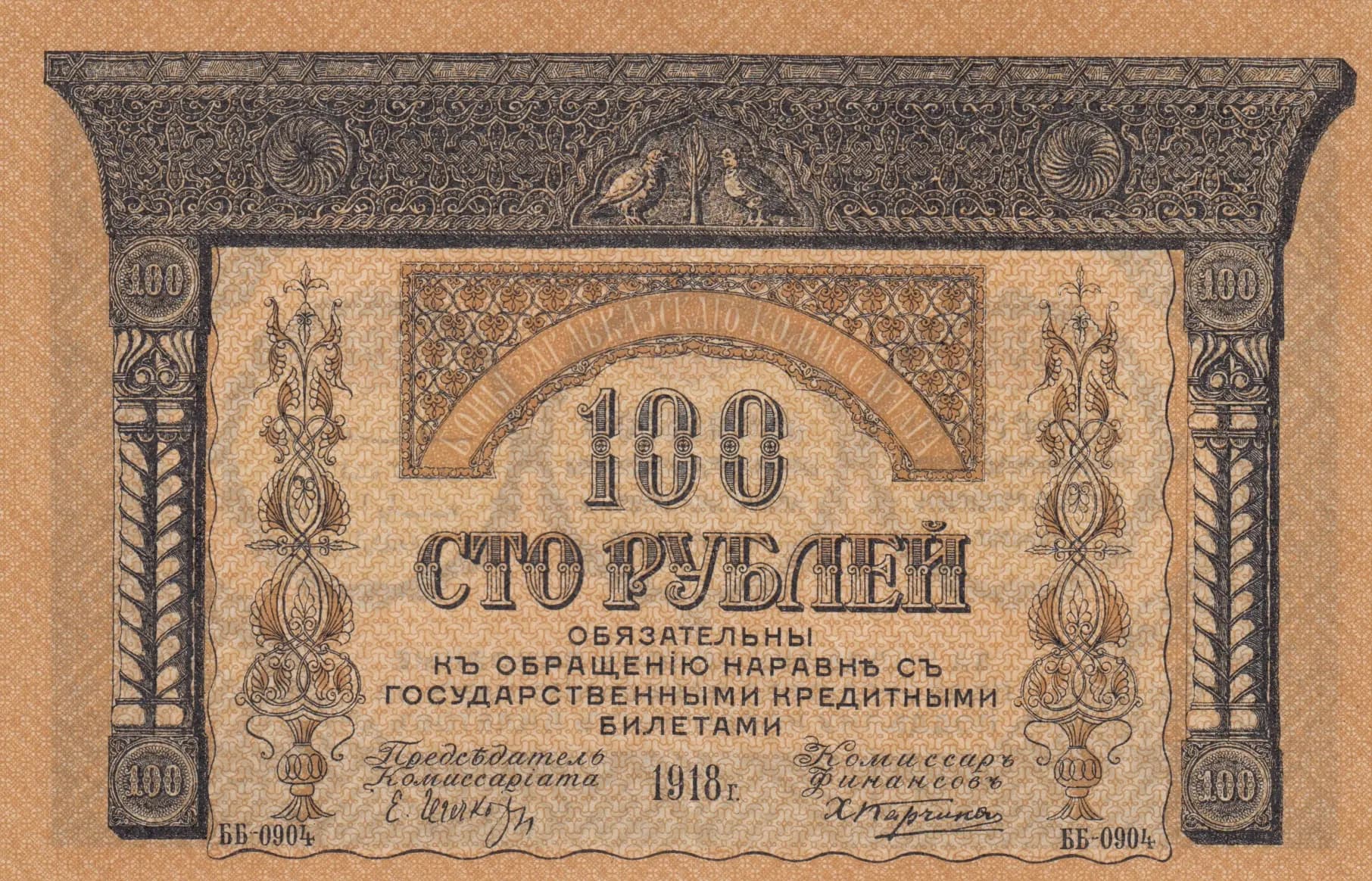
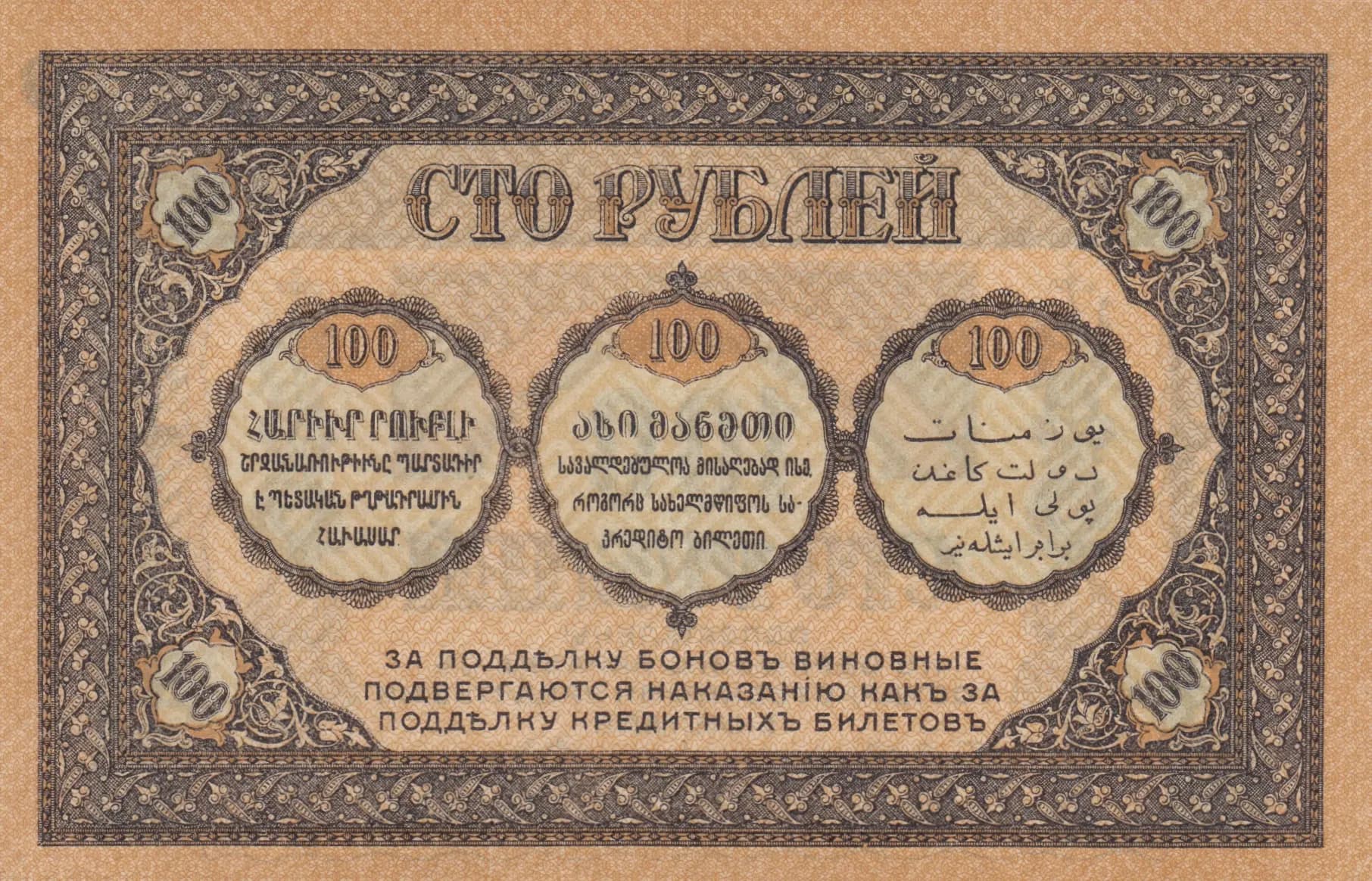
This 100 Rublei banknote from 1918 issued by the Transcaucasian Commissariat is presented in outstanding UNC condition with crisp, sharp printing throughout. The note features a sophisticated multilingual design with Armenian, Georgian, and Arabic script denominations on the reverse, reflecting the diverse population of the Transcaucasus region during this tumultuous period. The ornate decorative borders, fine crosshatch security patterns, and absence of wear or damage make this an exceptional example of early Soviet-era emergency currency.
Common. While the Transcaucasian Commissariat was short-lived (1918-1921) and these notes are historically significant, surviving examples remain available in the collector market at modest price points. The UNC condition grade and specific serial variety (ББ-0904) may command a modest premium within the broader category, but the note itself does not rank among rare Soviet-era issues. Print runs were substantial enough to ensure reasonable availability, particularly in higher grades.
The Transcaucasian Commissariat (Transcaucasian Democratic Federative Republic) issued this currency in 1918 during the chaotic transition following the Russian Revolution and the collapse of Imperial authority in the South Caucasus. The multilingual inscriptions in Armenian, Georgian, and Arabic scripts reflect the commissariat's attempt to establish legitimacy and facilitate circulation across the ethnically diverse region comprising modern-day Armenia, Azerbaijan, and Georgia. This note represents a brief experiment in independent Transcaucasian governance, as the region would soon fall under Soviet control and these notes became obsolete.
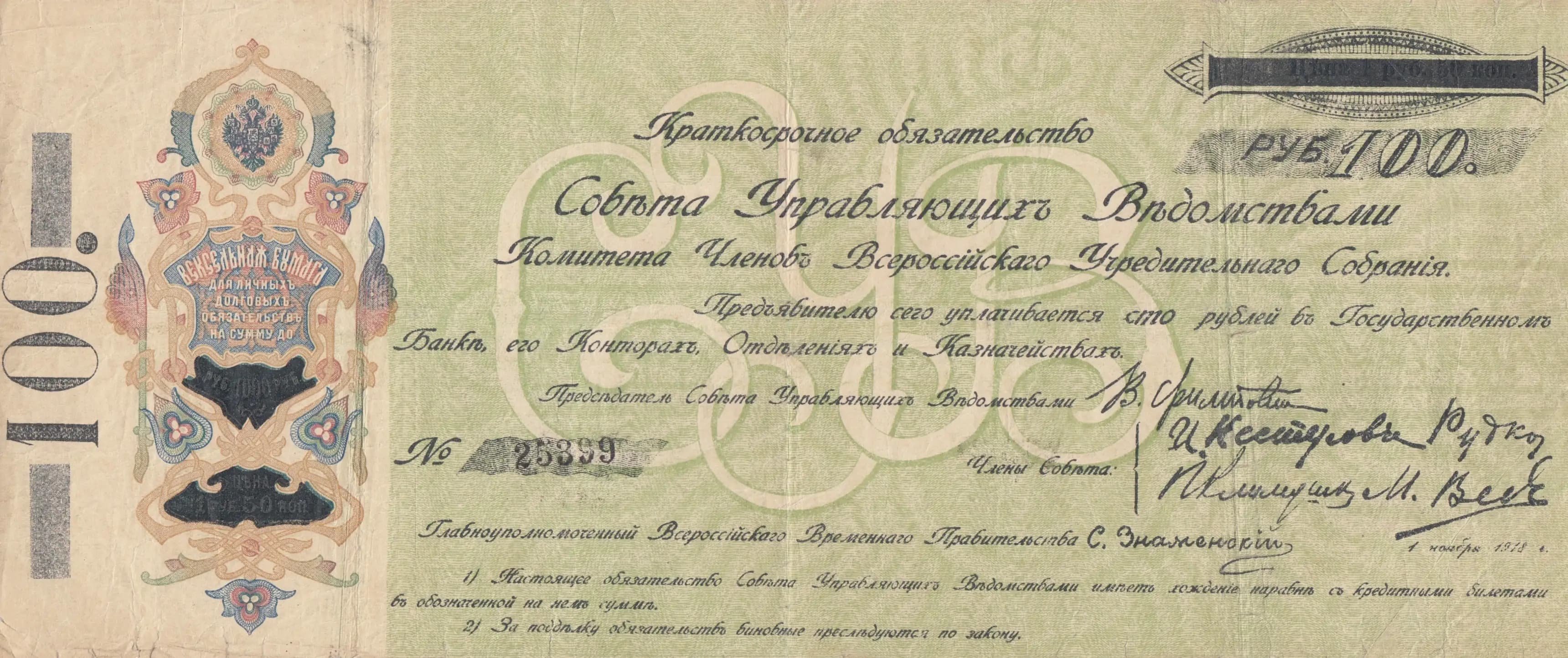
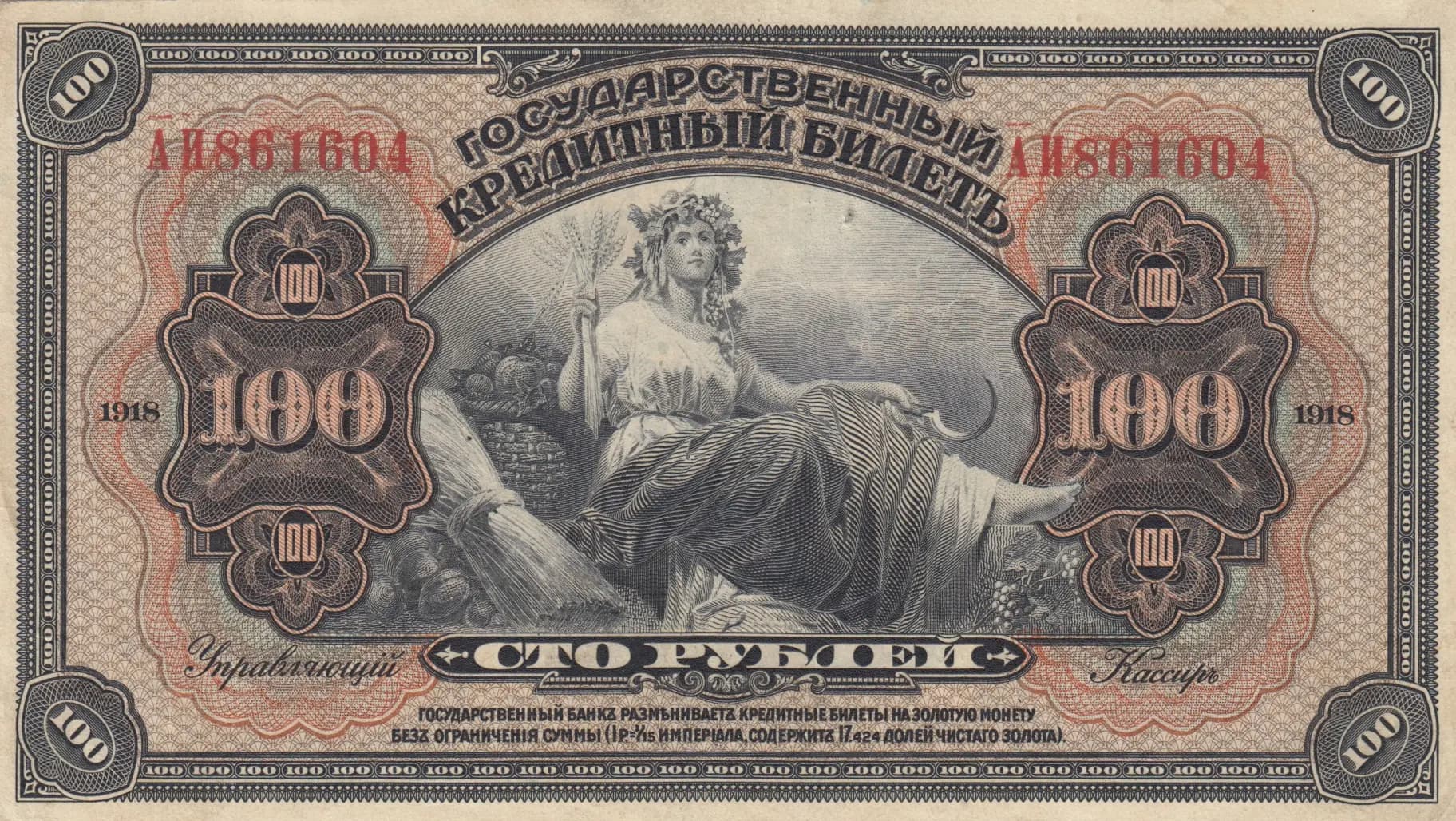
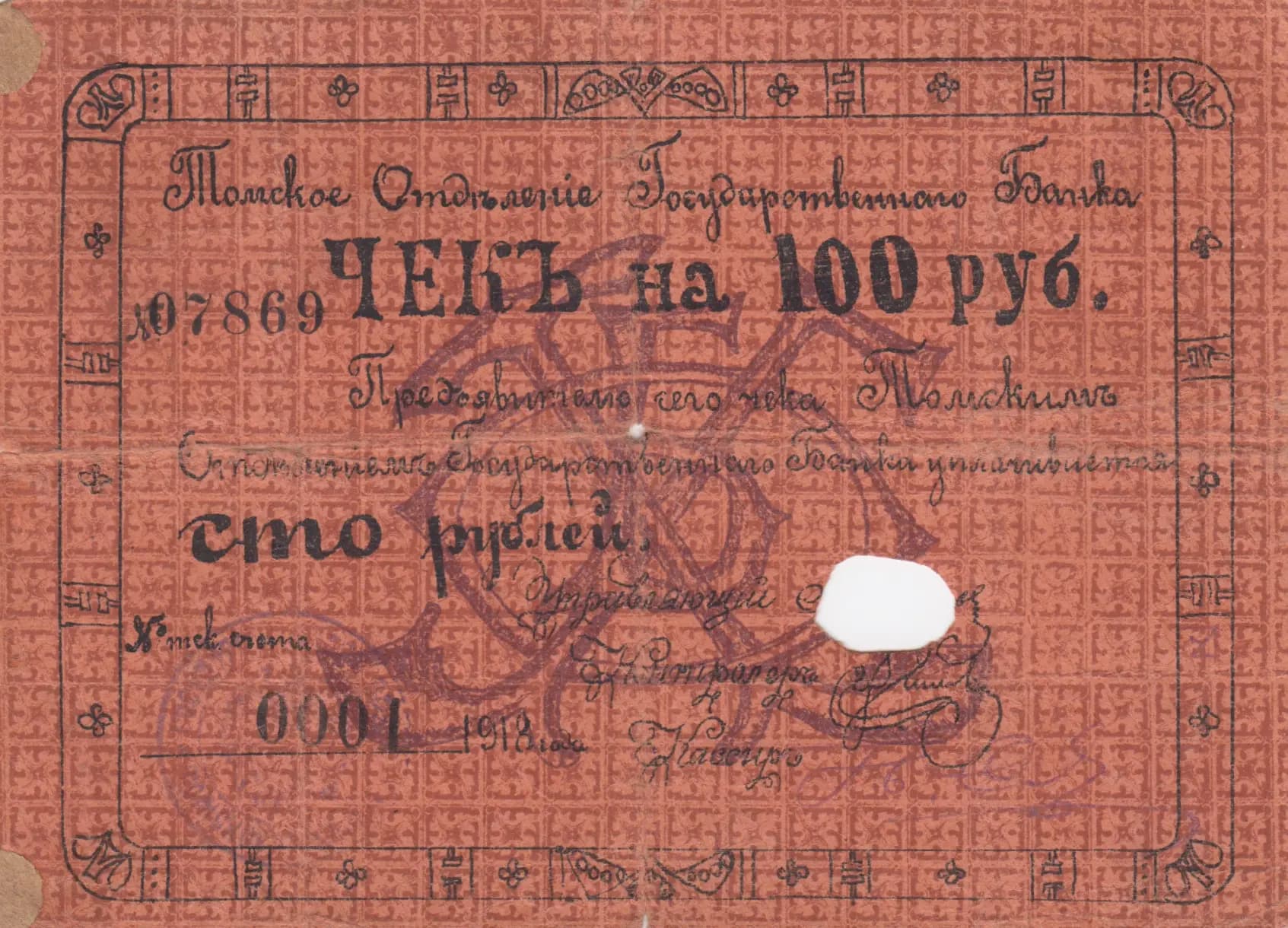
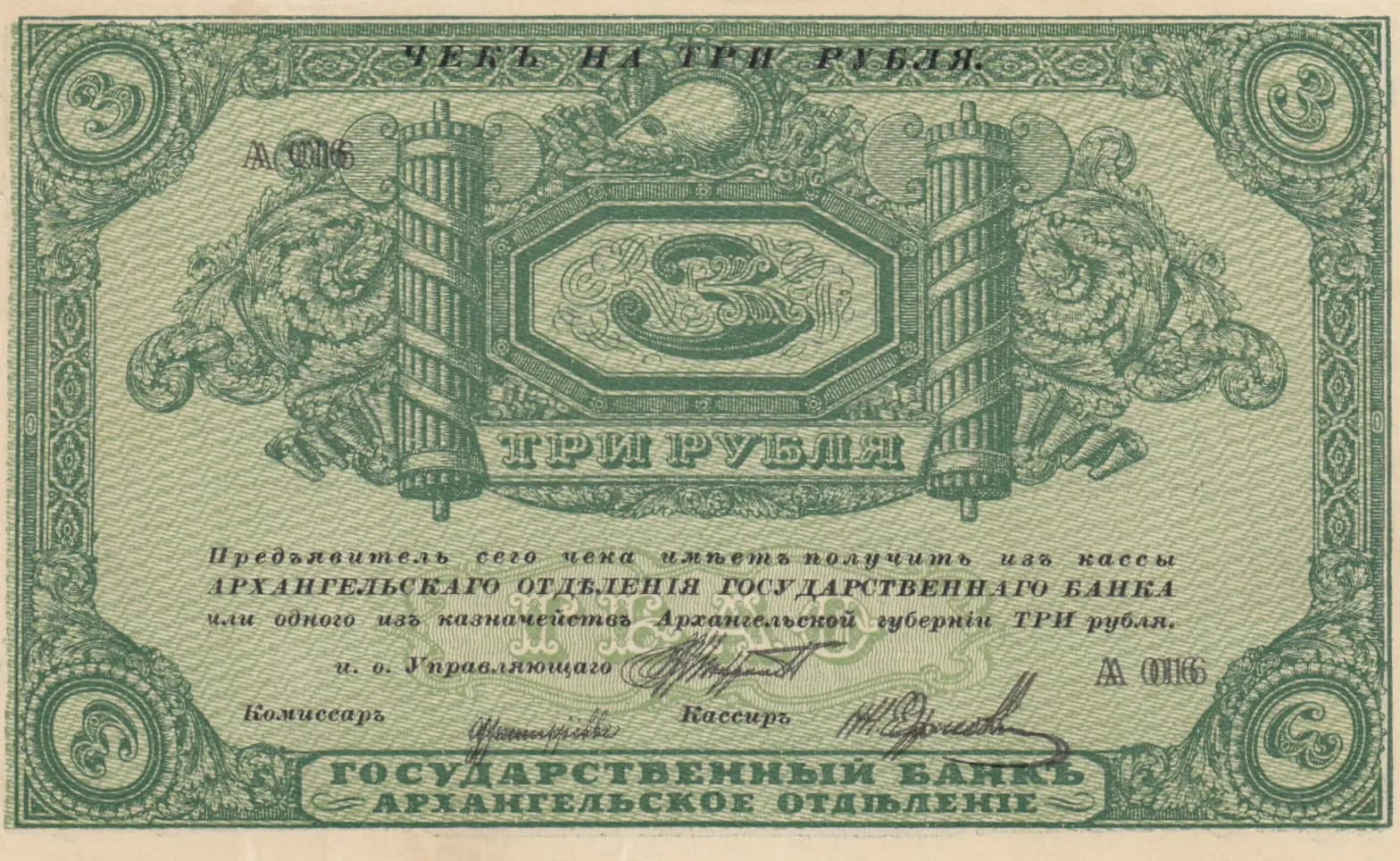
The obverse features a formal financial document layout with the denomination '100' prominently displayed in a large, ornately-framed central cartouche. Decorative corner pieces with shell-like spiral designs occupy all four corners, with the denomination repeated in each. The top border contains an elaborate band of geometric and floral ornamentation, reportedly featuring imperial heraldic elements (double-headed eagle motifs) inherited from pre-Revolutionary design traditions. The reverse presents three symmetrically-arranged circular medallions, each containing the numeral '100' within ornate frames, accompanied by text in Armenian (Cyrillic-based Armenian script), Georgian (unique Georgian script), and Arabic/Urdu script. This trilingual security feature was a sophisticated approach for the period, designed to ensure the note's acceptance across the region's diverse populations. The entire note employs a fine crosshatch background pattern as a security measure. All imagery is rendered in restrained earth tones—tan, beige, cream, and dark brown/black—typical of high-security currency engraving.
{"front":{"primary":"СТО РУБЛЕЙ (One Hundred Rubles)","mandatory_circulation":"ОБЯЗАТЕЛЬНЫ К ОБРАЩЕНИЮ НАРАВНѢ СЪ ГОСУДАРСТВЕННЫМИ КРЕДИТНЫМИ БИЛЕТАМИ (Mandatory for circulation on equal terms with state credit notes)","authority_lines":"Председателю / Комиссарь Финансов Аппарата / 1918г. (To the Chairman / Commissar of Finance of the Apparatus / 1918)","serial_reference":"ББ-0904 (Serial number reference BB-0904)"},"back":{"main_denomination":"СТО РУБЛЕЙ (One Hundred Rubles)","armenian":"ՀԱՅՈՑ ՀԱՆՐԱՊԵՏՈՒԹՅՈՒՆ ՊԵՏԱԿԱՆ ԿՐԵԴԻՏԱՅԻՆ ՏՈՄՍ (Armenian Republic State Credit Note)","georgian":"სახ მთავარი საკაზმო ანტიკური და სერიოზული პირობის უფლებით (Authority of the Main State Treasury under serious conditions)","counterfeiting_warning":"ЗА ПОДДЪЛКУ БОНОВЪ ВИНОВНЫЕ ПОДВЕРГАЮТСЯ НАКАЗАНІЮ НАНЬ ЗА ПОДДЪЛКУ КРЕДИТНЫХЪ БИЛЕТОВЪ (For counterfeiting of banknotes, the guilty parties are subject to punishment prescribed for counterfeiting credit notes)","denominations_repeated":"100 (numeral, repeated in three cartouches with different scripts)"}}
Intaglio engraving (relief printing from engraved steel plates), characteristic of official banknote production during this era. The crisp, sharp detail visible in both the fine crosshatch background pattern and the intricate ornamental borders indicates professional security printing. The uniform color saturation and precise registration of the multilingual reverse design suggest centralized production by an established security printer, likely either Russian Imperial facilities repurposed for the Transcaucasian Commissariat or a major European security printer contracted for this emergency issue. No specific printer attribution is evident from visible imprints on the analyzed images.
Serial number prefix ББ-0904 is visible on the obverse. Pick catalog P-S606 represents the standard 100 Rublei denomination of the Transcaucasian Commissariat series. Varieties within this pick may exist based on signature combinations (Председателю/Chairman and Комиссарь Финансов/Finance Commissar positions), printing house marks, or date variations, though such distinctions are not definitively visible in the provided images. The multilingual reverse (Armenian, Georgian, Arabic) is a constant feature of this denomination and not a variety marker.