1 dollar 1970
About This Note
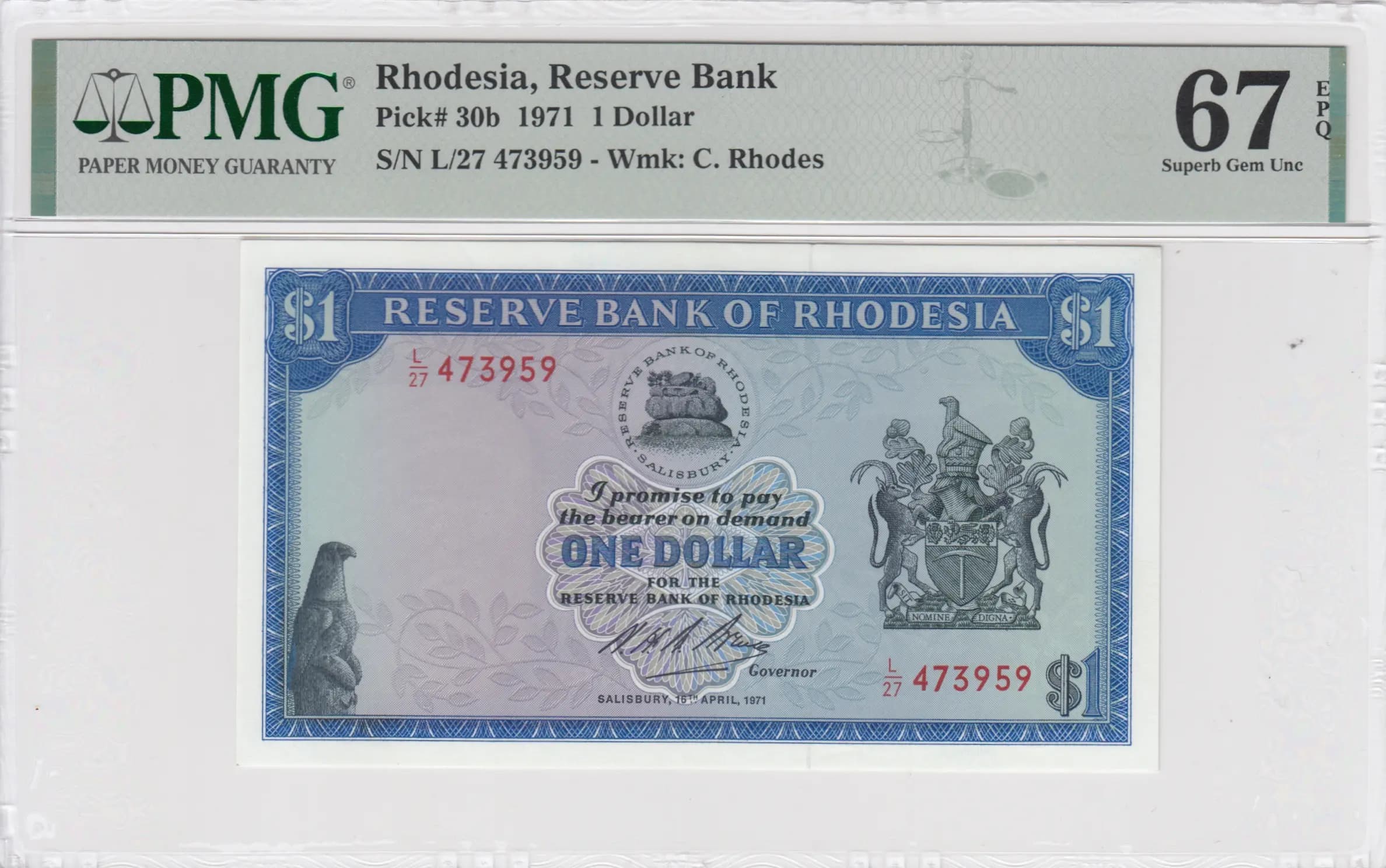
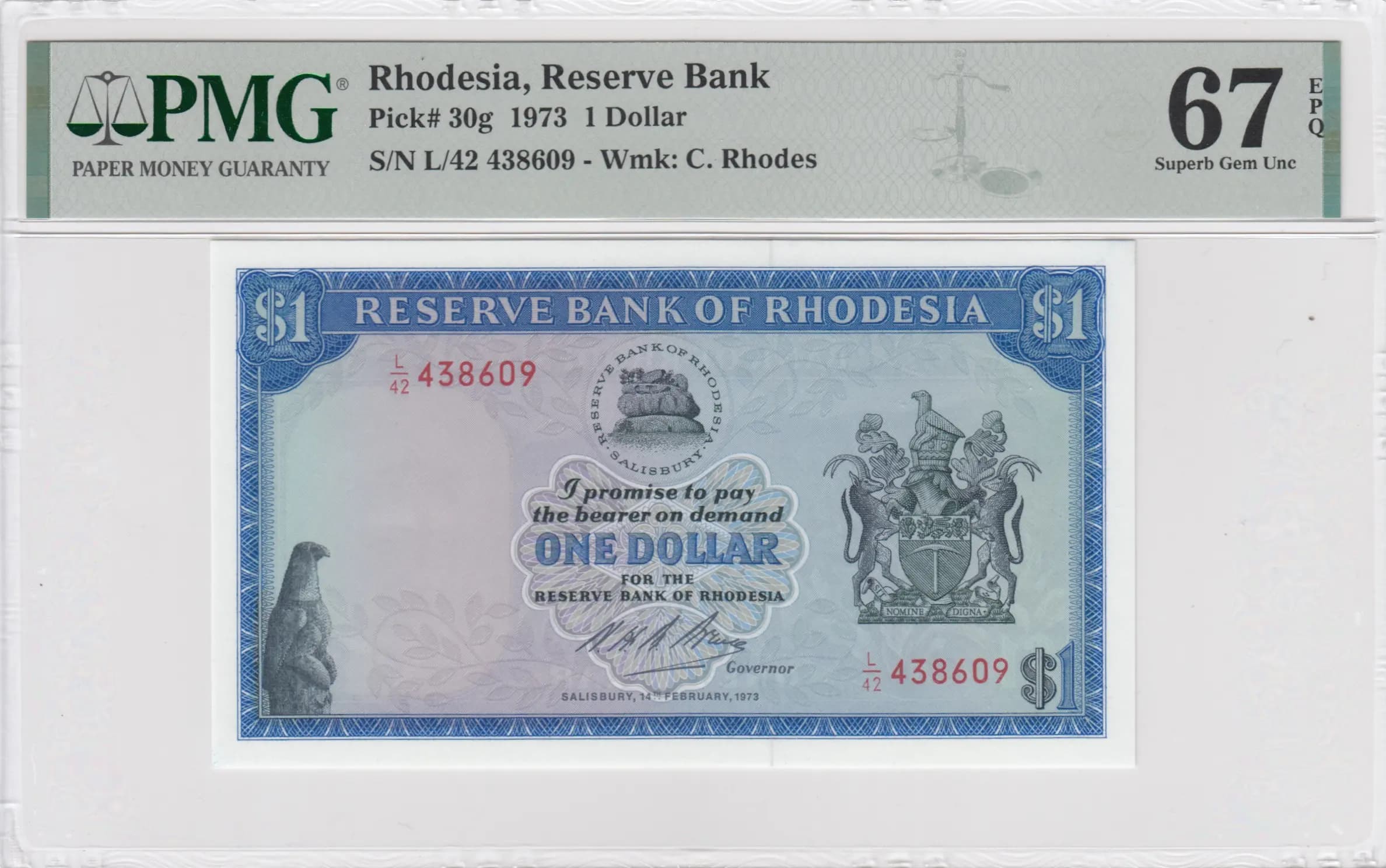
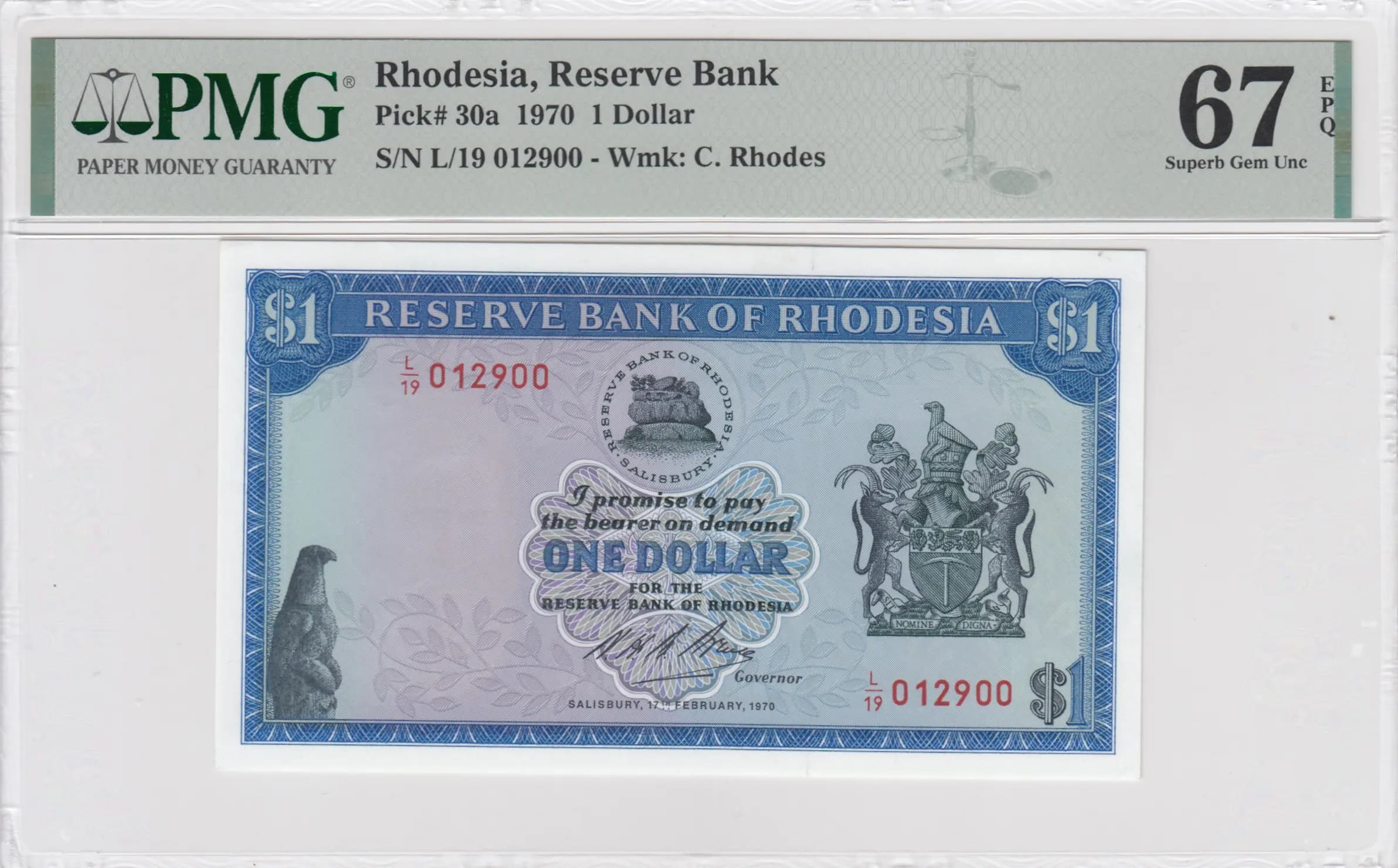
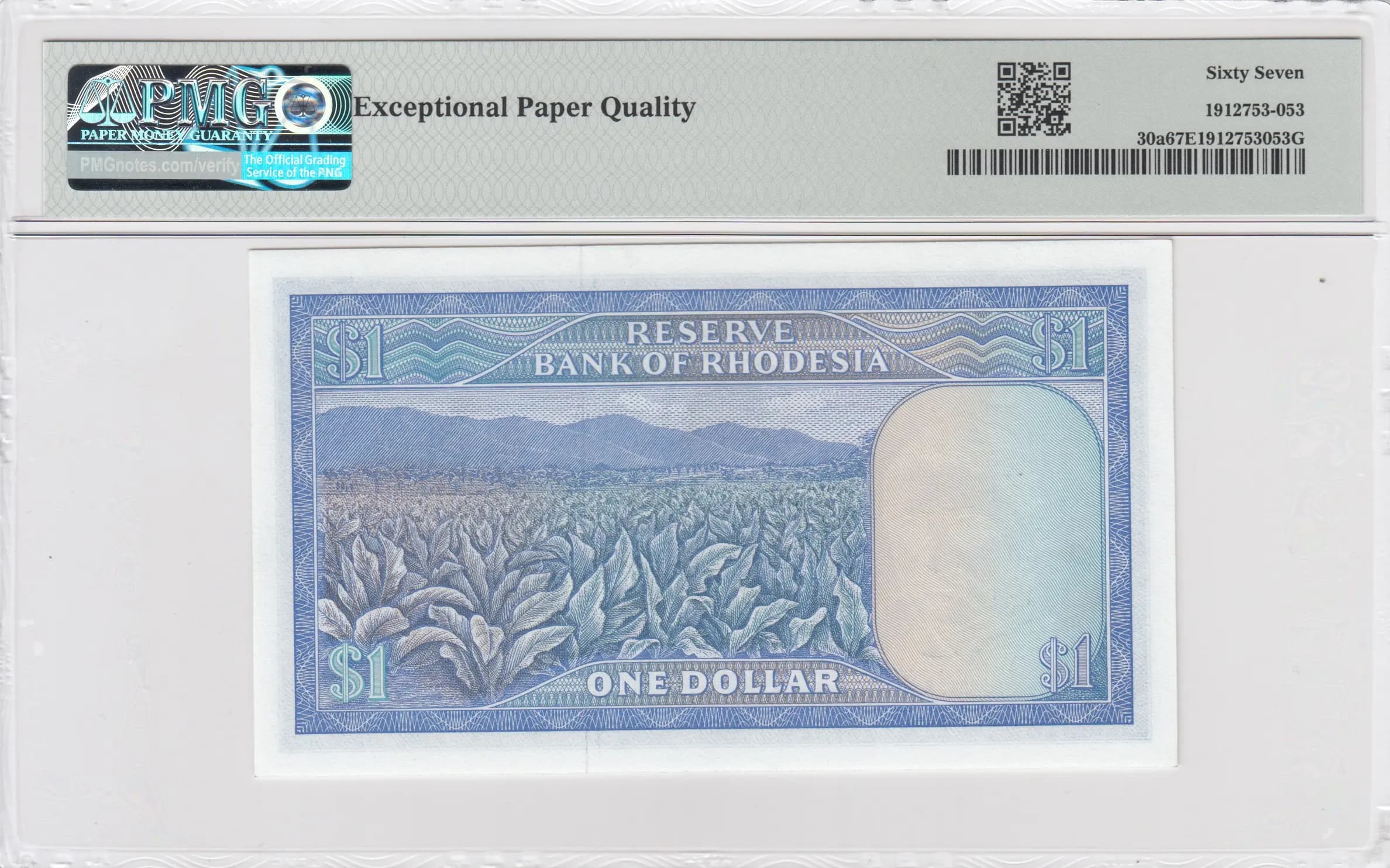
This is a pristine example of Rhodesia's 1970 one dollar note (Pick-30a) graded PMG 67 EPQ, representing the early currency of the Reserve Bank of Rhodesia during a significant period in the nation's history. The note features distinctive iconography including a meerkat on the obverse and an agricultural landscape on the reverse, rendered in an elegant blue color scheme with fine guilloche borders. In this exceptional uncirculated condition with no visible wear or imperfections, this note represents a desirable example of Rhodesian currency from the immediate post-UDI period.
Common. The 1970 one dollar note (Pick-30a) was produced in substantial quantities as the primary circulating denomination of early Rhodesian currency. No evidence of limited print runs, recalls, or scarcity exists for this issue. PMG 67 EPQ examples are desirable but not unusually rare, as these early Rhodesian notes were produced professionally with good technical standards and many survive in high grades. Market pricing and general availability support a common classification.
Issued on February 17, 1970, this one dollar note was printed during Rhodesia's early years following its Unilateral Declaration of Independence from Britain in 1965. The agricultural imagery on the reverse—depicting cultivated fields with mountains in the background—reflects Rhodesia's economy, which was heavily dependent on tobacco farming and other agricultural exports. The Reserve Bank of Rhodesia's seal and the Governor's signature represent the nation's attempt to establish independent monetary institutions during this controversial period of Rhodesian history.
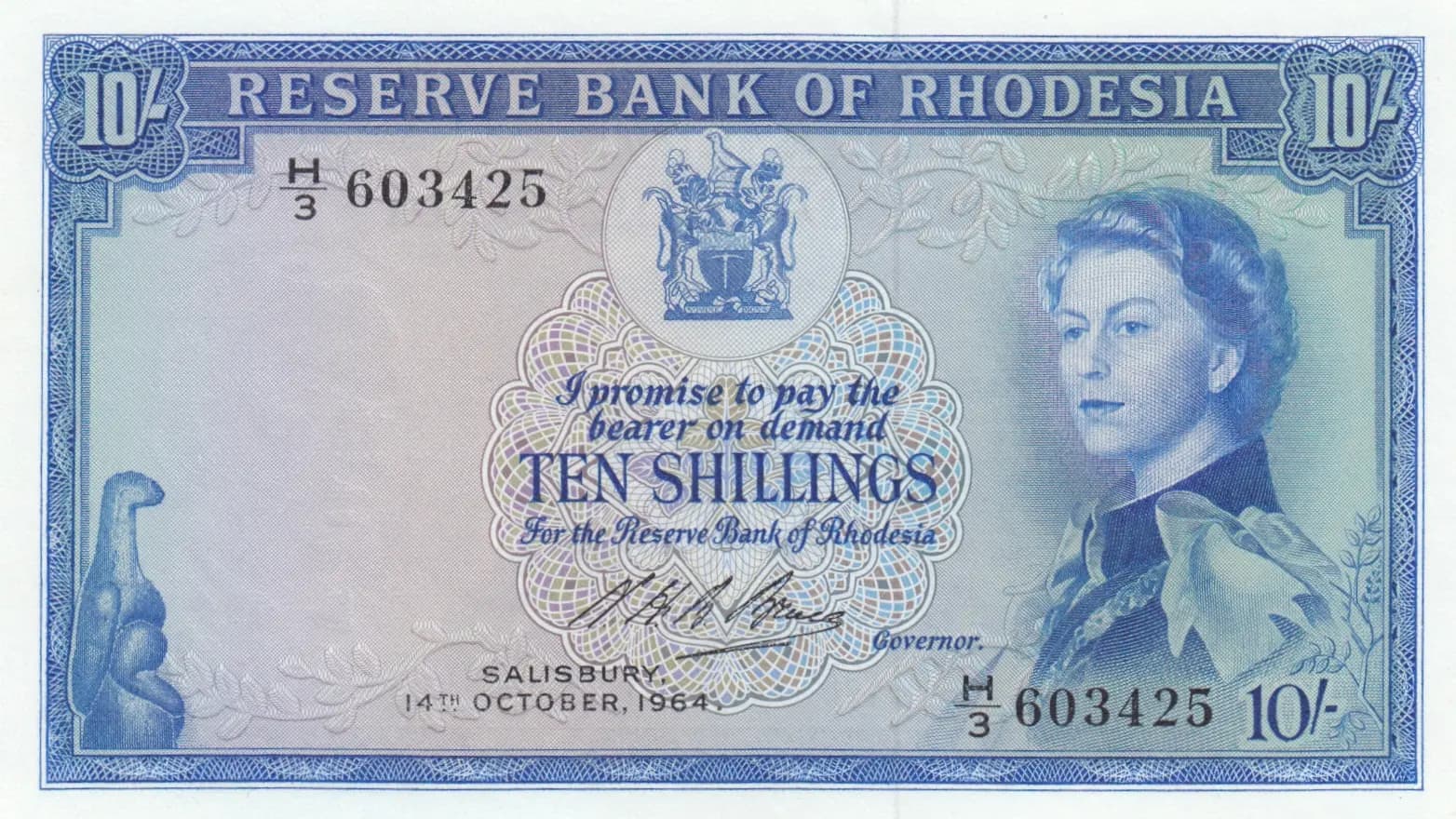
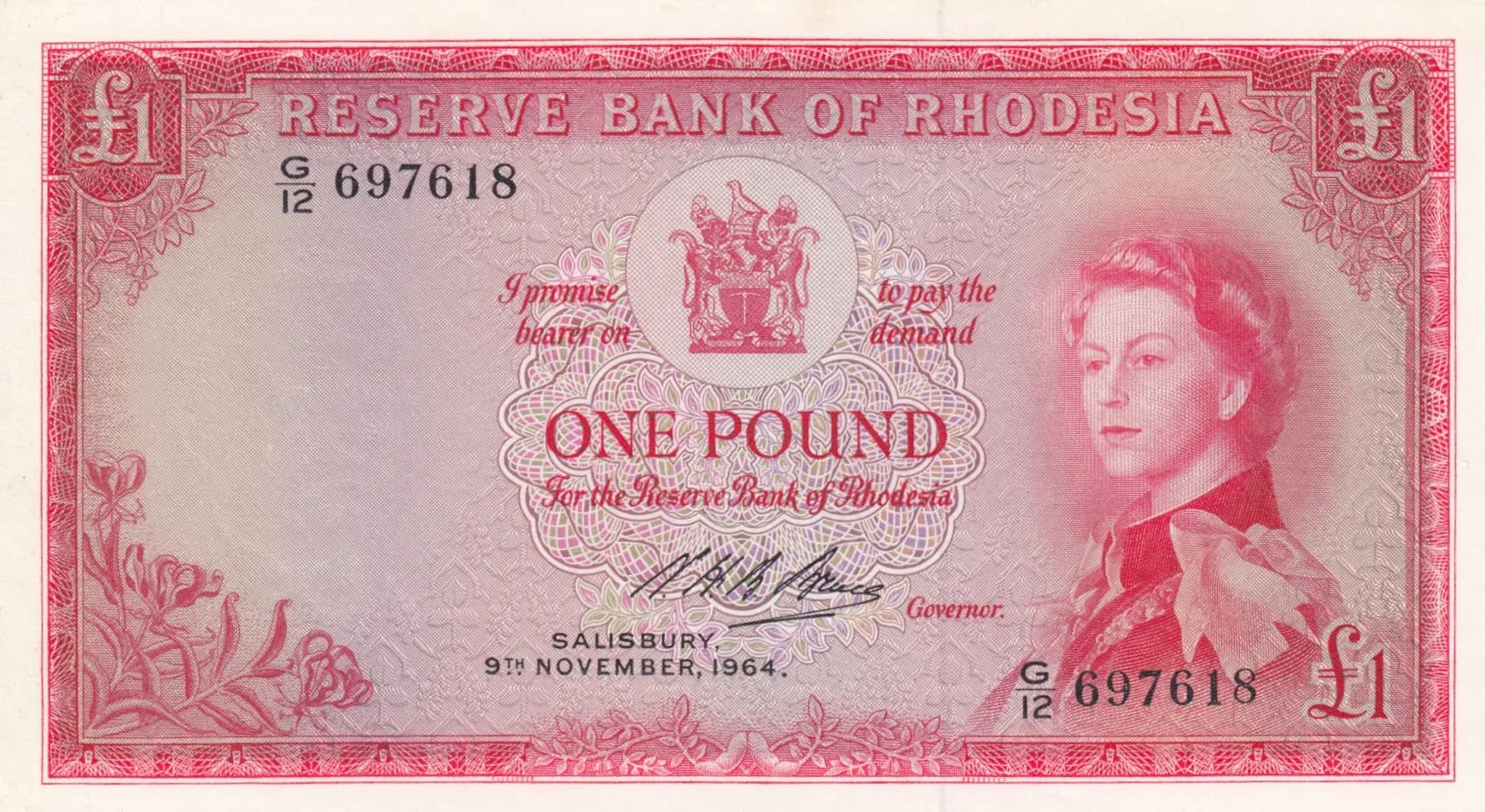
The obverse features a standing meerkat in profile on the left side, a species emblematic of African wildlife and Rhodesian national identity. The center displays an ornate oval cartouche containing the denomination and bank name, flanked by a formal coat of arms on the right featuring three standing figures with heraldic shield elements—representing Rhodesian symbols of authority. Fine decorative geometric border patterns and a circular Reserve Bank seal complete the formal design. The reverse depicts a landscape scene of Rhodesian agricultural enterprise: cultivated fields with regular crop rows in the foreground (likely tobacco plants, Rhodesia's primary export crop) with mountains visible on the horizon beneath a clear sky. An empty oval cartouche appears on the right side of the reverse. The color scheme throughout is predominantly blue, creating a cohesive and elegant aesthetic.
FRONT SIDE: 'RESERVE BANK OF RHODESIA' (issuing authority); '$1' (denomination); 'I promise to pay the bearer on demand ONE DOLLAR FOR THE RESERVE BANK OF RHODESIA' (promise to pay clause); 'SALISBURY, 17th FEBRUARY, 1970' (issue date and location); 'Governor' (signature line); Serial number: 'L/19 012900'. REVERSE SIDE: 'RESERVE BANK OF RHODESIA' (issuing authority); 'ONE DOLLAR' (denomination text); '$1' (denomination symbols). All inscriptions are in English.
Intaglio (engraved) printing, characteristic of Reserve Bank of Rhodesia currency of this period. The fine guilloche patterns visible in the ornate borders, the precision of the portrait and heraldic elements, and the detailed landscape rendering are all consistent with high-security intaglio production. The note was produced by Bradbury Wilkinson and Company, the principal security printer for Rhodesian banknotes during this era. Security features include watermarks, fine-line patterns, and the red serial number printed separately.
Variety identified by serial number prefix 'L/19' in the observed specimen. Rhodesian notes of this period exhibit variations in prefix letters and number combinations corresponding to different printing stages. The specific signature of the Governor and the precise date 'SALISBURY, 17th FEBRUARY, 1970' distinguish this from any subsequent printings or reissues. No overprints or secondary modifications are evident on this example, indicating it is a standard first-issue variety of the Pick-30a denomination.