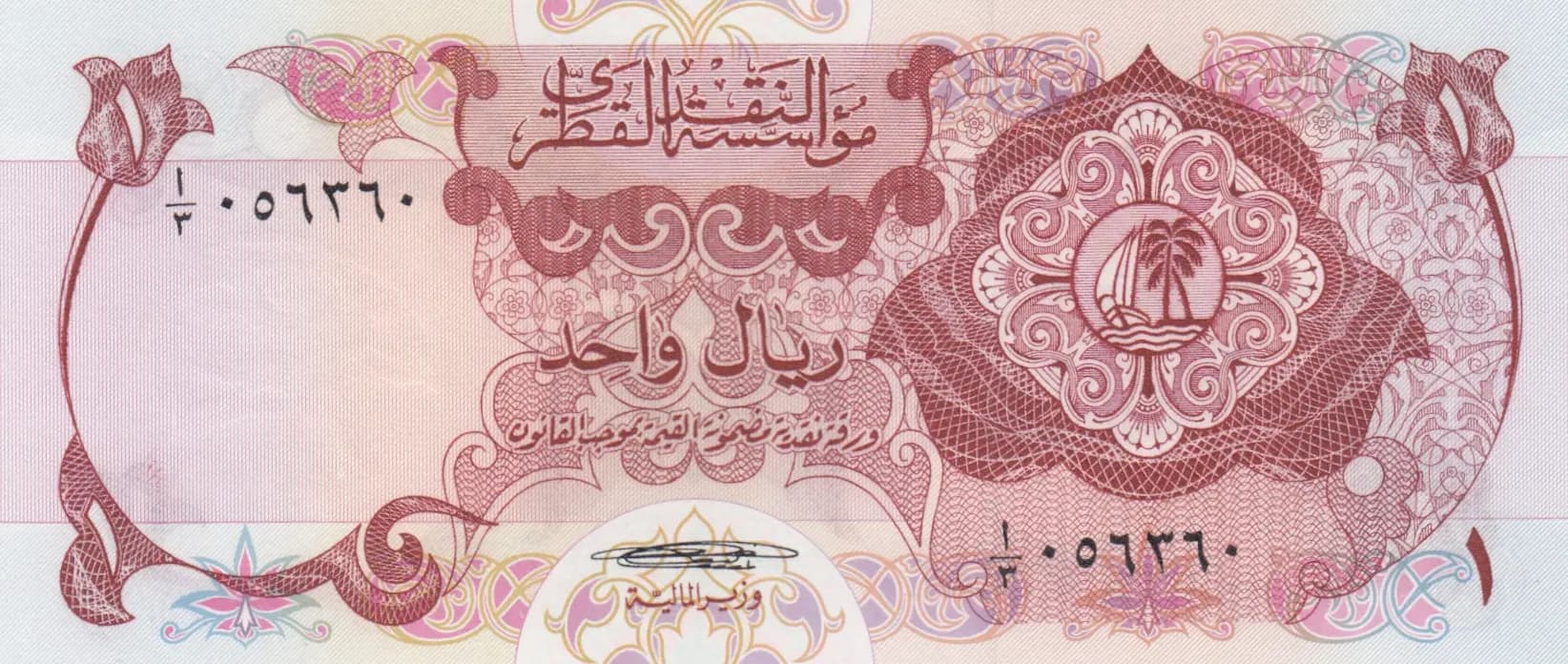
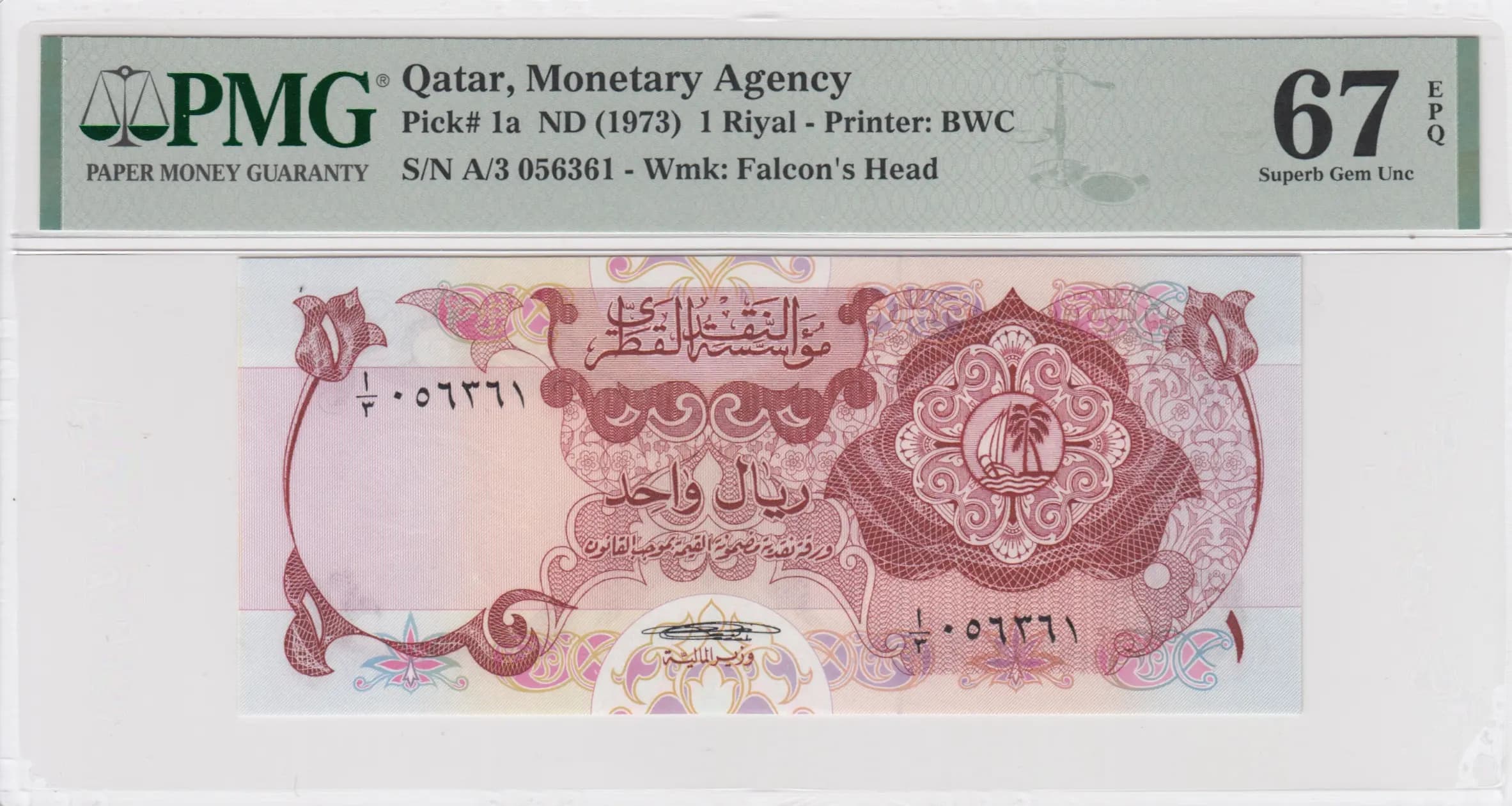
1 riyal 1980
Market Prices
47 salesAbout This Note
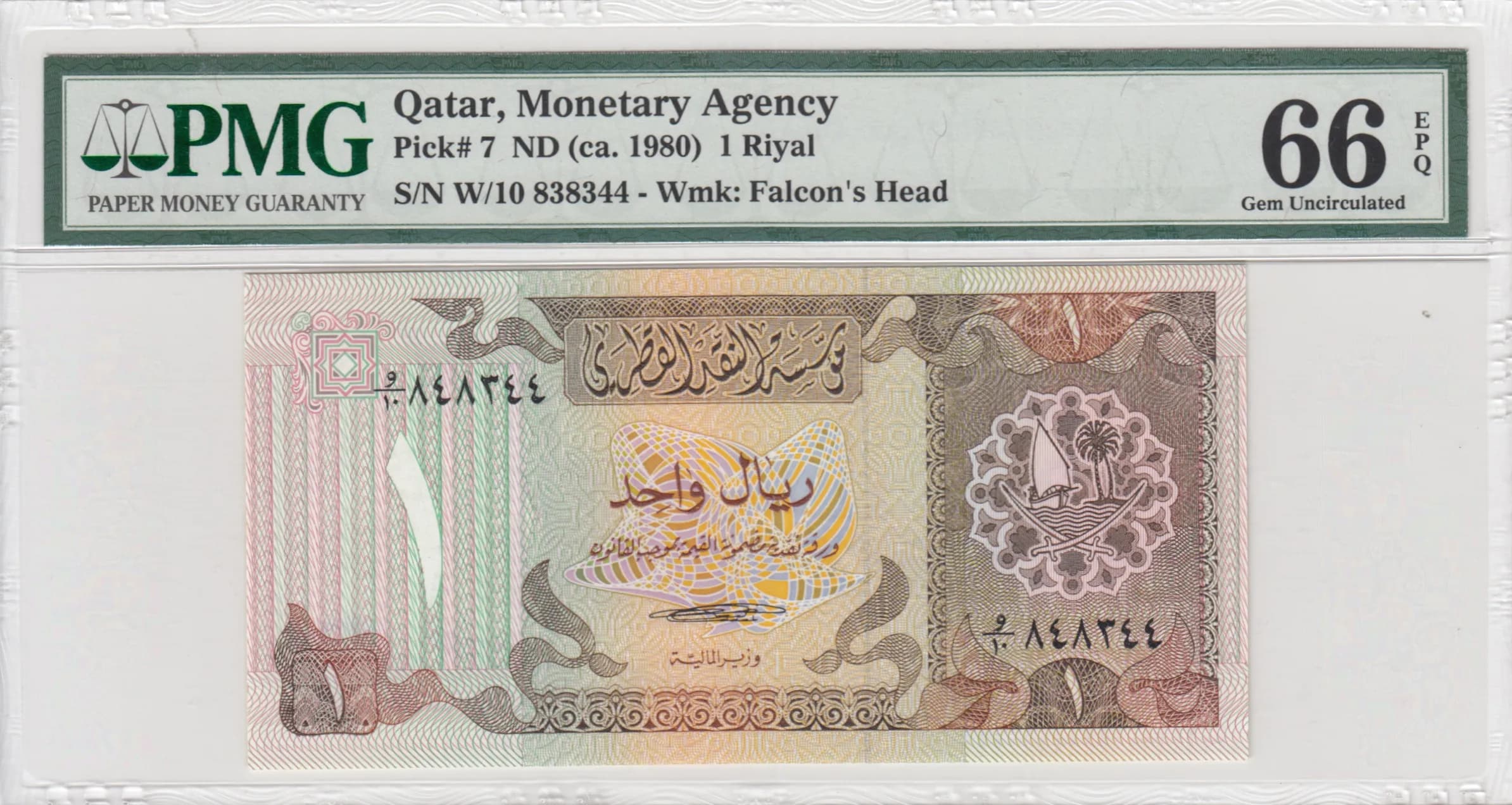
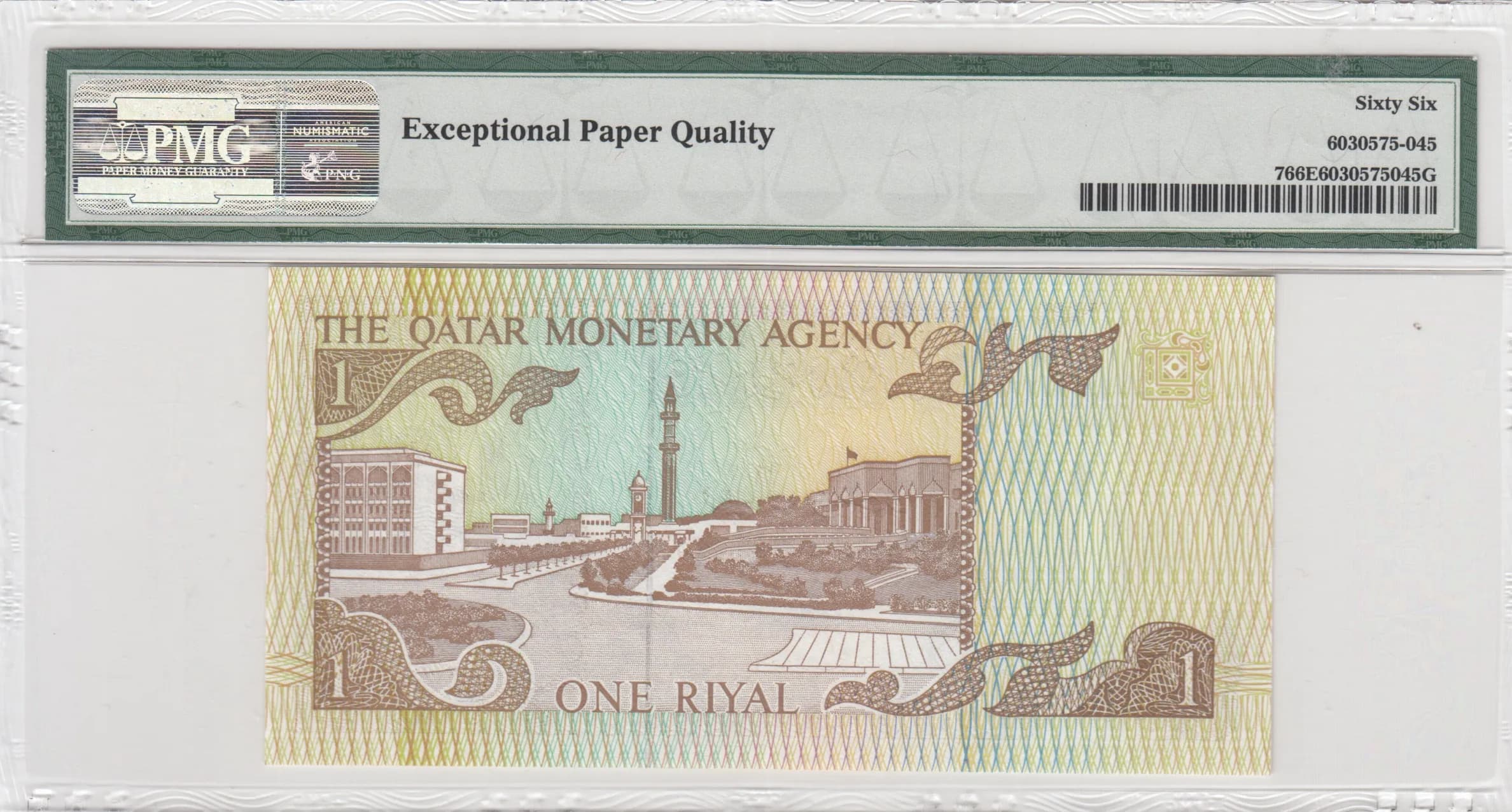
This Qatar 1 Riyal from 1980 (Pick-7) is a gem uncirculated example graded PMG 66 EPQ, featuring exceptional paper quality and pristine condition with no visible wear or handling. The note showcases intricate intaglio printing with elaborate geometric and floral borders in pink, green, and brown tones, along with the iconic Qatari state emblem featuring crossed swords and palm tree on the obverse. The reverse depicts a detailed architectural scene of modern Doha development including contemporary buildings, mosques, and Islamic landmarks, reflecting Qatar's rapid modernization during the oil boom era.
Common. Despite the premium condition grade, this 1980 issue remains common in the market. eBay sales data shows consistent trading in all grades from $5 to $220 range with multiple sales annually since 2009, indicating healthy supply. UNC examples sell for $40-70 regularly, and even PMG 66 examples have sold in the $90-150 range in recent years, with outlier high sales (such as the $1,325 anomaly in 2018) likely representing collector competition spikes rather than scarcity. The Pick-7 was a regular issue by the newly established Qatar Monetary Agency with substantial print runs.
Issued by the Qatar Monetary Agency in 1980, this banknote commemorates a pivotal moment in Qatar's history as a newly independent nation (1971) experiencing rapid economic and urban development fueled by oil revenues. The reverse design's emphasis on Doha's modern skyline, including multi-story buildings and Islamic architecture, reflects the ambitious nation-building and infrastructure expansion of the 1970s-1980s. The traditional crossed swords and palm tree emblem on the obverse represents Qatari national sovereignty and heritage, symbolizing the state's balance between modernization and cultural identity.
The obverse features the National Emblem of Qatar—a circular ornamental seal containing crossed scimitars and a stylized palm tree, rendered in fine detail on the right side of the note. The background incorporates sophisticated geometric and floral patterns in pink, red, and green creating a decorative border frame, with vertical striped patterns in complementary colors on the left margin. The reverse depicts an urban landscape of Doha featuring modern multi-story commercial/administrative buildings on the left, Islamic architectural elements including a mosque with minaret, geometric plaza landscaping, and Qatari flags. Fine-line intaglio background patterns provide visual depth and anti-counterfeiting security. The overall composition celebrates Qatar's rapid modernization while maintaining traditional Islamic and national symbols.
Front side: Arabic text 'دولة قطر' (Dawlat Qatar) translates to 'State of Qatar'; Serial number 'W/10 838344' in English alphanumeric format. Back side: 'THE QATAR MONETARY AGENCY' and 'ONE RIYAL' appear in English, identifying the issuing authority and denomination.
Intaglio (engraved) printing on high-quality banknote paper, evidenced by the fine line patterns creating the background, intricate geometric borders, and detailed architectural rendering on the reverse. The exceptional clarity of the crossed swords emblem, precise geometric patterns, and complex border designs are characteristic of multi-color intaglio production. Standard security printer techniques typical of 1980s Gulf state currency issues, likely produced by a European security printer such as De La Rue or similar establishment accustomed to Gulf currency contracts.
This specific example shows serial number prefix 'W/10' with sequential number 838344. No major varieties are documented for Pick-7 1980 issues. Varieties if any would typically be identified by: (1) signature combinations of Monetary Agency officials, (2) serial number prefix variations (letters and numbers combinations), or (3) subtle printing differences. The 'W' prefix and two-digit designation are consistent with standard Qatar Monetary Agency cataloging from this period. The EPQ (Exceptional Paper Quality) designation indicates superior paper stock quality for this example compared to some later printings.