1 riyal 1973
Market Prices
79 salesAbout This Note
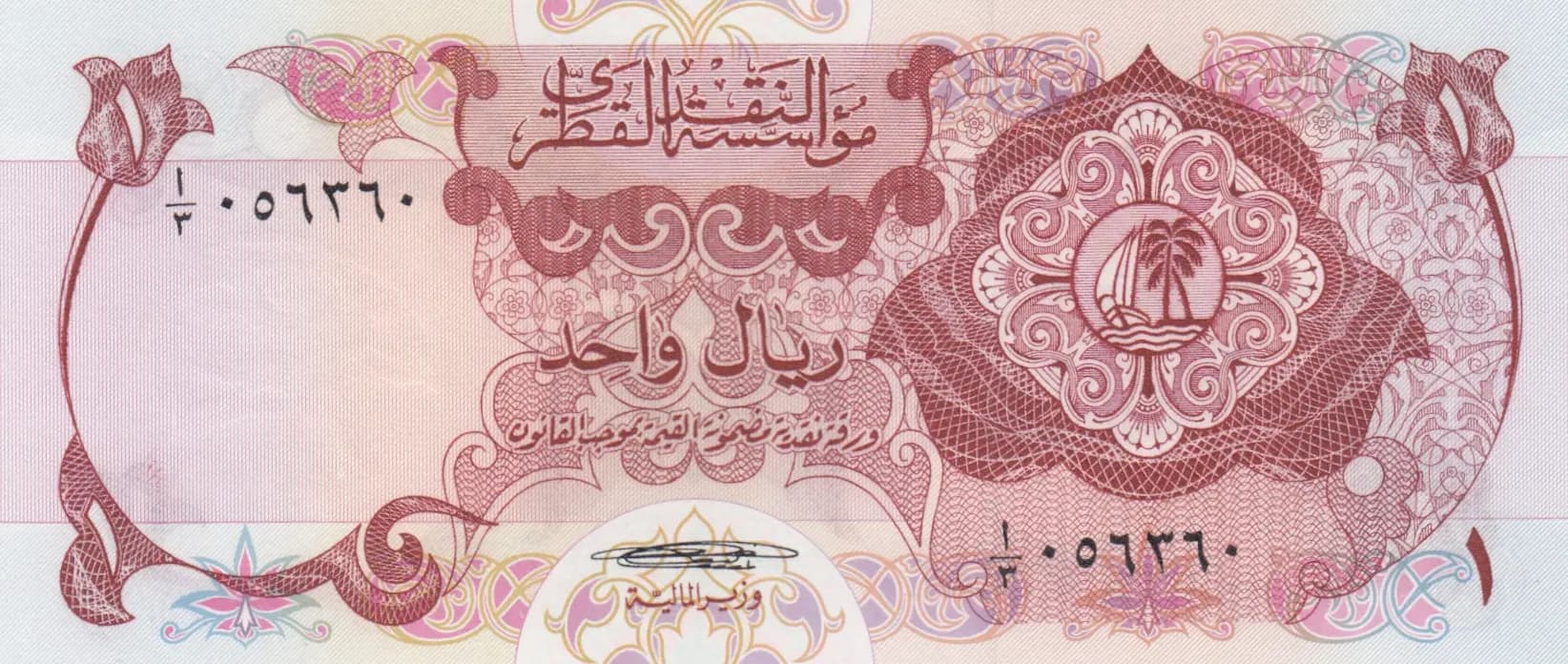
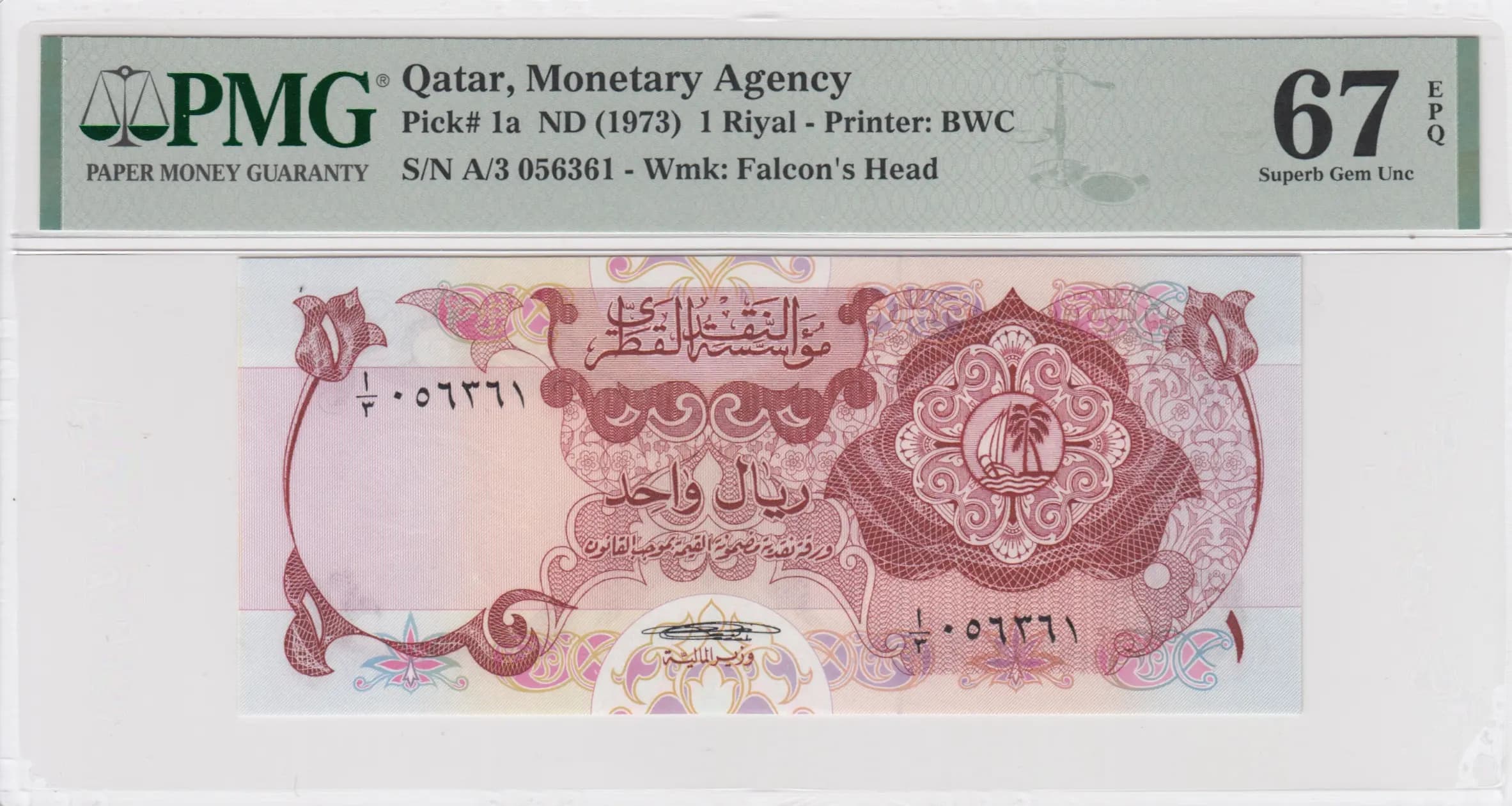
This is a pristine example of Qatar's first circulating banknote, the 1 Riyal issued by the Qatar Monetary Agency in 1973. Graded PMG 67 EPQ (Superb Gem Uncirculated), this note displays exceptional paper quality with sharp, well-registered printing throughout and no signs of wear, folds, or creases. The note is notable as an early Gulf currency issue featuring elegant Islamic geometric and floral design work, making it a desirable entry point for collectors of Middle Eastern currency and first-issue notes.
Common. While this is Qatar's first circulating banknote (Pick-1), the eBay market data shows consistent availability across multiple condition grades spanning from 2009 to 2026. PMG 67 examples regularly sell in the $150-$180 range (with occasional spikes to $330-$338 in earlier years), indicating steady collector demand but substantial supply. The note was issued in normal production quantities sufficient to meet circulating demand in 1973, and examples in all condition grades remain available in the secondary market. Only if this particular serial number had special characteristics (low number, rare prefix, or significant grading anomaly) would rarity assessment differ from common.
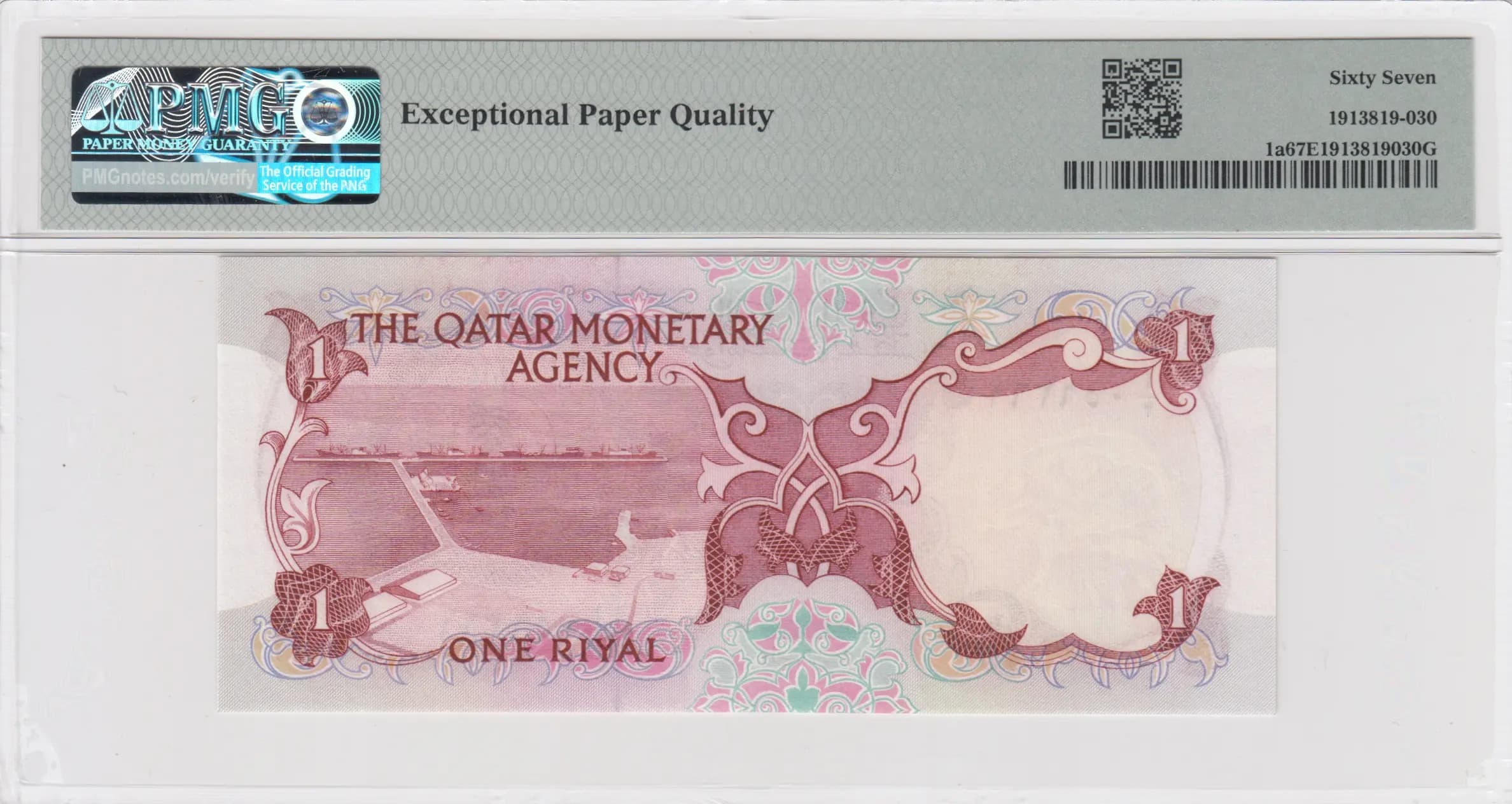
Issued in 1973 by the Qatar Monetary Agency, this 1 Riyal note marks Qatar's transition to an independent currency system during a period of significant economic development following the nation's oil wealth expansion. The Port of Doha depicted on the reverse represents the maritime heritage and commercial importance central to Qatar's economy during this era, while the geometric and floral Islamic design elements reflect the nation's cultural identity. As the first regular issue banknote of the new monetary authority, it commemorates a pivotal moment in Qatar's financial sovereignty.
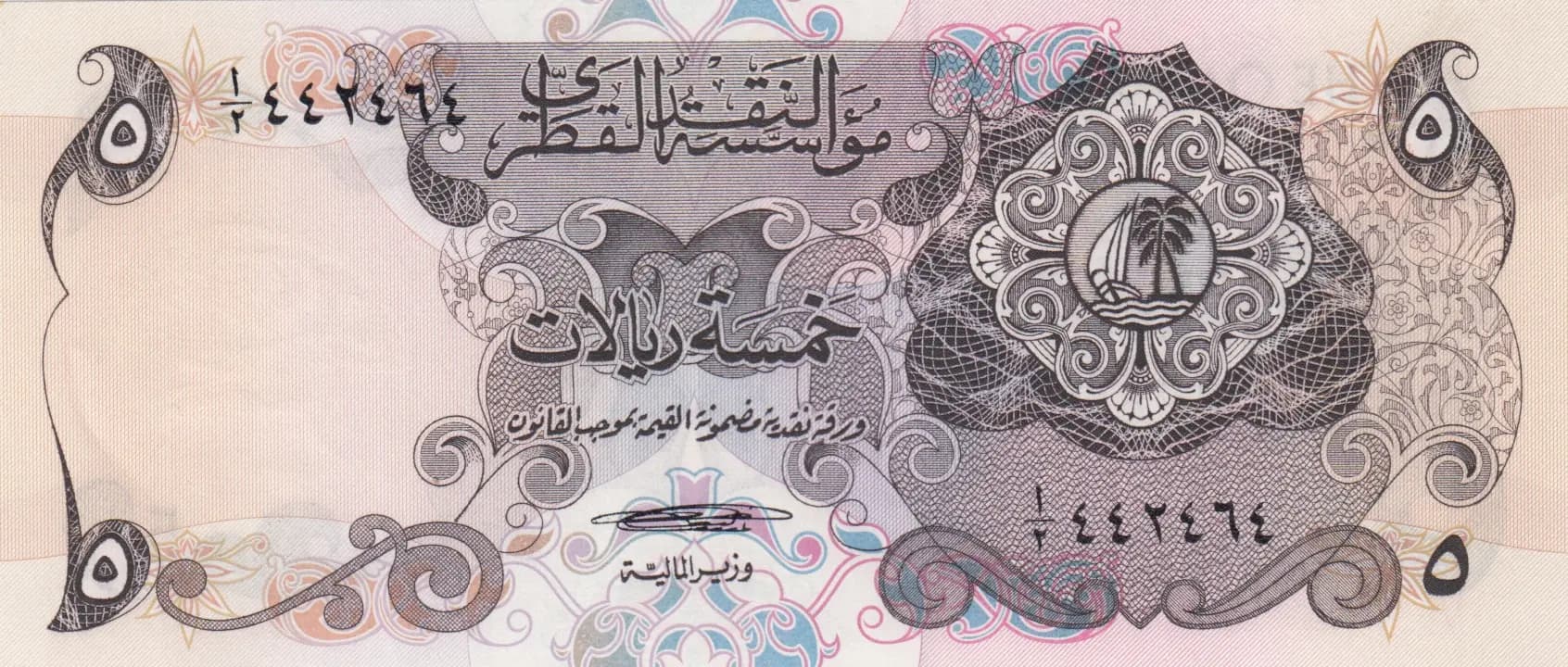
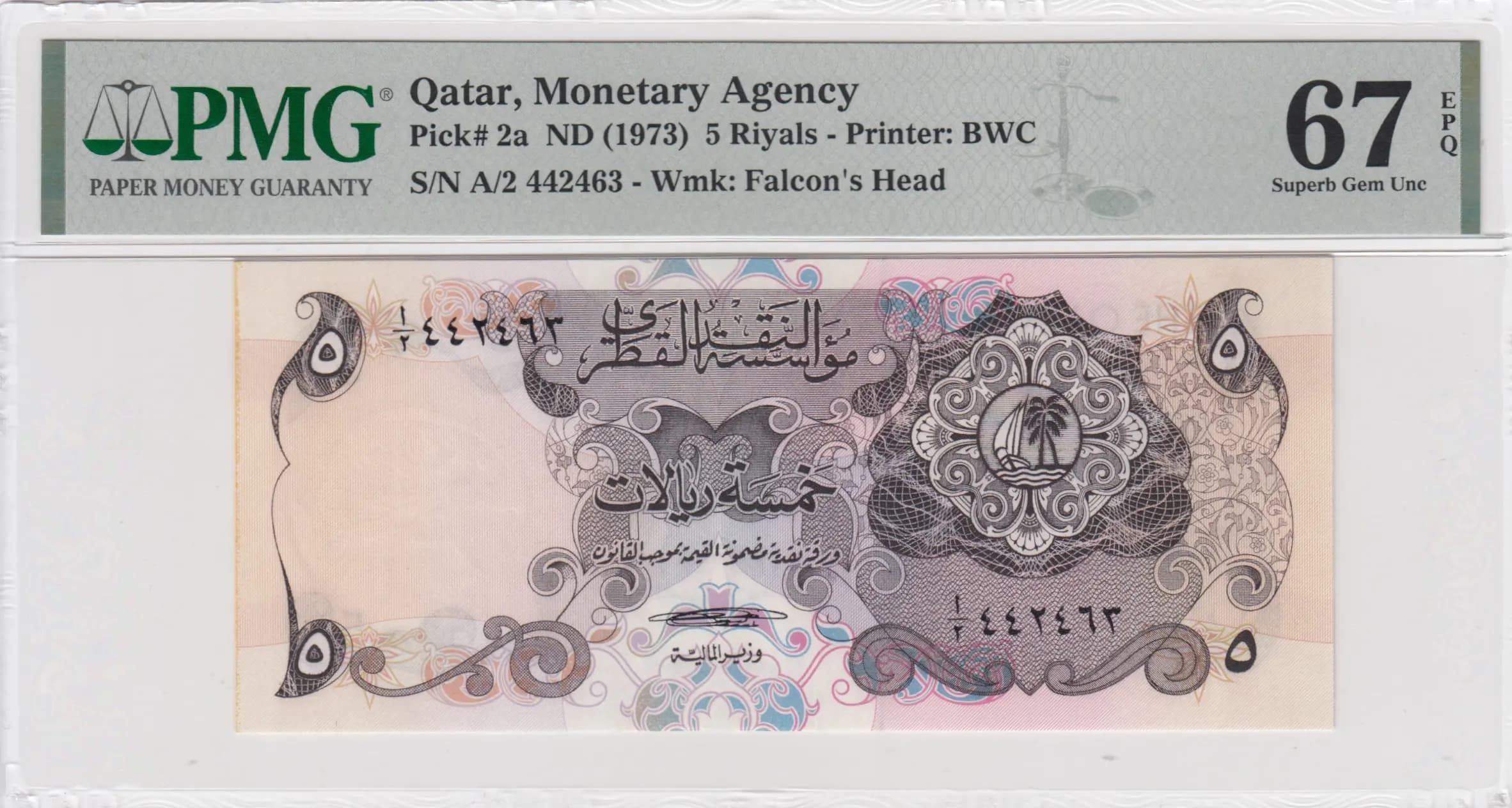
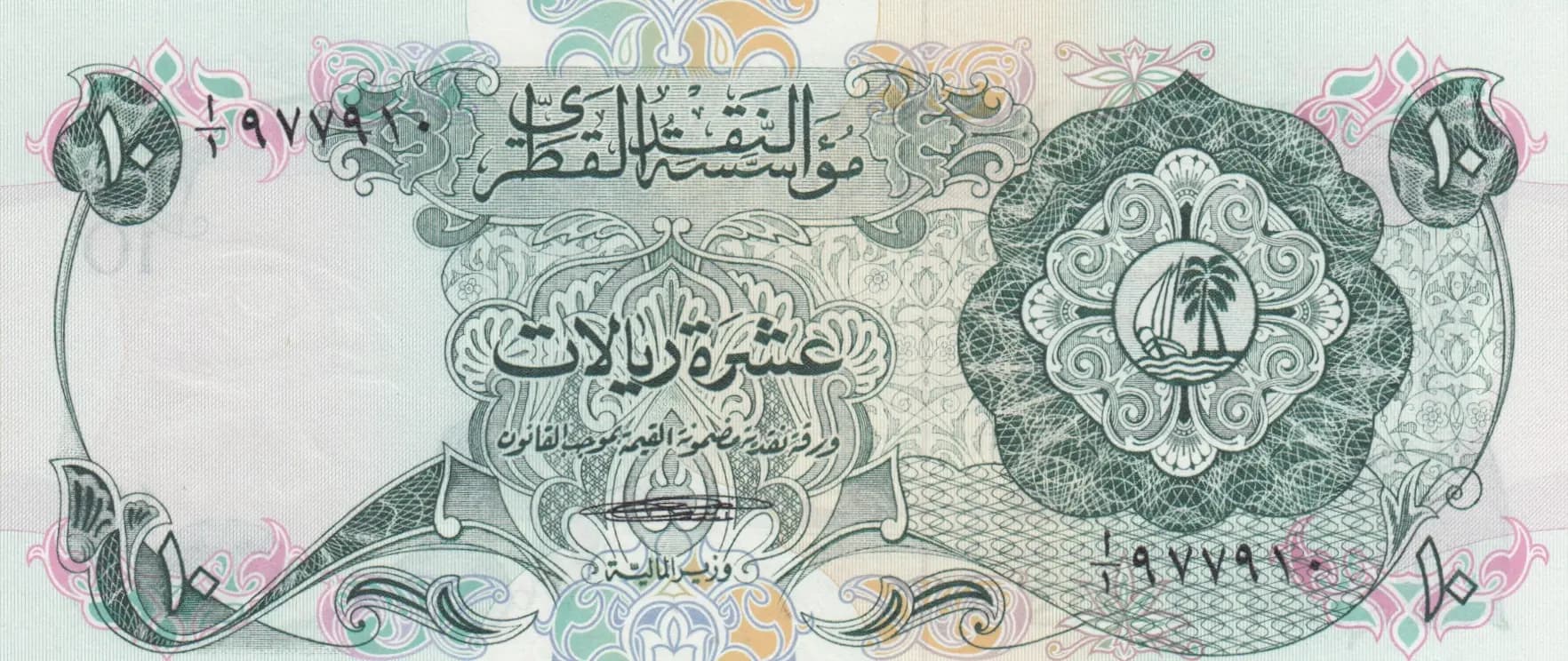
The obverse features a dominant circular medallion containing intricate geometric patterns with a central palm tree symbol, rendered in pink and mauve tones against a cream background. Ornate Islamic floral and geometric borders frame the design, with fine-line engraving patterns filling the background for security purposes. The reverse depicts the Port of Doha as a detailed maritime architectural scene in the center, featuring coastal structures rendered in complementary pink and mauve tones with light blue accents. Both sides employ matching ornate corner flourishes and decorative Islamic motifs consistent with the cultural aesthetics of 1970s Gulf currency design. The falcon's head watermark, traditional in Gulf currency design, provides additional security authentication.
Front Side: Arabic text 'موسسة النقد القطر' translates to 'Qatar Monetary Agency'; 'ريال واحد' translates to 'One Riyal'; serial numbers appear in both English (A/3 056361) and Arabic numerals (٢٠٥٦٢٦١ and ١٠٩١٧١). Back Side: English text reads 'THE QATAR MONETARY AGENCY' and 'ONE RIYAL' with denomination clearly marked; PMG certification information states 'Sixty Seven' (grade) and 'Exceptional Paper Quality'; verification identifier '1a67E1913819030G' and reference 'PMGnotes.com/verify' appear as part of the grading holder.
The note exhibits characteristics of intaglio (engraved) printing, evidenced by the fine-line pattern work visible throughout the background and the sharp, precise registration of the multicolored design elements. The complex geometric patterns and detailed architectural scene on the reverse are typical of high-security intaglio processes. Security printers for early Qatar Monetary Agency issues typically included De La Rue or similar specialist currency printers, though specific attribution for this Pick number would require additional documentation. The exceptional clarity and color registration observed in this PMG 67 specimen are consistent with professional currency-grade intaglio production.
The observed specimen shows serial number A/3 056361. Early Qatar 1 Riyal notes exist with variations in serial number prefixes (A/1, A/2, A/3, etc.) and in signature combinations, though signature varieties are not visible in the current image analysis. No overprints or security markings beyond the standard watermark are apparent. The eBay price history data suggests no major varieties command significant premiums, indicating all standard production variants are treated equally in the market. Specific variety identification would require comparison of signature blocks and serial number prefix ranges against a complete Pick catalogue reference for QAT P-1.