1 peso 1942
“Culion Leper”
Market Prices
About This Note
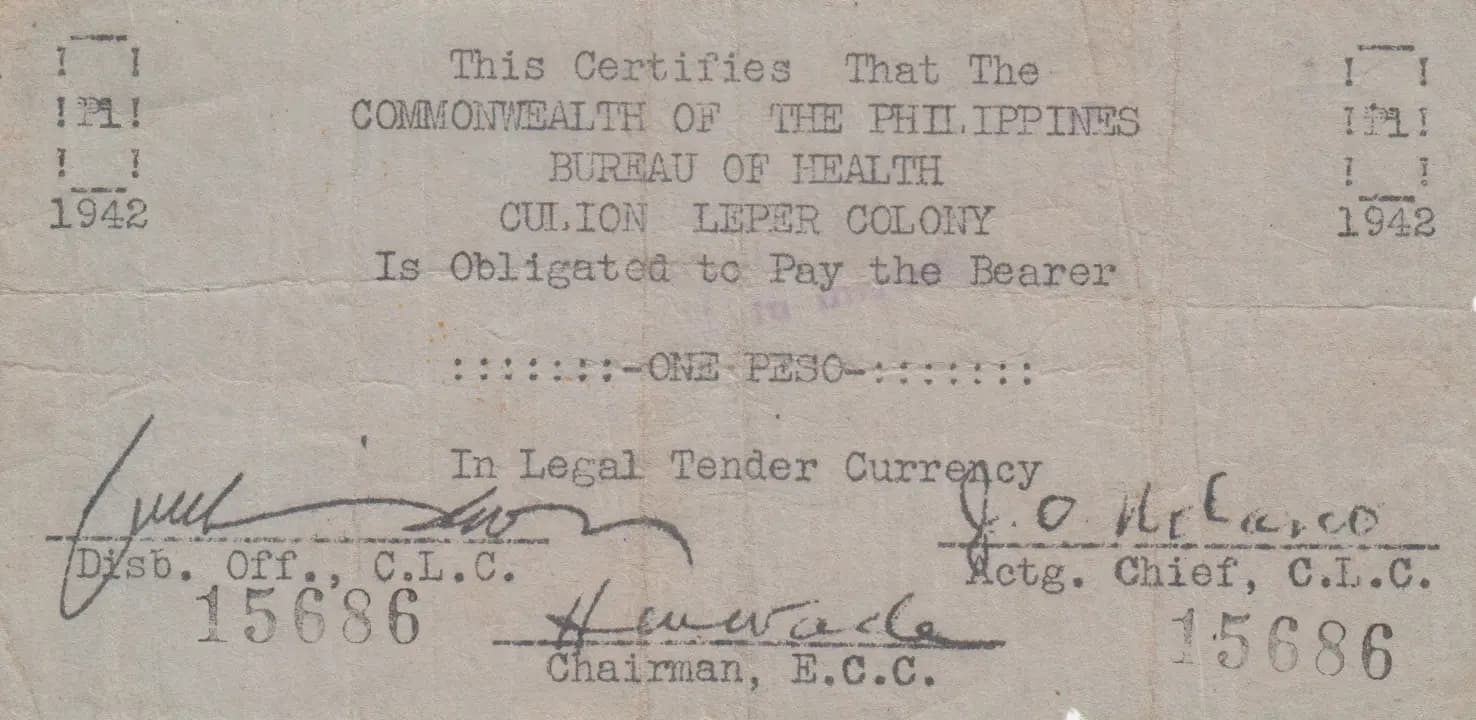
This is a remarkable 1942 emergency currency certificate issued by the Commonwealth of the Philippines Bureau of Health at the Culion Leper Colony, graded VF. Rather than a conventional banknote, this is an official government obligation certificate signed by multiple colonial authorities, representing a fascinating example of specialized wartime scrip. The note exhibits appropriate aging with visible creasing, discoloration, and foxing consistent with an 80+ year old document, with clear signatures and official stamps from the Disbursing Officer and Acting Chief of the facility.
Uncommon to Scarce. While Philippines 1942 emergency issues exist in various forms, this specific Culion Leper Colony certificate (Pick P-S245) represents a highly specialized and geographically isolated scrip issue from a single institutional source. The eBay market data shows VF specimens trading at approximately $20 USD, which is moderate and suggests limited collector demand but recognized scarcity compared to mainstream circulation issues. The institutional nature of the issue (limited to a single remote facility) and its specialized historical context (medical institution scrip during wartime occupation) make it less common than standard national currency of the period. Survivors in VF condition are genuinely scarce as most would have been redeemed or lost.
This certificate was issued during 1942, when the Philippines was under Japanese occupation during World War II. The Culion Leper Colony, located on Culion Island in Palawan, was an isolated medical facility established by American colonial authorities. The issuance of this local scrip by the Bureau of Health reflects the economic disruption and currency shortages caused by the war, when normal monetary channels were compromised and remote institutions had to create their own medium of exchange to facilitate commerce and compensate workers at the isolated facility.
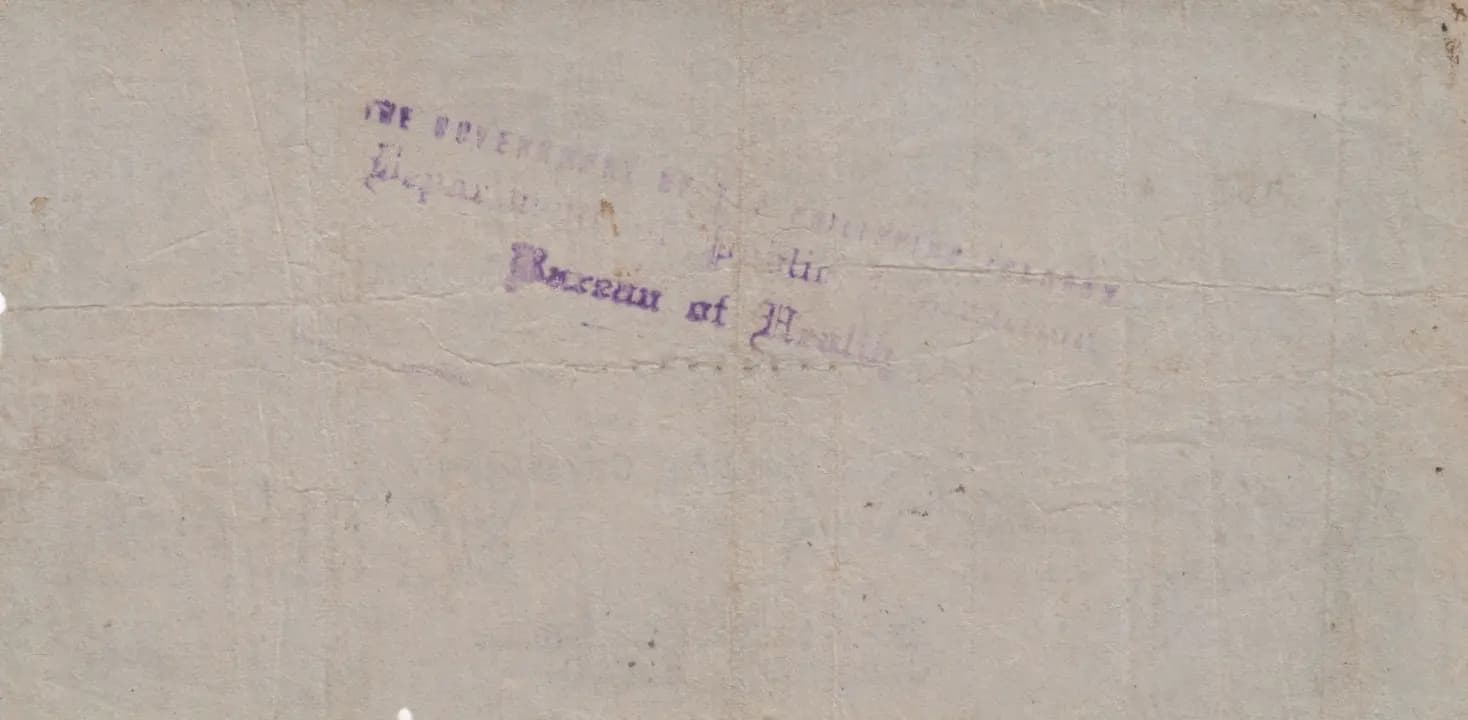
This document is printed on aged cream/beige paper and follows the format of an official government certificate rather than a conventional banknote. The design features centered text in English declaring the obligation of the Commonwealth of the Philippines Bureau of Health to pay one peso in legal tender. The security features consist of multiple official seals, rubber stamps, and three separate signature lines for colonial officials managing the Culion Leper Colony. The primary visual elements are typography, official government stamps (the specific seals appear to be from Philippine Bureau of Health and Emergency Control Committee authorities), and handwritten signatures in dark ink. The document is numbered (15686) and dated 1942, with the reverse bearing a museum acquisition stamp suggesting institutional provenance.
FRONT SIDE: 'This Certifies That The Commonwealth of The Philippines Bureau of Health Culion Leper Colony Is Obligated to Pay the Bearer One Peso In Legal Tender Currency' (1942). Official signatures and stamps from: Disbursing Officer, Culion Leper Colony (DISB. Off., C.L.C.); Acting Chief, Culion Leper Colony (Actg. Chief, C.L.C.); and Chairman, Emergency Control Committee (Chairman, E.C.C.). Serial number 15686 is visible. REVERSE SIDE: Faint purple/violet stamp or handwritten notation referencing 'Museum at Makati,' indicating this specimen has been held in a Philippine museum collection.
This document was produced using standard letterpress or offset printing for the primary text and borders, with official seals applied via rubber stamps and ink. The signatures and some administrative notations appear to be handwritten in manuscript form over the printed base. The printing is relatively simple, reflecting wartime constraints and the emergency nature of the issuance by a specialized government health facility rather than a central bank or security printer. No specialized anti-counterfeiting techniques are evident.
This specimen is identified as Pick P-S245 and bears serial number 15686, issued in 1942. The note shows signatures from three officials: Disbursing Officer, Acting Chief of Culion Leper Colony, and Chairman of the Emergency Control Committee. The reverse bears a museum acquisition stamp from 'Museum at Makati,' indicating this is from an institutional collection rather than private circulation. Given the limited and localized nature of Culion Leper Colony scrip production, individual serial numbers and signature combinations may constitute minor varieties, though no published variety census for this issue is widely known in numismatic literature. The institutional provenance (museum specimen) should be noted as a significant factor in its collector value and pedigree.