50 soles 1959
Market Prices
12 salesAbout This Note
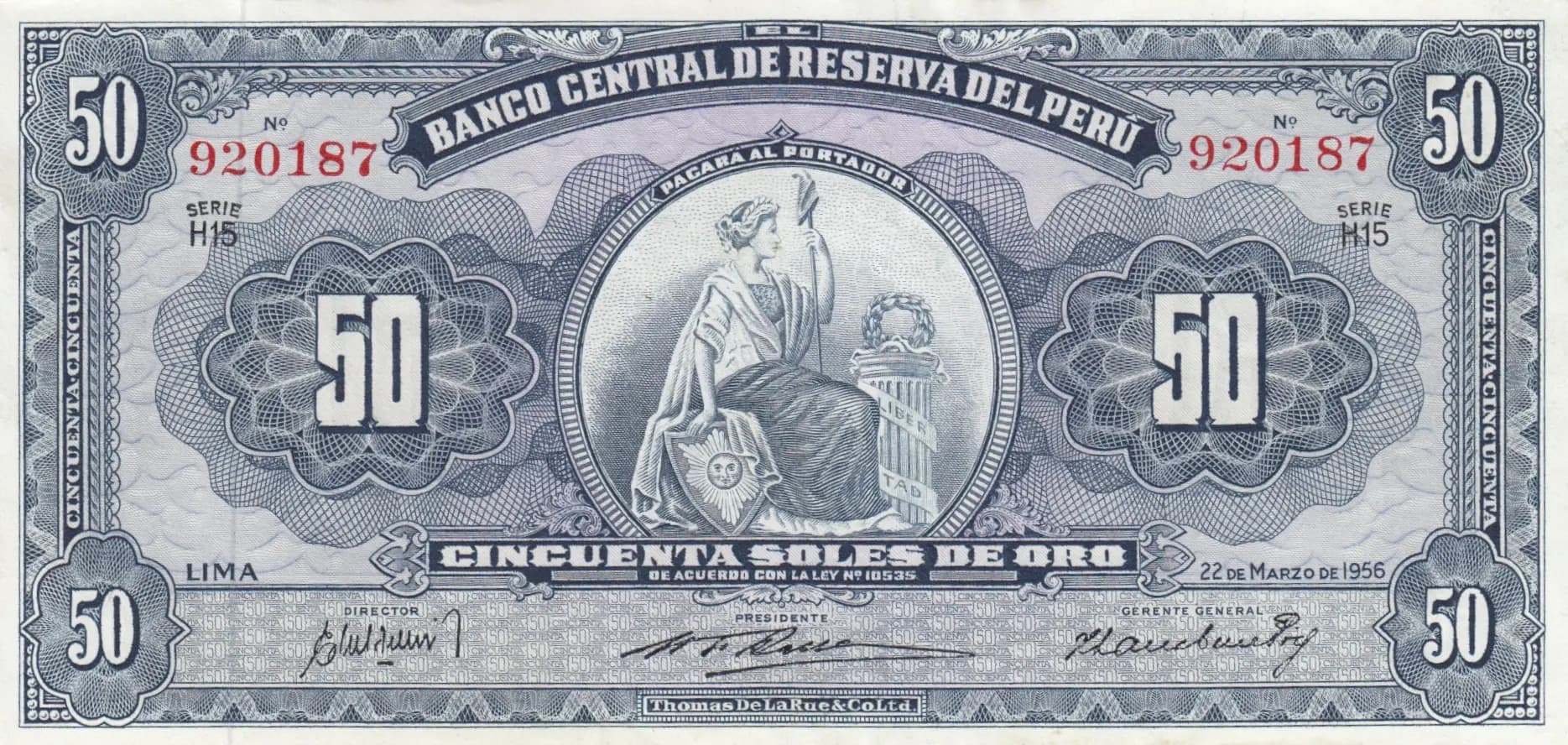
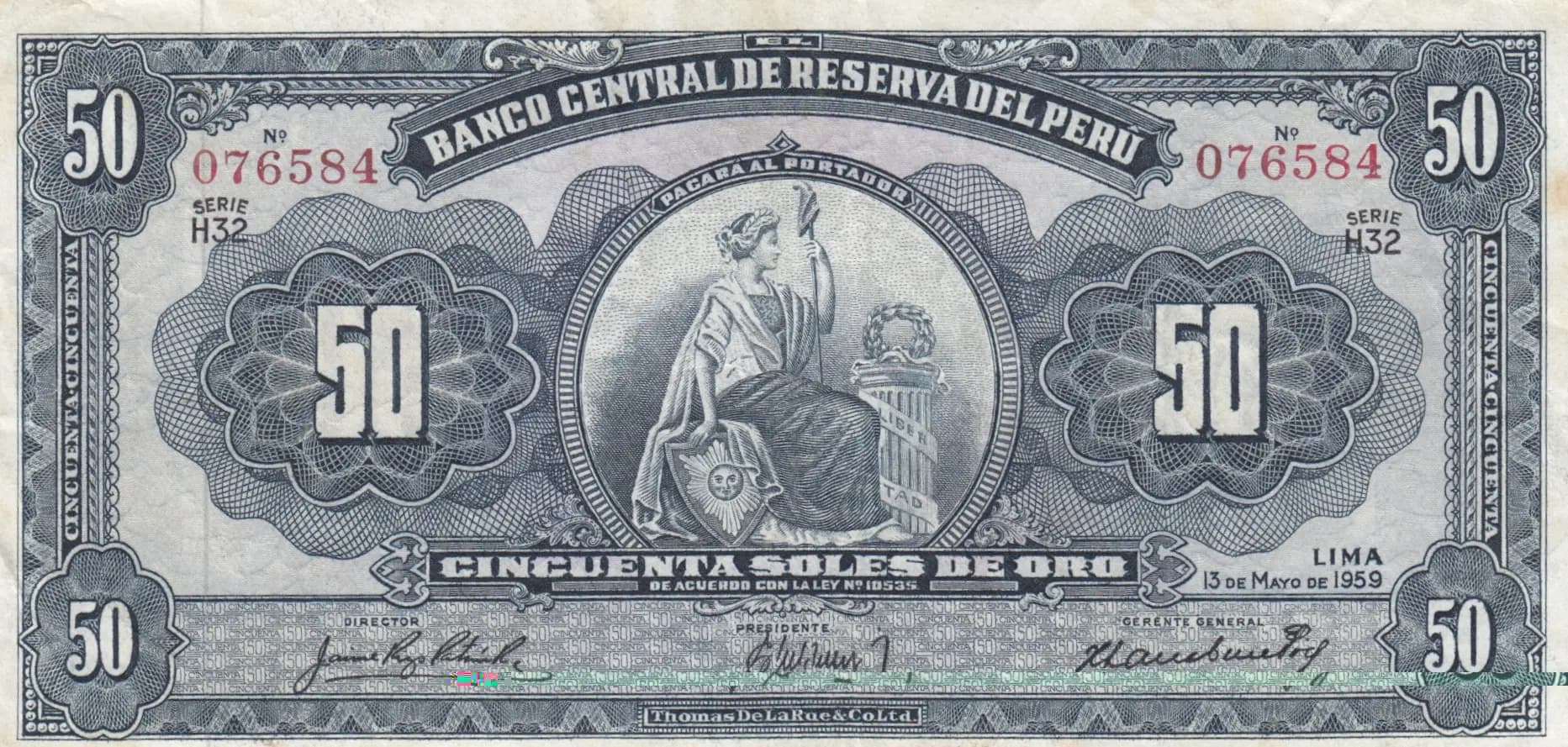
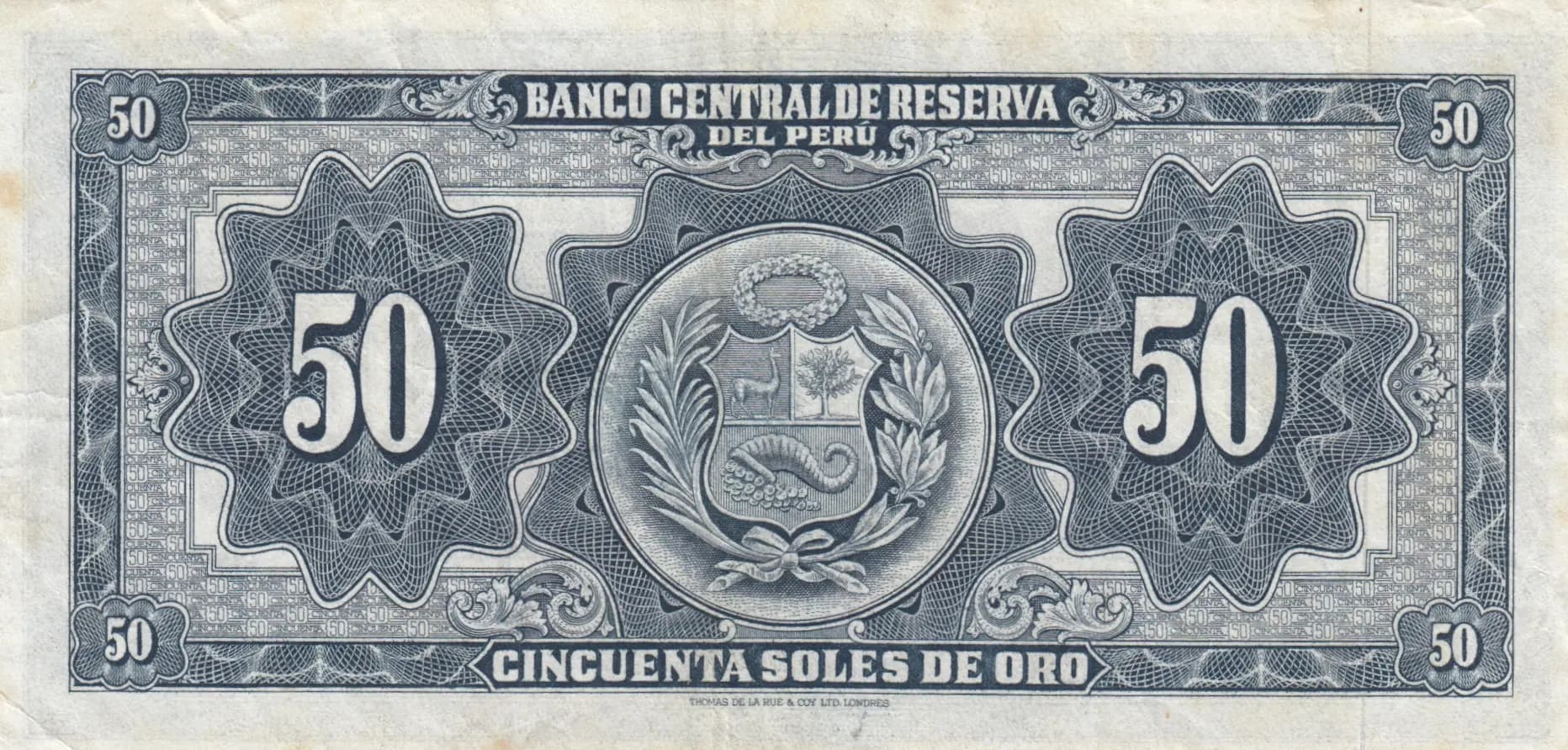
A handsome example of Peru's 50 Soles de Oro from the 1956-1959 series, graded Very Fine and printed by Thomas de la Rue. This note features a striking Art Deco design with a central allegorical Liberty figure seated beside a classical column on the obverse, and Peru's national coat of arms with vicuña on the reverse. The note exhibits crisp engraving, clear serial numbers, and minimal wear consistent with the VF grade, making it an attractive mid-century Peruvian banknote suitable for both general and specialized collectors.
Common. This note from the regular 1956-1959 issue series has a broad circulation history with multiple known signature and date varieties. eBay market data shows consistent sales in the VF grade ranging from $3.49 to $10.34 over the past decade, with catalog values for VF condition at $4.50 (2019 estimate). The print run was substantial given its status as a regular-issue banknote from a major South American central bank. No evidence of rarity in this Pick number exists; it remains readily available in VF and lower grades to collectors at modest prices.
Issued during the late 1950s under the Banco Central de Reserva del Perú, this note represents Peru's monetary system during a period of economic development and modernization. The Liberty allegorical figure and classical imagery reflect Peru's cultural heritage and aspirations, while the vicuña in the national coat of arms on the reverse symbolizes Peru's natural wealth and indigenous Andean identity. The denomination in 'Soles de Oro' (Gold Soles) references Peru's earlier gold standard, though this note was issued during the transition to fiat currency.
The obverse features an allegorical representation of Liberty as the central vignette—a classical female figure in draped clothing seated beside a fluted Doric or Ionic column, holding a staff or rod symbolizing authority. She is rendered in the neoclassical allegorical tradition common to banknote design of the era. The composition is framed by ornate Art Deco-style geometric borders with rosette medallions containing the denomination '50' in all four corners. The reverse displays Peru's national coat of arms centered in a large circular vignette: a heraldic shield with the vicuña (Peruvian national animal) positioned above it, flanked by laurel wreaths signifying national pride and victory. The design employs fine line engraving with detailed cross-hatching throughout, characteristic of high-security banknote production. The color scheme of dark blue on a lilac/cream underprint provides excellent contrast and visual distinction.
FRONT: 'Banco Central de Reserva del Perú' (Central Reserve Bank of Peru); 'Cincuenta Soles de Oro' (Fifty Gold Soles); 'De Acuerdo con la Ley No. 1053' (In Accordance with Law No. 1053); 'Lima' (Lima); '13 de Mayo de 1959' (May 13, 1959); 'Director', 'Presidente' (President), 'Gerente General' (General Manager) - signature lines; 'Thomas De La Rue & Co Ltd.' (printer attribution). BACK: 'Banco Central de Reserva del Perú' (Central Reserve Bank of Peru); 'Cincuenta Soles de Oro' (Fifty Gold Soles); 'Thomas De La Rue & Coy Ltd. Londres' (Thomas De La Rue & Co Ltd. London).
Intaglio engraving (line engraving and steel plate production), executed by Thomas de la Rue & Co Ltd. of London, the world's foremost banknote security printer of the era. The fine cross-hatching visible in the allegorical figure and coat of arms, the precision of the geometric borders, and the complexity of the ornamental elements are hallmarks of intaglio engraving. The serial numbers appear to have been applied in red ink, likely through letterpress or subsequent overprinting. The color separation and registration demonstrate professional security printing standards.
This specific note is dated 13 de Mayo de 1959 (May 13, 1959) with Series H32 and serial number 076584. The 1956-1959 series exhibits multiple varieties based on signature combinations (corresponding to different Directors, Presidents, and General Managers) and various printed dates within the range. The visual analysis identifies this as consistent with the P-78a variant cataloged by PMG. Collectors should note the three known printed date varieties: 1956, 24.10.1957, and 13.5.1959—this example bears the latest date, making it the 1959 printing variety.