5 soles 1870
Market Prices
1 saleAbout This Note
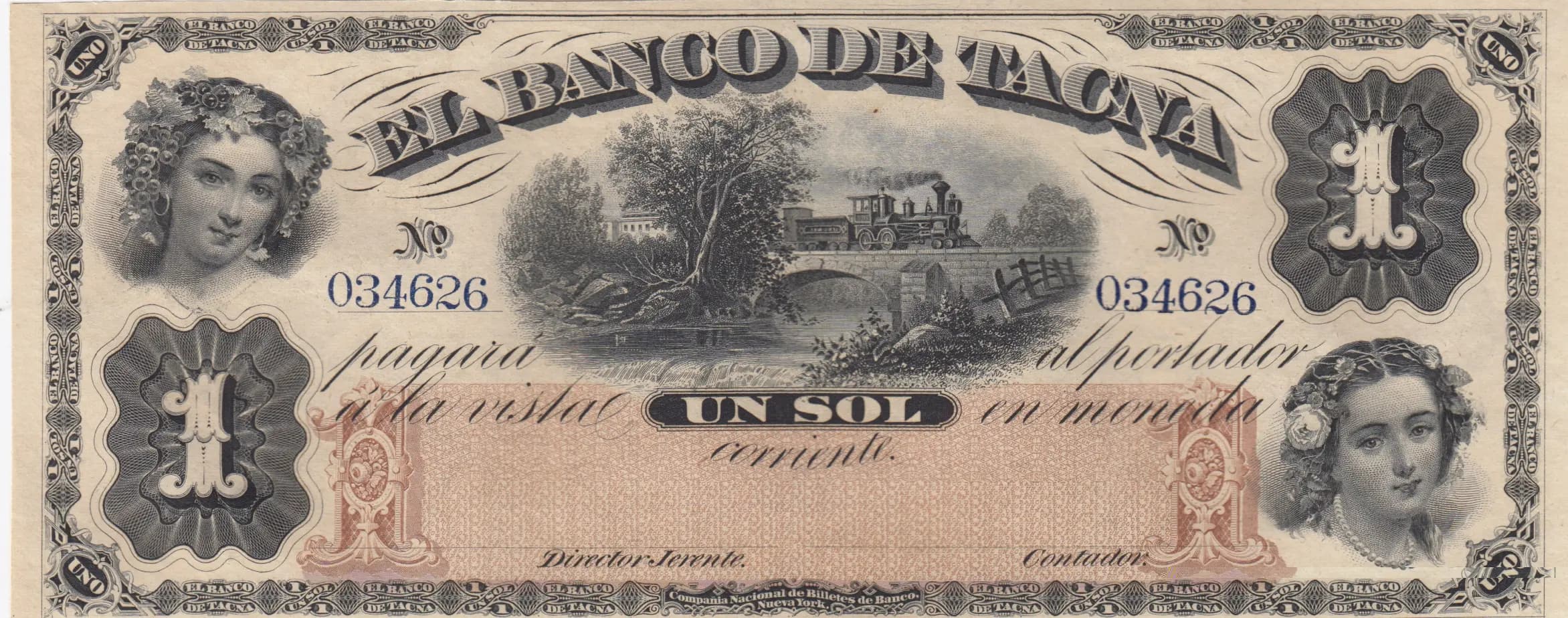
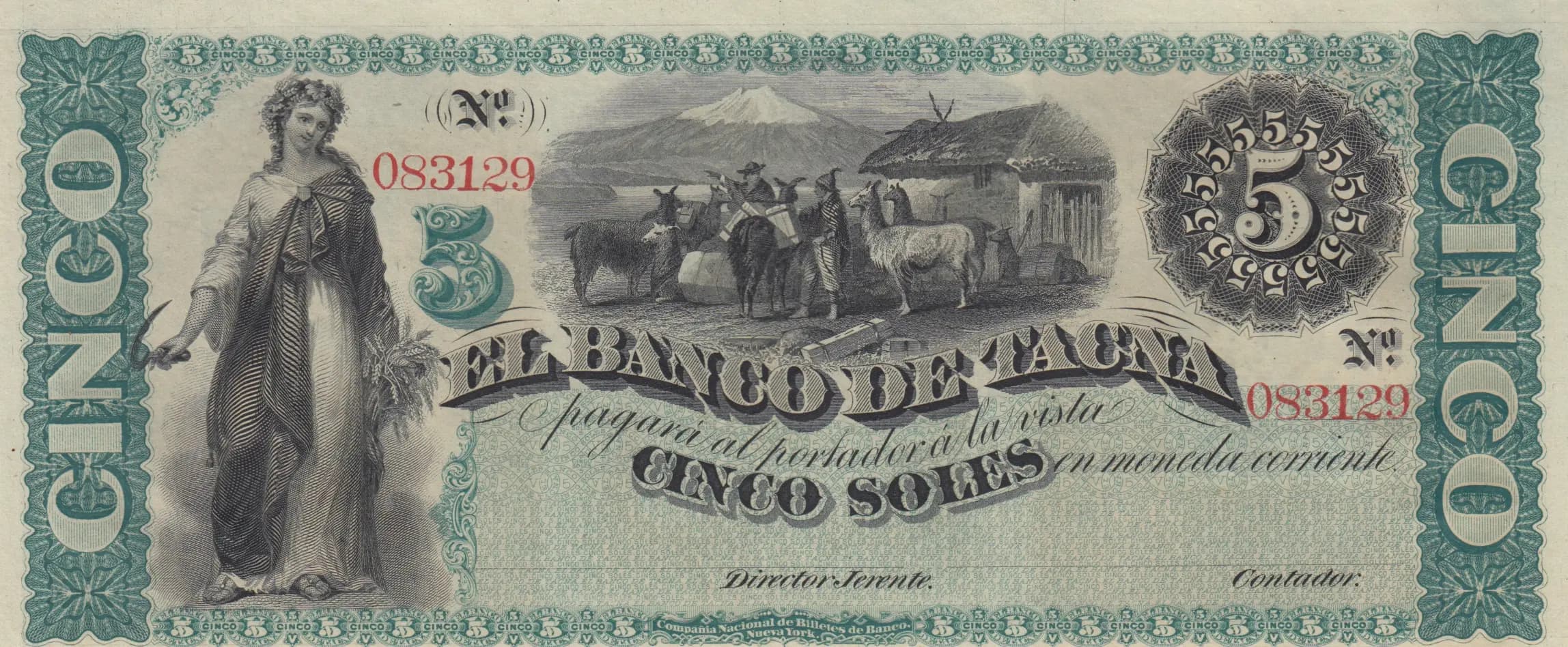
This is an exceptional example of a Banco de Tacna 5 Soles note from 1870, presented in uncirculated condition with sharp, crisp printing throughout. The note features a striking teal-green ornamental border design with a classical female allegorical figure on the obverse and a romanticized Peruvian landscape depicting llamas, indigenous architecture, and mountain scenery—imagery celebrating the nation's pastoral heritage and natural wealth. As a remainder banknote from a regional bank with limited circulation, this piece represents both numismatic artistry and a significant chapter in Peru's early banking history.
Uncommon. While most banknotes are common, this specific note shows characteristics suggesting limited original circulation: it is identified as a 'remainder banknote' (unsold stock from original printing), it originates from a regional bank with limited geographic distribution, and the UNC condition represents an issue that largely avoided circulation. The eBay market price of $290 for an UNC example with 49 bids indicates moderate collector demand and suggests this is not a common date/issuer combination. However, without evidence of a very small print run or complete recall, it does not qualify as rare, placing it in the 'uncommon to scarce' range.
The Banco de Tacna was a regional financial institution operating during Peru's early republican period, a time when provincial banks played crucial roles in local commerce and currency circulation. The depicted landscape with llamas and Andean mountains reflects 19th-century Peru's identity as a nation of pastoral wealth and indigenous cultural heritage, while the classical allegorical female figure symbolizes Liberty and the progressive ideals of the era. This 1870 issue represents an important transitional period in Peruvian banking, before the establishment of more centralized national monetary institutions.
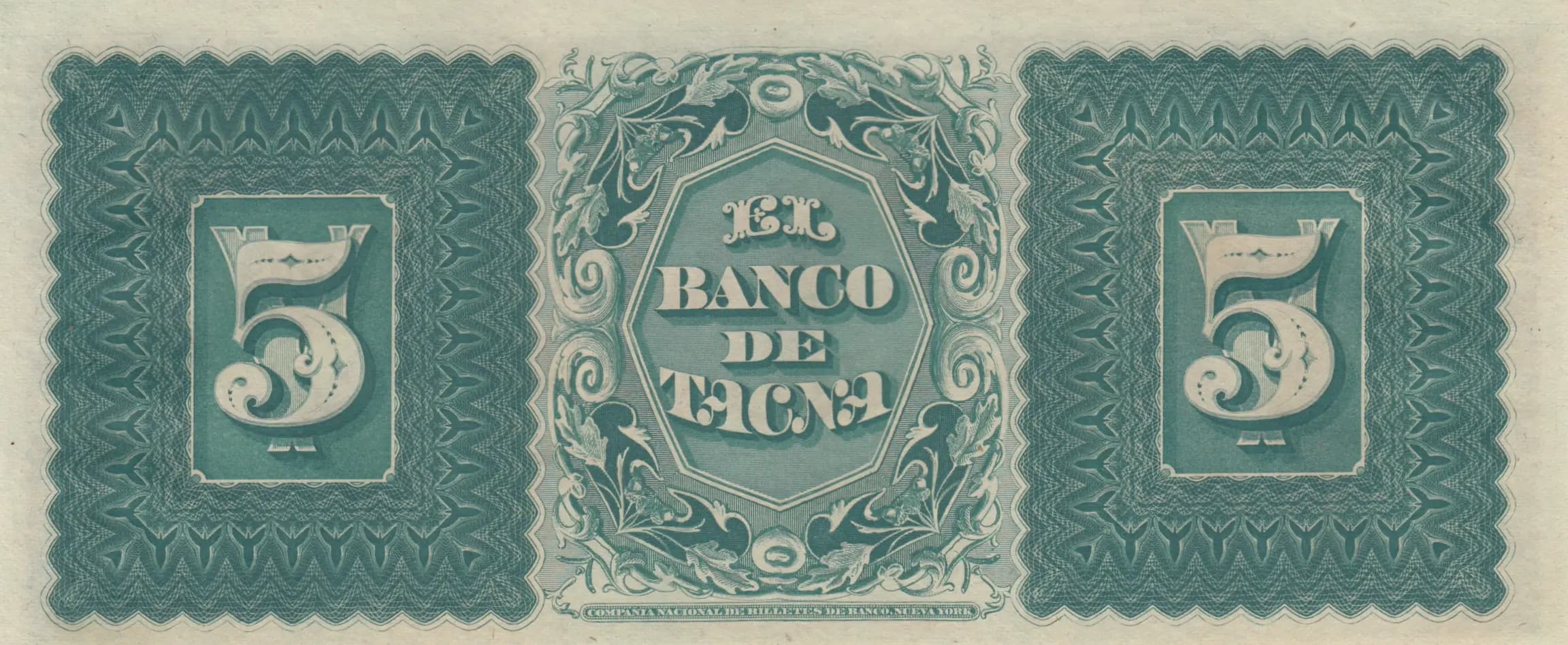
The obverse features an ornate teal-green rectangular border frame in fine decorative patterns. On the left stands a female allegorical figure in classical Greco-Roman drapery, representing Liberty or Justice. The central vignette depicts a romanticized Andean landscape with llamas grazing, indigenous peoples, traditional structures with thatched roofs, and mountain peaks in the distance—imagery emphasizing Peru's natural wealth and cultural patrimony. Large decorative numerals '5' in ornamental frames flank the composition on both sides. The reverse displays a symmetrical design centered on an elaborate oval cartouche with ornamental wreath, flanked by rectangular frames containing large numerals '5' against the teal background. Repeating geometric patterns and floral motifs form the complete border on both sides. The serial number '083129' appears in red ink on the obverse.
Front Side: 'EL BANCO DE LA NACION' (The Bank of the Nation) [Note: Visual analysis indicates 'EL BANCO DE TACNA' is the actual issuer]; 'CINCO SOLES' (Five Soles); 'CINCO' (Five); Serial number: '083129'; Signature lines labeled 'Director Gerente' (Managing Director) and 'Contador' (Accountant); Additional text regarding payment 'a la vista' (at sight). Back Side: 'EL BANCO DE TACNA' (The Bank of Tacna); 'COMPANIA NACIONAL DE BILLETES DE BANCO NUEVA YORK' (National Company of Banknotes New York); Repeating border pattern: 'AMMA'
Fine line engraving with intaglio printing, characteristic of high-security banknotes of the period. The note was produced by the Compania Nacional de Billetes de Banco (National Banknote Company) based in New York, a prominent security printer of the era. The multiple color printing (teal-green, black, red, and cream) indicates a multi-pass printing process typical of sophisticated 19th-century banknote production. The intricate decorative borders, fine line work, and ornamental designs demonstrate advanced engraving techniques used to prevent counterfeiting.
This example is cataloged as Pick S384r, the 'r' designation indicating a remainder note (unissued/unsold banknote from original production). The serial number '083129' in red ink is present. No obvious overprints, signature varieties, or date variations are apparent in this example. The note was produced by Compania Nacional de Billetes de Banco of New York. Collectors should note the distinction between this Banco de Tacna issue and other contemporary Peruvian regional bank notes, as Tacna-issued notes have particular regional significance and collector interest due to the city's strategic importance in 19th-century Peru.