10 soles 1968
Market Prices
7 salesAbout This Note
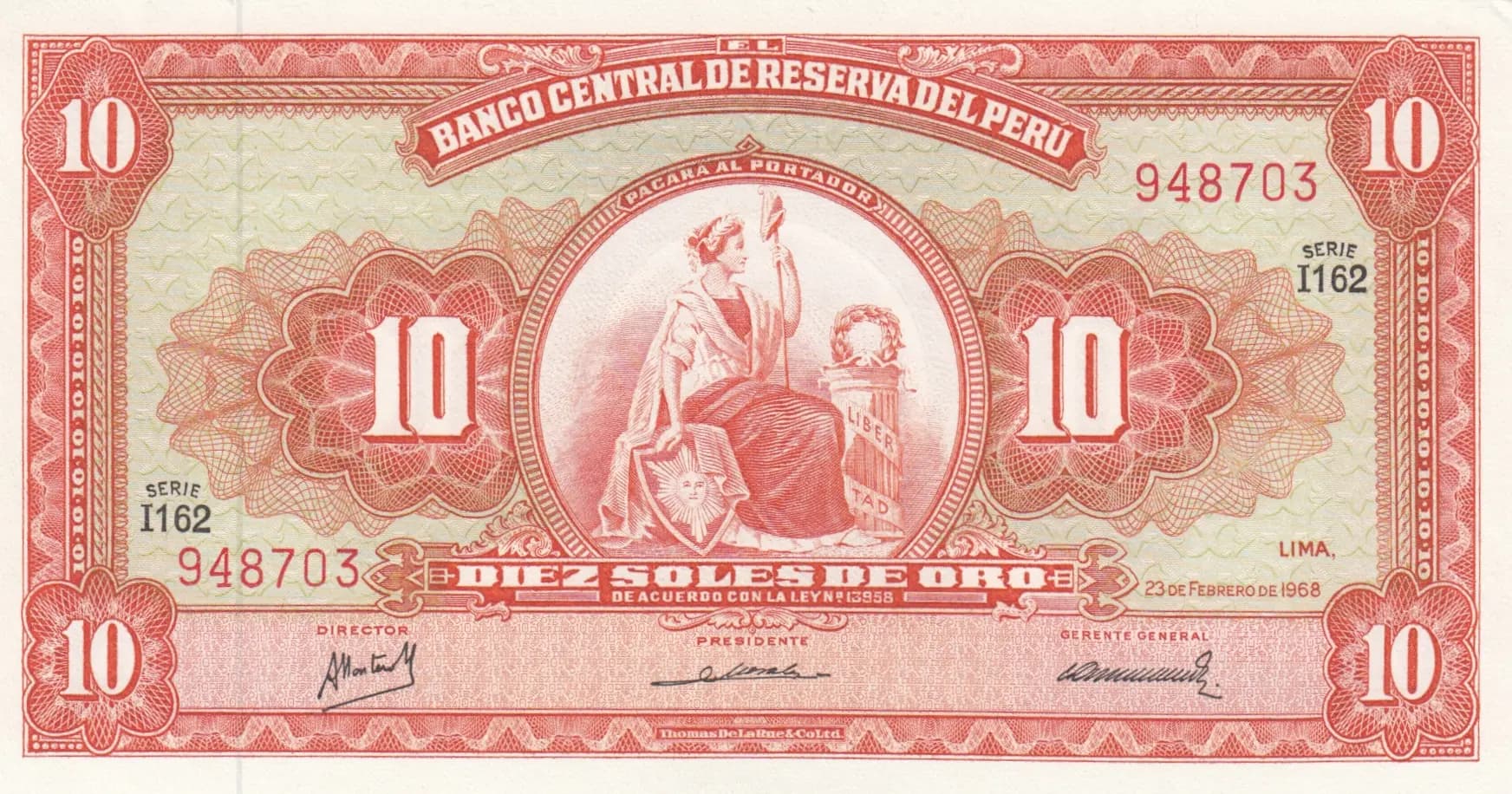
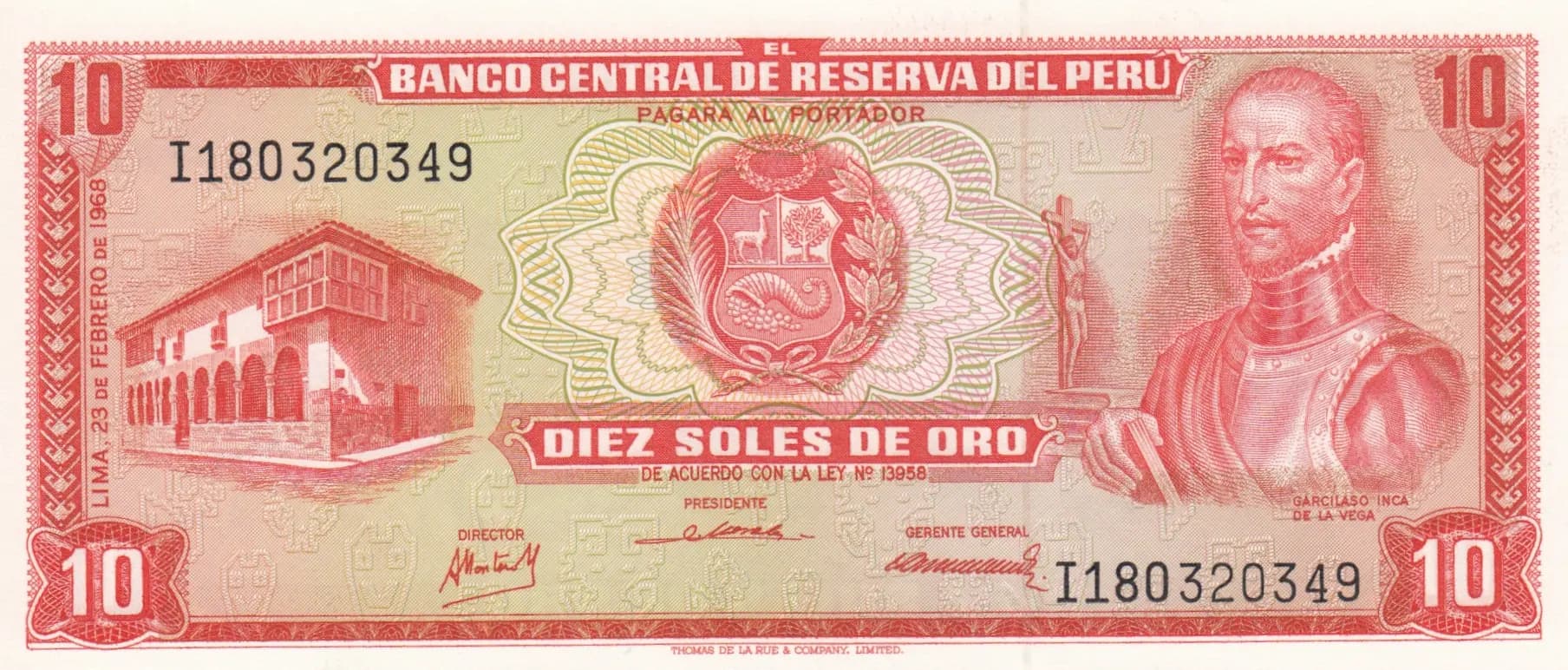
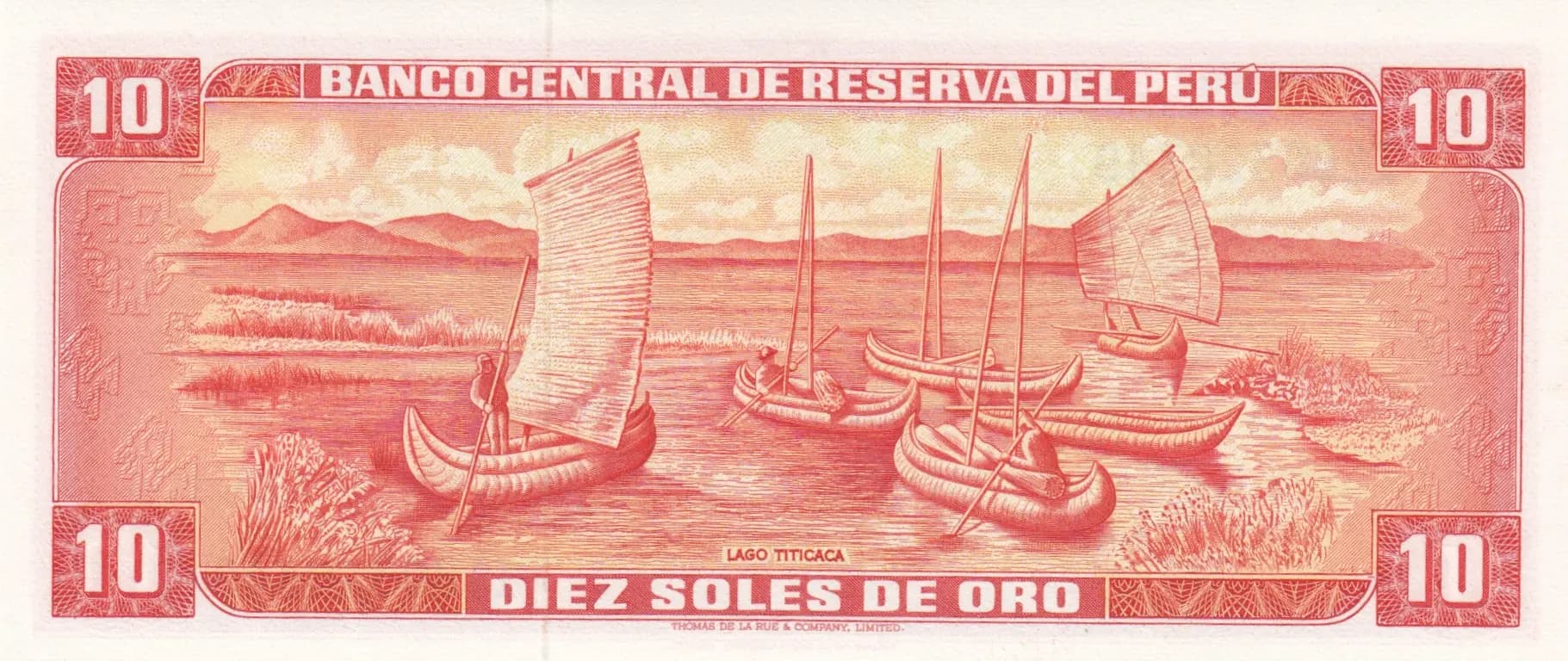
This is a well-preserved example of Peru's 1968 10 Soles de Oro note (Pick P-93), printed by Thomas de la Rue and issued by the Banco Central de Reserva del Peru. The note displays excellent uncirculated condition with crisp printing, vibrant red-orange coloring on the obverse, and fine line engraving throughout. The obverse features a portrait of Garcilaso Inca de la Vega in military dress alongside a colonial building, while the reverse showcases the iconic Lake Titicaca with traditional caballitos de totora (reed boats), making this a culturally significant representation of Peruvian heritage.
Common. This note is a regular issue from a major central bank with no indication of restricted print run or early recall. eBay market data shows consistent sales in the $0.99–$2.50 range for UNC examples, with one PMG 64 reaching $12.50, indicating typical collector interest rather than scarcity. The 1968 date places it within a standard modern era of Peruvian currency, and similar related notes (P-100, P-106, P-112) suggest this design was part of a broader series. Standard catalog valuations from 2019 list UNC at $2, confirming common circulation in the collector market.
This banknote was issued on February 29, 1968, during a period of monetary reform in Peru when the Banco Central de Reserva del Peru was modernizing its currency designs. The note commemorates two significant aspects of Peruvian culture: Garcilaso Inca de la Vega, the important colonial-era writer and descendant of Inca nobility, and Lake Titicaca, one of South America's most important geographical and cultural landmarks shared between Peru and Bolivia. The denomination in 'Soles de Oro' (Gold Soles) reflects the gold standard framework that was in place during this era of Peruvian monetary policy.
The obverse features a three-quarter profile portrait of Garcilaso Inca de la Vega rendered in fine engraving, depicted wearing Spanish colonial military dress with ornate breastplate and armor, positioned on the right side of the note. To the left is a colonial-era architectural structure with arched stonework, identified as Vega's house in Cuzco, rendered in detailed architectural perspective. The Peruvian coat of arms is prominently displayed in the center-top, featuring heraldic elements including flora and fauna symbols of national significance. The note employs a predominantly red and cream color scheme with green accents and ornamental corner frames containing the denomination '10'. The reverse presents a serene landscape of Lake Titicaca with traditional reed boats (caballitos de totora) in the foreground, marshland vegetation, and mountains visible in the background. This monochromatic red-pink design emphasizes the natural and cultural heritage of the high-altitude Andean lake region. The denomination appears multiple times in decorative corners, and fine line engraving creates ornamental border frames throughout both sides.
FRONT SIDE: 'BANCO CENTRAL DE RESERVA DEL PERU' (Central Reserve Bank of Peru) | 'PAGARA AL PORTADOR' (Will pay to bearer) | 'DIEZ SOLES DE ORO' (Ten soles of gold) | 'DE ACUERDO CON LA LEY Nº 13958' (In accordance with Law No. 13958) | 'PRESIDENTE' (President) | 'DIRECTOR' (Director) | 'GERENTE GENERAL' (General Manager) | 'GARCILASO INCA DE LA VEGA' (proper name of portrayed figure) | 'LIMA 29 DE FEBRERO DE 1968' (Lima, February 29, 1968) | 'THOMAS DE LA RUE & COMPANY, LIMITED' (printer identification) | Serial number: 'I180320349' (appears twice). BACK SIDE: 'BANCO CENTRAL DE RESERVA DEL PERU' (Central Reserve Bank of Peru) | 'LAGO TITICACA' (Lake Titicaca) | 'DIEZ SOLES DE ORO' (Ten soles of gold) | 'THOMAS DE LA RUE & COMPANY, LIMITED' (printer identification).
This note was produced using intaglio/engraving printing techniques, as evidenced by the fine line work, precise detail in portraits and architectural elements, and the characteristic raised ink impression visible in the visual analysis. The printer, Thomas de la Rue & Company, Limited of London, was a premier security printer known for advanced intaglio methods. The multi-color printing on the obverse (red-orange with green accents on cream underprint) and the monochromatic reverse suggest the use of multiple printing passes and color separations typical of high-security banknote production of the 1960s era.
This example is identified as Series I based on catalog references. The serial number I180320349 indicates the standard prefix series for regular circulation notes. The visible signature lines for 'PRESIDENTE,' 'DIRECTOR,' and 'GERENTE GENERAL' are consistent with the standard 1968 issue. No replacement notes (identified by Z999 prefix according to external reference) or overprints are evident in this specimen. The February 29, 1968 date on the obverse is notable as a leap year date, which appears to be the standard issue date for this series.