1/2 sol 1921
About This Note
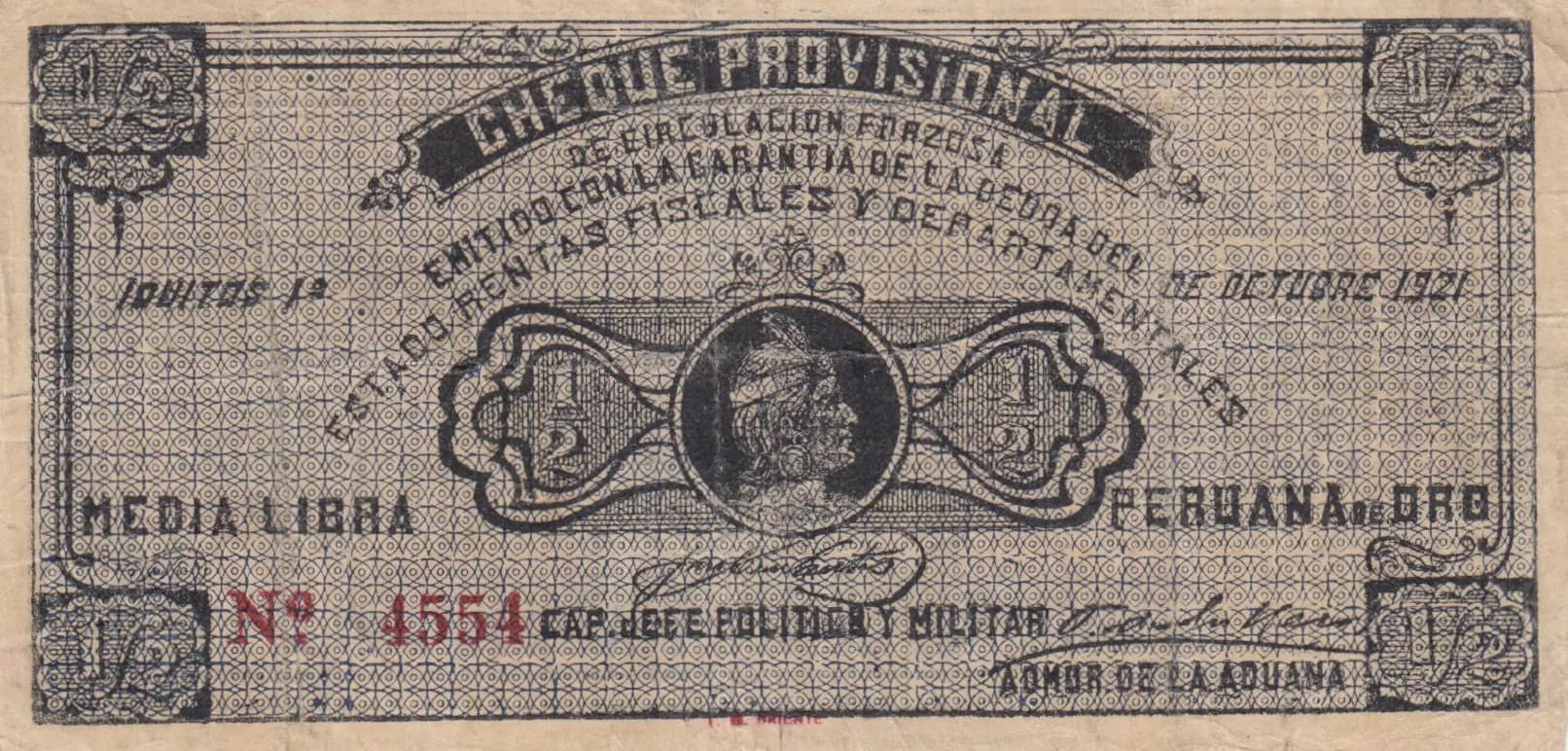
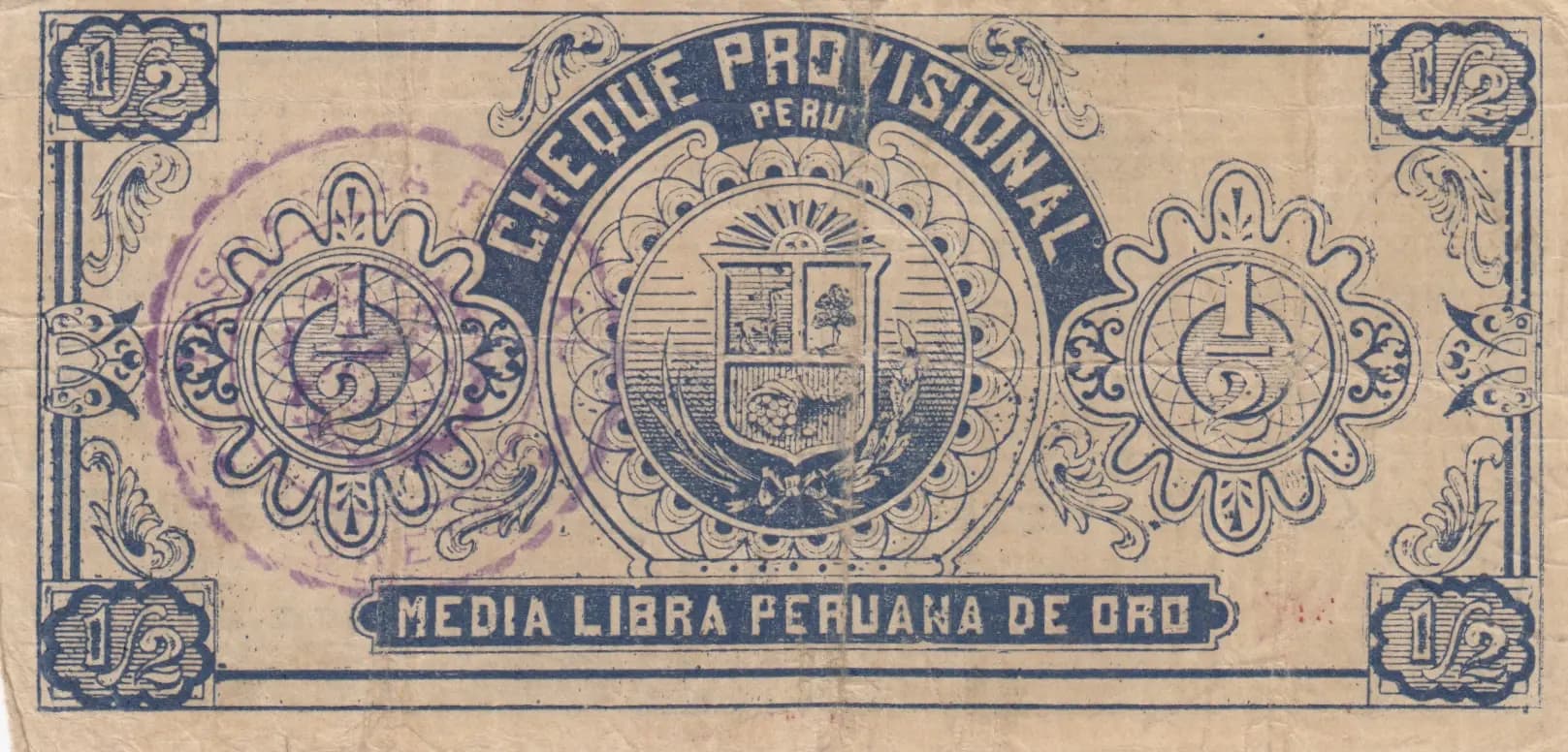
This 1921 Peruvian 1/2 Sol Cheque Provisional is a fascinating example of emergency currency from Peru's early republican period, featuring a classical male portrait in an ornate oval medallion on the obverse and the Peruvian coat of arms on the reverse. The note exhibits heavy foxing and aging patina consistent with a well-circulated early 20th-century banknote, though the blue printing on the reverse remains relatively clear. As an unlisted Pick item from a provisional issue during a period of monetary flux, this represents an intriguing piece of Peruvian numismatic history.
Uncommon. This note is unlisted in the Pick catalog, indicating it was either a limited provisional issue or has been overlooked in standard references. The serial number visible (No. 1851) and the specific 'cheque provisional' designation suggest a limited print run typical of emergency currency. The observed condition, while heavily aged and worn, indicates this particular example circulated extensively, suggesting moderate original production numbers. However, the unlisted status and specialized nature as a provisional check from an unstable monetary period make it less common than standard circulation Peruvian currency of the same era.
This provisional check was issued under 'extraordinary provision' during a period when Peru was transitioning its currency system, moving toward the gold standard indicated by the inscription 'Peruana de Oro' (Peruvian gold). The formal heraldic design on the reverse, featuring the Peruvian coat of arms with its distinctive quartered shield, reflects the nation's efforts to establish monetary credibility during the early 1920s, a time of political and economic reorganization in Peru following World War I.
The obverse features a formal portrait of a historical male figure in right-facing profile, enclosed within an ornate circular medallion. The portrait is flanked by elaborate baroque-style ornamental frames and surrounded by fine geometric crosshatch security patterning, characteristic of period security printing. Four decorative corner designs with classical motifs complete the formal composition. The reverse presents the Peruvian coat of arms as the central element, divided into quarters with heraldic symbols representing the nation's regional and institutional character. Two identical circular medallions containing numerals frame the shield on either side, and ornamental scrollwork and borders create a symmetrical, formal layout appropriate to official currency. The color scheme transitions from brown/tan/black on the obverse to blue/cream on the reverse, a common practice in multi-colored security printing of the era.
Front side: 'EMITIDO POR PROVISION EXTRAORDINARIA' (Issued by extraordinary provision), 'PERUANA DE ORO' (Peruvian gold), 'No. 1851' (Serial number 1851), 'FERNANDO ORO' (Fernando gold/name reference), 'ADUANA DE LA ADUANA' (Customs of customs - likely a title or institutional reference). Back side: 'CHEQUE PROVISIONAL PERU' (Provisional check Peru), 'MEDIA LIBRA PERUANA DE ORO' (Half Peruvian pound of gold), '1/2' (One half, indicating denomination).
This note was produced using intaglio engraving and letterpress printing, evidenced by the fine line work, detailed crosshatch patterns, and crisp heraldic detail visible on the reverse. The ornate frames, baroque flourishes, and portrait medallion show the characteristic depth and precision of engraved plates typical of security banknote production in the early 1920s. The transition between color schemes on obverse and reverse suggests separate printing passes, a standard practice for high-security currency of this period. The printer's identity is not definitively established from the visual analysis, though Peruvian notes of this era were sometimes produced by both local government presses and international security printers.
This specific example bears serial number 1851. The note is identified as a 'Cheque Provisional' (provisional check), which appears to be the distinct variety designation for this issue. The denomination '1/2 Sol' (expressed as 'Media Libra Peruana de Oro') on this 1921 provisional may exist in different serial number ranges; collectors should note that different serial numbers likely represent distinct printing runs or batches of this provisional issue. The presence of the purple circular stamp on the reverse suggests post-issuance institutional marking, possibly indicating customs or banking house processing.