1 pound 1976
Market Prices
13 salesAbout This Note
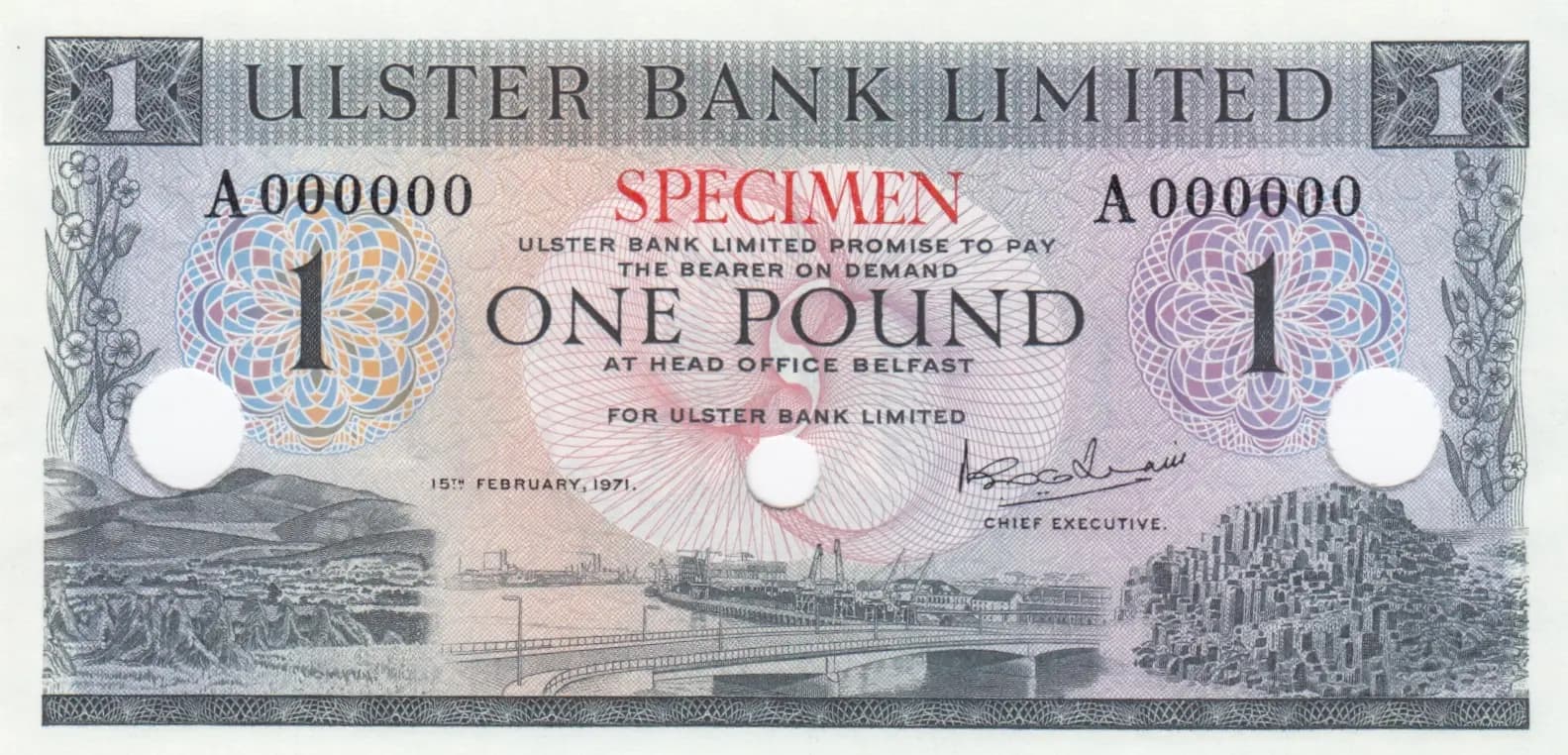
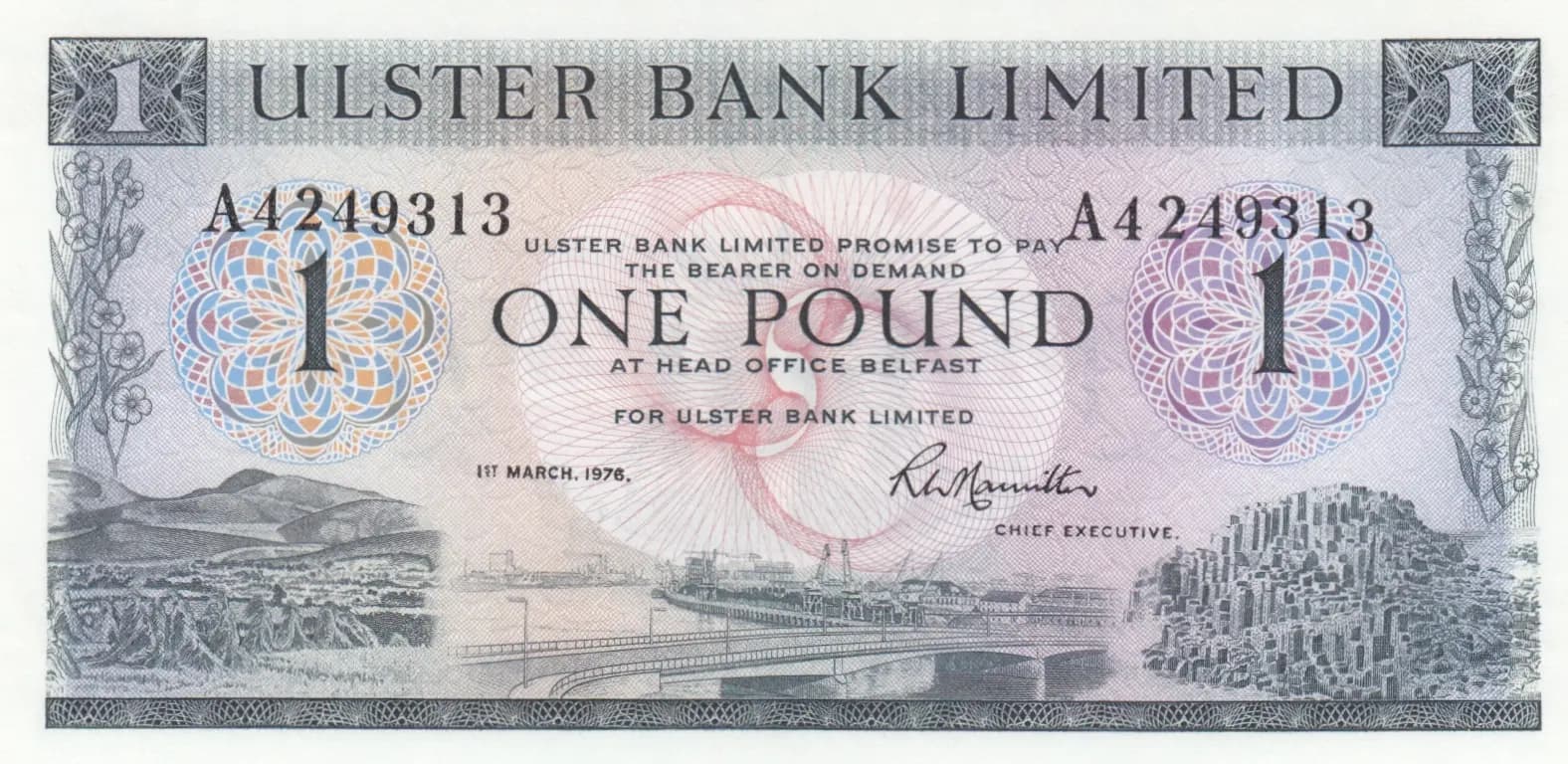
This is an uncirculated 1 pound note from Ulster Bank Limited dated 1st March 1976 (Pick P-325b), featuring a striking multicolored design with blue-black primary printing on the obverse. The note displays excellent condition with crisp details throughout, showcasing the Belfast industrial and rural landscape vignettes along with decorative rosette designs characteristic of this series. This denomination and issuer combination represents a classic example of Northern Irish currency from the mid-1970s, with market prices for UNC specimens typically ranging from $23-$30 based on recent sales activity.
Common. This note is a regular issue from a major regional bank with typical print runs for the 1973-1976 series. Market data shows consistent UNC sales in the $20-$30 range since at least 2010, with multiple examples selling annually on eBay. The denomination (1 pound) and issuer (Ulster Bank Limited) are neither rare nor particularly scarce. No evidence of limited production, recalls, or special printing conditions that would elevate rarity status.
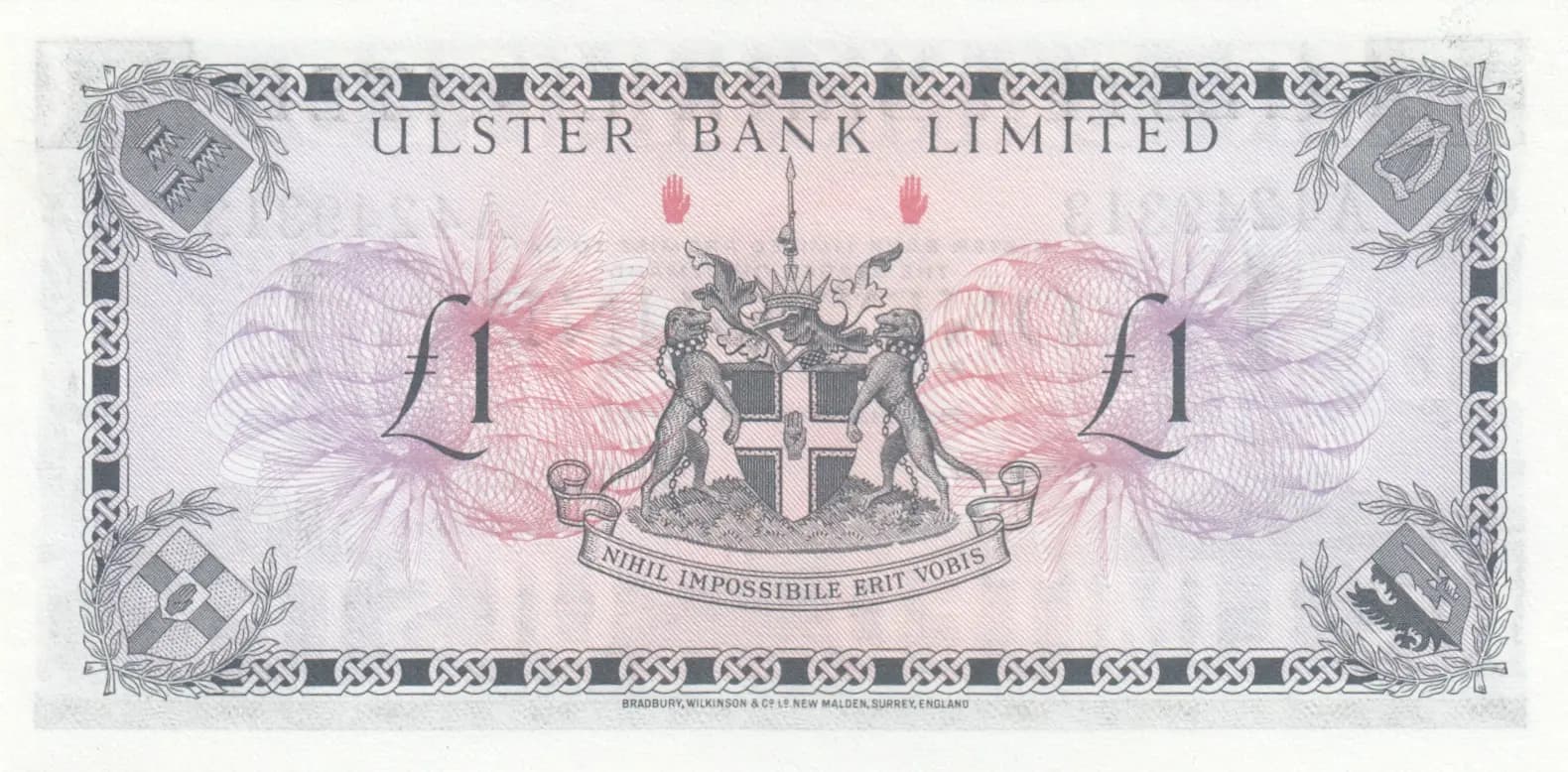
Ulster Bank Limited, a major Belfast-based financial institution, issued this note during the 1973-1976 series, a period of significant economic transition in Northern Ireland during The Troubles. The obverse design prominently features Belfast's industrial heritage with a bridge and cityscape, reflecting the city's maritime and shipbuilding prominence, while the reverse displays the heraldic coat of arms with the Latin motto 'Nihil Impossibile Erat Vobis' (Nothing is Impossible to You). This imagery emphasizes cultural identity and economic significance during a turbulent era in Northern Ireland's history.
The obverse features a landscape composition with multiple vignettes representing Belfast's character: a prominent bridge spanning water in the center background (likely representing the Queen's Bridge or similar Belfast structure), industrial cityscape with buildings and dock infrastructure at lower center, and rural/agricultural landscape elements at lower left. Two large decorative circular rosette designs flank the denomination markers, with ornamental floral patterns filling the corners and borders in a guilloche style. The reverse displays the coat of arms of Northern Ireland (or Ulster heraldic arms) in the center, flanked by two heraldic supporting beasts (likely lions rampant), with a shield containing a cross design and a crown above. A continuous Celtic knot pattern forms an ornate border around the entire reverse side, with laurel wreaths and shield emblems in all four corners, reinforcing the cultural and heraldic significance of the design.
FRONT: 'ULSTER BANK LIMITED PROMISE TO PAY THE BEARER ON DEMAND AT HEAD OFFICE BELFAST' (standard note promise); 'ONE POUND' (denomination); '1ST MARCH, 1976' (issue date); 'FOR ULSTER BANK LIMITED' and 'CHIEF EXECUTIVE' (authorization); Serial number 'A4249313' (appears twice); Signature of 'R. M. Frangllon' (Chief Executive). BACK: 'ULSTER BANK LIMITED' (issuer); '£1' (denomination, appears twice); 'NIHIL IMPOSSIBILE ERAT VOBIS' (Latin motto, translates to 'Nothing is Impossible to You'); 'BRADBURY, WILKINSON & CO LTD NEW MALDEN, SURREY, ENGLAND' (printer attribution).
This note was produced by Bradbury Wilkinson & Co Ltd, a renowned British security printer based in New Malden, Surrey, using traditional intaglio engraving methods. The printing demonstrates fine line work, complex guilloche patterns, and multi-color printing (blue-black primary color on multicolored underprint) characteristic of high-security banknote production of the era. The intricate Celtic knot borders, ornate rosette designs, and detailed heraldic imagery all reflect the precision of classical intaglio engraving, combined with sophisticated color separation and registration techniques typical of Bradbury Wilkinson's work.
This specific example is dated 1st March 1976 with the signature of Chief Executive R. M. Frangllon, representing the later period of this series' circulation (Pick P-325b designation indicates the 1976 variant within the broader 1973-1976 issue range). The serial number prefix 'A' indicates standard production. No overprints, error varieties, or other distinguishing features are apparent. The note represents a standard printing of this type with consistent design and security features across the known issue range.