50 kobo 1973 specimen
Market Prices
7 salesAbout This Note
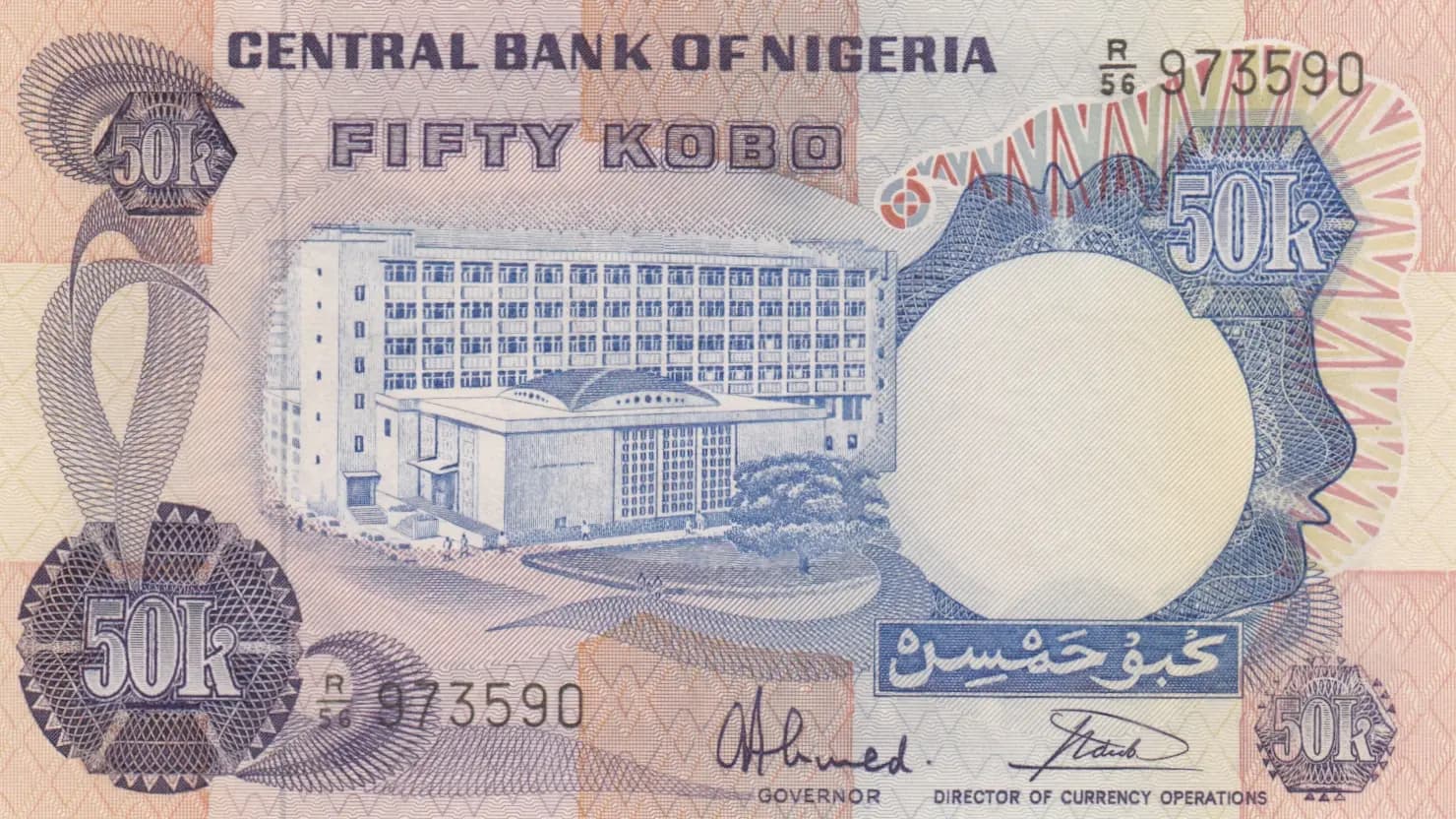
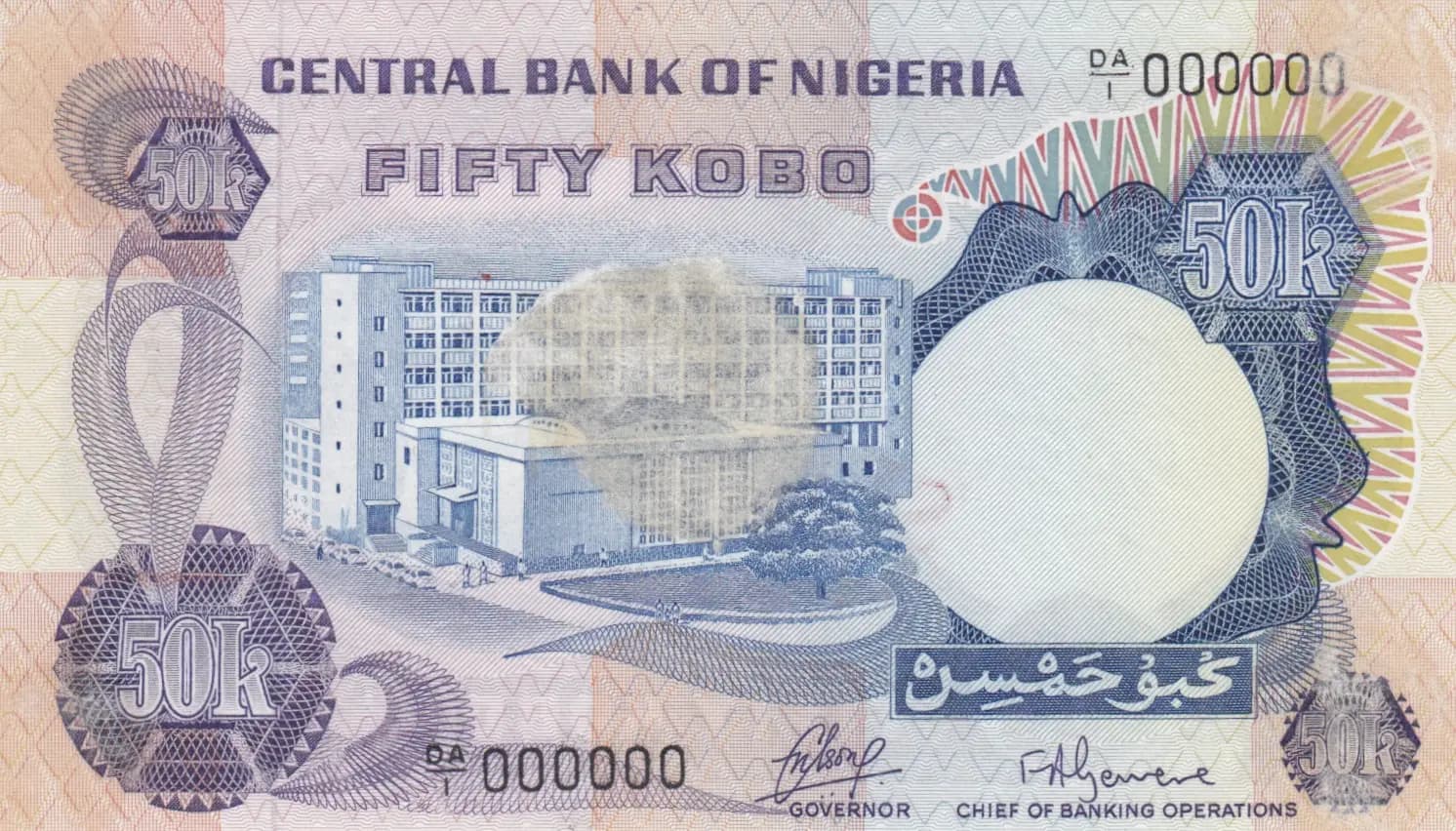
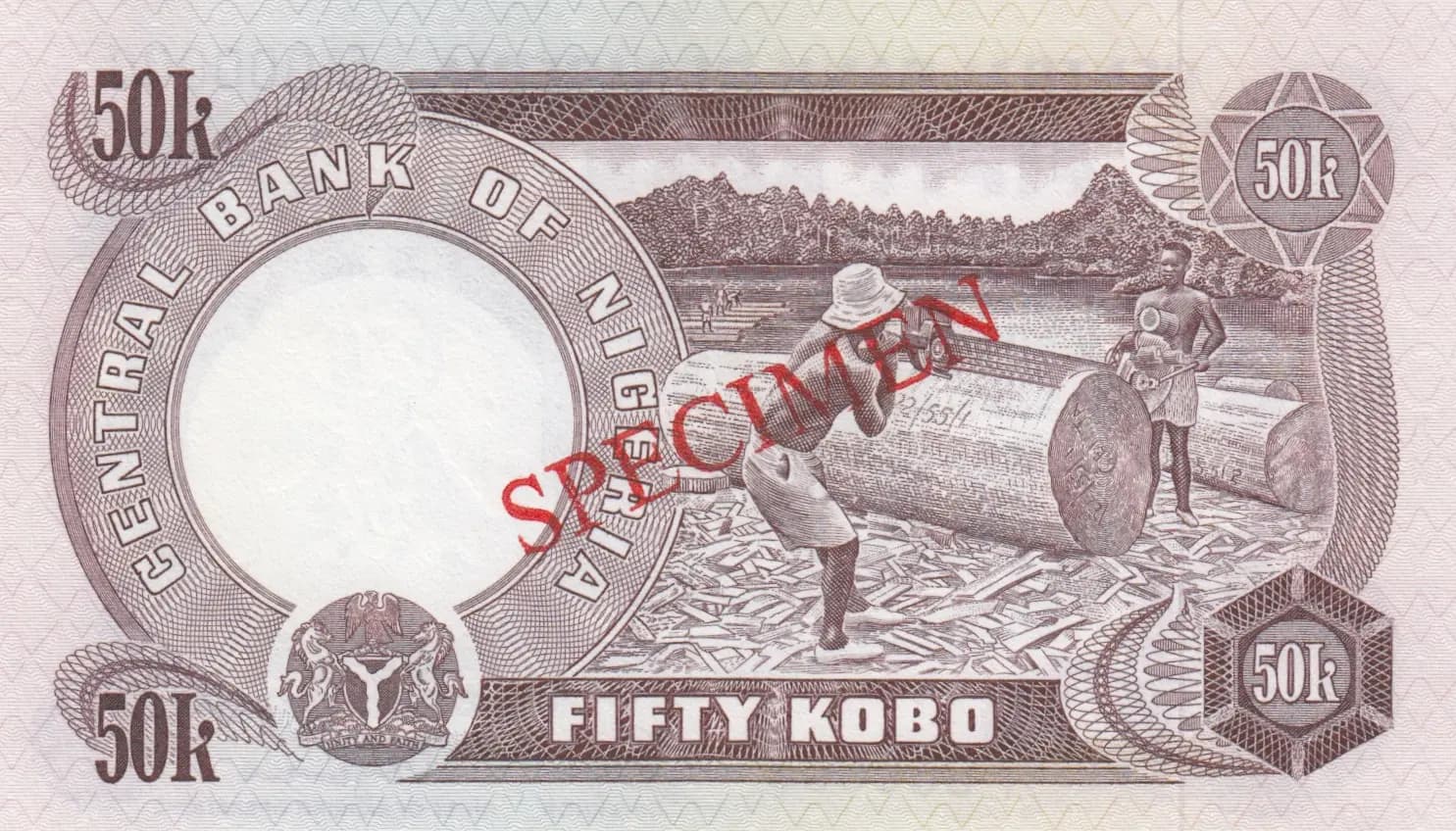
This is a Nigerian 50 kobo specimen note from 1973, featuring the distinctive architectural design of the Central Bank of Nigeria building on the obverse and a logging/timber harvesting scene on the reverse. The note displays excellent preservation with minimal wear, characteristic of specimen issues intended for archival rather than circulation, and bears the prominent red 'SPECIMEN' diagonal overprint. The purple, blue, and brown color scheme, combined with fine intaglio engraving and intricate security details, exemplifies the high-quality banknote production standards of the Central Bank of Nigeria during this period.
Common. Based on eBay market data showing multiple sales ranging from $0.99 to $29.88, with standard circulated and graded examples regularly available, this denomination and issue is routinely encountered in the collector market. The 1973-1978 series was a substantial regular issue by the Central Bank of Nigeria. While specimen notes command modest premiums over circulated examples, specimen 50 kobo notes from this series are not scarce. The AU condition grade and specimen status are desirable but do not elevate this to rare status given consistent market availability and moderate pricing.
Issued during Nigeria's post-independence period under military administration, this 1973 banknote reflects the nation's institutional development and economic focus. The Central Bank of Nigeria building depicted on the front represents the modern financial infrastructure established after independence, while the reverse's logging scene illustrates Nigeria's natural resource wealth and primary economic activities of the era. The bilingual presentation (English and Arabic script) reflects Nigeria's diverse cultural and religious heritage within the federation.
The obverse features the modernist Central Bank of Nigeria headquarters building in Lagos prominently positioned at center-left, showcasing the multi-story institutional architecture with regular fenestration and landscaped grounds including water features and vegetation. Ornamental decorative elements frame the design: an elaborate shell or spiral medallion on the left and a stylized fish motif with radiating lines (likely representing Nigerian fauna) on the right. The denomination '50' appears within circular and oval medallions with fine geometric detailing. The reverse depicts an economic labor scene showing indigenous figures engaged in logging operations along a tropical riverside, with palm trees and dense vegetation in the background. A central oval medallion contains the national coat of arms with 'CENTRAL BANK OF NIGERIA' inscribed around its circumference. Both sides employ extensive fine-line engraving, cross-hatching, and geometric border treatments as anti-counterfeiting measures.
Front side: 'CENTRAL BANK OF NIGERIA' (institutional issuer identification); 'FIFTY KOBO' (denomination in words); '50k' (denomination numeral and currency abbreviation); 'GOVERNOR' and 'CHIEF OF BANKING OPERATIONS' (signature authority lines); Serial number prefix 'DA 000000' (specimen number). Back side: 'CENTRAL BANK OF NIGERIA' (issuer identification around central medallion); 'FIFTY KOBO' (denomination); '50k' (denomination markers in corners); 'SPECIMEN' (red diagonal overprint indicating non-circulating issue). Arabic text in rectangular box on front appears to be a standard banking or security notation.
Intaglio (steel plate engraving) on multicolor security paper, characteristic of Central Bank of Nigeria production standards for this era. The fine line work, cross-hatching, and detailed background patterns visible throughout are consistent with high-security intaglio printing. The note exhibits the sophisticated multi-color underprinting and overprinting typical of professional central bank banknote production facilities of the 1970s. While the specific security printer is not confirmed by catalog data, Nigerian banknotes of this period were typically produced by De La Rue or similar international security printers.
This note is identified as Pick 14as, indicating it is a specimen variant of the standard Pick 14a issue. The 'SPECIMEN' overprint and prefix designation (DA series prefix visible on this example) distinguish it from regular circulating notes. Replacement notes with 'DZ/' serial number prefix are noted in catalog references as a known variety. As a specimen note with standard architectural and logging designs, this represents the primary design type without significant variations, though serial number prefixes and overprint placement may vary among specimen examples of this issue.