50 kobo 1973
Market Prices
19 salesAbout This Note
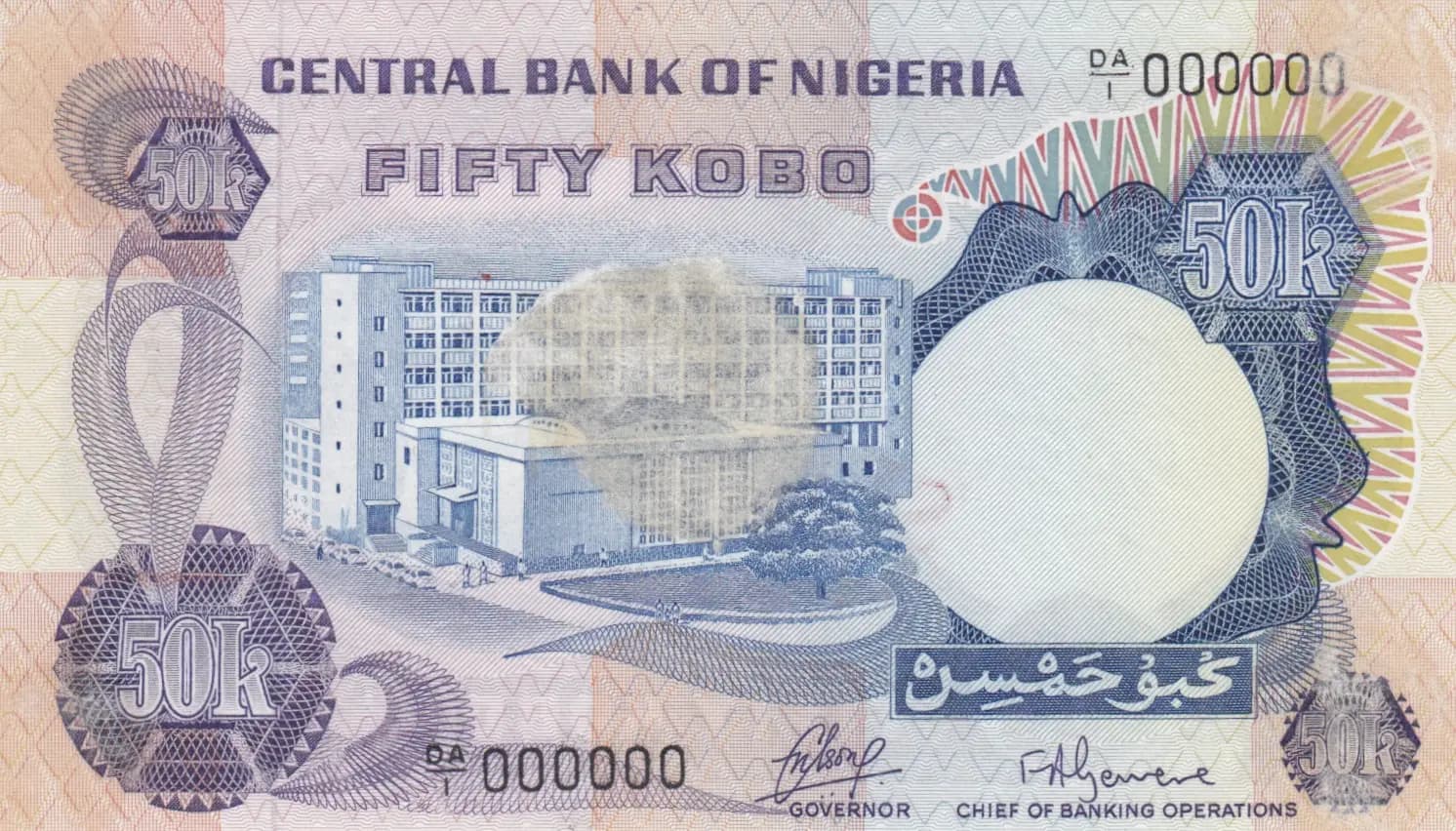
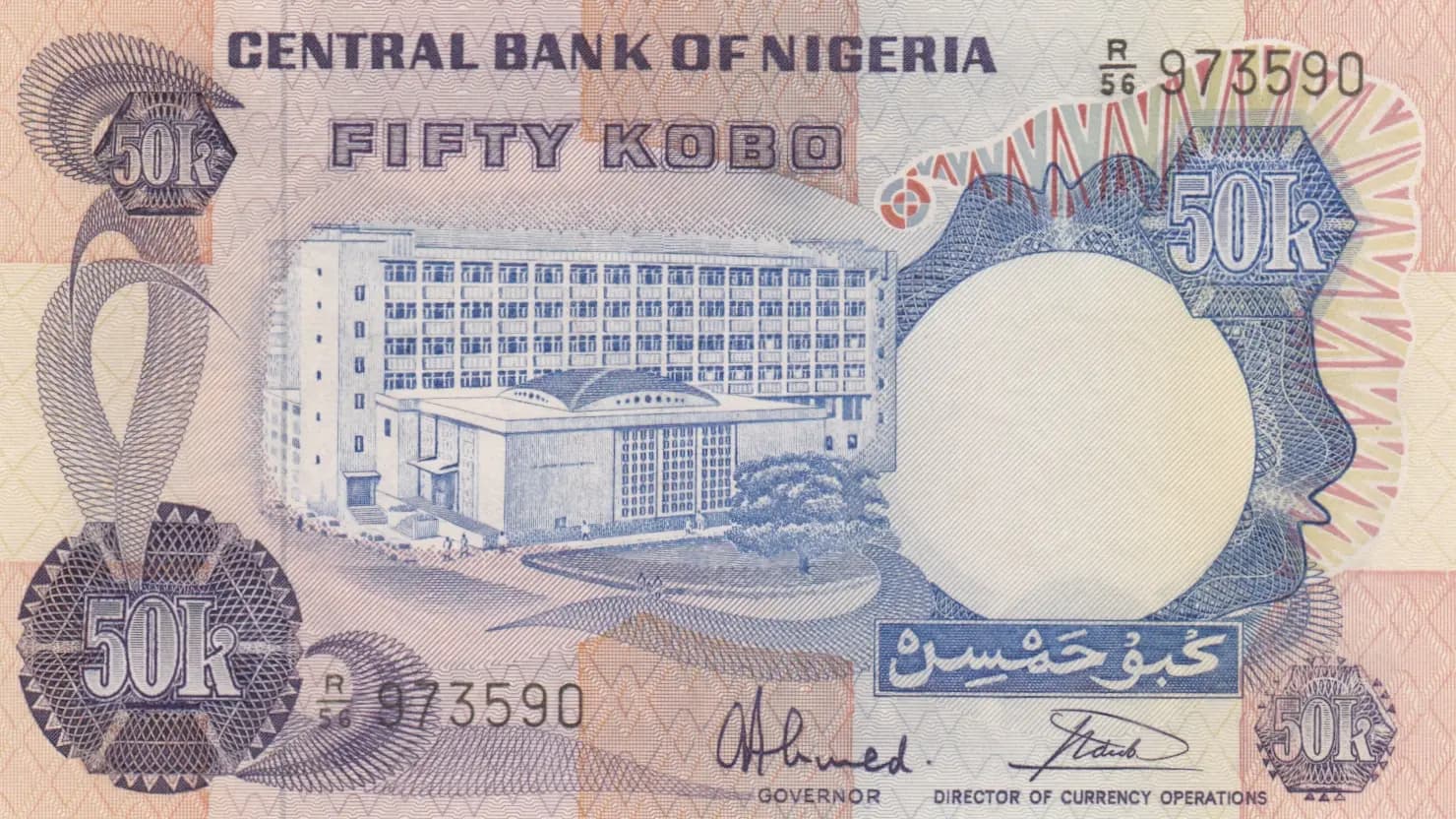
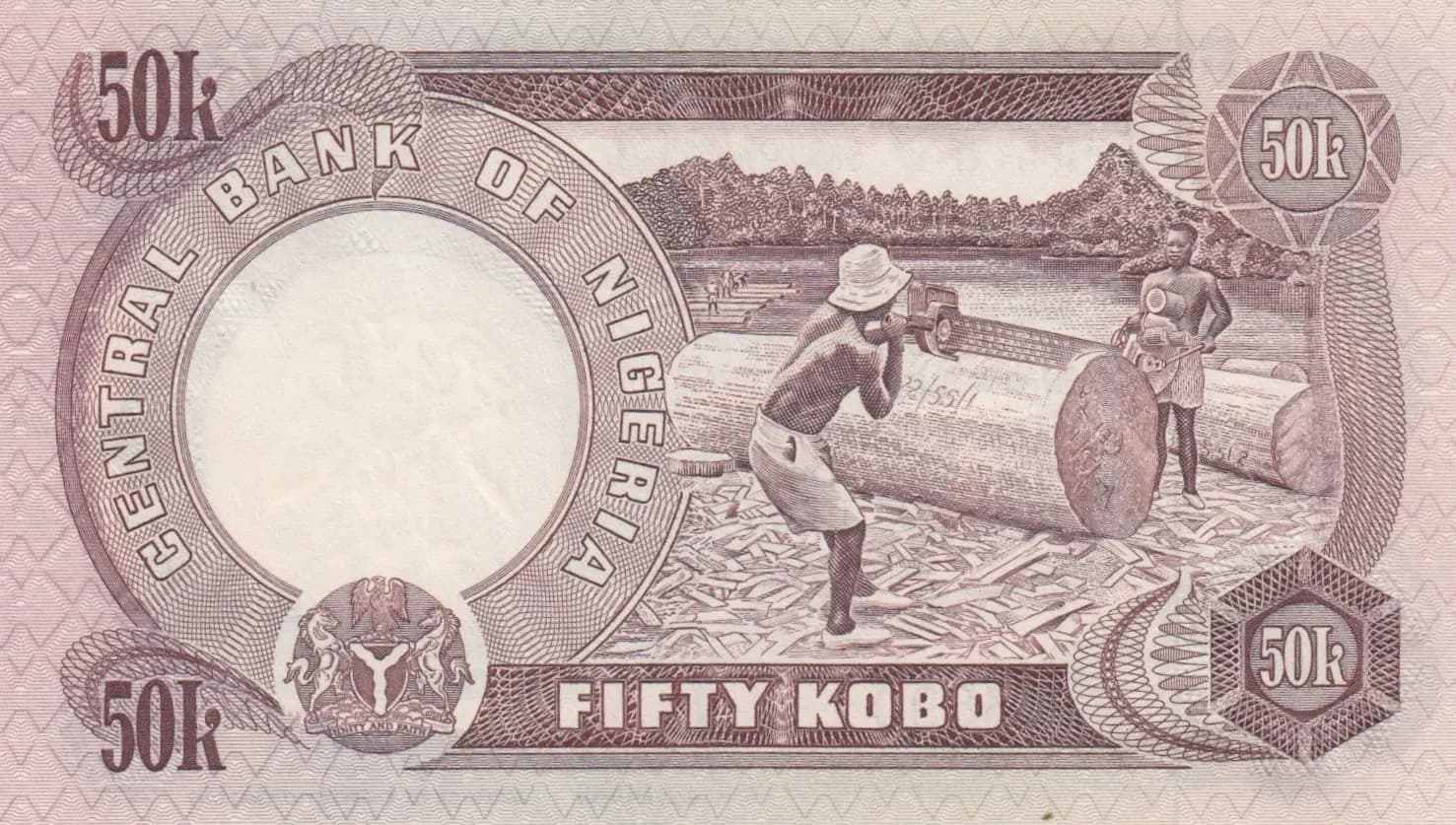
This is a well-preserved UNC example of the Nigeria 50 Kobo from 1973 (Pick P-14g), featuring the distinctive blue and orange color scheme on the obverse and brown tones on the reverse. The note displays the Central Bank of Nigeria building on the front and a detailed logging scene on the back, with crisp engraving and no visible wear, fold marks, or tears. The serial number prefix and overall print quality suggest this is a regular issue note from the early years of this denomination's circulation.
Common. This is a regular issue note from a major denomination series with substantial print runs. eBay market pricing data shows consistent sales in the $1.86–$5.50 range across 2014–2021, with UNC examples regularly achieving $2–$4, indicating abundant supply in the collector market. The 2019 catalog value of $1.50 for UNC further confirms this as a widely available note with no scarcity premium.
Issued in 1973 during Nigeria's post-Civil War economic recovery period, this 50 Kobo note reflects the nation's development priorities through its imagery: the modernist Central Bank of Nigeria building in Lagos symbolizes financial progress and institutional stability, while the reverse's logging scene depicts the country's natural resource wealth and primary economic activities. The Arabic script inscriptions alongside English reflect Nigeria's diverse linguistic and cultural heritage during this era of nation-building.
The obverse features a portrait of a notable Nigerian figure in traditional attire on the left, complemented by the modern Central Bank of Nigeria headquarters building complex in the center—a symbol of post-independence institutional development in Lagos. The reverse depicts an economic activity scene showing workers engaged in logging operations with forest and water elements, representing Nigeria's forestry and natural resource sectors. Both sides incorporate the Nigerian national coat of arms (heraldic eagle) and decorative '50k' medallions in all four corners, with intricate cross-hatching and fine engraving patterns throughout the design. The color palette—blue and orange/salmon on front, brown and cream on back—provides strong visual distinction between denominations.
Front: 'CENTRAL BANK OF NIGERIA' (issuing authority); 'FIFTY KOBO' (denomination in English); '50k' (denomination abbreviation in corners); 'GOVERNOR' and 'DIRECTOR OF CURRENCY OPERATIONS' (authority signatures); Arabic text 'خمسون' (Khamsun - Fifty in Arabic). Back: 'CENTRAL BANK OF NIGERIA' (issuing authority); 'FIFTY KOBO' (denomination); '50k' (denomination in corners). Serial number visible as 'R 56 973590'.
Intaglio engraving (recess printing), the standard security printing method for Central Bank of Nigeria currency of this era. The crisp line work, fine cross-hatching patterns, and depth of impression visible in both the visual analysis are characteristic of high-quality intaglio production. The watermark (heraldic eagle) and detailed security engraving indicate professional Central Bank security printing standards.
This example bears serial number prefix 'R 56', consistent with regular issue notes of the 1973–1978 series. The catalog references replacement notes with serial prefix 'DZ', indicating this is a standard circulation note rather than a replacement. No significant varieties (overprints, signature variants, or color shifts) are evident in the observed specimen. The Pick P-14g designation confirms this as part of the standard 1973 series.