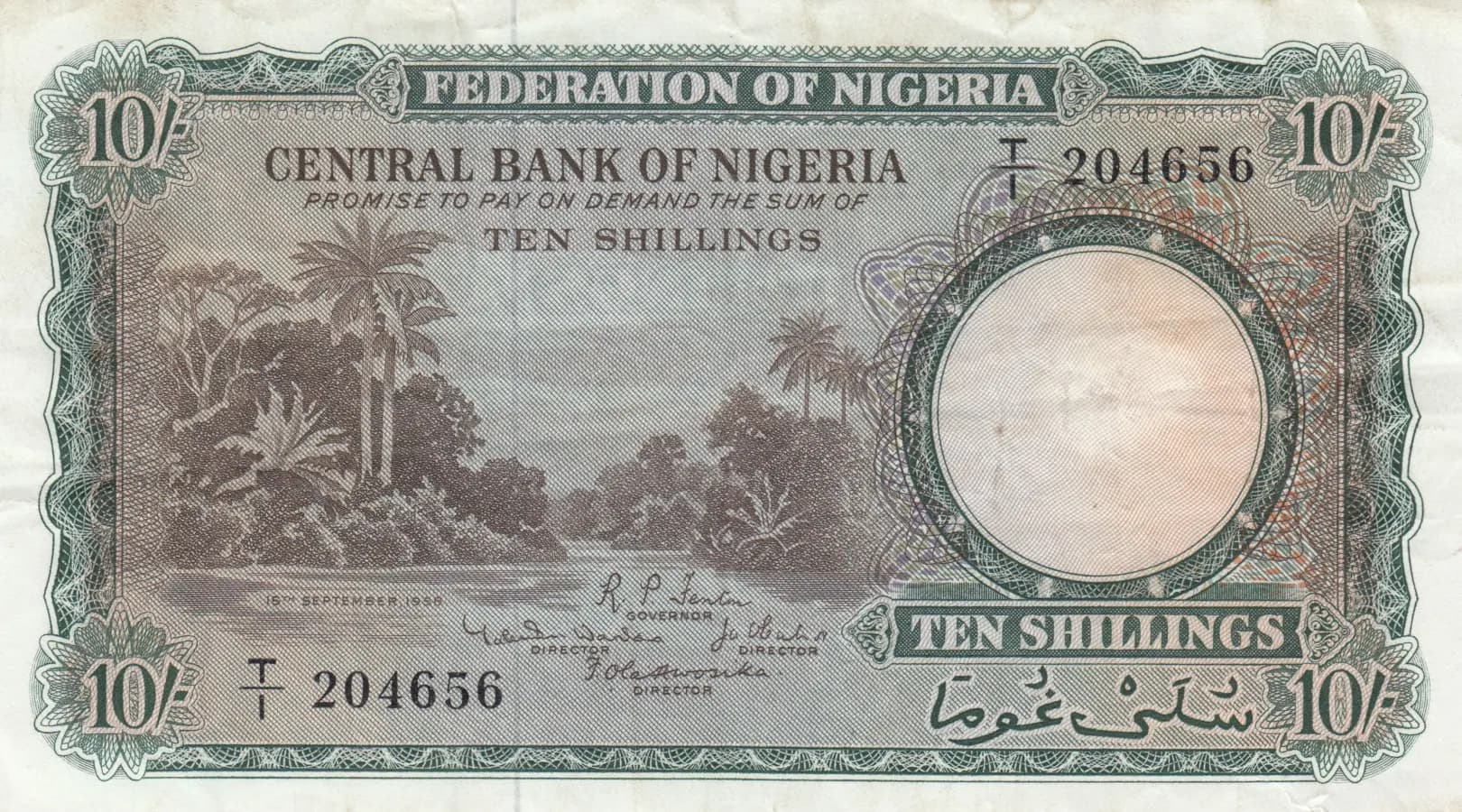
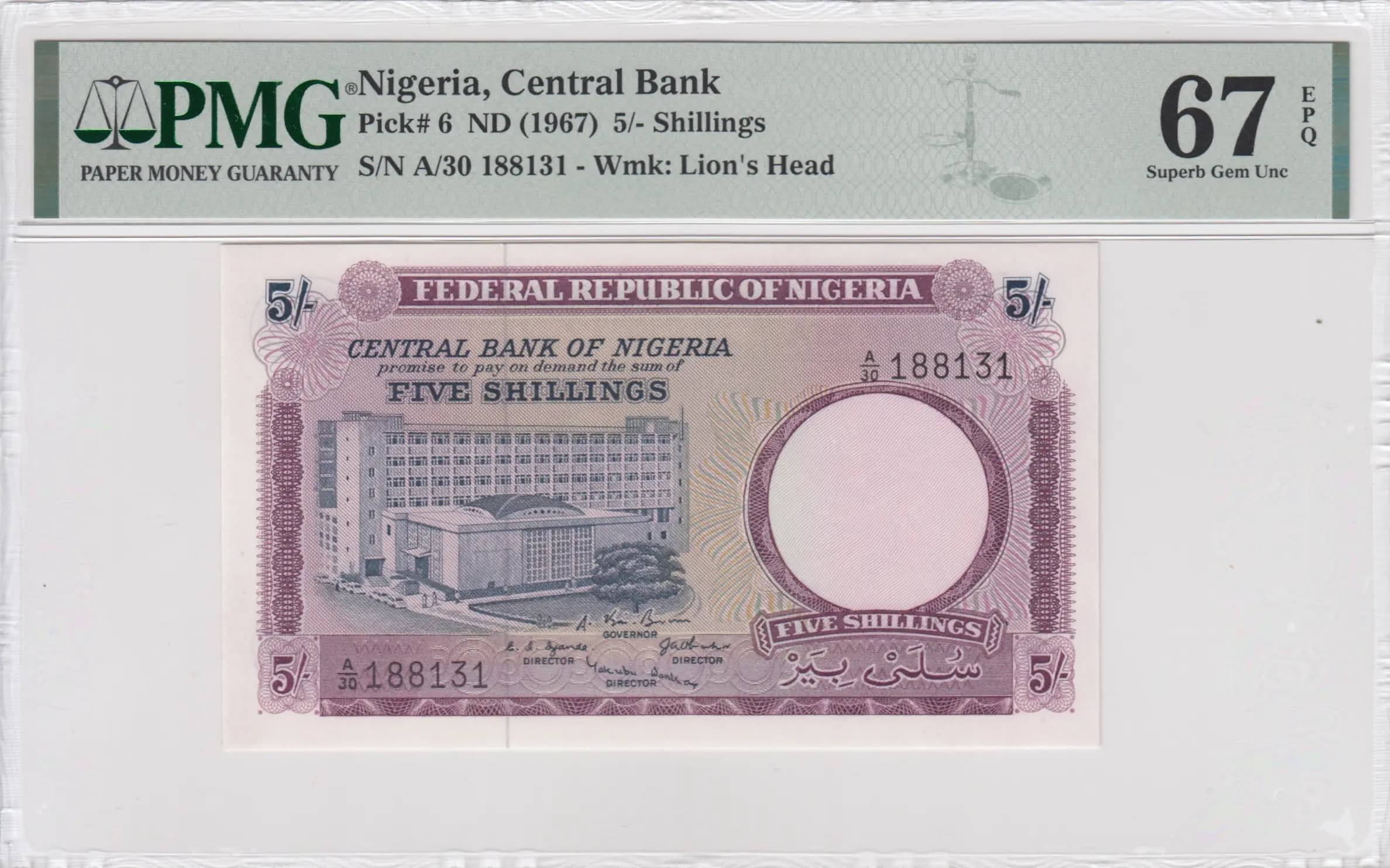
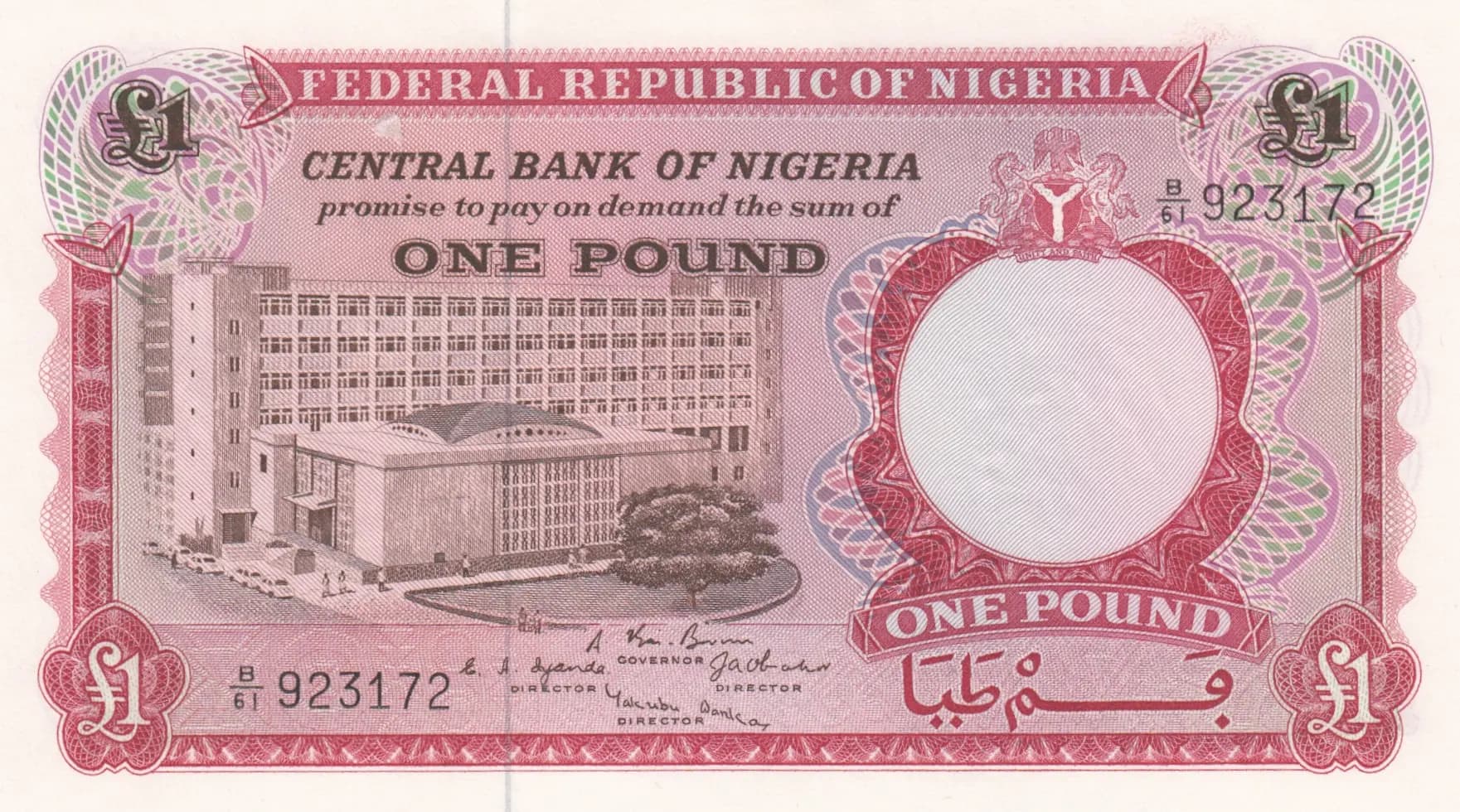
5 naira 1973 specimen
Market Prices
1 saleAbout This Note
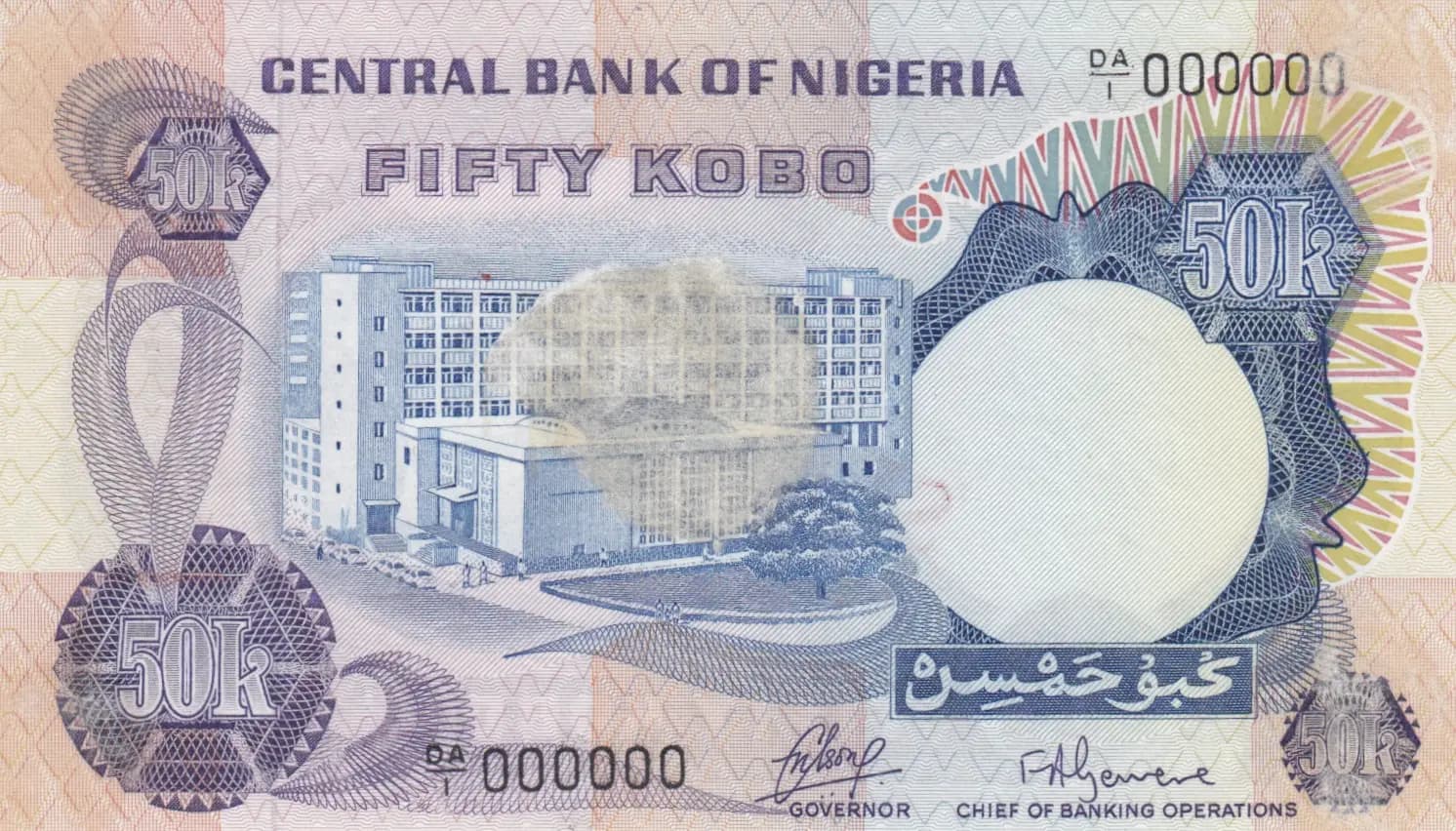
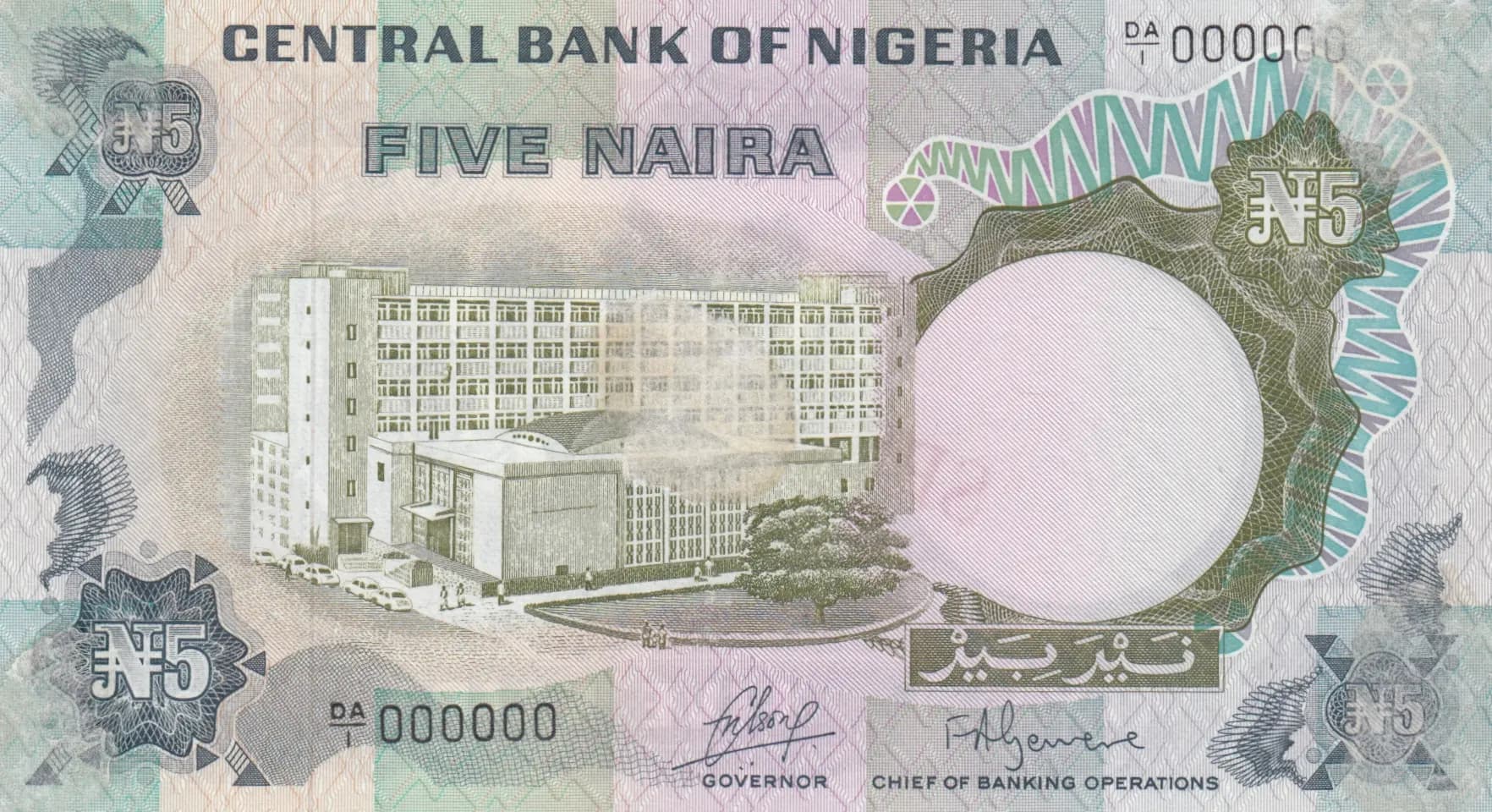
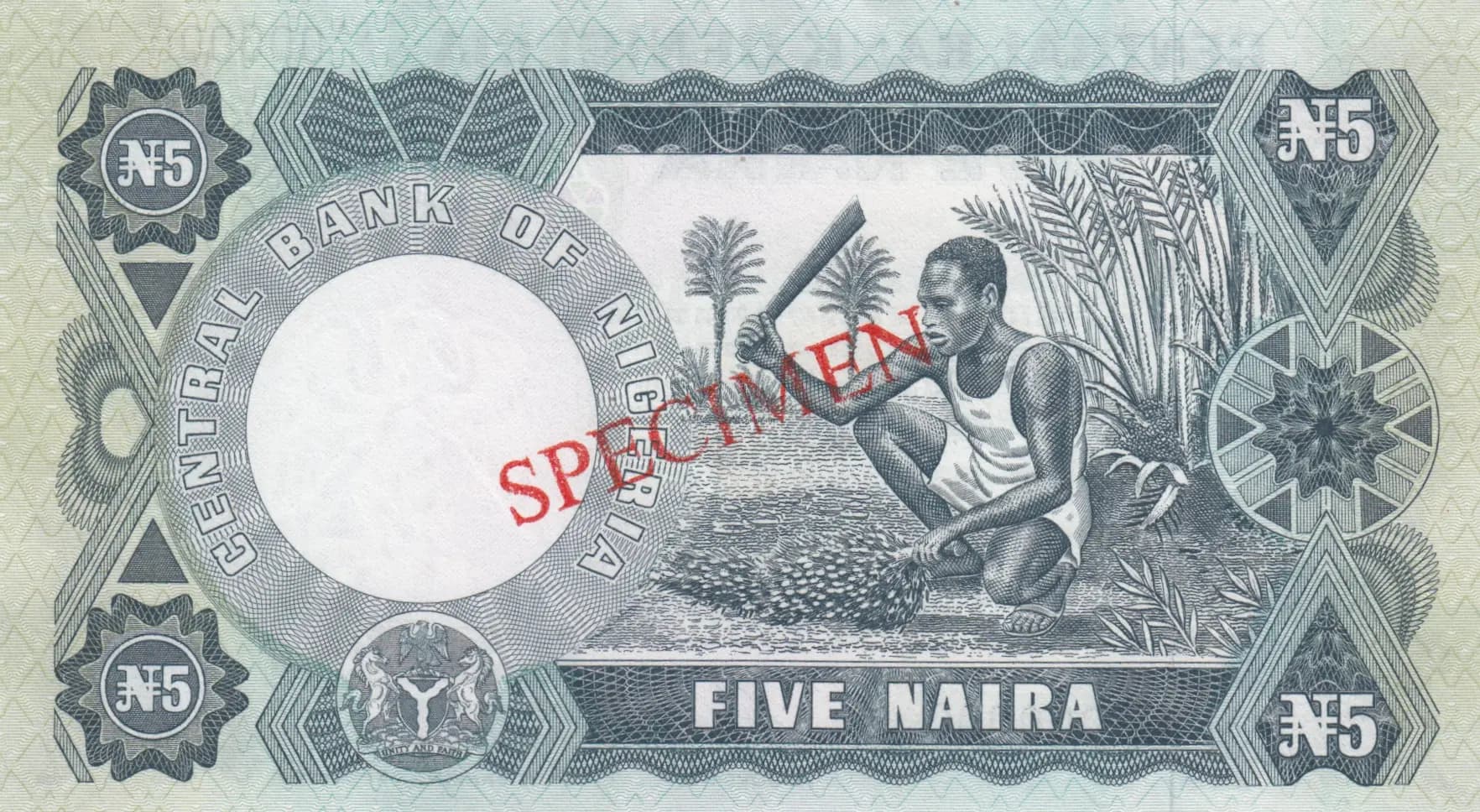
This is a Nigerian 5 Naira specimen note from 1973 (Pick P-16as), displaying exceptional uncirculated condition with sharp printing detail and no visible wear. The note features the Central Bank of Nigeria building prominently on the obverse in green, pink, and beige tones, while the reverse depicts a male figure engaged in date palm harvesting—reflecting Nigeria's important agricultural heritage during the post-Civil War reconstruction period. As a specimen note marked with a red 'SPECIMEN' stamp, this is an institutional reference piece intended for distribution to banks and collectors, making it a particularly interesting addition to Nigerian currency collections.
Common. While this is a specimen note (which are generally less common than regular circulation issues), the 1973 Nigerian 5 Naira is a standard issue from a major economic period with substantial print runs. eBay market data from 2019 shows VF examples selling for approximately $15 catalog value and under $3.25 realized prices, with UNC specimens cataloged at $70—pricing that indicates healthy supply in the collector market. Specimen notes, though intentionally distributed in limited quantities to institutions, were produced in sufficient numbers that they remain readily available to collectors. There is no evidence of exceptional scarcity or special desirability that would elevate this beyond common classification.
Issued in 1973, just three years after the end of the Nigerian Civil War (1967-1970), this 5 Naira note represents the Central Bank of Nigeria's effort to stabilize and modernize the nation's currency during a period of economic recovery and renewed institutional confidence. The design choice to prominently feature the Central Bank's Lagos headquarters on the obverse symbolizes institutional authority and economic stability, while the reverse's depiction of date palm harvesting reflects Nigeria's continued economic reliance on agricultural production alongside its emerging oil wealth. The specimen designation indicates this was part of the Central Bank's official distribution program to financial institutions, serving both as a security reference and a demonstration of the bank's printing and design capabilities.
The obverse features the Central Bank of Nigeria headquarters in Lagos, a modernist multi-story institutional building depicted in center-left position with regular window patterns characteristic of 1970s government architecture. The design employs a sophisticated color palette of green, pink, beige, gray, and white with fine geometric patterns and wave-like decorative elements. The reverse depicts a male figure in traditional attire, rendered without upper garment, actively harvesting date palm fronds in an agricultural scene that references Nigeria's palm-based economy. Both sides incorporate the Nigerian coat of arms and multiple ₦5 denomination markers for authentication. The note features circular security feature areas and fine-line engraving throughout, reflecting professional banknote production standards of the era.
Front side: 'CENTRAL BANK OF NIGERIA' (header); 'FIVE NAIRA' (denomination); 'GOVERNOR' and 'CHIEF OF BANKING OPERATIONS' (signature lines); '₦5' (denomination symbol, multiple locations); 'DA 000000' (specimen serial number area). Back side: 'CENTRAL BANK OF NIGERIA' (header in arc); 'FIVE NAIRA' (denomination at bottom); 'SPECIMEN' (red stamp overlay, indicating official reference/specimen status); '₦5' (denomination symbol, multiple locations). All inscriptions are in English, reflecting Nigeria's post-colonial currency standardization.
Intaglio (steel engraving/line engraving) combined with multicolor offset lithography. The fine-line details visible in the architectural rendering of the Central Bank building and the detailed figural work on the reverse indicate professional security printing using traditional banknote production methods standard for Central Bank of Nigeria notes of this period. The crisp registration of multiple color layers (green, pink, beige, gray, and black) and the detailed geometric patterns demonstrate advanced offset printing coordination typical of currency production by established security printers working with African central banks during the 1970s.
This is identified as a specimen note (Pick P-16as, with the 's' suffix denoting specimen status). According to reference sources, replacement notes carry the serial number prefix 'DZ/' which would indicate notes printed to replace damaged currency from original production runs. This particular example displays the standard specimen serial format 'DA 000000' typical of Central Bank reference specimens. The serial number prefix 'DA' appears consistent with specimen designations for this issue. No other major varieties (signature variations, printing differences, or overprint varieties) are noted for this Pick number in standard catalogs, though collectors should verify specific serial number prefixes and signature combinations when acquiring examples for specialized collections.