1 naira 1973 specimen
Market Prices
21 salesAbout This Note
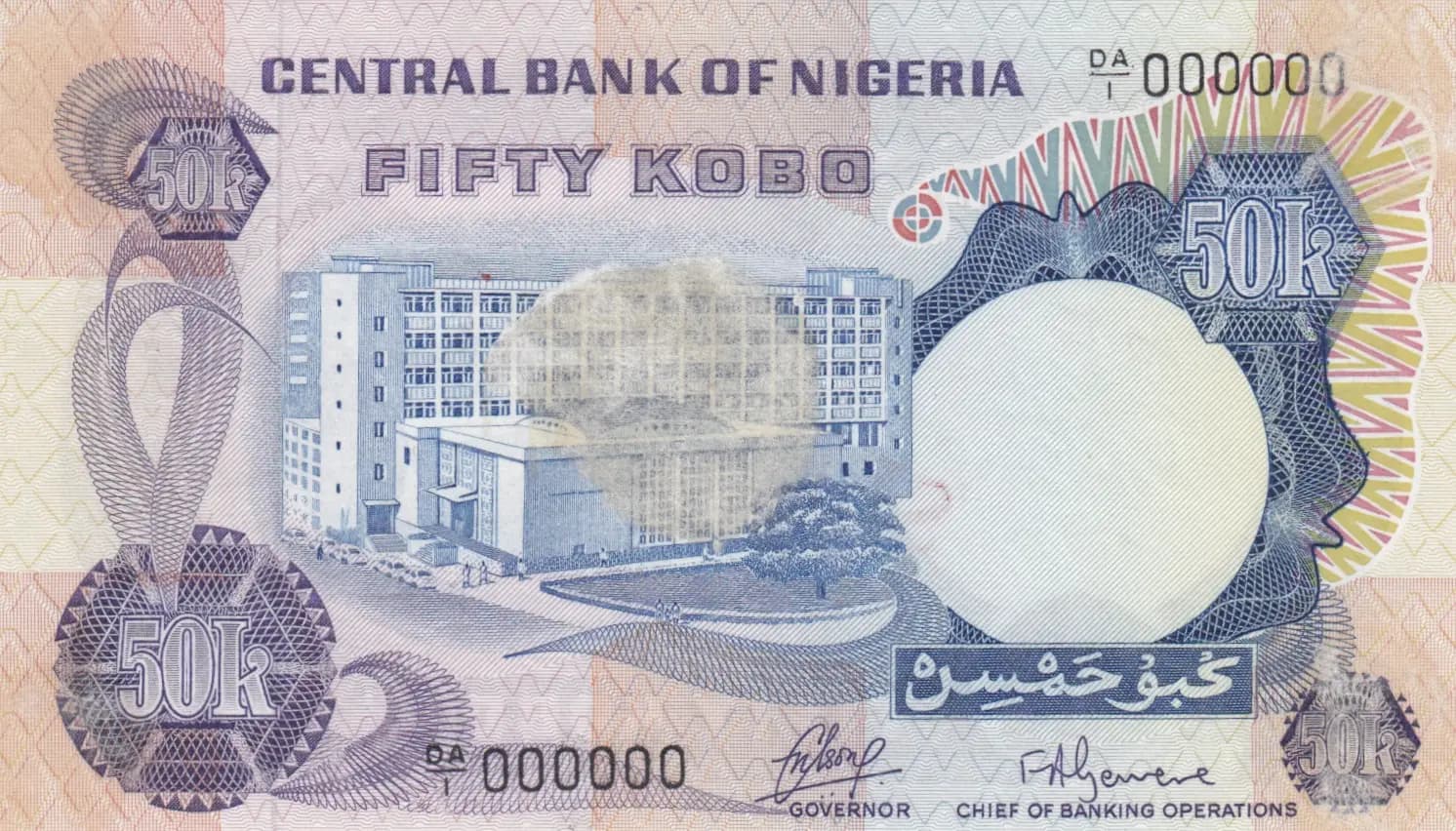
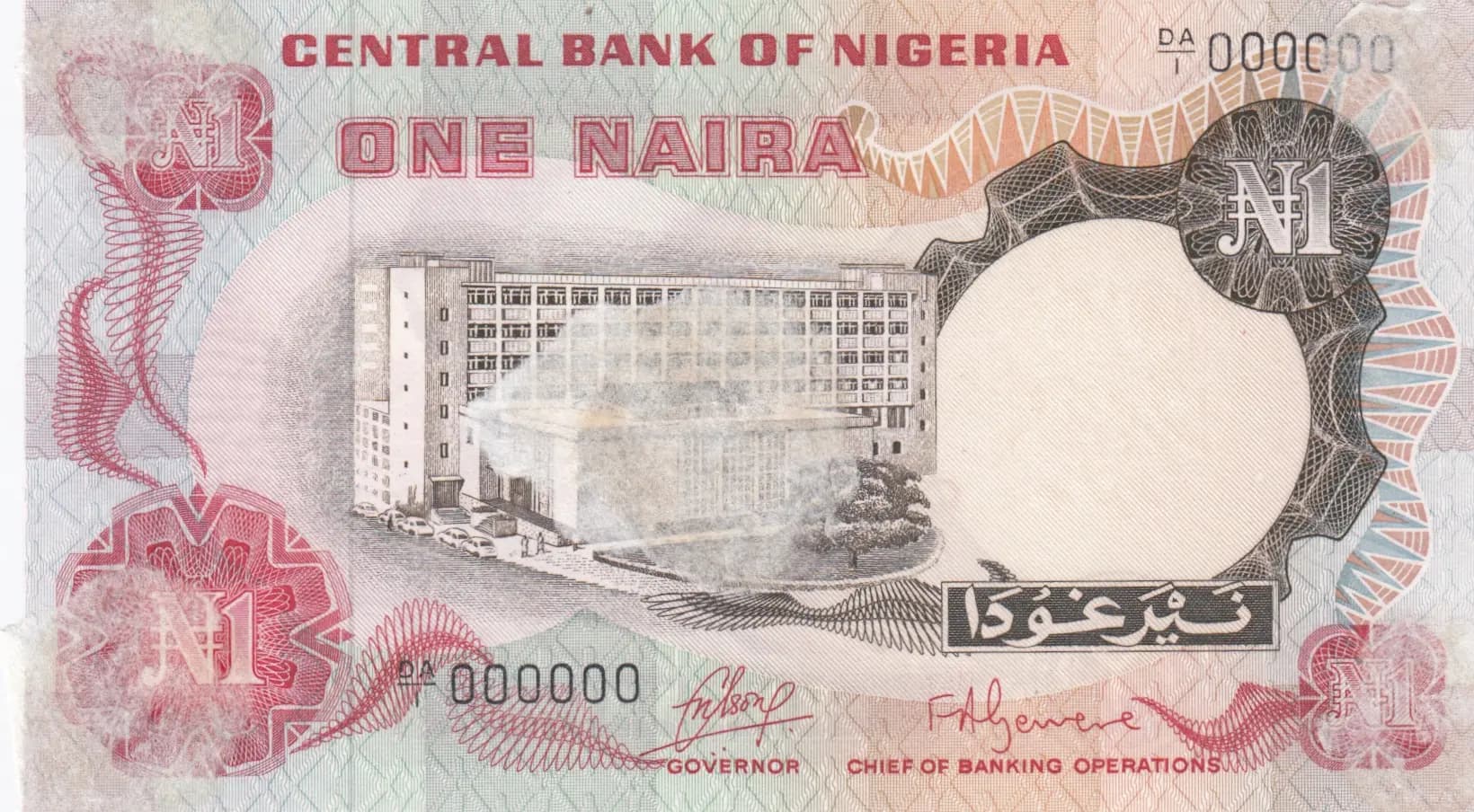
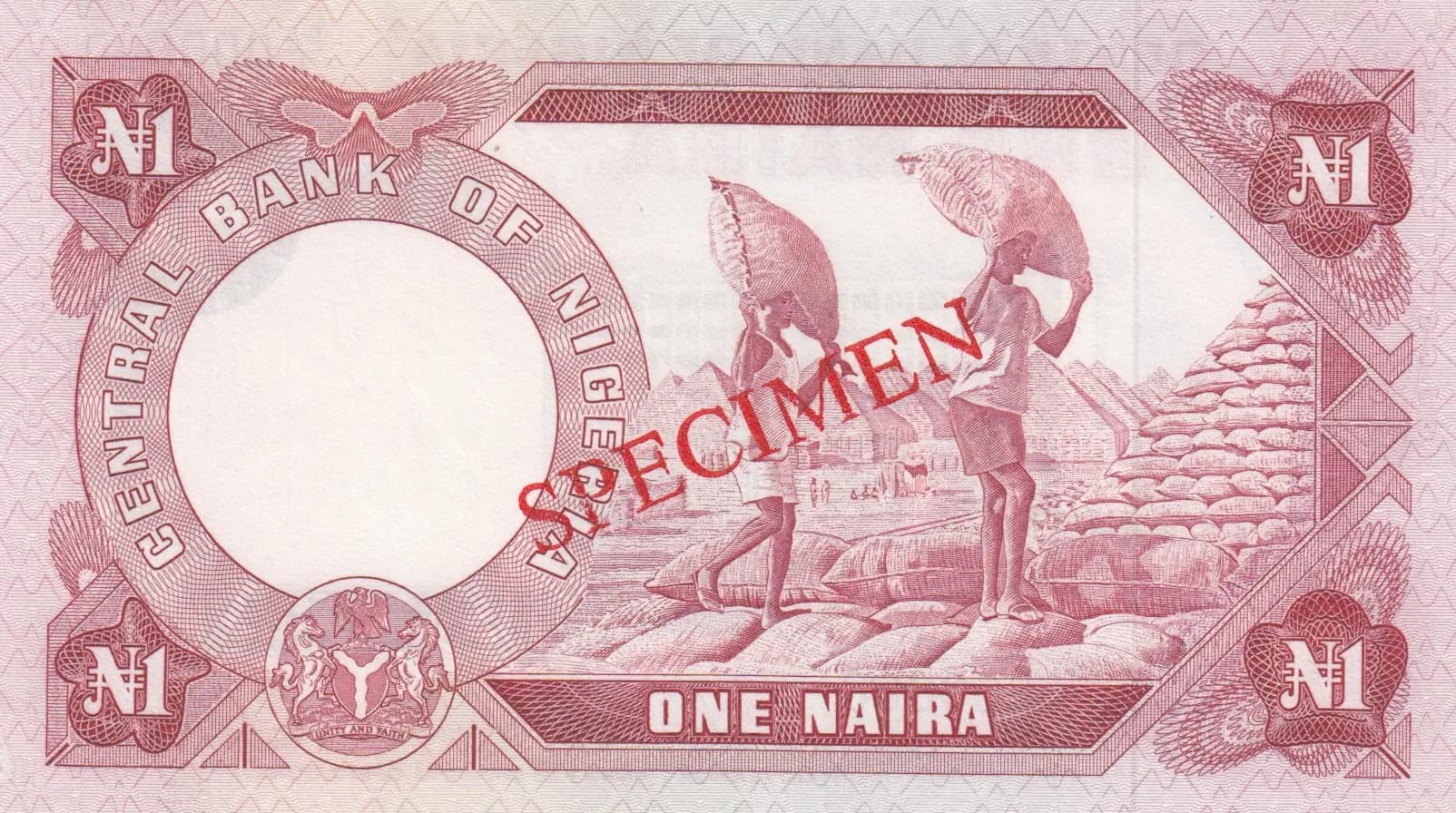
This is a 1973 Nigerian 1 Naira specimen note (Pick P-15as) in AU condition, featuring the Central Bank of Nigeria building prominently on the obverse and a scenic agricultural vignette on the reverse. The note displays the characteristic pale pink/salmon and light green color palette of the issue, with fine engraving throughout and clear SPECIMEN overprints in red diagonal stamps across the reverse. As a specimen note rather than circulation currency, this represents an institutional presentation piece from the early years of Nigeria's independent monetary system.
Common. eBay transaction data shows consistent sales activity across multiple condition grades from 2013-2021, with prices typically ranging from $0.99 to $12.02, indicating ready availability in the collector market. The 1973-1978 series had substantial print runs. Even AUNC and EF specimens appear regularly at modest prices ($4.99-$7.18 range in recent sales), demonstrating this is a standard issue for collectors rather than a scarce or rare variety.
This 1 Naira note was issued in 1973, during Nigeria's post-civil war period of national reconstruction and economic development under the Federal Military Government. The Central Bank of Nigeria building depicted on the obverse represents the institutional modernization of Nigeria's financial system, while the reverse's agricultural vignette with figures in traditional dress reflects the nation's continued reliance on farming and pastoralism alongside industrial development. The specimen designation indicates this was a formal presentation or archival note rather than currency for general circulation.
The obverse features the modernist Central Bank of Nigeria headquarters building in Lagos positioned at left-center, depicted in fine architectural detail with its characteristic multi-story structure, regular fenestration, and central courtyard. The right side displays Nigeria's national heraldic eagle emblem rendered in black within an ornate circular radiating frame, symbolizing state authority. Ornamental floral and botanical scrollwork in red dominates the left margin. The reverse presents a rural agricultural scene with two figures in traditional Nigerian dress with parasols/umbrellas, set within a landscape of fields and vegetation. The lower center features Nigeria's national coat of arms within an ornate circular frame. Both sides incorporate the letter 'N' in decorative circular emblems at corners. Watermark areas are evident as blank oval spaces on both sides.
Front side: 'CENTRAL BANK OF NIGERIA' (issuer identification); 'ONE NAIRA' (denomination); 'DA 0000000' and '#00000' (specimen serial number designations); 'GOVERNOR' and 'CHIEF OF BANKING OPERATIONS' (signature titles); Arabic text present on right side (content not fully legible in image). Back side: 'CENTRAL BANK OF NIGERIA' (issuer); 'ONE NAIRA' (denomination); 'SPECIMEN' (specimen overprint in red diagonal stamps); 'UNITY AND FAITH' and 'PEACE' (portions of Nigeria's national motto).
Intaglio engraving (line engraving) with fine detailed crosshatching and guilloche pattern work throughout, characteristic of high-security banknote production. The fine lines, ornamental borders, and detailed scenic elements indicate professional security printing. While the specific printer for Pick P-15as is not definitively documented in standard references, Nigerian notes of this era were typically produced by De La Rue or similar established security printers, though confirmation would require archival research.
This is a specimen note variant (designated 'as' in Pick numbering), indicated by the red diagonal 'SPECIMEN' overprints visible on the reverse. The serial number prefix 'DA' with zeros indicates this is a specimen/presentation example rather than a circulation note. Replacement notes from this series carried the serial number prefix 'DZ/', which would represent a different variety. As a specimen note, this example represents the formal archival or institutional presentation variant of the 1973 1 Naira issue.