5 cordobas 1968
Market Prices
8 salesAbout This Note
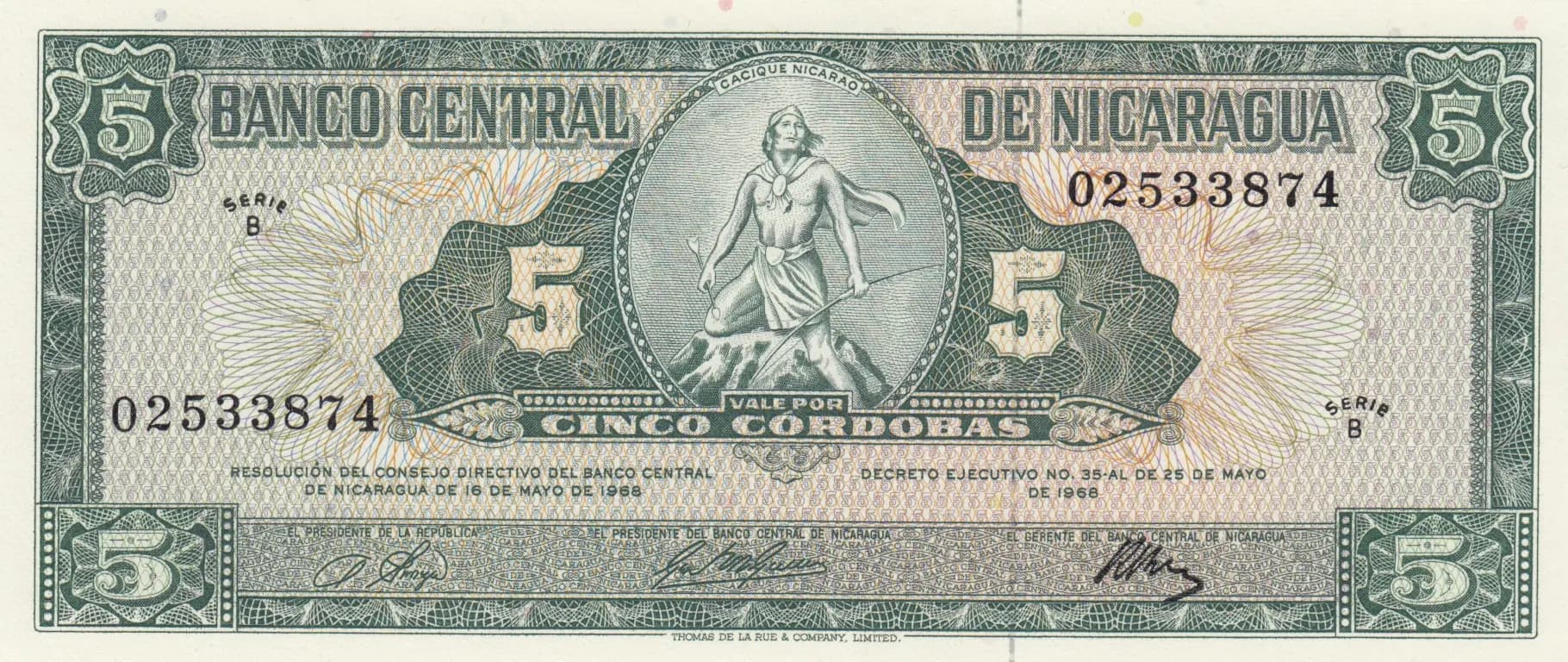
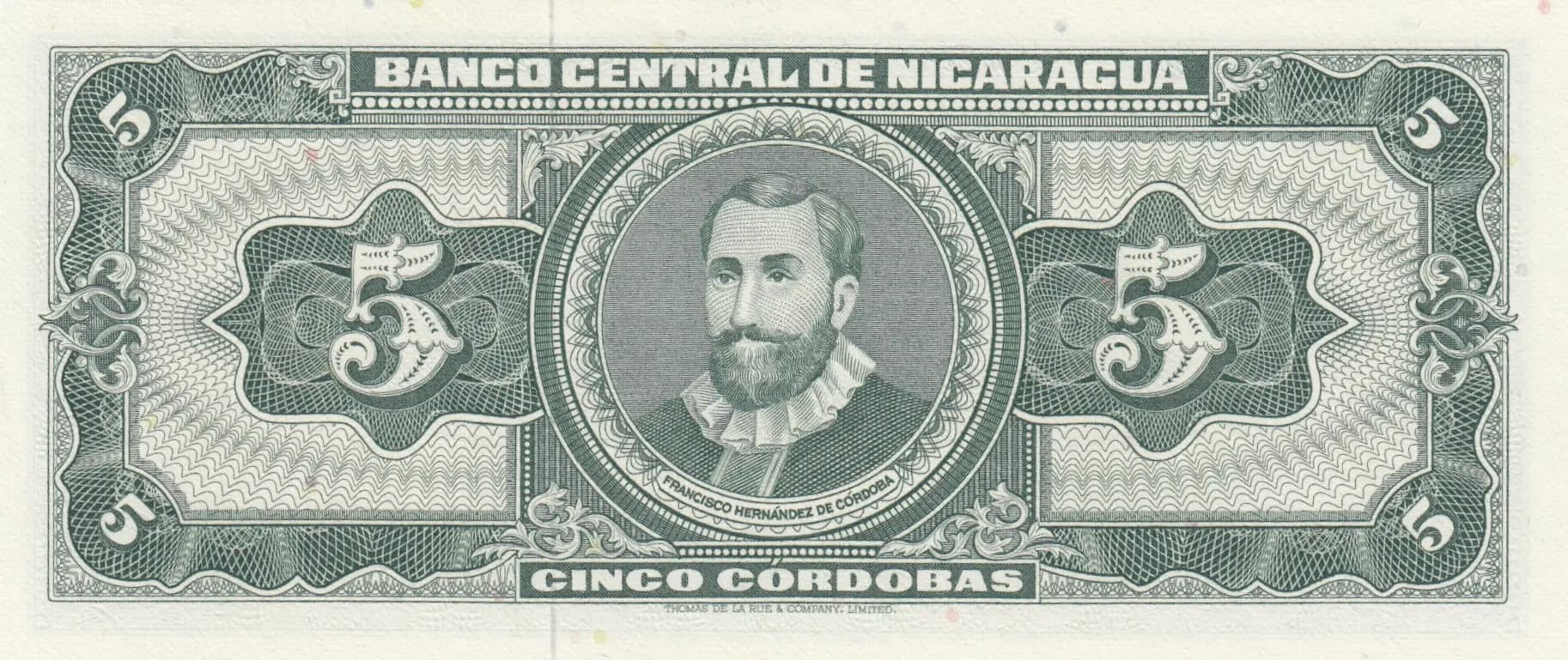
This is a beautiful uncirculated example of the 1968 Nicaragua 5 Cordobas (Pick P-116), featuring exceptional print quality from Thomas de la Rue with sharp, crisp imagery showing virtually no wear. The note displays the characteristic green and cream color scheme with an allegorical female figure on the obverse and a portrait of Francisco Hernández de Córdoba on the reverse, both rendered with fine engraving detail typical of premium currency production. Minor age-related foxing is barely noticeable on this otherwise pristine note, making it an excellent specimen for collectors seeking quality Central American currency from the mid-20th century.
Common. This is a regular-issue banknote from a major Central American nation with a substantial print run typical of Banco Central de Nicaragua's circulation currency for the period. The eBay market data provided shows consistent examples trading in the $3-$10 range for lower grades (F-VF), with uncirculated grades achieving $15-$26 catalog value and $100+ in certified gem conditions (PMG 66-67). The wide availability of examples at modest prices, the lack of any documented printing limitation or recall, and the standard issuance as regular currency all confirm this as a common date. The current specimen's UNC grade places it among the more desirable examples available, but the underlying denomination remains common in the broader numismatic market.
This note was issued on May 25, 1968, by decree of the Nicaraguan government and represents the Central Bank's authority to issue currency during a period of relative monetary stability in the country. The selection of Francisco Hernández de Córdoba—the Spanish conquistador and founder of Nicaragua's colonial settlements—reflects the nation's historical identity, while the allegorical female figure on the obverse (representing Ceres or agricultural prosperity) emphasizes Nicaragua's agrarian economy. The mid-1960s issue date places this note during a transitional period in Nicaragua's monetary policy, predating the significant political upheaval that would characterize the following decades.
The obverse features a classical allegorical female figure—likely representing Ceres, the Roman goddess of agriculture and abundance—kneeling gracefully on rocky terrain within an ornate oval medallion. This personification emphasizes Nicaragua's agricultural heritage and economic foundation. The reverse bears a formally rendered portrait of Francisco Hernández de Córdoba (1475-1526), the Spanish conquistador and colonial administrator, shown in period dress with a distinctive ruffled collar characteristic of 16th-century Spanish nobility. Both sides are framed with elaborate guilloche patterns, geometric designs, and decorative corner shields displaying the denomination numeral '5'. The color scheme of green on a cream/white underprint, combined with intricate line work throughout, creates a visually sophisticated and secure design typical of Thomas de la Rue's premium banknote production standards.
FRONT SIDE: 'BANCO CENTRAL DE NICARAGUA' (Central Bank of Nicaragua); 'SERIE B' (Series B); '02533874' (Serial Number); 'VALE POR CINCO CORDOBAS' (Worth Five Cordobas); 'RESOLUCION DEL CONSEJO DIRECTIVO DEL BANCO CENTRAL DE NICARAGUA DE 16 DE MAYO DE 1968' (Resolution of the Board of Directors of the Central Bank of Nicaragua of May 16, 1968); 'DECRETO EJECUTIVO NO. 35-AL DE 25 DE MAYO DE 1968' (Executive Decree No. 35-AL of May 25, 1968); 'EL PRESIDENTE DE LA REPUBLICA' (The President of the Republic); 'EL PRESIDENTE DEL BANCO CENTRAL DE NICARAGUA' (The President of the Central Bank of Nicaragua); 'EL GERENTE DEL BANCO CENTRAL DE NICARAGUA' (The Manager of the Central Bank of Nicaragua); 'THOMAS DE LA RUE & COMPANY, LIMITED' (Thomas De La Rue & Company, Limited—the printer). BACK SIDE: 'BANCO CENTRAL DE NICARAGUA' (Central Bank of Nicaragua); 'FRANCISCO HERNÁNDEZ DE CÓRDOBA' (Francisco Hernández de Córdoba); 'CINCO CORDOBAS' (Five Cordobas); 'THOMAS DE LA RUE & COMPANY, LIMITED' (Thomas De La Rue & Company, Limited—the printer).
This note was produced by Thomas de la Rue & Company, Limited (TDLR), London, using intaglio engraving—the gold standard for security printing in the mid-20th century. The fine detail visible in the guilloche patterns, portrait rendering, and background geometric elements are hallmarks of the intaglio process, where designs are incised into printing plates and ink is forced into recessed areas. The multiple color printing (green on multicolor underprint) suggests multi-pass printing utilizing advanced plate technology. The sharp, crisp impression and consistent color distribution observed in both obverse and reverse indicate precision craftsmanship and optimal paper-to-plate contact pressure typical of the world's premier security printer of that era.
This is Series B as indicated by the 'SERIE B' marking on the obverse. The serial number 02533874 observed on this specimen appears to be from a standard production run without special overprints or variations. Pick P-116 does not typically list major recognized varieties, though serial number prefixes and series letters may vary across different production batches. The note references a similar earlier issue printed by ABNC (American Bank Note Company), which is listed as Pick P-108, indicating this Thomas de la Rue printing represents a later production version of the same denomination. No specific cherrypicking varieties (such as low serial numbers, fancy numbers, or special prefixes) are apparent from the standard serial number 02533874 shown on this example.