50 pesos 1915
About This Note
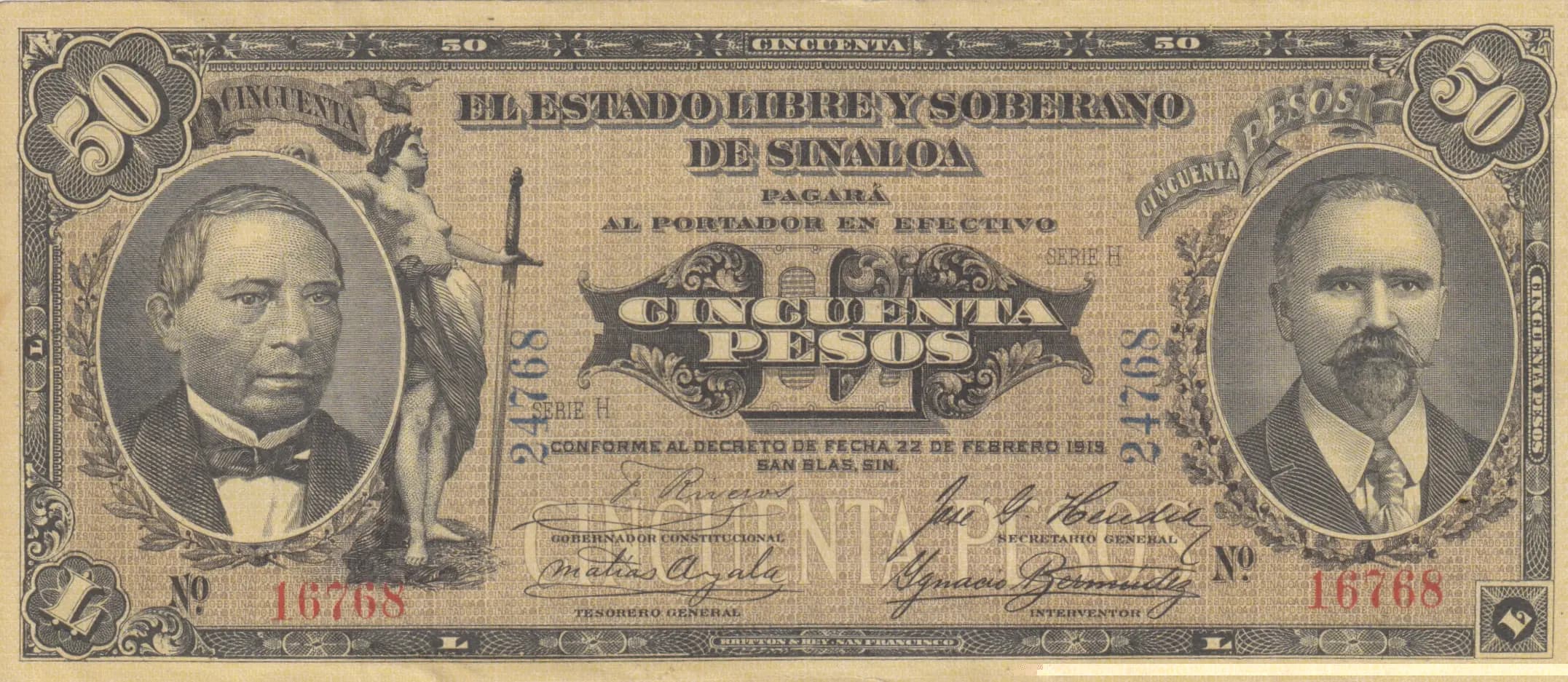
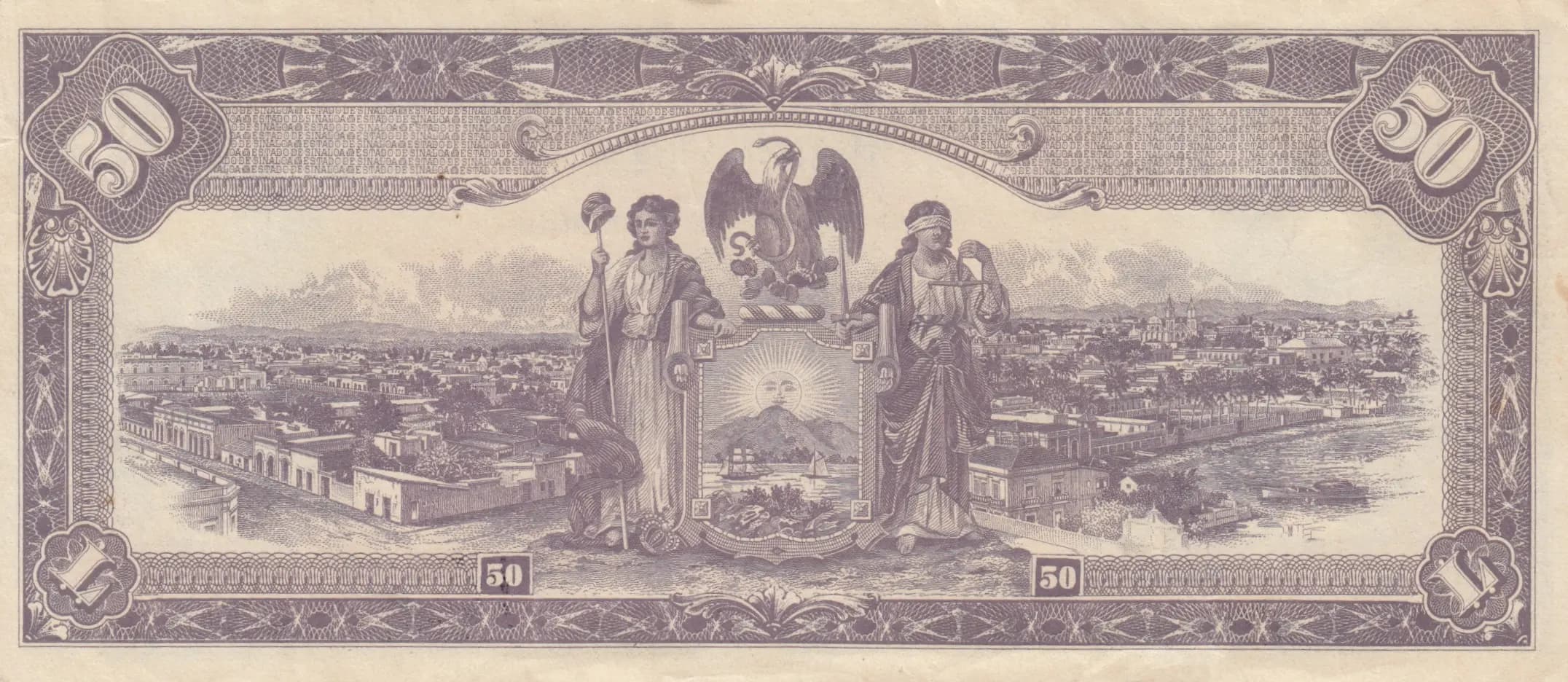
A striking 50 pesos banknote issued by the Estado Libre y Soberano de Sinaloa during the Mexican Revolution period (1915), presented in Very Fine condition. The front features two male portrait medallions framing an allegorical female figure with sword, while the reverse showcases an elaborate allegorical composition with robed female figures, an eagle, and a volcanic landscape vignette. The note's aged tan patina and crisp engraving details are well-preserved, making it an excellent example of early Mexican state currency from this turbulent historical period.
Common. While state-issued currency from the Mexican Revolution period can command collector interest, this particular note (Pick S1047, Serie H) was issued in substantial quantities by the Sinaloa state government. The catalog listing, series designation, and the presence of multiple surviving examples in circulation suggest a print run sufficient to classify this as a common variety. Notes from this issuer and period typically trade at modest prices among Mexican numismatic specialists, reflecting their relative availability despite their historical significance.
This note was issued under decree dated February 22, 1915, during the height of the Mexican Revolution when various states issued their own currency due to federal instability. The allegorical imagery on the reverse—featuring robed female figures, an eagle, and a volcano—reflects the revolutionary era's emphasis on national identity, virtue, and Mexican natural heritage. The volcano depicted likely represents either Colima or another significant peak in the Sinaloa region, connecting the currency to its regional origin during a period when state sovereignty was both celebrated and contested.
The front presents a formal, symmetrical composition with two male portraits in decorative circular frames—the left figure shown in right profile wearing formal attire with bow tie, the right figure depicted in left profile with mustache and beard. Between and to the left of these portraits stands an allegorical female figure representing Liberty or Justice, holding a raised sword. The central cartouche displays 'CINCUENTA PESOS' in ornamental lettering. The reverse features an elaborate allegorical tableau dominated by two robed female figures (representing national virtues such as Liberty and Prosperity or Justice and Peace) flanking a central monument or altar structure. An eagle perches atop this central composition, and within the monument frame appears a landscape vignette depicting a prominent volcano with radiating sun rays, suggesting dawn or national illumination. A panoramic cityscape or valley settlement is visible in the background. The denomination '50' appears in decorative frames at all four corners of both sides. Ornate floral and geometric border designs frame the entire composition on both sides, with fine scrollwork and corner ornaments characteristic of late 19th/early 20th century bank note engraving.
FRONT: 'EL ESTADO LIBRE Y SOBERANO DE SINALOA' (The Free and Sovereign State of Sinaloa) | 'CINCUENTA PESOS' (Fifty Pesos) | 'PAGARÁ AL PORTADOR EN EFECTIVO' (Will pay the bearer in cash) | 'CONFORME AL DECRETO DE FECHA 22 DE FEBRERO 1915 EXPEDIDO POR' (In accordance with the decree dated February 22, 1915 issued by) | 'SERIE H' (Series H) | 'GOBERNADOR CONSTITUCIONAL' (Constitutional Governor) | 'SECRETARIO GENERAL' (General Secretary) | 'TESORERO GENERAL' (General Treasurer) | 'INTERVENTOR' (Auditor/Controller) | Serial number: 16768. BACK: '50' (Fifty) appears in corners. The reverse contains primarily allegorical and symbolic imagery with minimal text.
This note was produced using intaglio engraving (steel or copper plate engraving), the standard security printing method for currency of this era. The fine line work visible throughout—particularly in the allegorical figures, portrait details, and landscape vignette—is characteristic of professional bank note engraving. The red-colored serial number indicates either hand-stamping or special red ink printing applied separately from the main intaglio process. The level of detail, consistent line quality, and complexity of the design suggest production by an established currency printer, though records for Sinaloa state note production from 1915 are limited.
This example is from SERIE H, as clearly marked on the obverse. The serial number 16768 places it within the standard numbering sequence for this series. The printed date of February 22, 1915 is consistent across this entire issue. No overprints, watermarks, or secondary varieties are apparent from the visual analysis. If higher or lower numbered serials or different series (A through G or beyond H) exist, they would constitute distinct catalog varieties, though all would likely fall under the same Pick number S1047 unless significant design changes accompanied series changes.