50 centavos 1915
About This Note
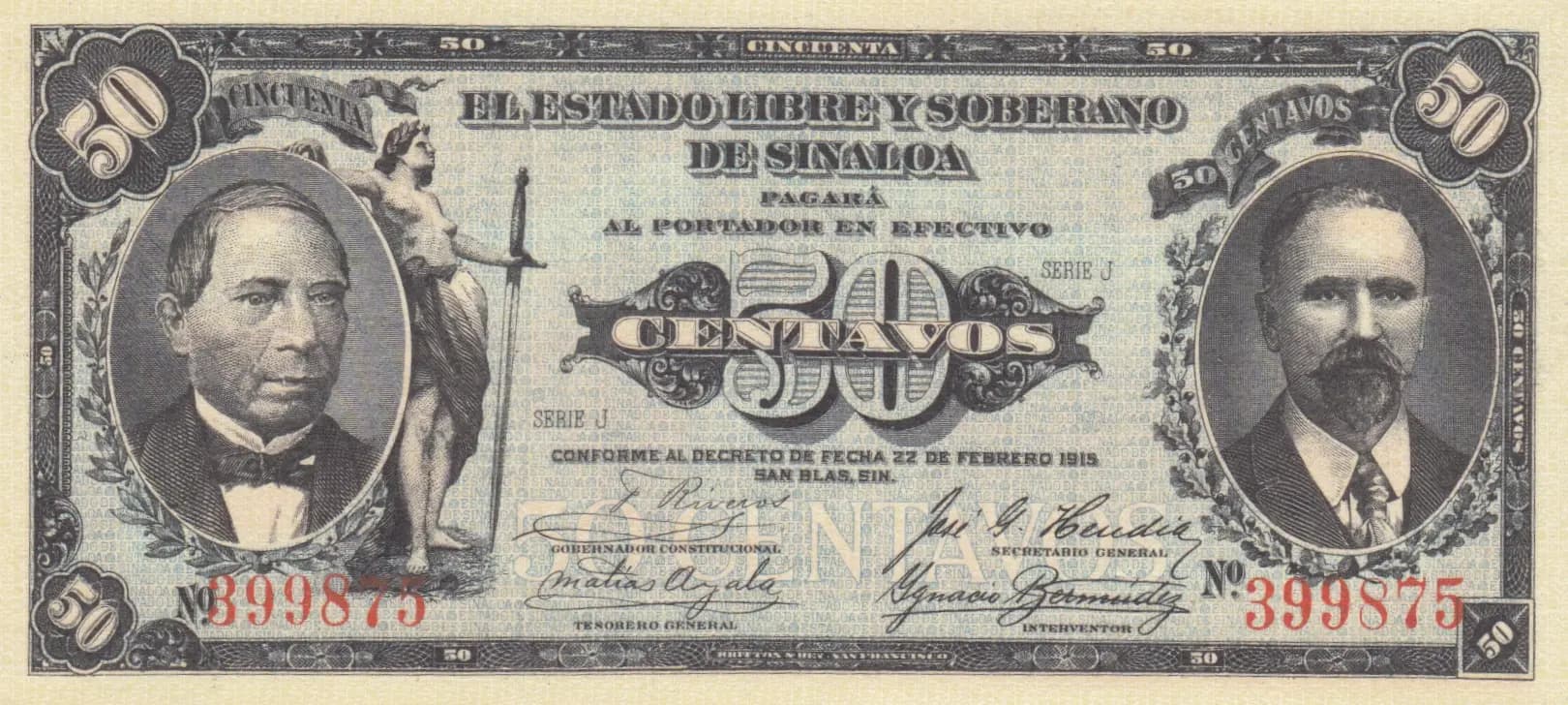
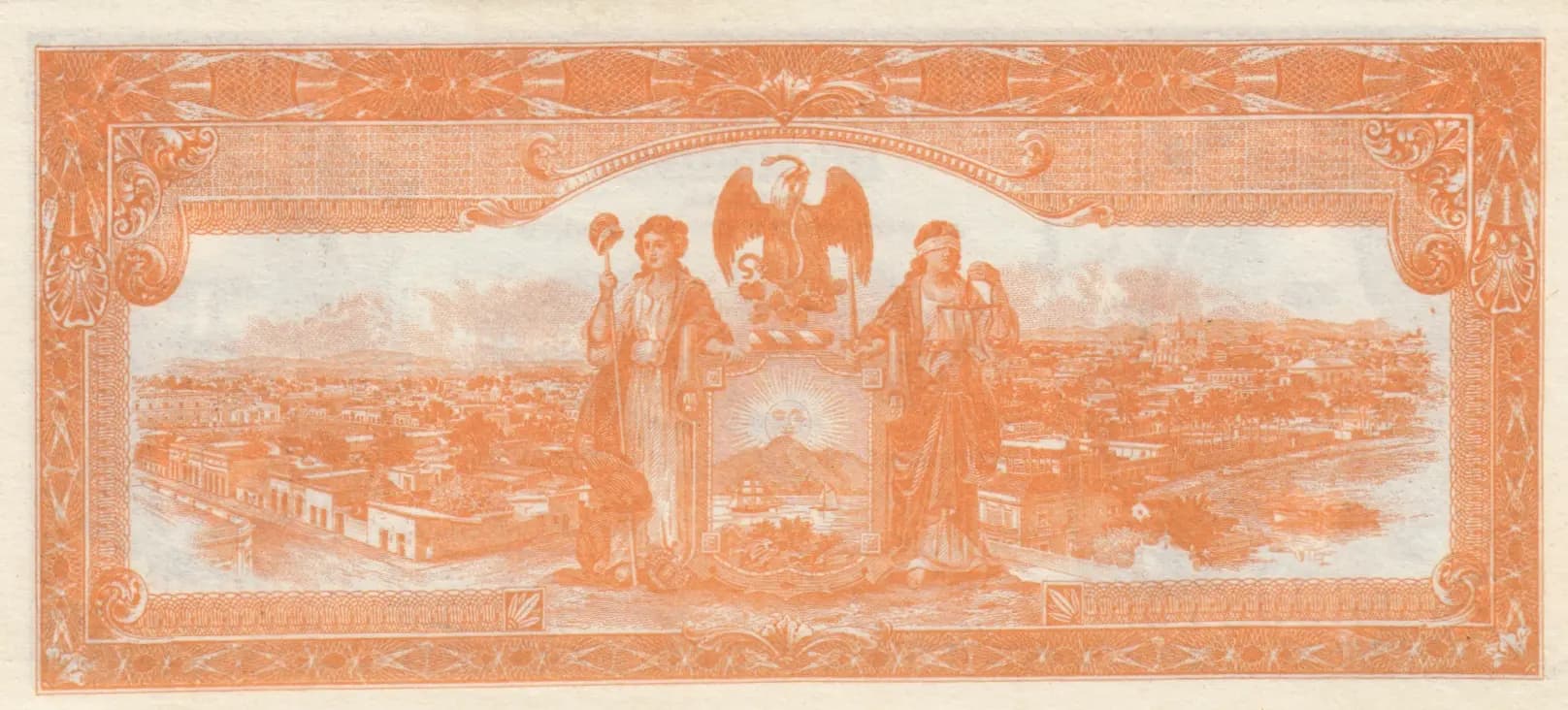
This is an exceptional example of a 50 centavos banknote issued by the Estado Libre y Soberano de Sinaloa in 1915, graded UNC. The front features two formal portrait medallions flanking an ornate central vignette with the denomination prominently displayed, while the reverse depicts an allegorical scene with robed figures and a winged angel or eagle monument rendered in warm orange tones. The intricate engraving, fine line work, and decorative scrollwork throughout demonstrate the high quality of this regional Mexican emergency currency issue.
Common. While this is a regional Mexican emergency issue from the Revolutionary period with limited historical documentation, the denomination of 50 centavos, the large series designation (SERIE J with multiple examples documented), and the general availability of Sinaloa state currency in the numismatic market indicate this was produced in sufficient quantity for circulation. UNC examples are less frequently encountered than circulated pieces, but the note itself is not particularly scarce. Regional Mexican Revolutionary-era notes of this type are typically considered common to uncommon depending on the specific state and denomination; there is no evidence of an extremely limited print run or widespread recall that would classify this as rare.
This note was issued during Mexico's tumultuous Revolutionary period under a decree dated February 22, 1915, by the State of Sinaloa as emergency currency. The allegorical imagery on the reverse—featuring angelic or eagle symbolism with radiating light and robed figures—reflects the state's governmental authority and aspirations during a time when central authority was fragmented and regional governments issued their own money. The formal portraiture and official inscriptions referencing the Constitutional Governor, General Treasurer, General Secretary, and Auditor emphasize the legitimacy the state sought to project for this currency despite the chaotic conditions of the Mexican Revolution.
The front of this banknote displays a formal, symmetrical design typical of governmental currency of the period. Two prominent portrait medallions occupy the left and right sides—the left portrait depicts a distinguished gentleman in formal attire with a bow tie shown in profile facing right, while the right portrait shows a bearded man in similar formal dress, also facing right. These portraits likely represent prominent Sinaloan political figures of the Revolutionary era, though specific identification requires additional historical documentation. The center features an elaborate allegorical vignette incorporating the denomination '50' and 'CENTAVOS' text, surrounded by decorative wreaths, ornamental scrollwork, and a Liberty figure with sword in the upper left area. Large ornate '50' numerals frame the top and bottom of the design. The back presents an ambitious allegorical composition in orange and rust tones: two robed figures flank a central monument topped with a winged figure (likely an angel or Mexican eagle) radiating light, set against a cityscape backdrop. This imagery suggests themes of state sovereignty, justice, and national aspiration. The entire note is bordered by intricate decorative elements characteristic of high-security engraving work.
FRONT SIDE: 'EL ESTADO LIBRE Y SOBERANO DE SINALOA' (The Free and Sovereign State of Sinaloa) / 'PAGARÁ AL PORTADOR EN EFECTIVO' (Will pay to the bearer in cash) / '50 CENTAVOS' (50 Centavos) / 'SERIE J' (Series J - appears twice) / 'CONFORME AL DECRETO DE FECHA 22 DE FEBRERO 1915' (In accordance with the decree dated February 22, 1915) / 'SAN BLAS, SIN.' (San Blas, Sinaloa) / 'GOBERNADOR CONSTITUCIONAL' (Constitutional Governor) / 'TESORERO GENERAL' (General Treasurer) / 'SECRETARIO GENERAL' (General Secretary) / 'INTERVENTOR' (Auditor/Comptroller) / Serial numbers: 399870 (left) and 399875 (right). BACK SIDE: No legible inscriptions visible in the provided visual analysis; the reverse is dominated by allegorical imagery.
This banknote was produced using intaglio engraving (also called line engraving or copperplate printing), evidenced by the fine, detailed line work, precise stippling in the portrait medallions, and the intricate security-style embellishments throughout the design. The separate color applications (black ink on the front, orange on the back) indicate multiple printing passes. The printer for this specific Sinaloa issue has not been definitively documented in standard references, though it was likely produced by a Mexican security printer or a foreign firm contracted by the state government. The quality of execution suggests professional security printing standards despite the emergency circumstances of the 1915 issuance.
The observed example is SERIE J with serial numbers in the range 399870-399875 (right side), suggesting this is from a specific printing batch. Known varieties for this Pick P-S1042 note should include different series designations (other letters may exist), variations in signature blocks for the four named officials, and potentially different serial number ranges. The visual analysis does not provide clear detail on the signature blocks, so specific signature varieties cannot be confirmed from this image alone. No overprints or other major varieties are evident in the provided analysis. Collectors should note the series letter and specific serial number range when cataloging individual examples.