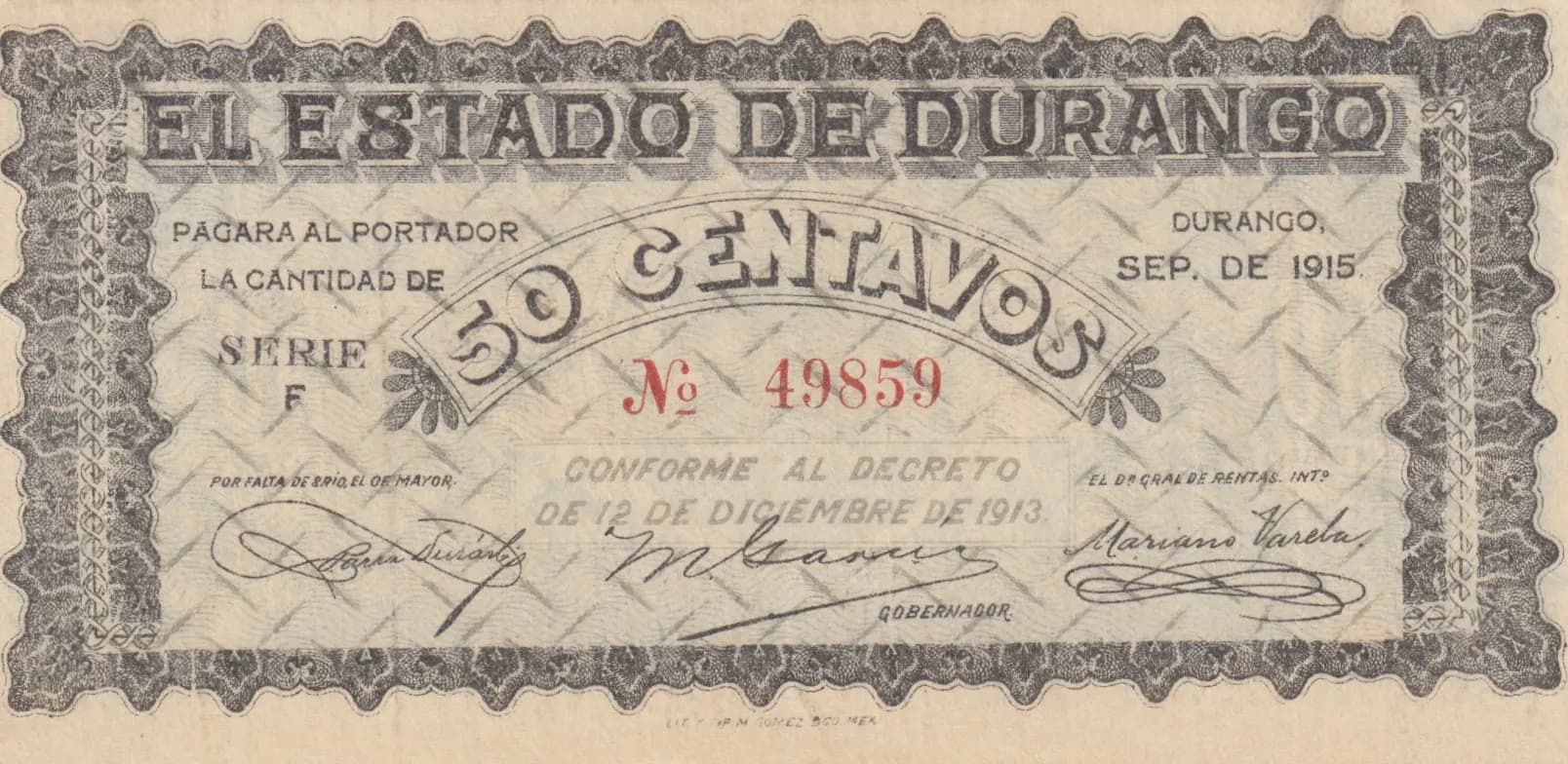
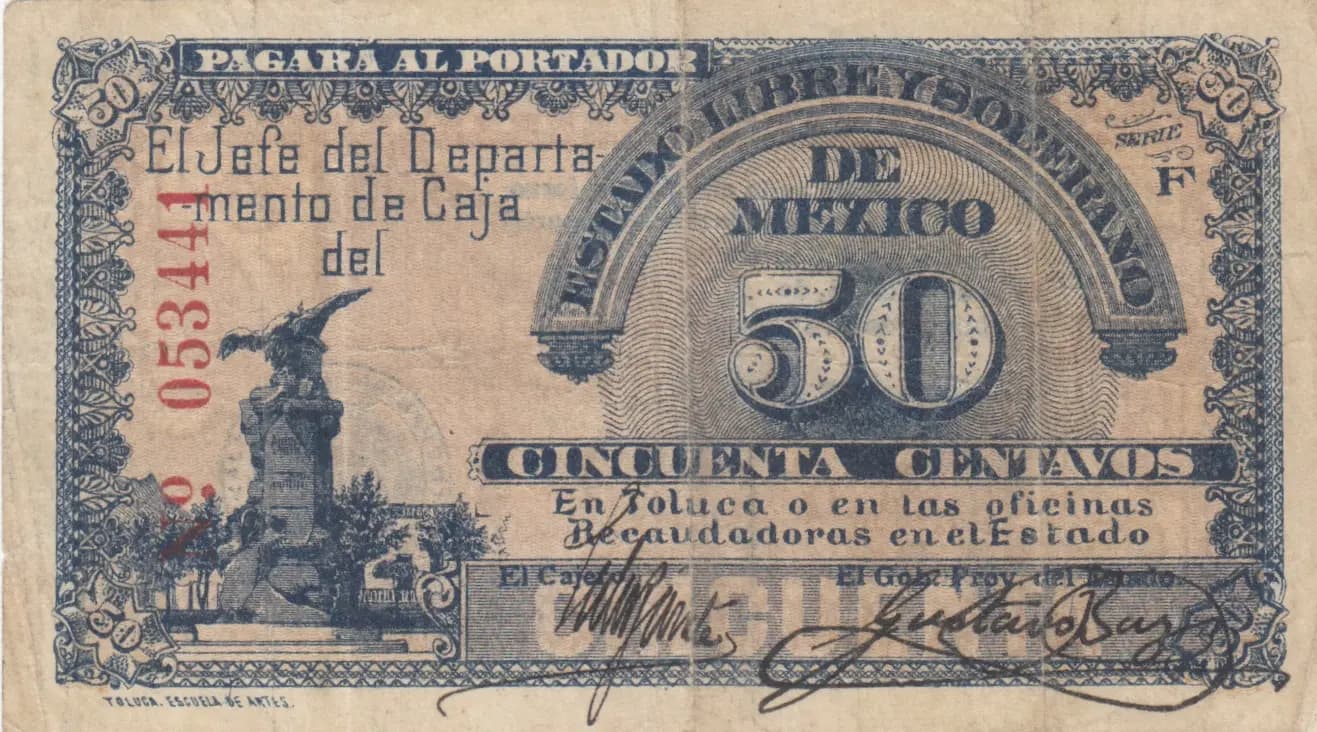
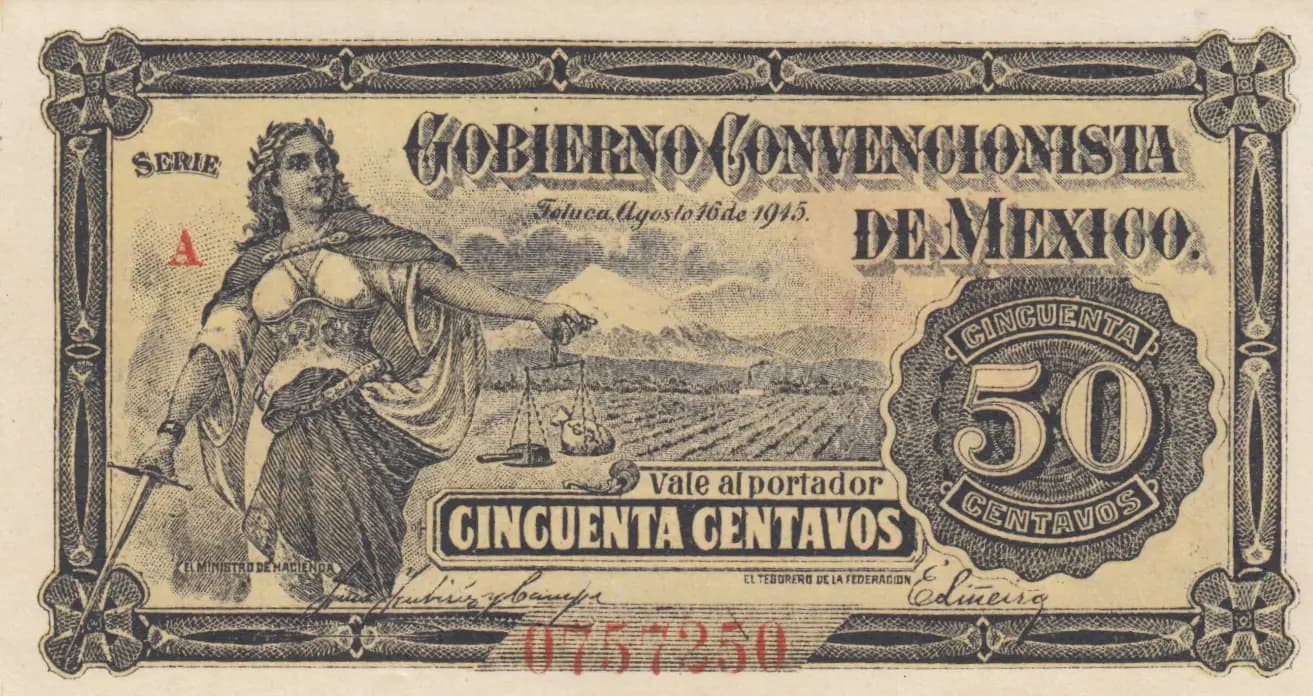
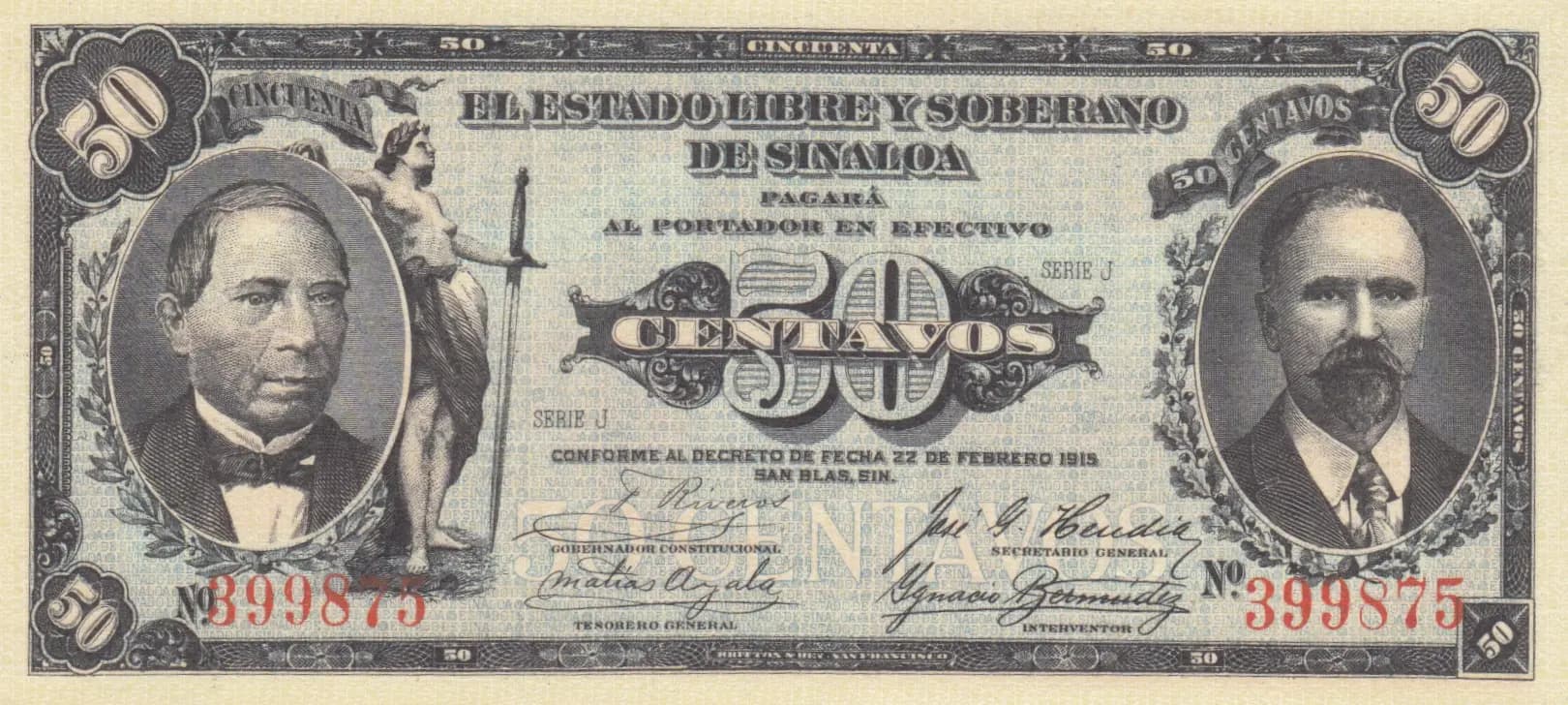
50 centavos 1915
About This Note
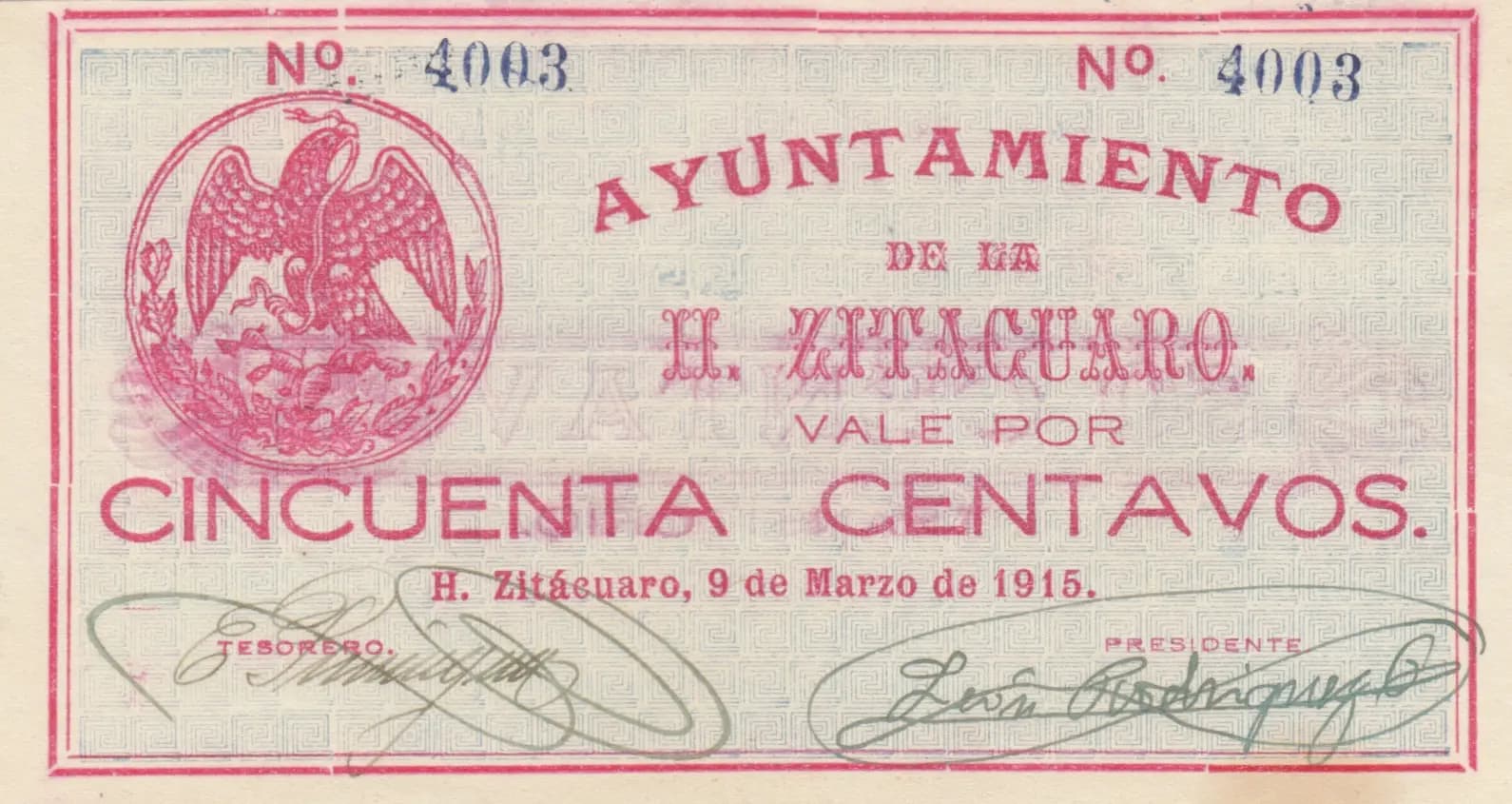
This 50 centavos note from the Ayuntamiento de Zitacuaro (1915) represents an important piece of Mexican Revolutionary-era emergency currency. The note features an ornate pink/magenta design with the Mexican national coat of arms prominently displayed in a circular seal on the obverse, accompanied by handwritten signatures of the Treasurer and President. In AU condition, the note shows expected age-related patina with visible creasing and foxing, but retains excellent overall eye appeal and legibility of all printed and manuscript elements.
Common. Municipal scrip from the Mexican Revolution, while historically significant, was produced in modest quantities by numerous local authorities throughout 1913-1916. Zitacuaro issues appear with relative frequency in the numismatic market. The AU condition grade and serial number 4003 (mid-range numbering) suggest this was part of a standard production run rather than a rare early or late emission. These notes, while collectible, do not command premium prices typical of rare Revolutionary currency.
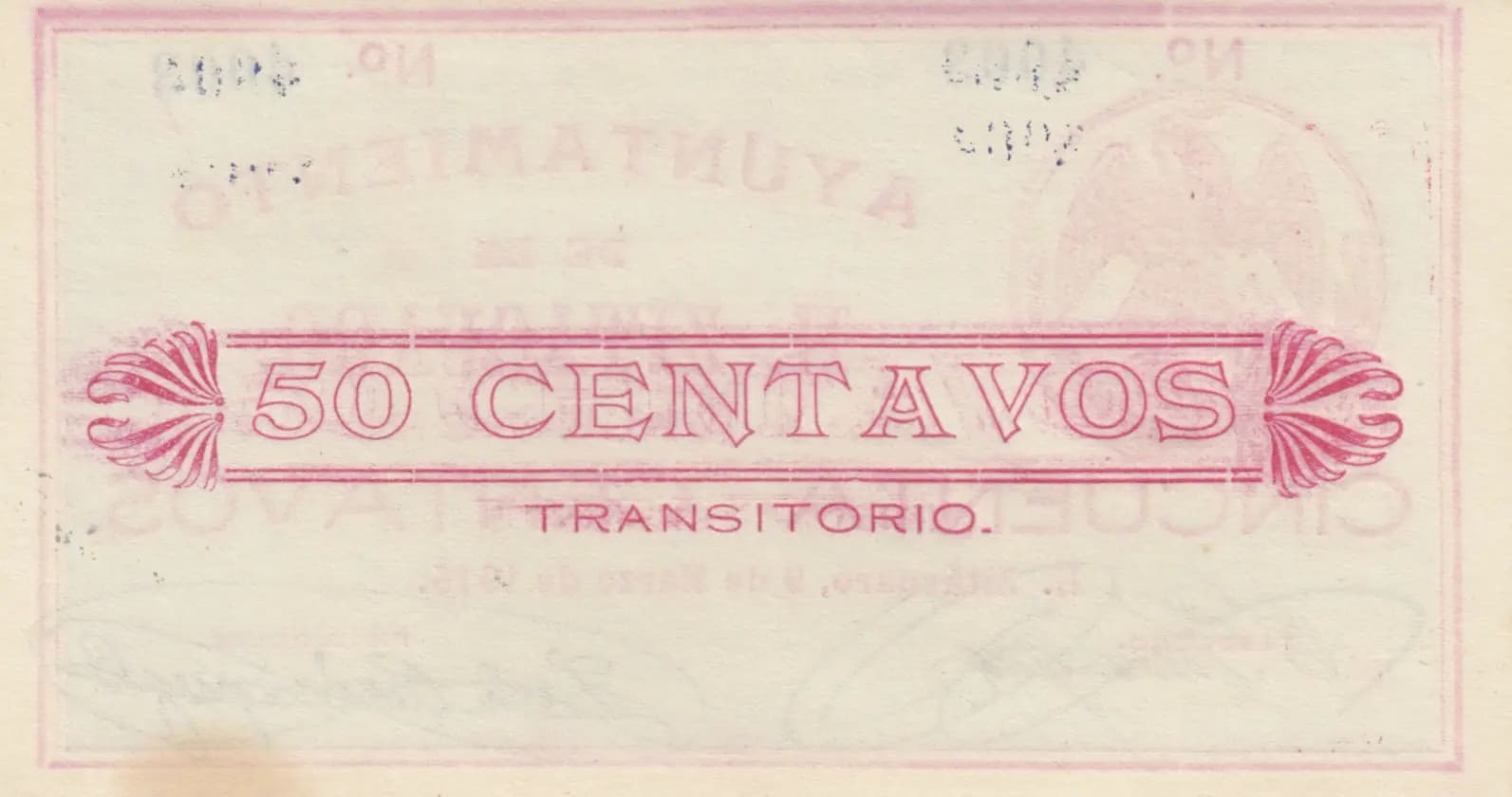
Issued during Mexico's turbulent Revolutionary period on March 9, 1915, this municipal scrip from Zitacuaro represents emergency currency produced when central government authority was fragmented and local authorities needed to facilitate commerce. The prominently displayed Mexican eagle coat of arms underscores the issuer's assertion of legitimate governmental authority despite the chaos of the Revolution. The designation 'TRANSITORIO' (temporary/transitional) on the reverse acknowledges the provisional nature of this currency, typical of the financial improvisation required during this period of civil conflict.
The obverse features a classical-style ornate border design with a Greek key pattern rendered in pink/magenta ink on cream-colored paper. The centerpiece is a detailed circular emblem containing Mexico's national coat of arms—an eagle with outstretched wings perched on a cactus, the iconic Aztec symbol adopted into the Mexican national heraldry. The denomination and issuing authority text are prominently displayed in capital letters, with the specific date of issue (March 9, 1915) printed below. Two handwritten signatures, labeled for the Treasurer (Tesorero) and President (Presidente), provide official authentication. The reverse presents a more restrained design with a centered rectangular decorative frame adorned with shell or fan motifs at the corners, containing only the denomination and the word 'TRANSITORIO' to indicate its temporary status.
FRONT: 'AYUNTAMIENTO DE LA H. ZITACUARO' (Municipal Government of the Honorable Zitacuaro) / 'VALE POR CINCUENTA CENTAVOS' (Good for Fifty Centavos) / 'H. Zitacuaro, 9 de Marzo de 1915' (H. Zitacuaro, March 9, 1915) / 'TESORERO' (Treasurer) / 'PRESIDENTE' (President) / Serial number 'NO. 4003' BACK: '50 CENTAVOS' (Fifty Centavos) / 'TRANSITORIO' (Temporary/Transitional)
Letterpress printing on paper stock, with the primary design and text composed of lead type and printing blocks. The ornate borders, coat of arms circular seal, and decorative shell/fan corner motifs were produced through traditional engraved or relief-cut printing blocks. The handwritten signatures and serial numbers (4003) were added by hand during or immediately after printing, a common practice for emergency municipal currency of this era. The consistent, crisp impression of the printed elements indicates professional printing, likely by a Mexican commercial printer experienced in currency production.
Serial number 4003 indicates this is from the standard issue series. Known varieties for Zitacuaro municipal notes of this period include different signature combinations (reflecting changes in municipal officials), date variations, and potentially different printing runs with subtle design variations. Without comparison to documented catalogs of Zitacuaro varieties, the specific signature variety cannot be definitively established. Collectors should note that the handwritten elements (signatures and potentially serial numbers) may show variation across examples, a characteristic of hand-applied features on emergency currency.