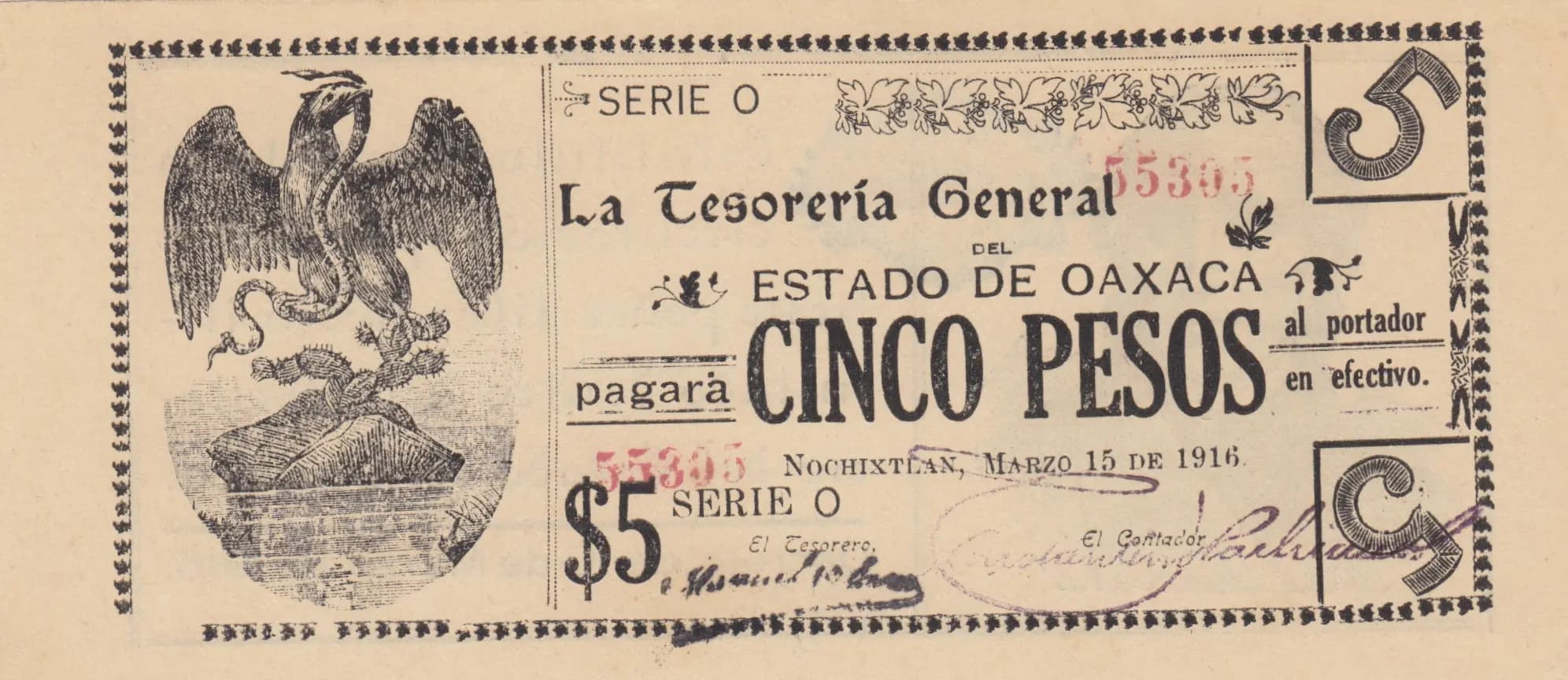
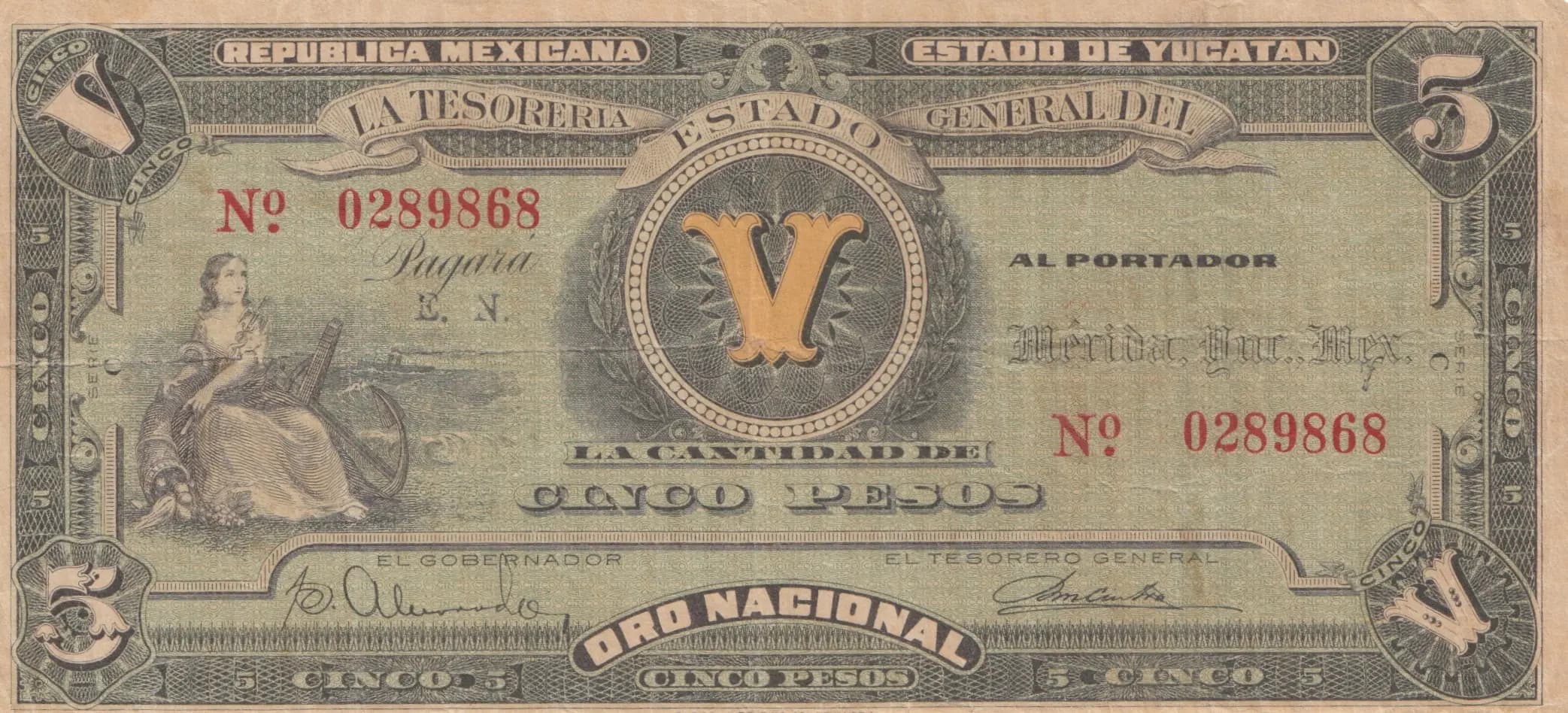
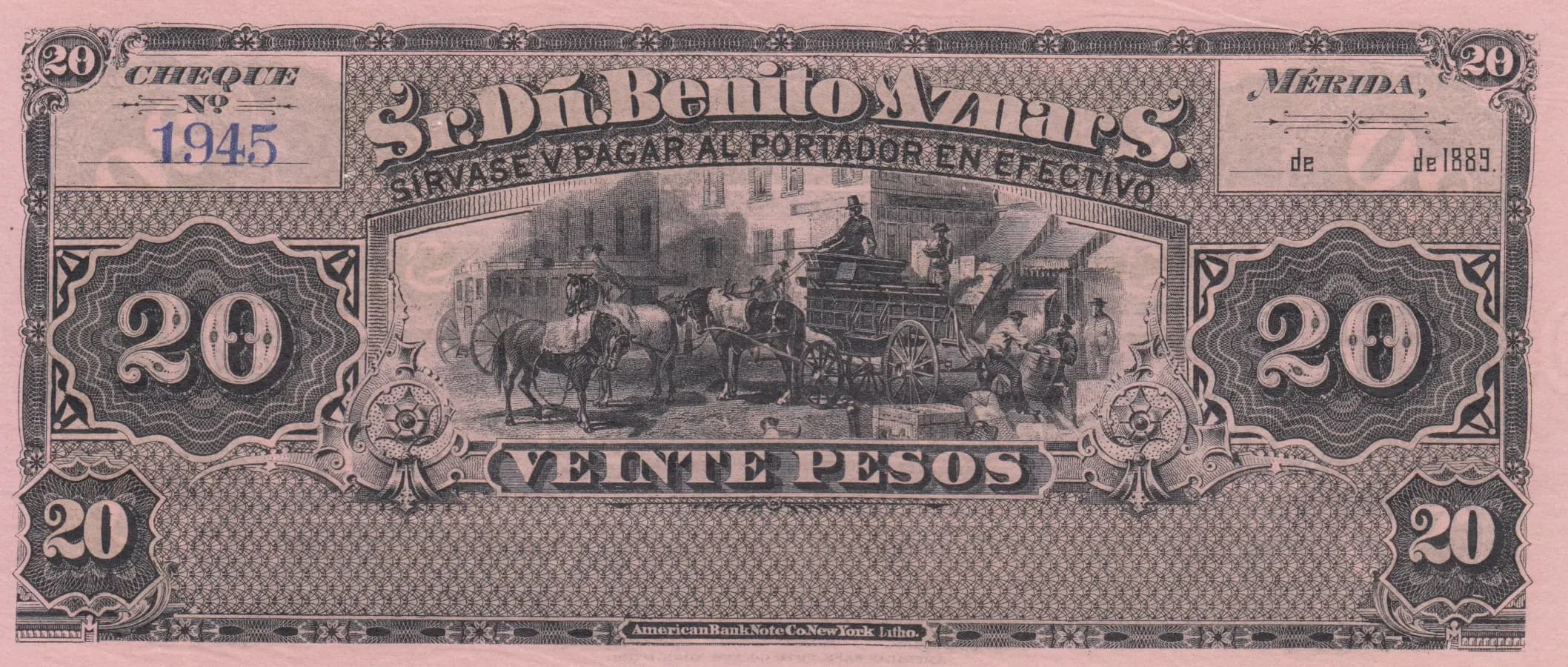
5 pesos 1916
About This Note
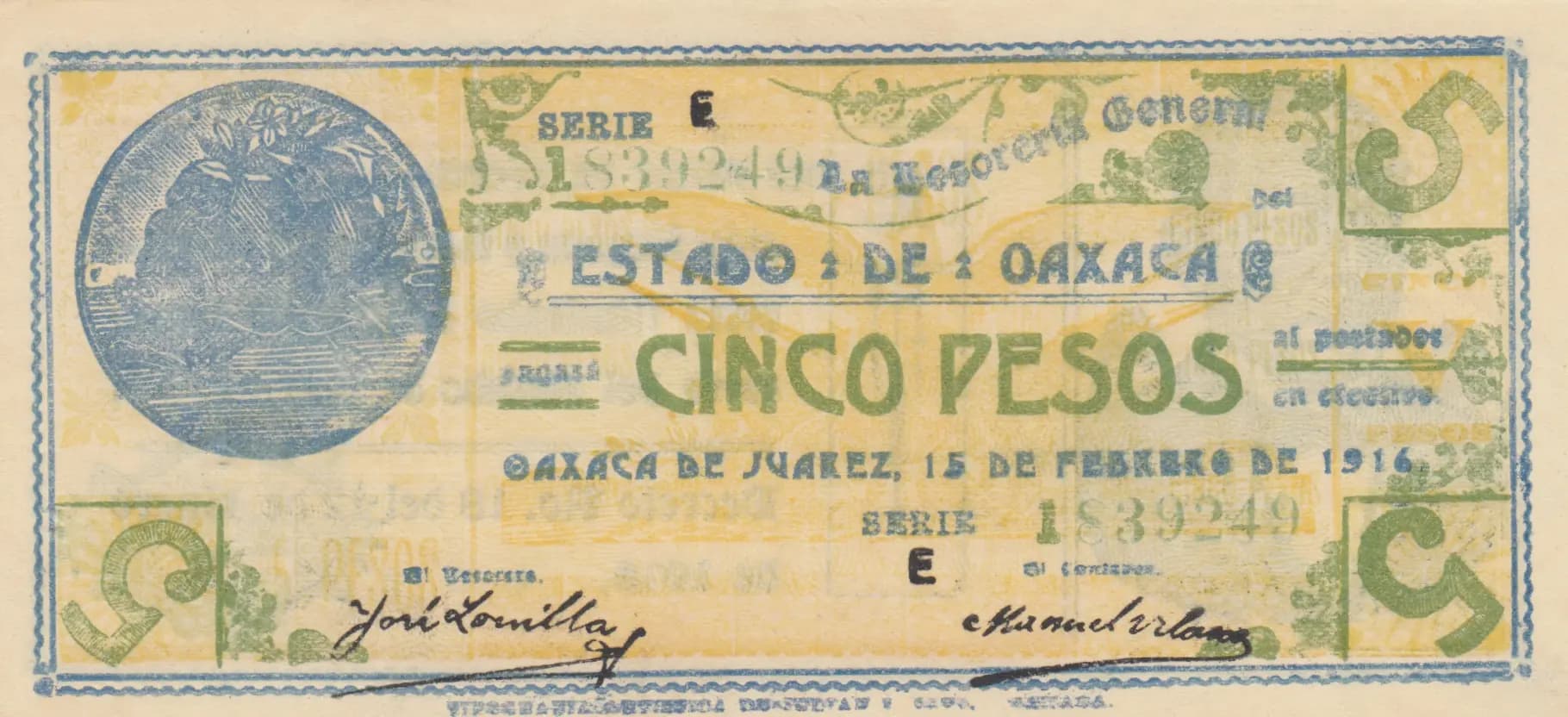
This 5 Pesos note from Oaxaca, issued February 15, 1916, represents a significant example of Mexican Revolution-era currency from the state government level. The note displays the characteristic cream, green, and blue color scheme with an eagle medallion on the obverse and a formal portrait on the reverse, consistent with early 20th-century Mexican security printing practices. The AU condition grade is somewhat generous given the extensive foxing, discoloration, and creasing visible throughout both sides, though the note remains structurally sound and legible—appropriate for a note over a century old from an active circulation period.
Common. This is a standard issue from an established state government's official treasury during the Revolution, with no documented evidence of limited print runs, recalls, or extreme scarcity. Series E appears to represent a standard production series rather than a rare variant. Revolutionary-era Mexican state currency from functioning government treasuries like Oaxaca's are generally encountered with reasonable frequency in the collector market.
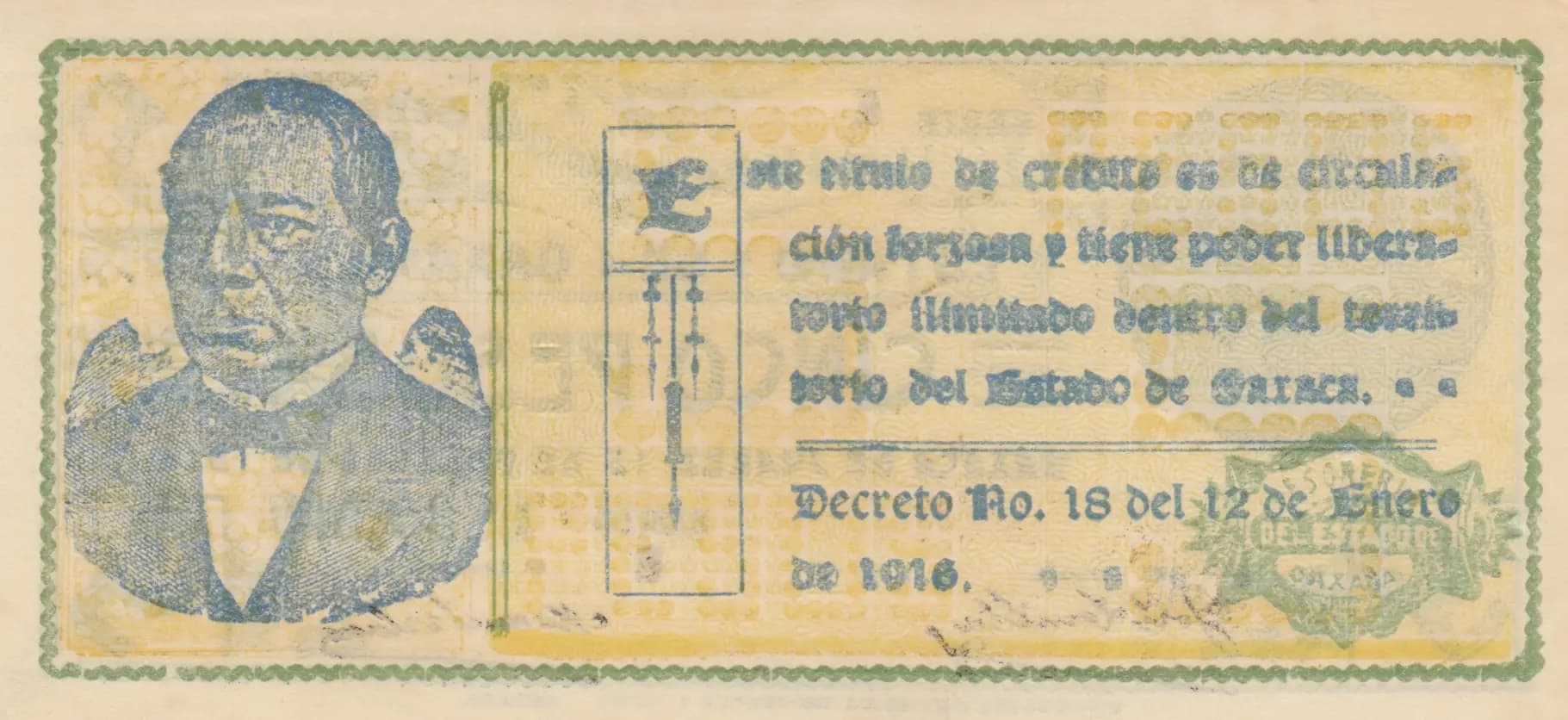
Issued during the height of the Mexican Revolution (1910-1920), this banknote represents the Oaxaca state government's emergency currency under Decree No. 18 from January 12, 1916. The formal portrait on the reverse and official governmental inscriptions reflect the state's assertion of legitimate authority during a period of severe political fragmentation, when multiple factions issued competing currencies throughout Mexico. The Tesoreira General del Estado de Oaxaca's issuance from Oaxaca de Juarez demonstrates how state governments maintained financial functions despite federal instability.
The obverse features a circular eagle medallion positioned on the left side—a common national Mexican symbol representing governmental authority—surrounded by decorative scrollwork in green and ornamental borders in blue and cream. The denomination 'CINCO PESOS' appears prominently in the center in green and blue text, with the issuing authority clearly identified. The reverse displays a formal portrait of a gentleman in military dress or formal attire, shown from the shoulders up facing forward, positioned on the left side within a green decorative border frame. The right side contains the authoritative text of Decree No. 18, establishing the note's legal basis. Ornamental vertical design elements and corner flourishes enhance both sides, typical of early Revolution-era state currency security design.
FRONT SIDE: 'SERIE E' (Series E); 'ESTADO DE OAXACA' (State of Oaxaca); 'CINCO PESOS' (Five Pesos); 'OAXACA DE JUAREZ, 15 DE FEBRERO DE 1916' (Oaxaca de Juarez, February 15, 1916); Signature lines for 'Tesorero' (Treasurer), 'Comandante' (Commander), 'Portazgo' (Toll/Tariff official), and 'Escribano' (Notary/Scribe). BACK SIDE: 'E' (Series indicator); 'Decreto No. 18 del 12 de Enero de 1916' (Decree No. 18 of January 12, 1916); '[...] que estado de oaxaca es de divulgación forzosa y tiene poder ilimitado dentro del territorio dentro del estado de oaxaca [...]' ('[...] that the state of Oaxaca is subject to forced publication and has unlimited power within the territory of the state of Oaxaca [...]').
Letterpress/Relief printing with separate color applications, likely executed by a Mexican security printer experienced in governmental currency production. The precise registration of the green, blue, and cream colors across both sides, combined with the fine detail visible in the eagle medallion and portrait, indicates skilled planographic or intaglio enhancement. The ornamental border patterns and scrollwork suggest hand-engraved plates typical of legitimate state currency production during 1916.
Series E is identified on this note. The February 15, 1916 date and Decree No. 18 reference (January 12, 1916) are consistent with documented Oaxaca issues. Multiple signature lines for various officials (Treasurer, Commander, Toll Official, Notary) suggest this variety may exist with different authorized signatories. Collectors should note variations in signature presence, ink intensity, and paper tone among surviving examples, typical of civil-issued Revolution currency where signing authority varied by official and date.