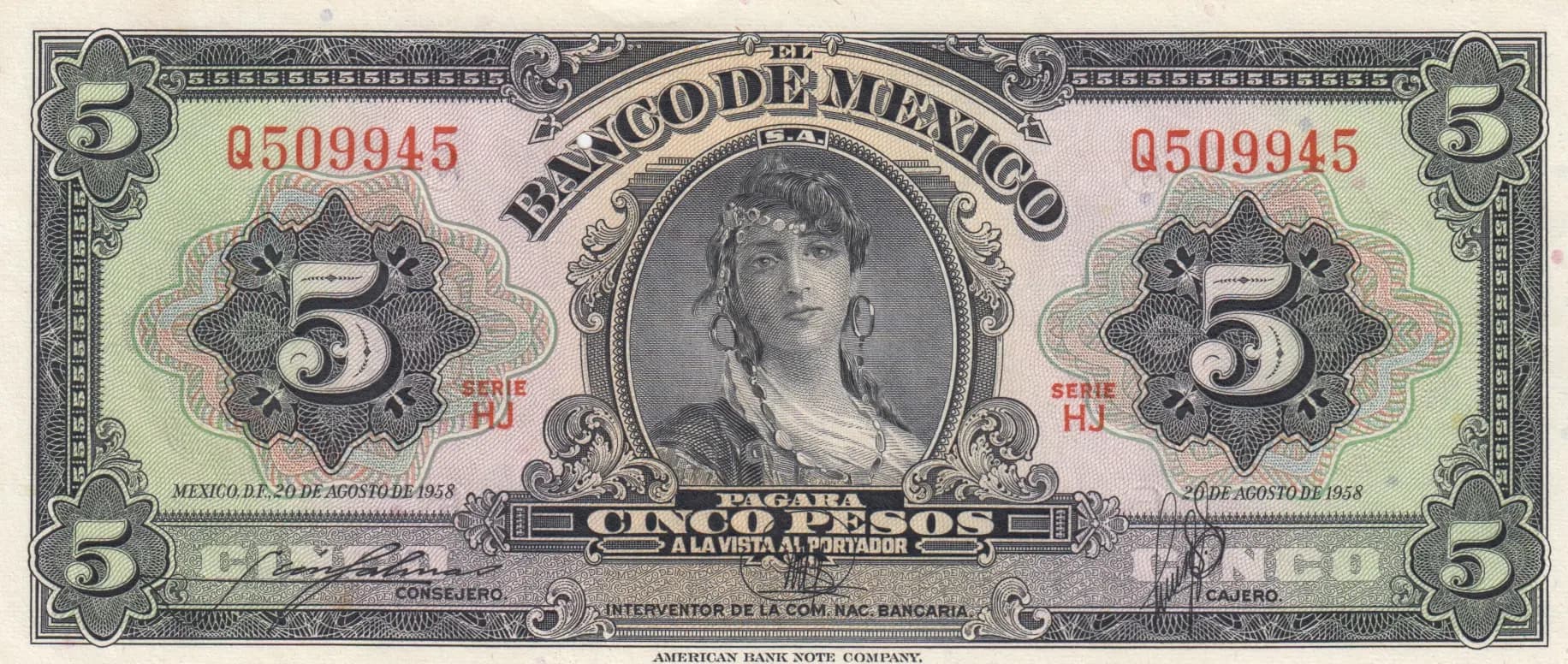
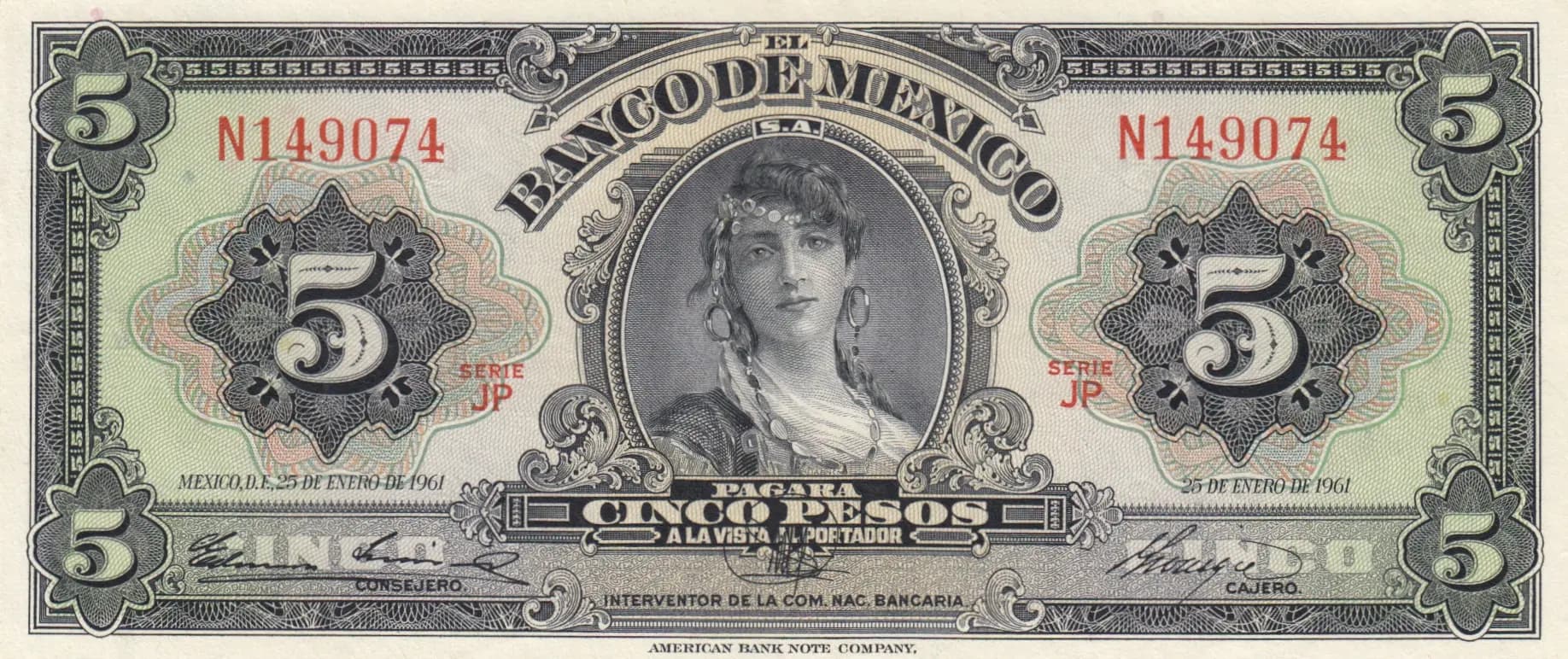
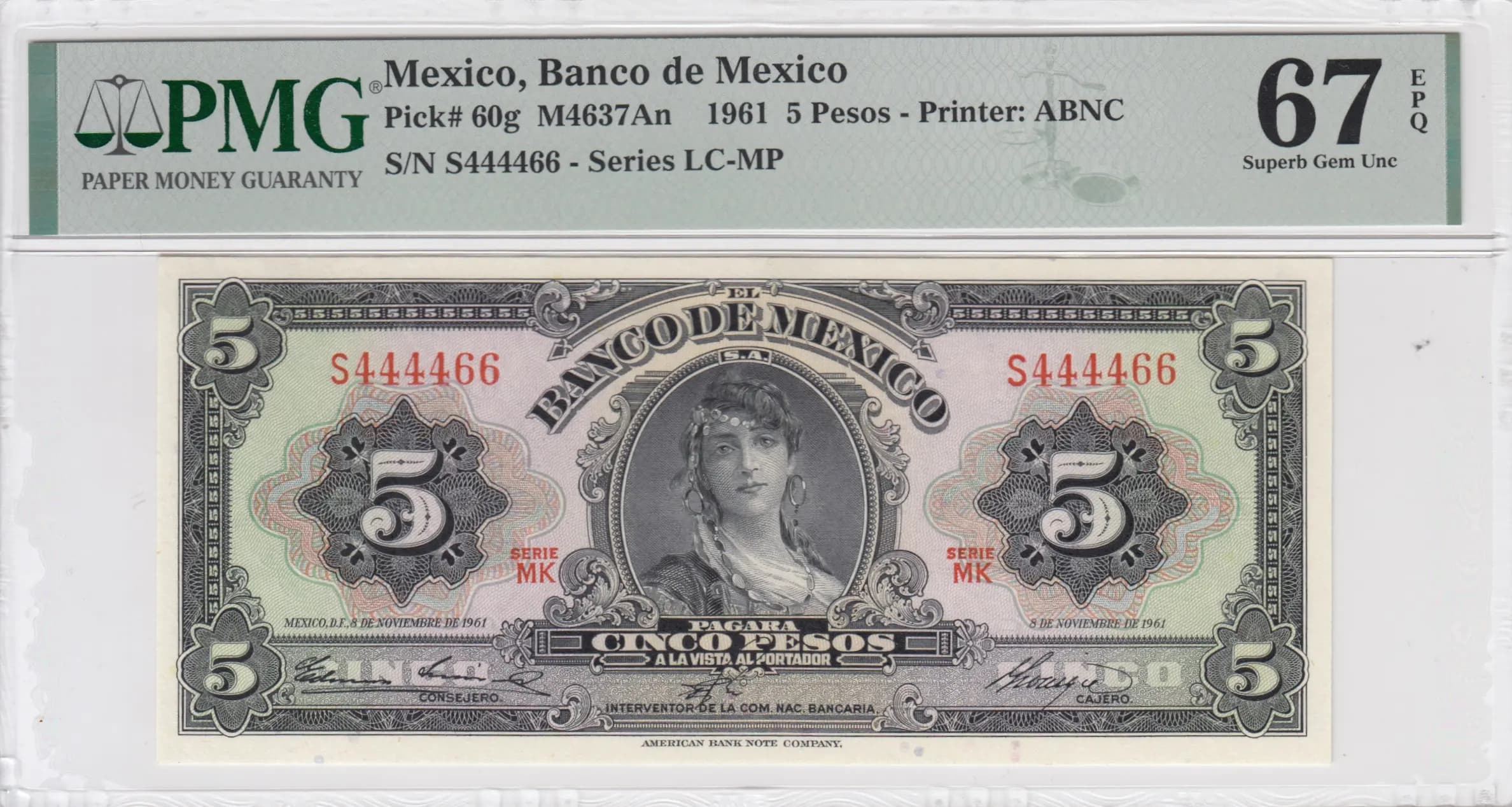
5 pesos 1961
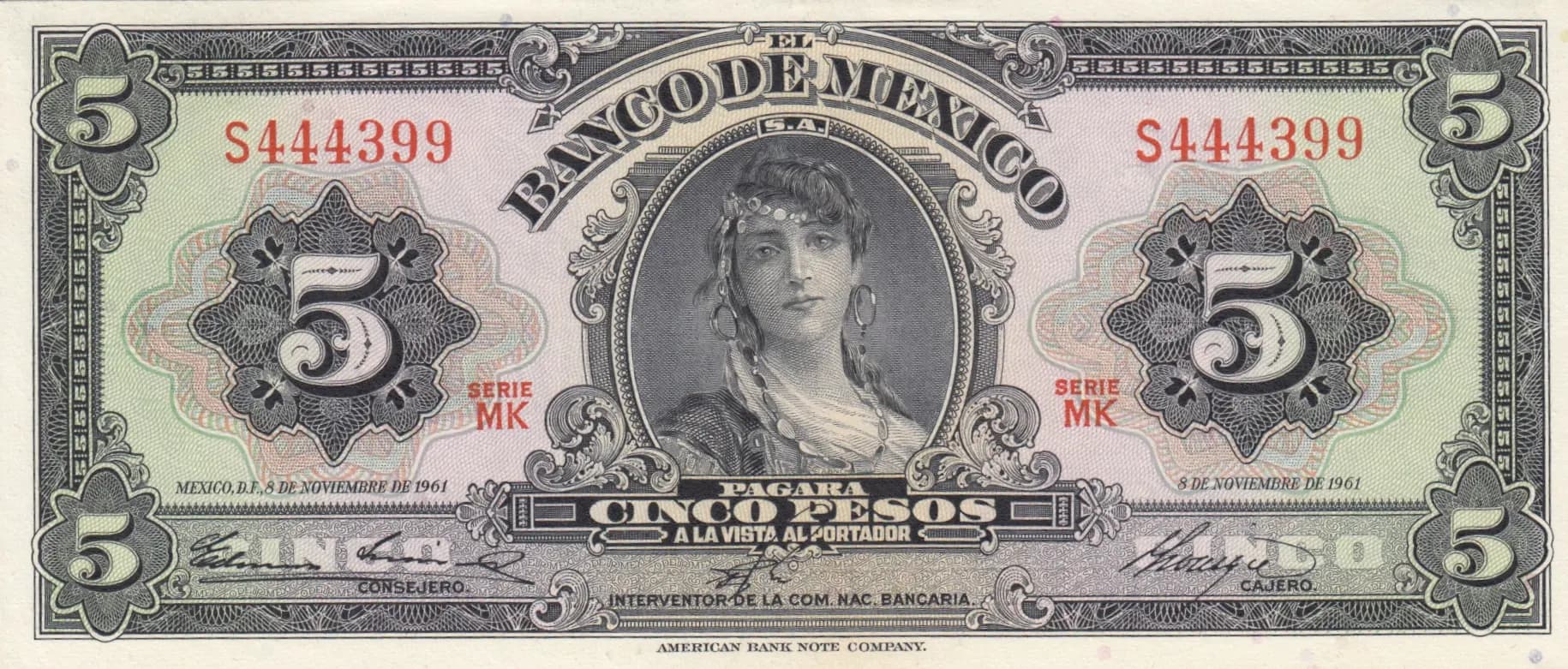
“08.11.61”
Market Prices
45 salesAbout This Note
This is an uncirculated example of the 1961 Mexican 5 pesos note (Pick P-60g), featuring exceptional print quality and sharp detail throughout both obverse and reverse. The note showcases the characteristic light green and pink color scheme with black intaglio work, displaying a portrait of a woman in profile on the front and the iconic Independence Monument on the back. In UNC condition, this note represents a well-preserved specimen of mid-20th century Mexican currency, with crisp printing and no visible circulation wear.
Common. The 1961 5 pesos (Pick P-60g) is a standard-issue banknote with no evidence of restricted print runs, recalls, or scarcity. eBay historical sales data shows consistent market availability with prices ranging from approximately $1-$50 USD depending on grade and PMG certification, with the majority of sales occurring in the $5-$25 range. Even high-grade examples (PMG 66-67) have sold repeatedly at moderate prices ($15-$50), and UNC raw examples have appeared regularly on the market, confirming this is a common note in the collector market.
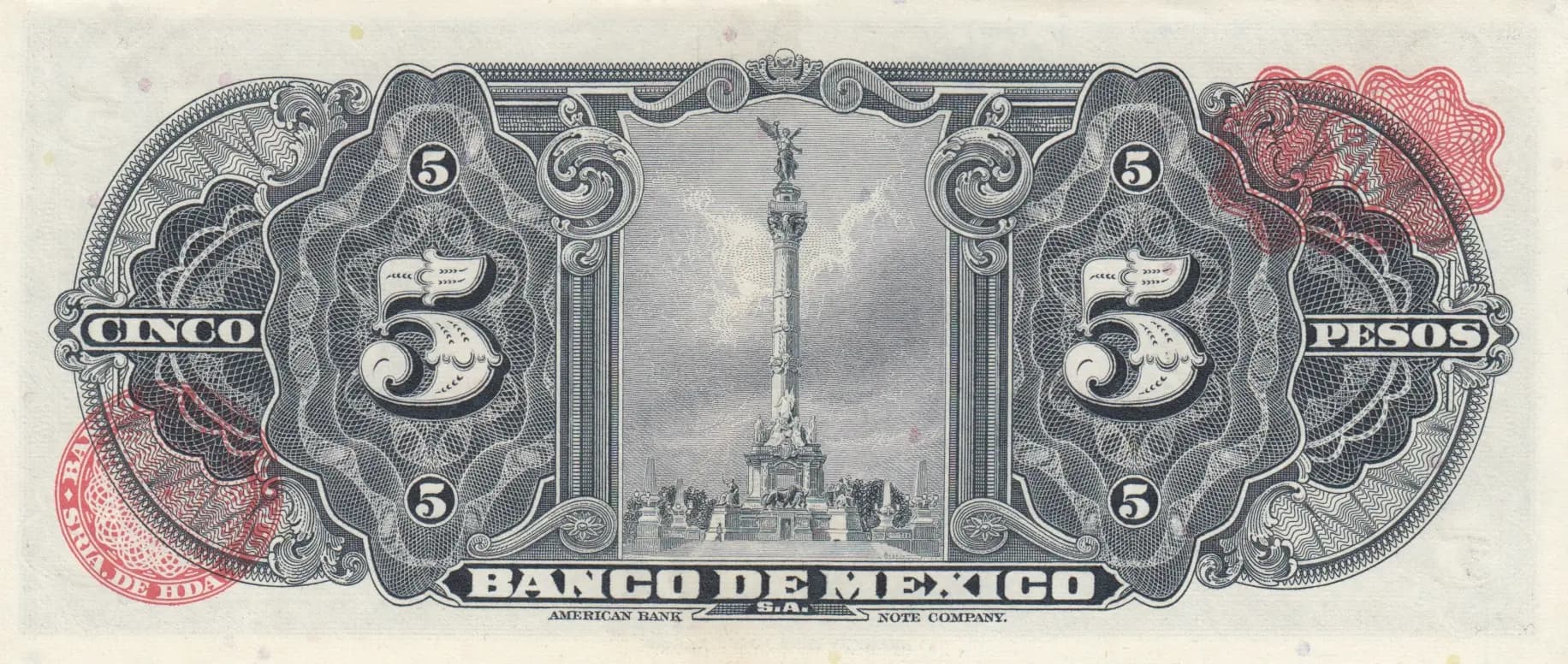
Issued on November 8, 1961, by Banco de Mexico, this 5 pesos note was produced during a period of economic development and modernization in post-revolutionary Mexico. The reverse depicts the Independence Monument (Monumento a la Independencia), a towering obelisk topped with a winged victory figure located in Mexico City, symbolizing Mexico's independence and national pride. The front portrait represents a figure of significance to Mexican national identity, and the inclusion of 'MEXICO, D.F.' in the date inscription emphasizes the note's origin from the nation's capital.
The obverse features a classical portrait of a woman with long hair and earrings rendered in profile within an ornamental oval frame, surrounded by elaborate decorative borders with floral and scrollwork designs characteristic of early 20th-century banknote aesthetics. The denomination appears multiple times across the note. The reverse displays the Monumento a la Independencia (Independence Monument), a prominent Mexico City landmark featuring a tall obelisk topped with a winged Victory figure, rendered in black and grey tones. The composition employs classical architectural styling with ornamental numerical denominations positioned at corners and sides. Red security emblems or coat of arms elements appear on both the obverse and reverse, enhancing security features. The overall design demonstrates the classical Mexican banknote style of the 1960s with patriotic symbolism.
FRONT SIDE: 'BANCO DE MEXICO S.A.' (Bank of Mexico, Anonymous Company) | 'CINCO PESOS' (Five Pesos) | 'A LA VISTA AL PORTADOR' (Payable to Bearer on Sight) | 'PAGARA' (Will Pay) | 'MEXICO, D.F., 8 DE NOVIEMBRE DE 1961' (Mexico City, November 8, 1961) | 'SERIE MK' (Series MK) | 'S444399' (Serial number) | 'CONSEJERO' (Advisor/Councillor) | 'INTERVENTOR DE LA COM. NAC. BANCARIA' (Auditor of the National Banking Commission) | 'CAJERO' (Cashier) | 'AMERICAN BANK NOTE COMPANY' (printer credit). BACK SIDE: 'CINCO PESOS' (Five Pesos) | 'BANCO DE MEXICO S.A.' (Bank of Mexico, Anonymous Company) | 'AMERICAN BANK NOTE COMPANY' (American Bank Note Company).
Intaglio printing (engraved steel plate printing) executed by American Bank Note Company (ABNC), as credited on both sides of the note. The sharp detail, fine line work throughout the design, complex geometrical patterns, and crisp rendering of both the portrait and monument are characteristic of high-quality intaglio production. The use of multiple colors (light green, pink, black, grey, red, and cream/beige) indicates multicolor intaglio printing technique with sequential color application.
This note is identified as Pick P-60g with Series MK designation. The visual analysis indicates the date 'MEXICO, D.F.' inscription before the date (distinguishing it from earlier versions like P-57), and the serial number format 'S444399' in red ink is consistent with the 1961 issue specifications. The specific series designation (MK in this example) may indicate different printing runs or signature combinations, though without additional comparative examples visible, the precise variety distinction cannot be definitively determined from this single note.