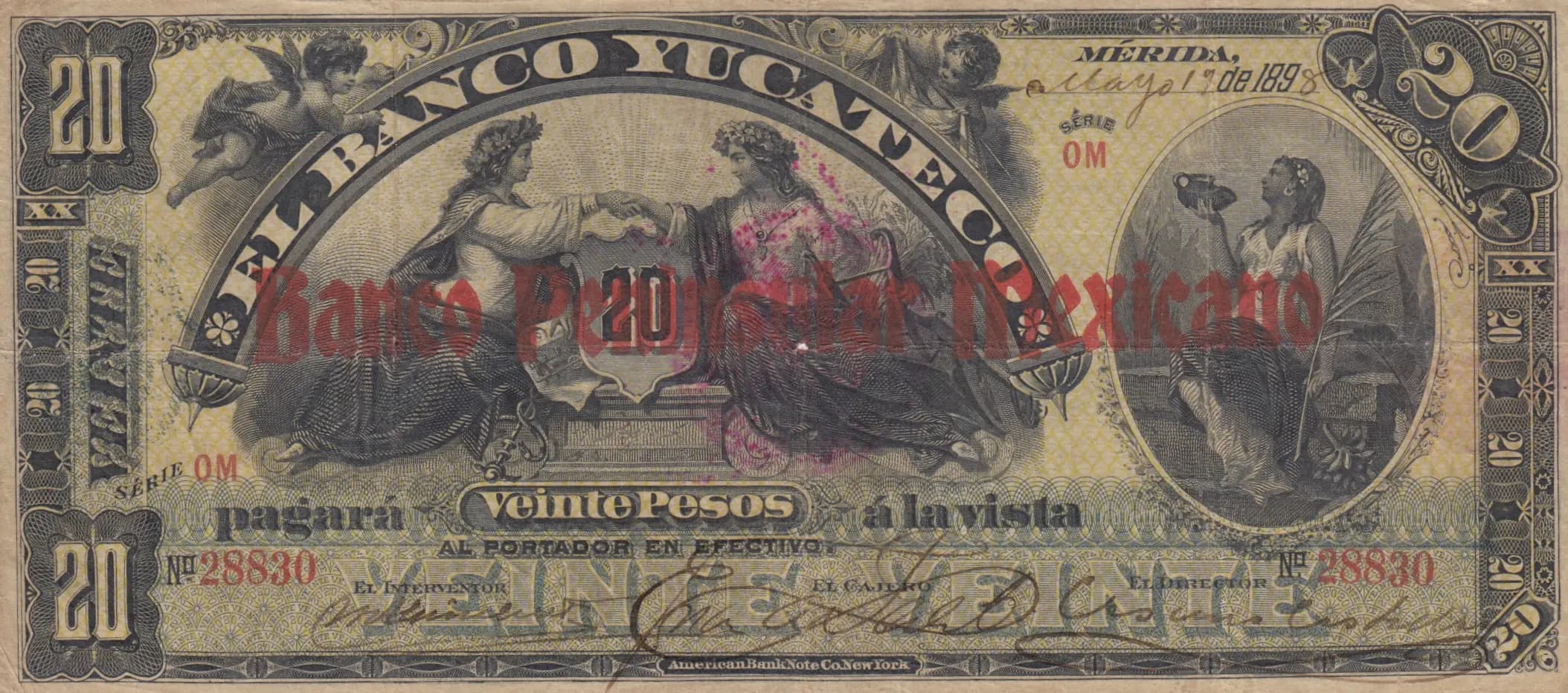
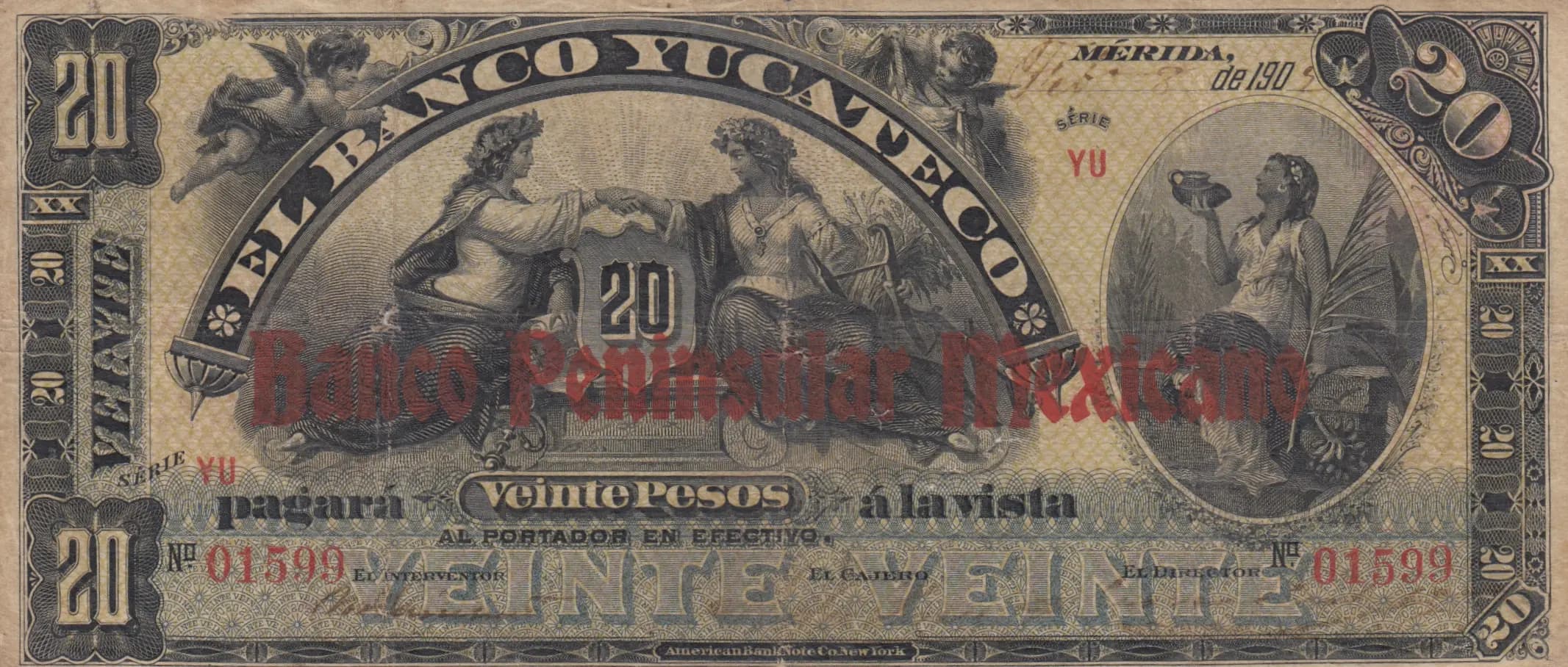
20 pesos 1905
Market Prices
About This Note
This 20 Pesos note from Banco Yucateco (1905, Pick S460f) features a striking red overprint across classical allegorical figures and ornate baroque design elements. The note displays the characteristic tan/beige patina expected of early 20th-century Mexican regional bank currency, with visible aging and creasing consistent with the F (Fair) condition grade. The red overprint and fine engraved details by American Bank Note Company make this a distinctive example of Yucatan state banking currency.
Common. The eBay market data shows Fair condition examples trading at $157.00 USD, with numerous listings at $1.99-$22.00 USD, indicating steady availability and modest collector demand rather than scarcity. Regional Mexican banknote issues from this era are generally well-represented in the market, and Banco Yucateco notes appear regularly in circulation among dealers. The Pick S460f catalog number suggests this is a documented standard variety rather than a rare sub-type.
The Banco Yucateco issued this note during Mexico's Porfiriato era (1876-1911), when regional banks operated with considerable autonomy in peripheral states like Yucatan. The classical allegorical imagery—featuring Union and figures representing prosperity—reflects the aspirational modernization rhetoric of the period, while the American Bank Note Company imprint underscores the reliance on foreign security printing expertise. The 1907 date visible on the note and the red overprint suggest a reissue or validation mark related to the banking reforms and consolidations occurring in Mexico during this decade.
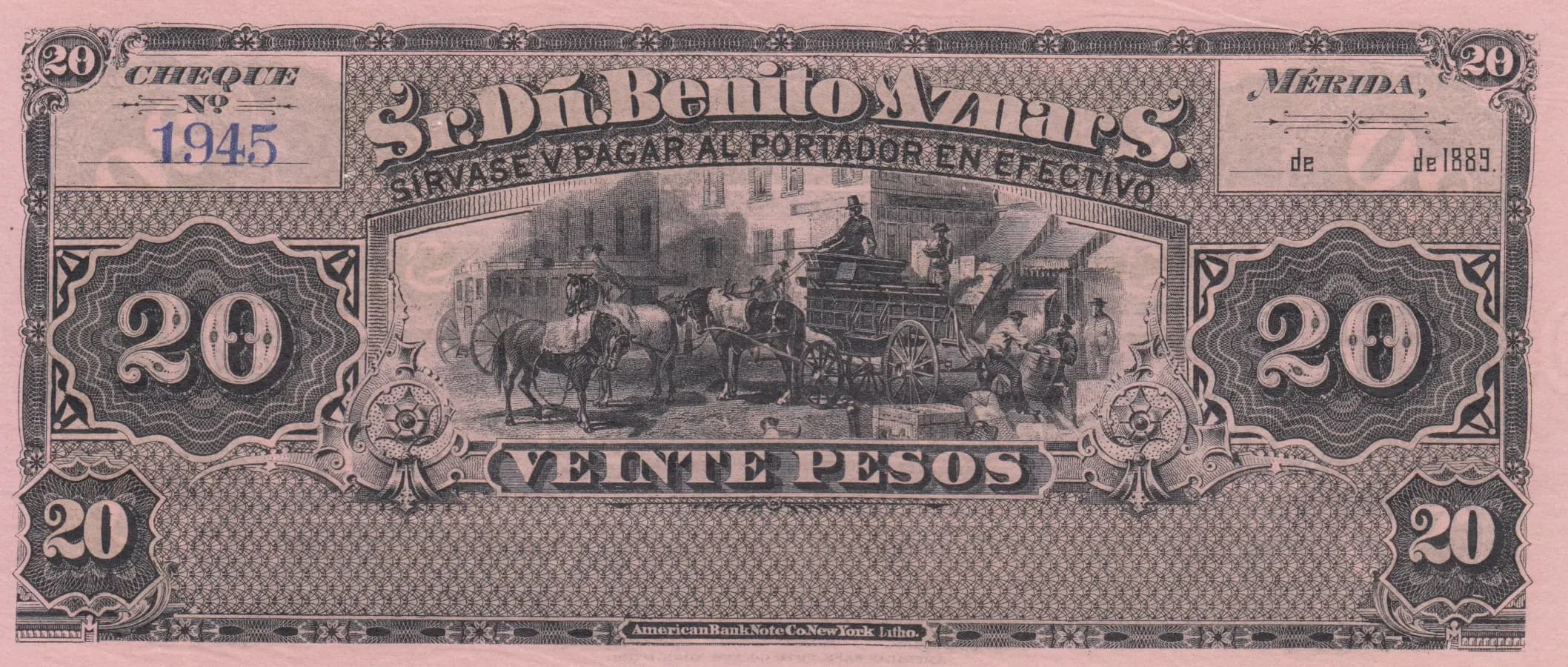
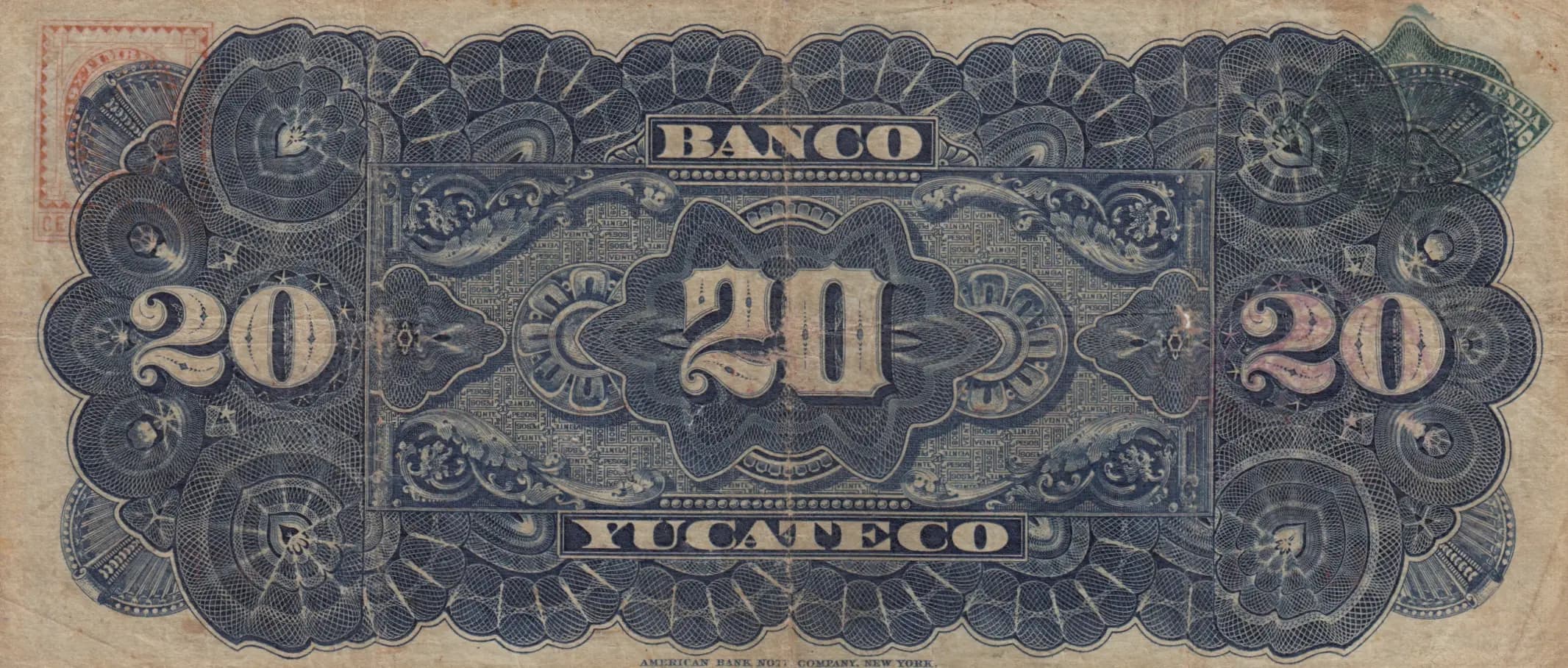
The obverse depicts two classical female allegorical figures (representing Union and prosperity/commerce) in flowing robes flanking the central denomination, with ornate scrollwork borders and radiating corner ornaments. A circular vignette on the right contains two classical/mythological figures in a subsidiary scene. An eagle emblem appears in the top right corner, reinforcing Mexican national identity. The reverse presents a purely decorative design centered on an ornamental shield containing '20', surrounded by elaborate baroque-style spirals, scrollwork, and symmetrical flourishes in dark blue on the cream/tan ground. The red overprint crosses the front, likely indicating a validation or reissue authorization.
FRONT: 'BANCO YUCATECO' (Yucatan Bank), 'VEINTE PESOS' (Twenty Pesos), 'AL PORTADOR EN EFECTIVO' (Payable to Bearer in Cash), 'MERIDA' (Merida—capital city), 'ESTADO DE YUCATAN' (State of Yucatan), 'SERIE YU VII' (Series YU VII), Serial numbers: 06180, 01599, 'American Bank Note Co. New York' (printer attribution), 'Banco Yucateco 1907' (reissue date), 'XX' (Roman numeral for 20). BACK: 'BANCO' (Bank), 'YUCATECO' (Yucatecan), '20' (denomination), 'American Bank Note Company New York' (printer attribution).
Intaglio engraving (steel plate printing) executed by American Bank Note Company, New York—evident from the fine line work, cross-hatching, and detailed scrollwork visible throughout both sides. The complexity of the allegorical figures and ornamental borders, combined with the crisp impression of text and serial numbers, confirms professional security printing standards of the early 1900s. The overprint appears to have been applied separately, likely via lithographic or letterpress methods.
This note displays the characteristic red overprint noted in the Pick reference as S460f, which distinguishes it from the unoverprinted S469 base design. The series designation 'SERIE YU VII' and the reissue date of 1907 visible on the note (distinct from the catalog year of 1905) indicate this is a later printing or revalidation. Serial numbers 06180 and 01599 are consistent with documented range for this series. No signature varieties are apparent in the visual analysis, though regional Mexican notes of this period often exist with minor printing variations across different production batches.