20 pesos 1959
Market Prices
4 salesAbout This Note
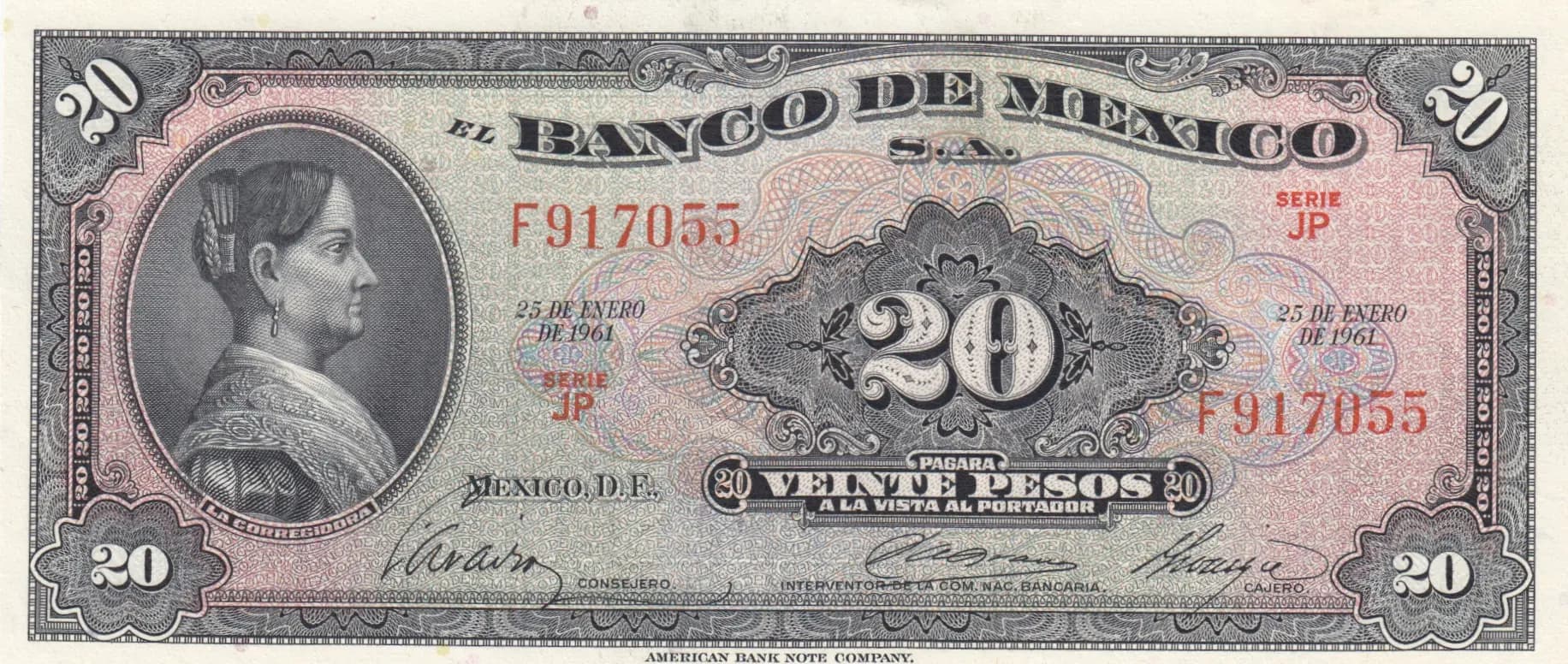
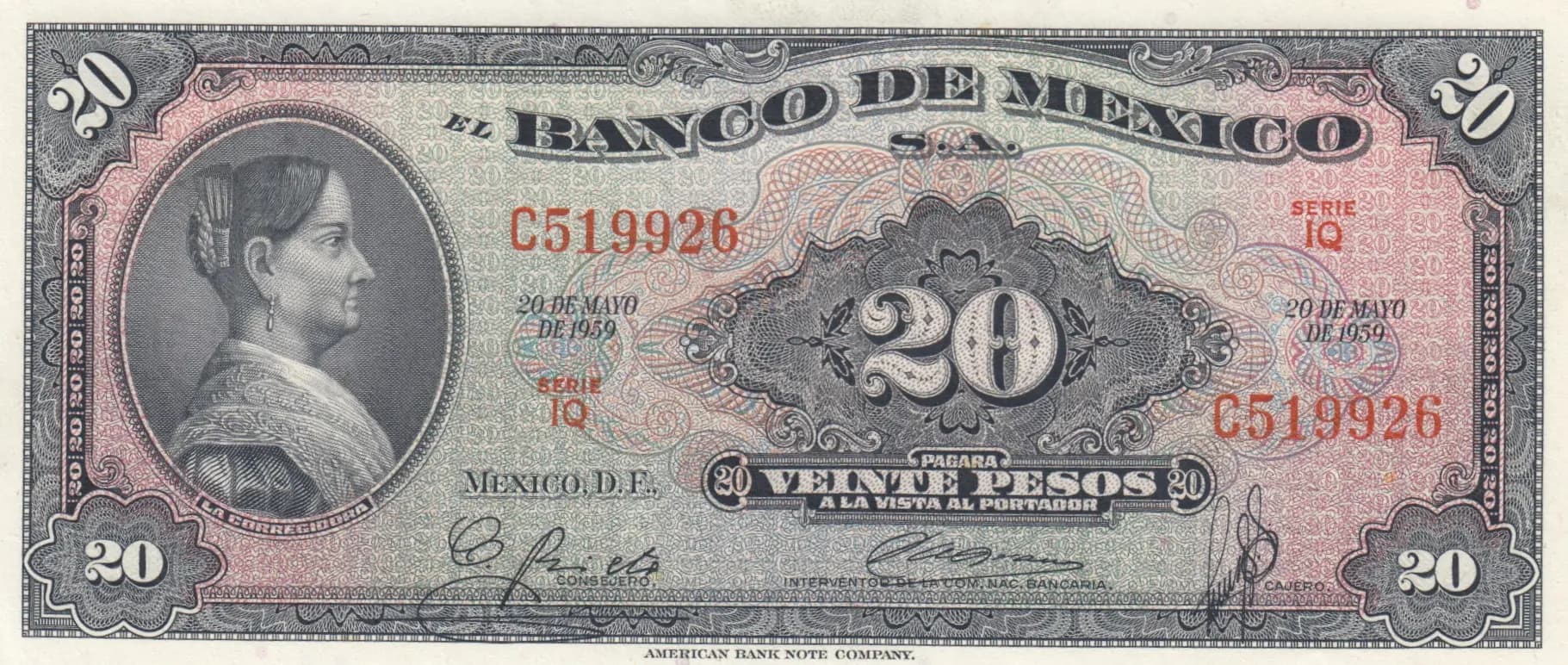
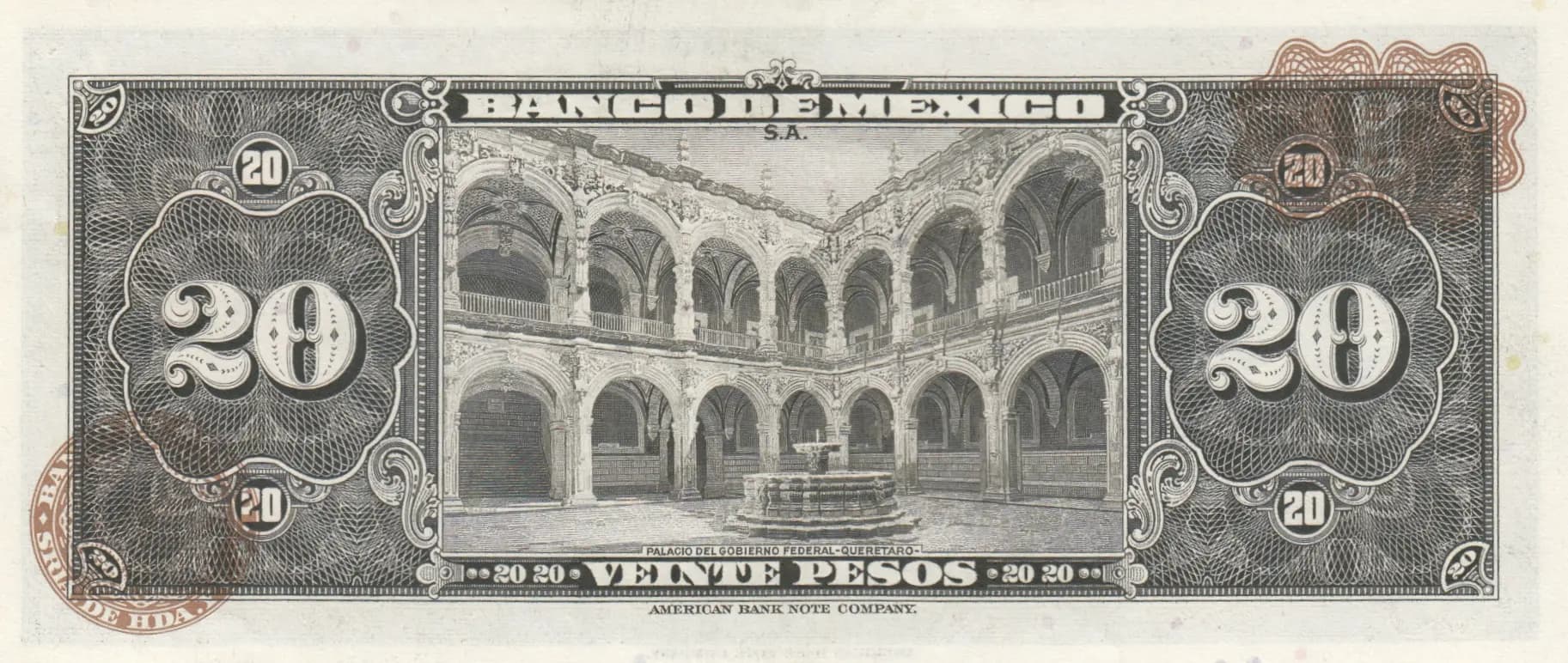
This is a pristine uncirculated example of Mexico's 1959 20 peso note (Pick P-54h), featuring black multicolor printing on the obverse with an ornate classical portrait and the reverse depicting the Federal Palace courtyard in Querétaro. The note exhibits exceptional preservation with crisp, clean appearance throughout and no visible wear, creases, or stains, making it an excellent specimen for collectors of mid-20th century Mexican currency.
Common. The catalog values from 2019 list this note at $10 UNC and $2 VF, consistent with common circulation-era issues. eBay sales data confirms modest market prices, with PMG-graded specimens in the $30-57 range and raw VF examples selling for approximately $7.50. These low price points and regular market availability indicate this is a standard, frequently-encountered note from a regular issue with substantial print runs. Series IQ and IR designations represent consecutive standard series from a large production run.
Issued on May 20, 1959, by Banco de Mexico, this note reflects the post-war modernization period of Mexico under President Adolfo López Mateos. The reverse features the Palacio del Gobierno Federal in Querétaro, a colonial-era seat of Mexican government that symbolized Mexico's historical continuity and institutional authority during a period of economic and political consolidation in the 1950s.
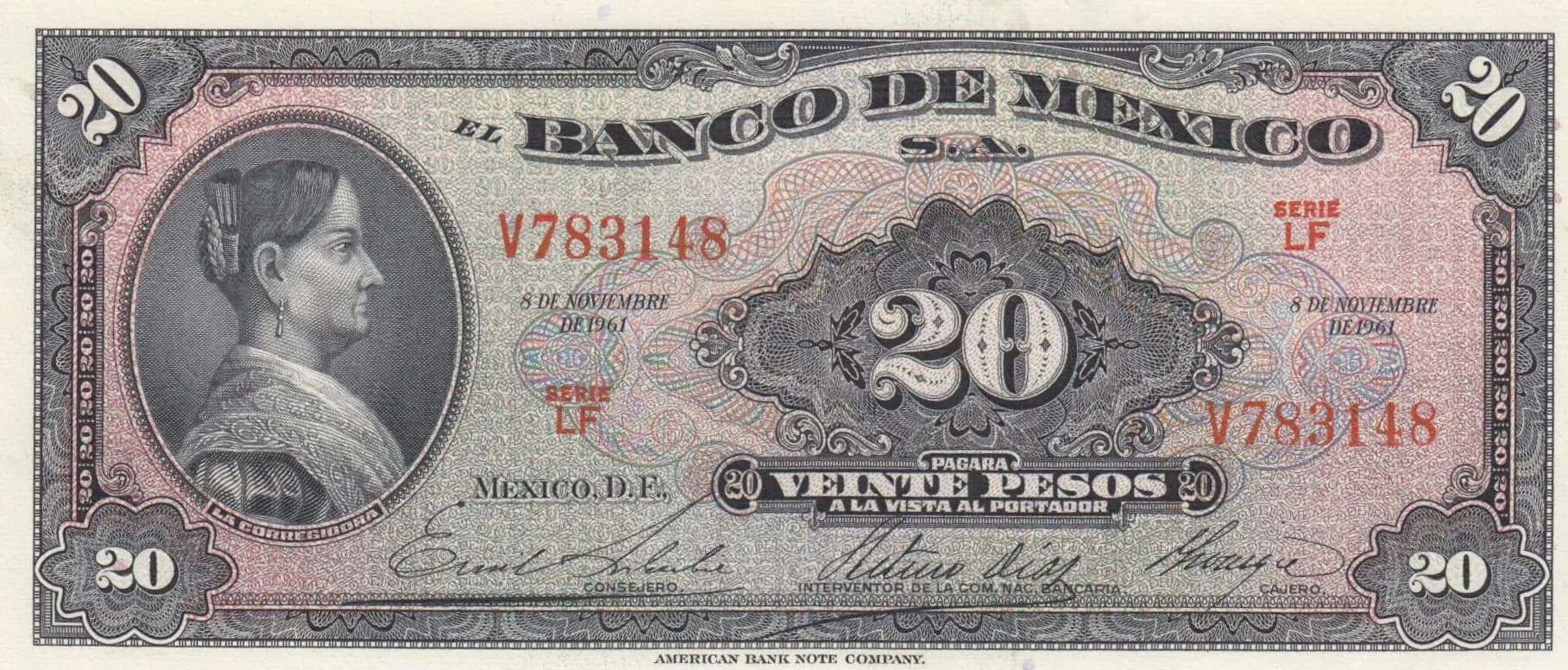
The obverse features a classical profile portrait on the left side of a historical figure wearing 16th-17th century period clothing with draped fabric, rendered in black on multicolor underprint dominated by pink/rose, green, and gray tones. Ornate decorative borders with intricate scrollwork frame the entire composition, with ornamental corner designs displaying the denomination 20 in elaborate cartouches. The reverse presents a detailed architectural engraving of the Palacio del Gobierno Federal in Querétaro, showing a multi-story colonial building with arched colonnades surrounding a central courtyard with a well or fountain structure, rendered primarily in black, gray, brown/tan, and white. Both sides feature the characteristic fine-line engraving work and repeated background patterns typical of American Bank Note Company production.
Front: 'EL BANCO DE MEXICO' (The Bank of Mexico) / '20 DE MAYO DE 1959' (May 20, 1959) / 'MEXICO, D.F.' (Mexico City) / 'VEINTE PESOS' (Twenty Pesos) / 'A LA VISTA AL PORTADOR' (On demand to bearer) / 'PAGARA' (Will pay) / Serial number: C519926 / 'SERIE 19' (Series 19) / 'AMERICAN BANK NOTE COMPANY' (printer credit). Back: 'PALACIO DEL GOBIERNO FEDERAL-QUERETARO' (Federal Government Palace - Querétaro) / 'VEINTE PESOS' (Twenty Pesos) / '20' (denomination) / 'AMERICAN BANK NOTE COMPANY' (printer credit).
Intaglio engraving (recess printing), the standard security printing method used by American Bank Note Company. The fine line work, intricate background patterns, ornate borders, and detailed architectural rendering visible in both obverse and reverse are characteristic of high-security intaglio production. The multicolor printing on the obverse indicates additional color layers applied over the primary black engraved design.
This example belongs to Pick P-54h, representing the variant without 'No.' designation above the serial number (distinguished from earlier P-54 varieties). The visual analysis confirms the absence of this marking, and identifies this as Series 19 (one of the known series variants for this issue: Series IQ and IR are documented as primary series). Signature varieties are noted in catalog data as a known variant characteristic for this Pick number, though specific signature identification would require closer examination of the obverse signatures.