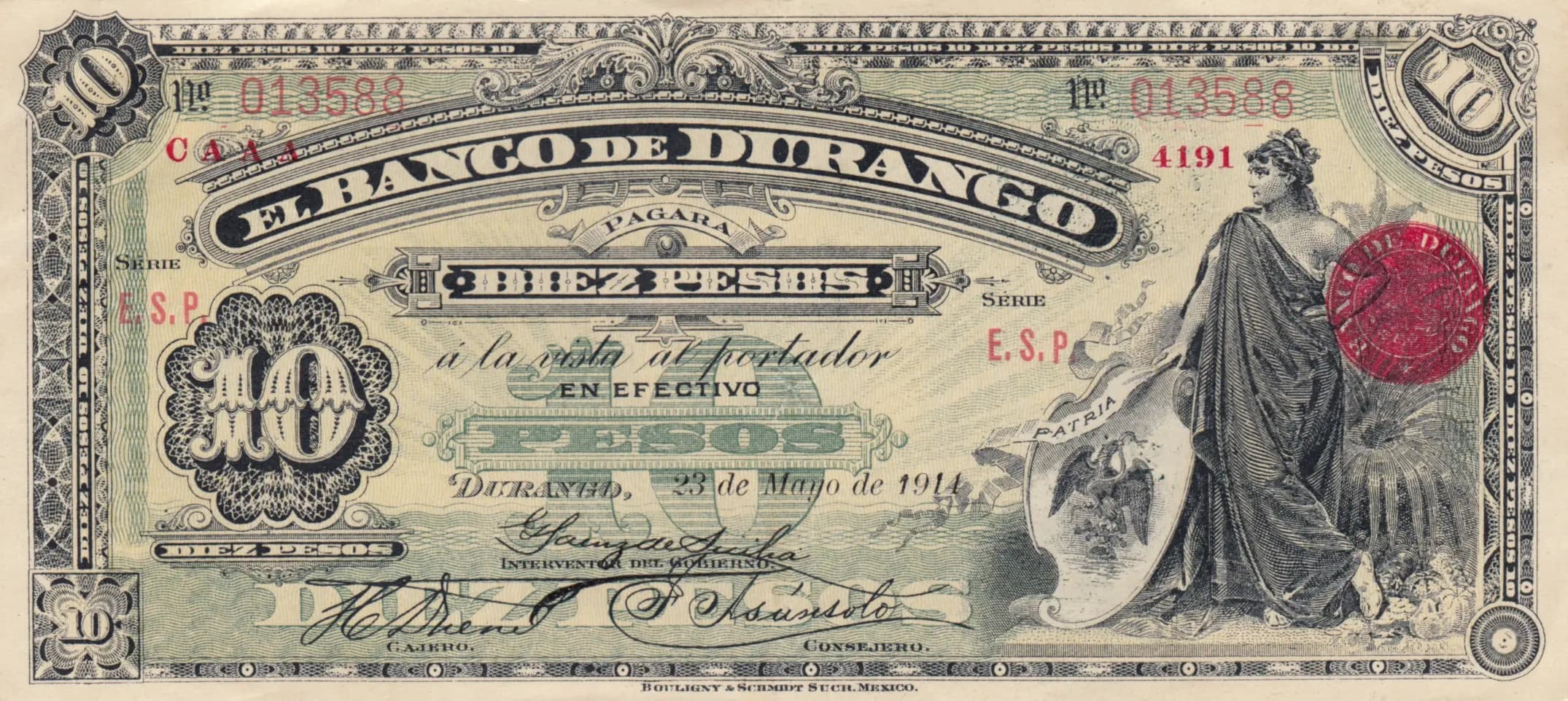
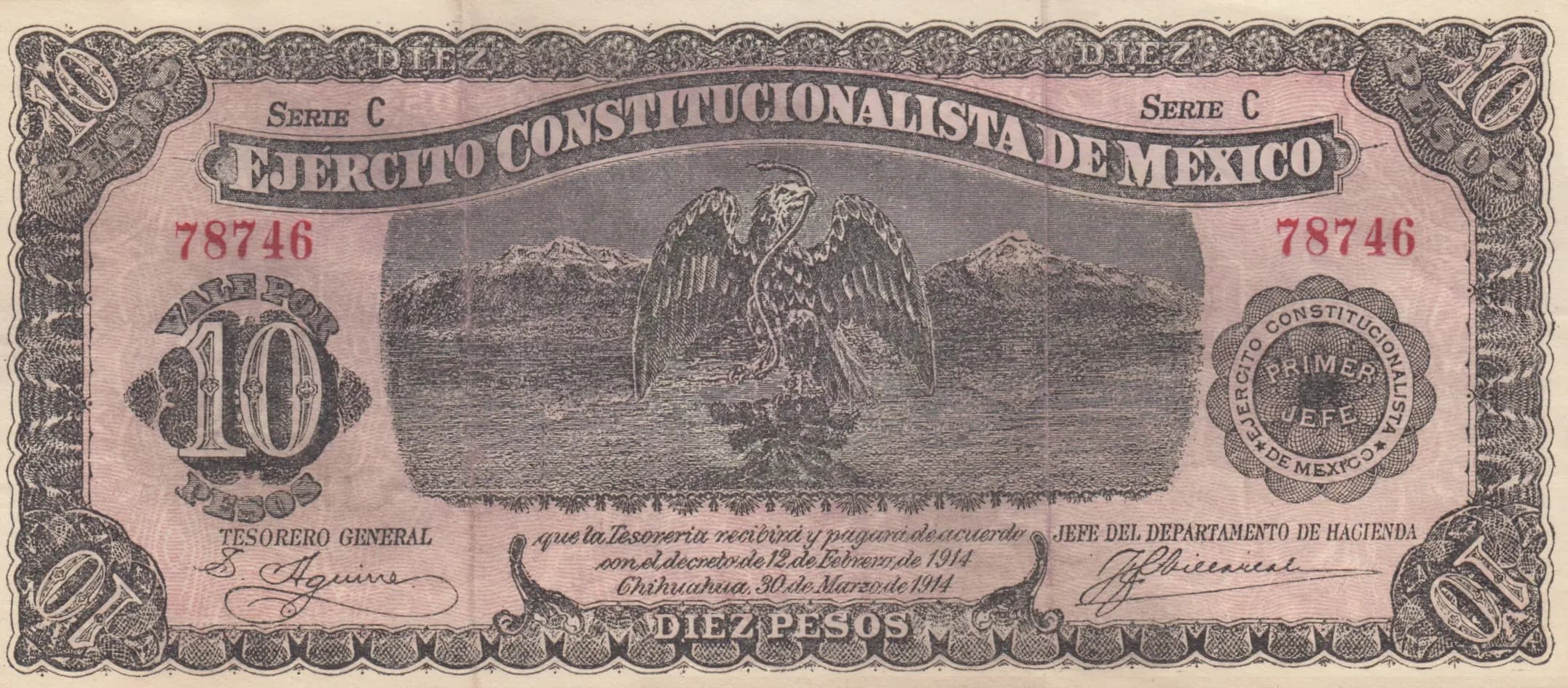
10 pesos 1914
Market Prices
1 saleAbout This Note
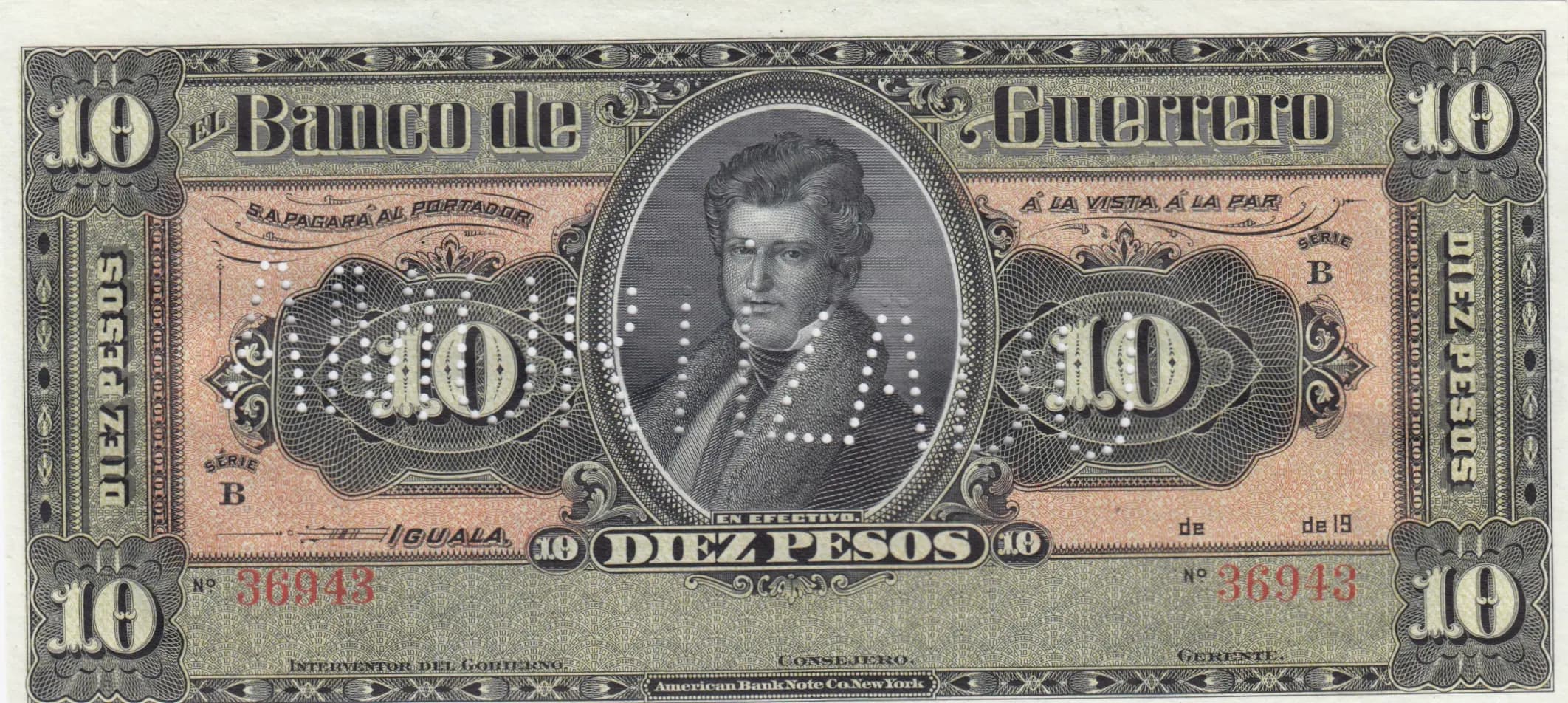
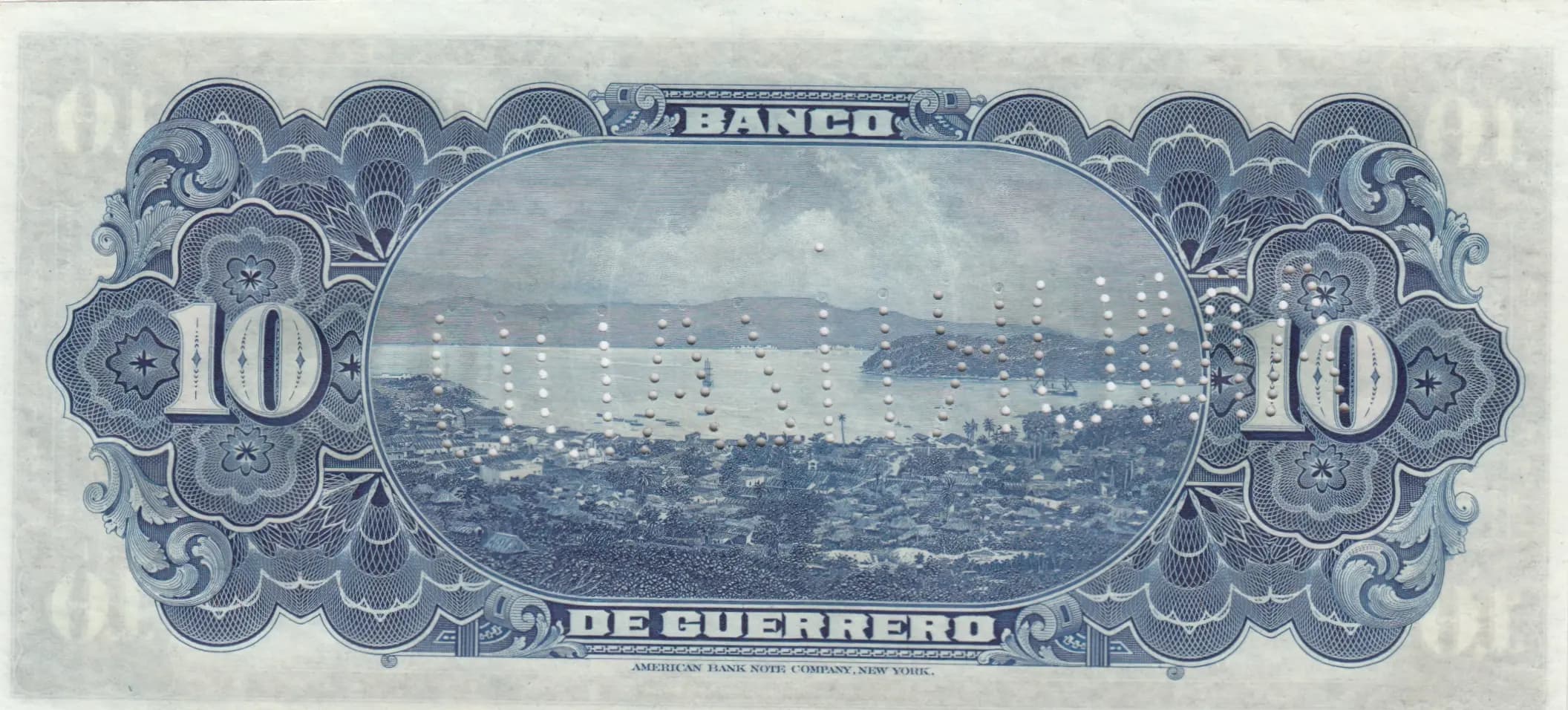
This is a handsome Series B example of the 1914 Banco de Guerrero 10 pesos note (Pick S299b), presented in uncirculated condition with crisp original colors and sharp detail throughout. The obverse features a portrait of V. G. Saldaña in military dress within an ornate oval frame set against brown and green underprinting, while the reverse showcases an engraved landscape of Acapulco's coastal bay in blue tones. This ABNC-printed regional Mexican banknote represents an important artifact of the Guerrero state banking system during the turbulent Revolutionary era.
Common. While regional Mexican banknotes from the Revolutionary period have collector interest, the Banco de Guerrero 10 pesos (Pick S299b) remains a relatively available note in the market. The eBay reference showing a PMG 65 example selling for approximately $91 in December 2024, despite 29 bids, indicates steady but not exceptional demand. Print runs for this regular-issue series appear to have been substantial enough to ensure reasonable availability today. The ABNC production quality and the note's survival in high grades suggests it was not heavily recalled or destroyed relative to other Mexican regional issues.
The Banco de Guerrero was a state-chartered institution operating during Mexico's early 20th century, issuing notes between approximately 1906-1914 as regional commercial banking activity expanded. The portrait of V. G. Saldaña and the prominence of Acapulco's harbor on the reverse reflect the state's economic importance as a Pacific coastal trading center. This series was issued during the height of the Mexican Revolution, and many notes from this issuer were subsequently perforated 'AMORTIZADO' (amortized/cancelled) as banking reforms and consolidations occurred under the new government.
The obverse features a centrally-positioned oval portrait of V. G. Saldaña, identifiable as a government or military official of the era based on his formal dress uniform with decorative chest insignia. The design is surrounded by elaborate baroque-style ornamental borders with fine geometric and floral guilloche patterns serving both aesthetic and security purposes. Multiple denomination indicators ('10' and 'DIEZ PESOS') are strategically placed. The reverse depicts an engraved coastal landscape identified as Acapulco, showing the natural harbor/bay with shoreline settlement and mountainous terrain in the background—emphasizing the state's geographic and commercial significance. The entire design employs classical bank note engraving with detailed line work throughout, characteristic of American Bank Note Company's high-security production standards.
FRONT: 'Banco de Guerrero' (Bank of Guerrero) / '10' and 'DIEZ PESOS' (Ten Pesos) / 'A LA VISTA, A LA PAR' (At sight, at par) / 'SE PAGARA AL PORTADOR EN EFECTIVO' (Will be paid to bearer in cash) / 'SERIE B' (Series B) / 'INTERVENTOR DEL GOBIERNO' (Government Comptroller) / 'CONSEJERO' (Counselor) / 'GERENTE' (Manager) / 'No 36943' (Serial number) / 'American Bank Note Co. New York' (Printer attribution). BACK: 'BANCO DE GUERRERO' (Bank of Guerrero) / '10' (Denomination in decorative cartouches) / 'American Bank Note Company, New York' (Printer attribution).
Intaglio engraving (line engraving) by the American Bank Note Company, New York. The note exhibits the company's signature fine-line guilloche patterns, ornate border designs, and detailed landscape engraving characteristic of security printing of the period. The multi-color printing (brown/green obverse, blue reverse) was achieved through multiple engraved plates, a standard ABNC production method for regional Mexican currency of this era.
This is identified as Pick S299b, Series B variant, issued circa 1914. The visual analysis confirms Series B designation visible on the obverse. Many examples of this note carry the AMORTIZADO (amortized) perforation overprint, indicating post-issue cancellation during banking reforms; the presence or absence of this overprint may constitute a notable variety distinction. Serial number 36943 is documented in this example. No additional modern varieties (signature or date variants) are apparent from the imagery provided, though the ca.1906-14 date range suggests this series may have been produced over multiple years, potentially with minor signature or imprint variations typical of ABNC regional issues.