10 pesos 1912
Market Prices
About This Note
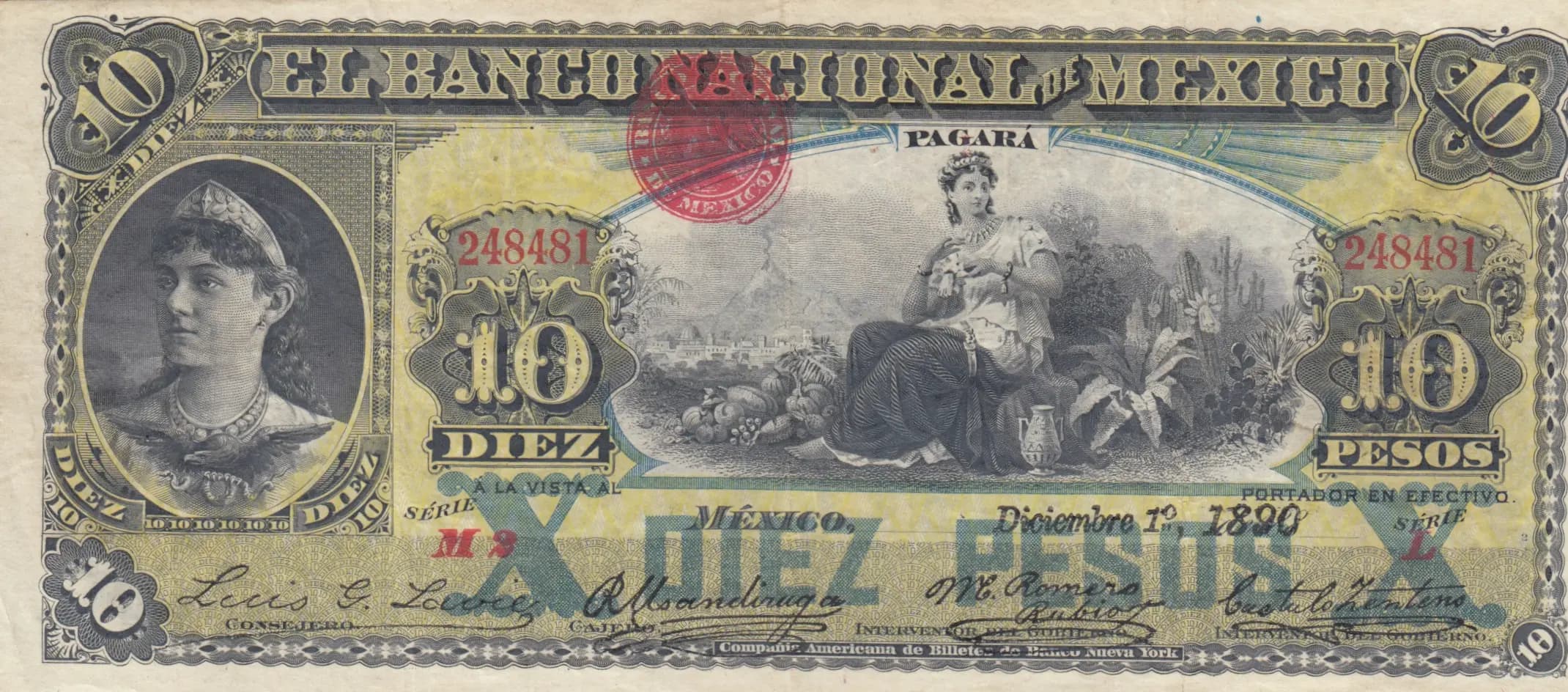
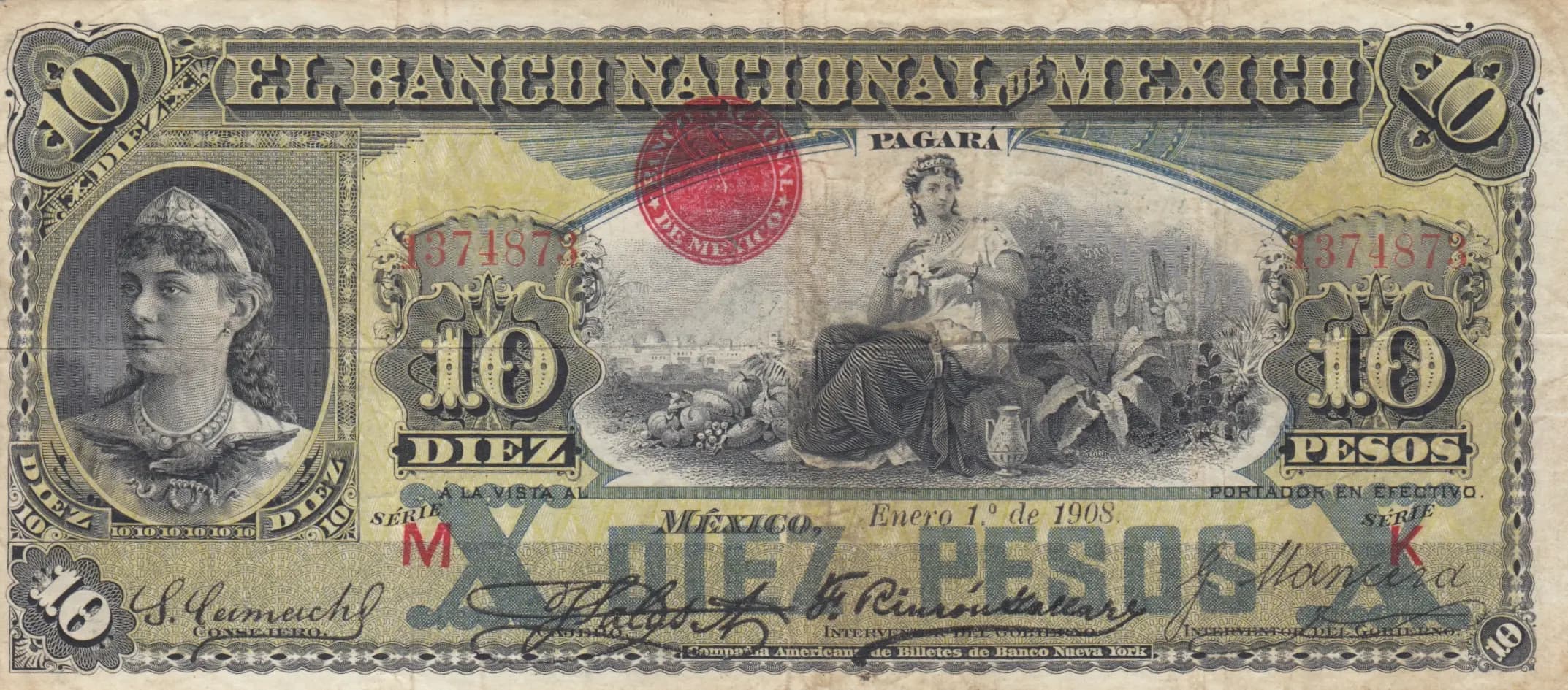
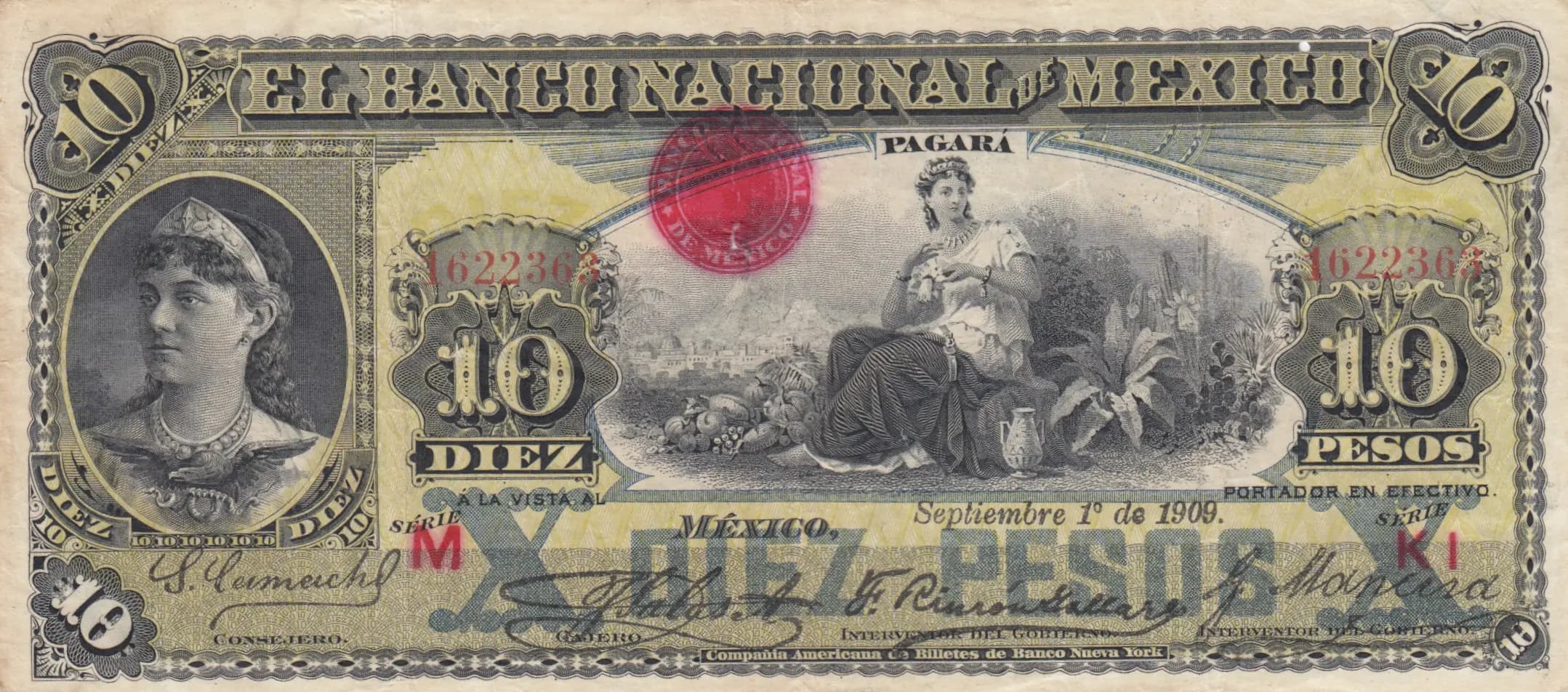
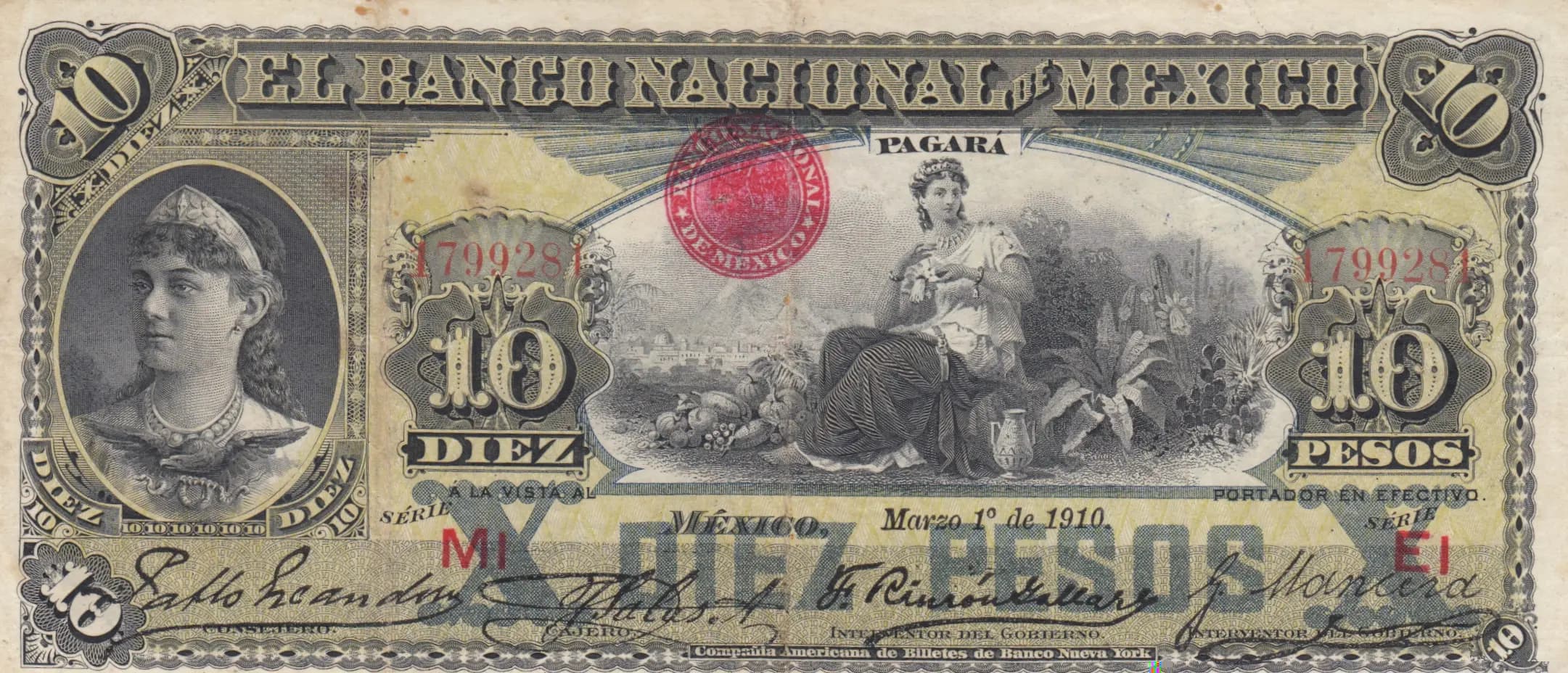
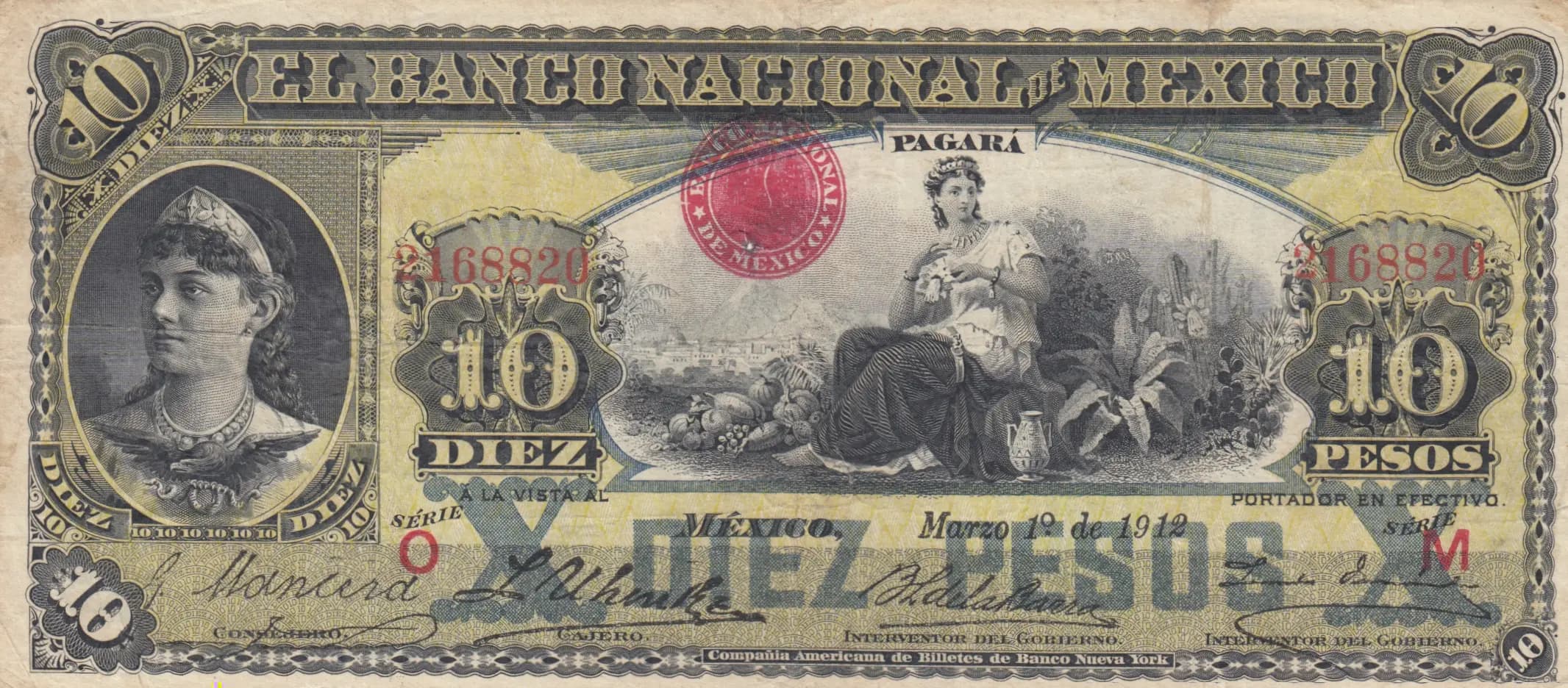
This is a 1912 Banco Nacional de México 10 pesos banknote (Pick P-S258e) in Fair condition, representing the later years of the bank's classical design series. The note features a striking allegorical female figure in the center-right, a portrait medallion on the left, and ornate engraving throughout with yellow-cream and blue coloring. Age-related wear including creasing, foxing, and discoloration is consistent with its 112-year circulation history, and it bears the official red government 'PAGARÁ' stamp, indicating government-witnessed currency.
Common. eBay market data shows circulation-grade examples trading in the $95–$135 USD range, with Fine condition notes typically commanding $25–$40 USD; these modest prices indicate steady supply and collector demand without scarcity. The Banco Nacional de México 10 pesos denomination was issued in large quantities from 1885–1913, and no short-run or recalled varieties are documented for this Pick number. The 1912 date falls within the bank's normal operational period, and ABNC production runs for major Mexican bank denominations were substantial.
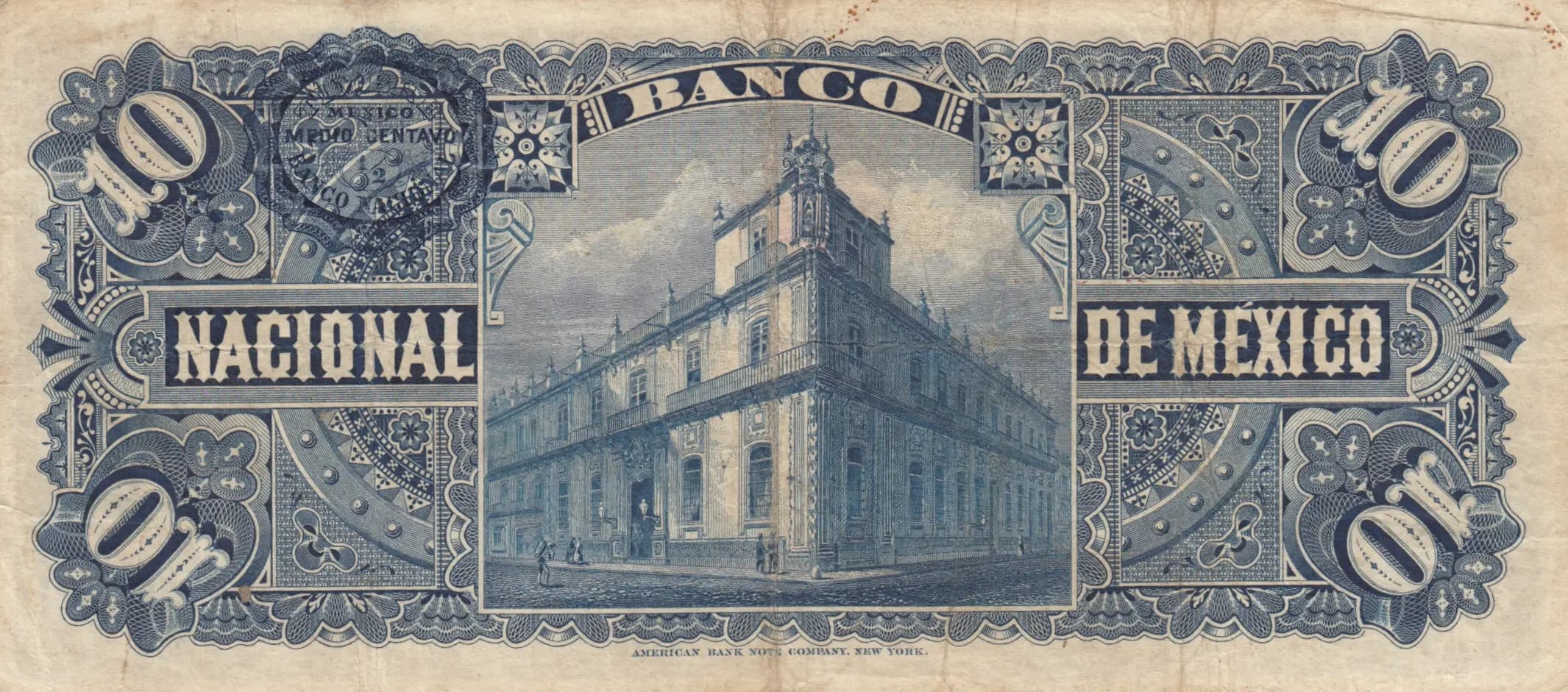
Issued on March 1, 1912, during a tumultuous period in Mexican history (the Mexican Revolution began in 1910), this banknote represents the Banco Nacional de México's commitment to maintaining confidence in the currency through classical allegorical imagery depicting national prosperity and commerce. The depicted landscape with Mexican terrain (mountains, cacti, desert vegetation) and the neoclassical government building on the reverse symbolize the nation's institutional stability and natural wealth during a period of significant political upheaval. The presence of government supervision ('CON GOBIERNO' and 'INTERVENTOR DEL GOBIERNO' inscriptions) reflects efforts to regulate and legitimize the currency amid revolutionary uncertainty.
The obverse features a classical female portrait medallion on the left (representing M. García Teruel or an allegorical Mexican personification), with the dominant central-right vignette depicting 'Tropics No. 2'—a seated female allegorical figure in classical dress surrounded by a Mexican landscape including mountains, cacti, and desert vegetation, symbolizing national prosperity and the country's natural abundance. The reverse showcases the institutional authority of the Banco Nacional de México through an architectural vignette of a prominent neoclassical government or banking building with a corner tower, spire, multiple windows, and small human figures at street level for scale. Both sides are framed by elaborate ornamental borders with wreathed scrollwork, floral and geometric patterns, and decorative corner pieces housing denomination numerals—typical of American Bank Note Company's sophisticated design standards for Latin American central and commercial banks.
Front: 'EL BANCO NACIONAL DE MÉXICO' (The National Bank of Mexico); 'DIEZ PESOS' (Ten Pesos); 'PAGARÁ' (Will Pay); 'MÉXICO, Marzo 1º de 1912' (Mexico, March 1st, 1912); 'A LA VISTA' (On Sight/On Demand); 'SERIE 168820' (Series 168820 - serial number); 'PORTADOR EN EFECTIVO' (Bearer in Cash); 'Compañía Americana de Billetes de Banco Nueva York' (American Bank Note Company New York); 'Moneda Fuerte' (Strong Currency); 'CON GOBIERNO' (With Government); 'INTERVENTOR DEL GOBIERNO' (Government Intervener). Back: 'BANCO' (Bank); 'NACIONAL' (National); 'DE MÉXICO' (of Mexico); 'AMERICAN BANK NOTE COMPANY, NEW YORK' (printer identification); '10' (denomination marker).
Intaglio engraving (line engraving), executed by the American Bank Note Company (ABNC) of New York, as identified on both sides of the note. The fine line work visible throughout, complex decorative border patterns, and detailed architectural rendering on the reverse are characteristic of high-security intaglio production. The note employs a yellow-toned underprint on the obverse with black engraved primary designs, and blue coloring on the reverse—all consistent with multicolor intaglio printing techniques. Anti-counterfeiting measures incorporated into the design include fine line engraving, complex geometric and floral security patterns, and an additional official government red/purple stamp overlay (the 'PAGARÁ' mark).
This specimen is dated March 1, 1912, placing it in the final four years of the 1885–1913 series (per Pick P-S258e dating: 1.9.1909–6.12.1913). Serial number 168820 is visible. The note bears the official red 'PAGARÁ' government stamp and 'INTERVENTOR DEL GOBIERNO' designation, indicating government supervision of this particular specimen—a variant feature related to regulatory oversight during the Revolutionary period rather than a distinct cataloged variety. The visual analysis confirms standard obverse (yellow and blue underprint with M. García Teruel portrait and Tropics allegory) and reverse (blue with institutional building) designs consistent with the Pick catalog description for P-S258e.