5 pounds 1968
Market Prices
23 salesAbout This Note
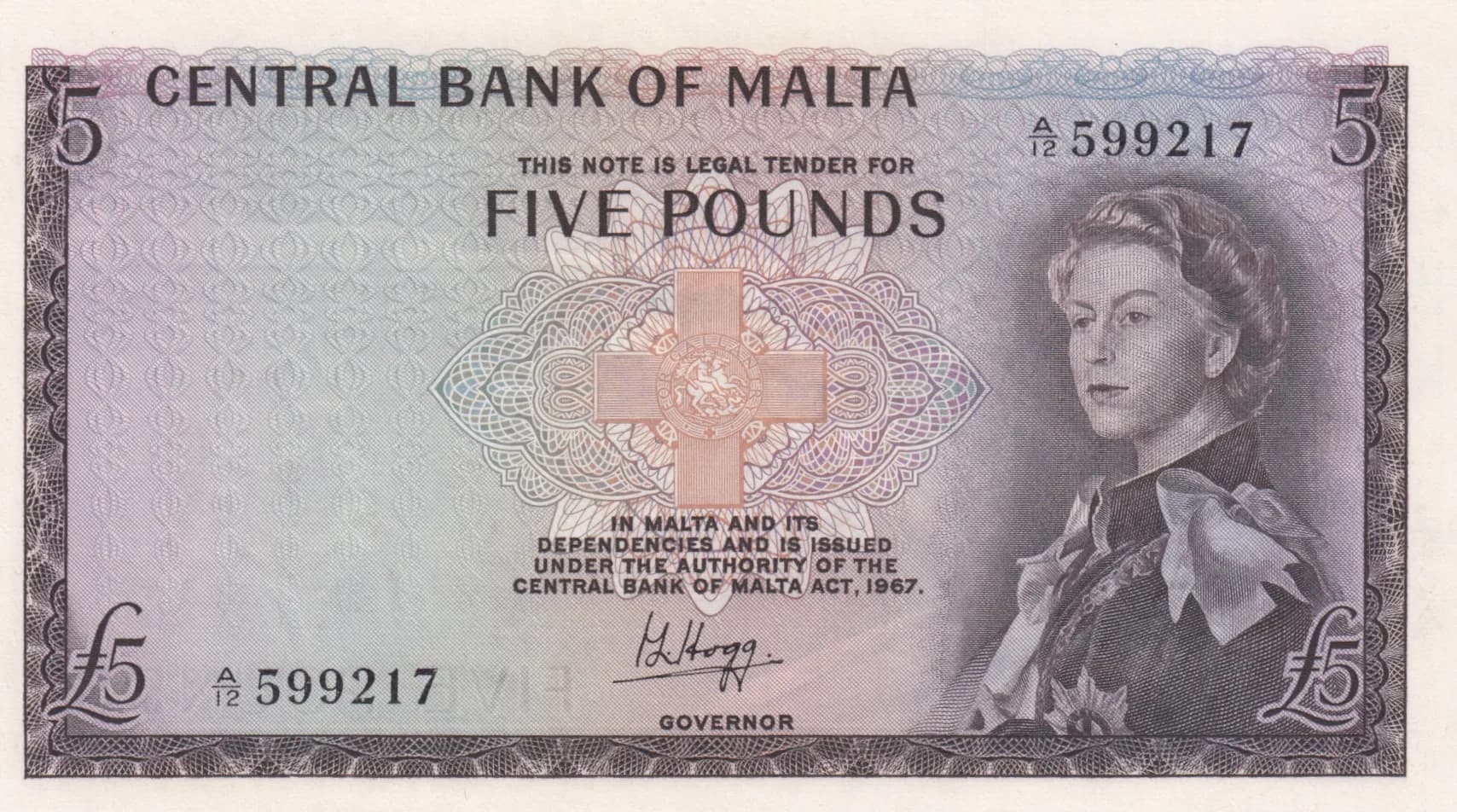
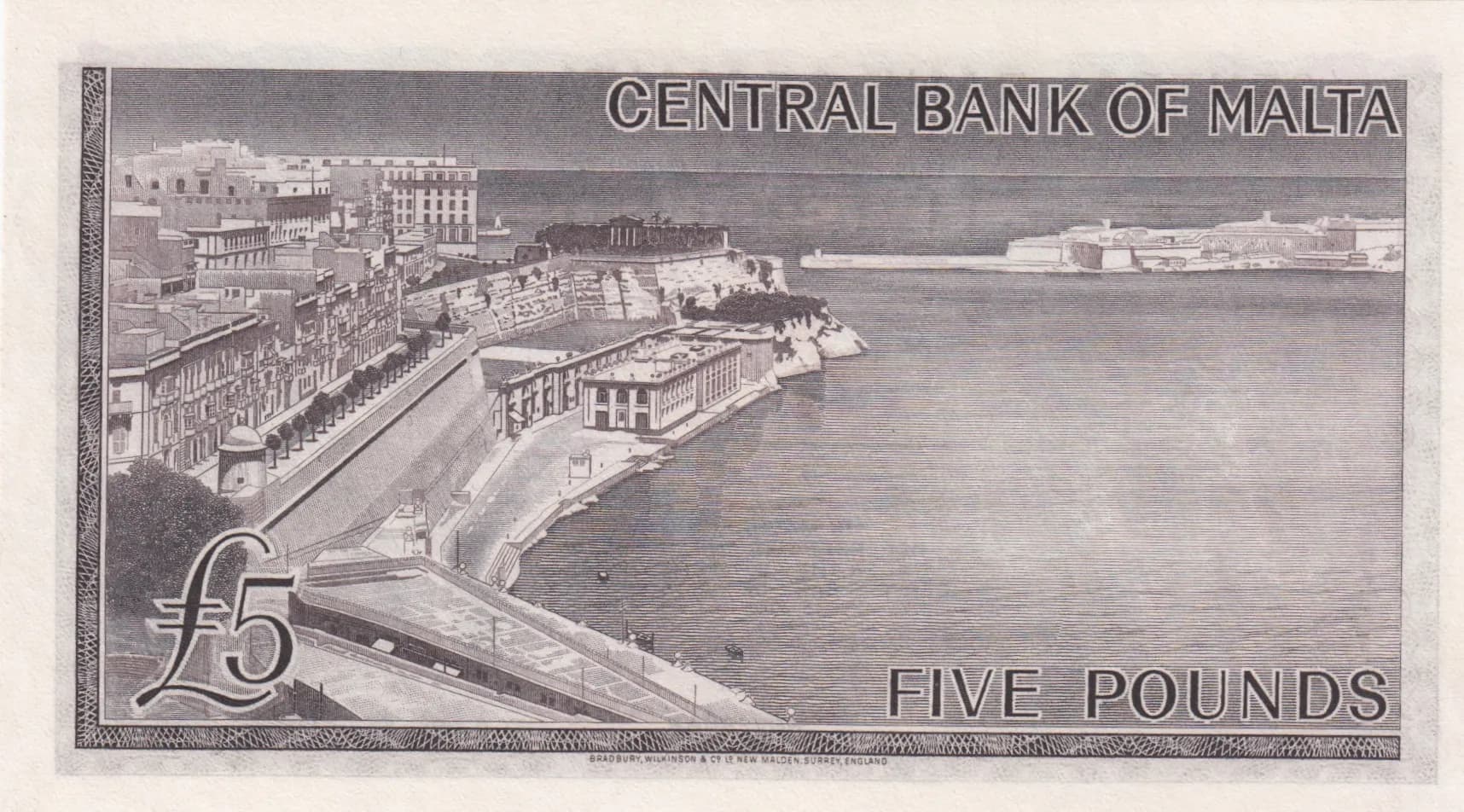
This is an exceptional example of Malta's early Central Bank currency, the 5 Pounds note from 1968 (Pick P-30) in uncirculated condition. The note features striking purple and mauve tones on the obverse with an ornate cross design and a portrait of a woman, while the reverse displays an exquisitely detailed engraved panorama of Valletta's fortified harbor. As one of the first notes issued by the newly established Central Bank of Malta under the 1967 Act, this crisp, unmarked example represents an important piece of Malta's numismatic history during its transition to independence.
Common. The 1968 Central Bank of Malta 5 Pounds note (Pick P-30) was part of the regular initial circulation issue of the newly established Central Bank and saw substantial production and distribution. Uncirculated examples are readily available in the numismatic market and typically command modest premiums over lower grades. No documented print run restrictions, recall issues, or supply constraints exist for this denomination and year.
This 5 Pounds note was issued in 1968, just one year after Malta's Central Bank was formally established under the Central Bank of Malta Act, 1967, during a pivotal period in the nation's post-independence development. The reverse depicts Valletta, the capital city with its distinctive fortified harbor and bastions, symbolizing Malta's strategic maritime heritage and historical significance. The note's design and English inscriptions reflect Malta's Commonwealth ties during this transitional era of its monetary and political independence.
The obverse features a formal three-quarter profile portrait of a woman facing left, rendered in classical engraving style with fine details including a brooch or medal on her formal attire. The centerpiece is an ornate geometric cross design with intricate Maltese cross motifs and elaborate guilloche patterns characteristic of high-security banknote design. The reverse showcases a panoramic engraved scene of Valletta's distinctive fortified waterfront, including fortification bastions, multi-story period architecture, a prominent church or cathedral, and the characteristic harbor railings and waterfront promenade. Fine decorative borders frame both sides of the note, with denomination markings in multiple locations.
FRONT SIDE: 'CENTRAL BANK OF MALTA' | 'THIS NOTE IS LEGAL TENDER FOR' | 'FIVE POUNDS' | 'IN MALTA AND ITS DEPENDENCIES AND IS ISSUED UNDER THE AUTHORITY OF THE CENTRAL BANK OF MALTA ACT, 1967.' | Serial number 'A/12 599217' (appears twice) | 'GOVERNOR' | '£5'. BACK SIDE: 'CENTRAL BANK OF MALTA' | 'FIVE POUNDS' | '£5' | 'BRADBURY, WILKINSON & CO LTD NEW MALDEN, SURREY ENGLAND' (printer's attribution).
Intaglio engraving (line engraving) using traditional banknote security printing methods. The note was produced by Bradbury, Wilkinson & Co Ltd of New Malden, Surrey, England, one of the world's premier security printers. The complex geometric patterns, fine line work, and sophisticated guilloche designs throughout the note are characteristic of their high-security intaglio printing process, which was the standard for banknote production in the 1960s.
The observed serial number A/12 599217 suggests a standard prefix pattern from the initial issue. Known varieties for Pick P-30 may include different signature combinations of Central Bank governors and denomination variations, though without comprehensive variety catalogs specific to this early Maltese issue, primary differentiation appears limited to serial number prefixes. The noted A-prefix likely indicates the first printing series.