2 shillings 6 pence 1940
Market Prices
5 salesAbout This Note
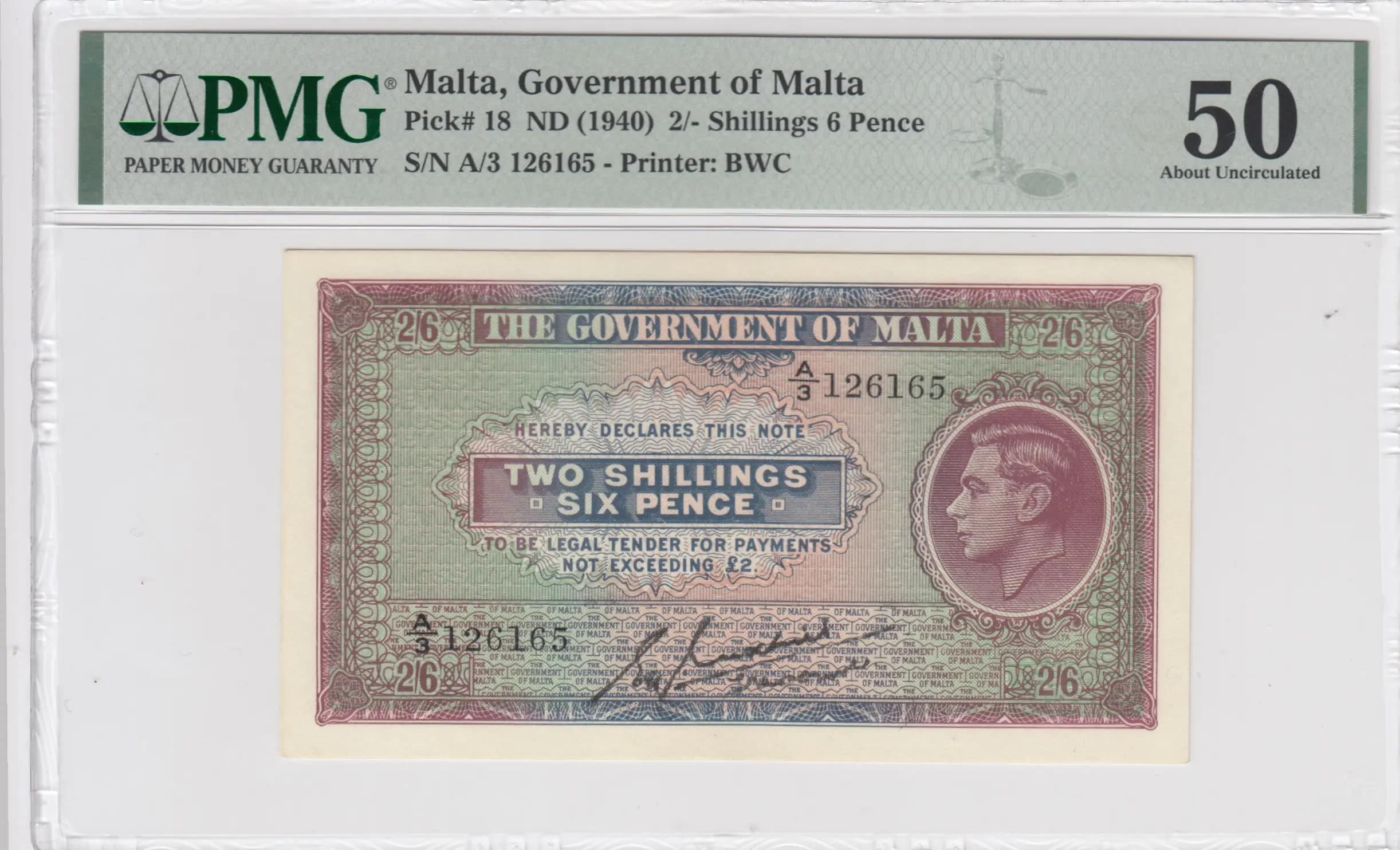
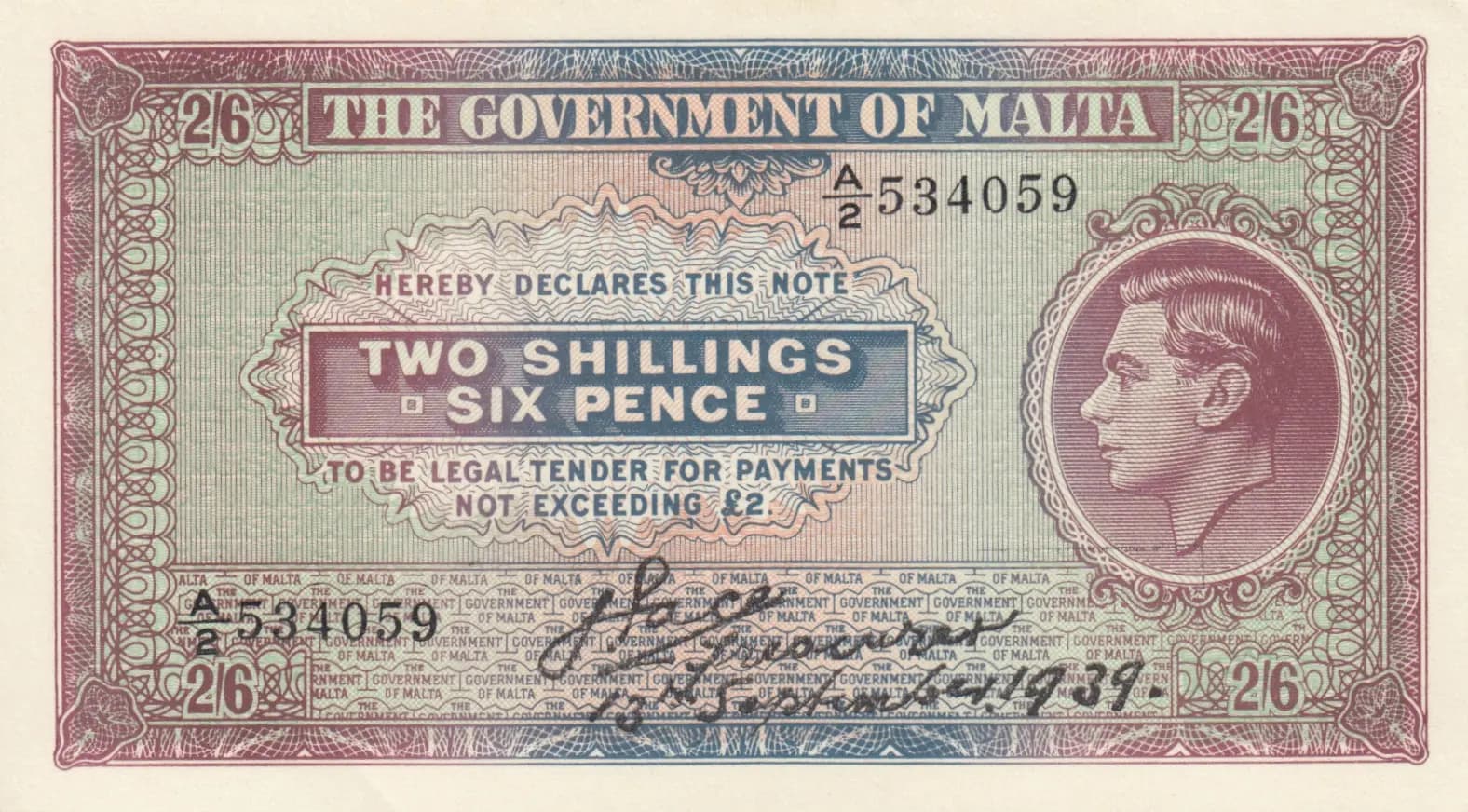
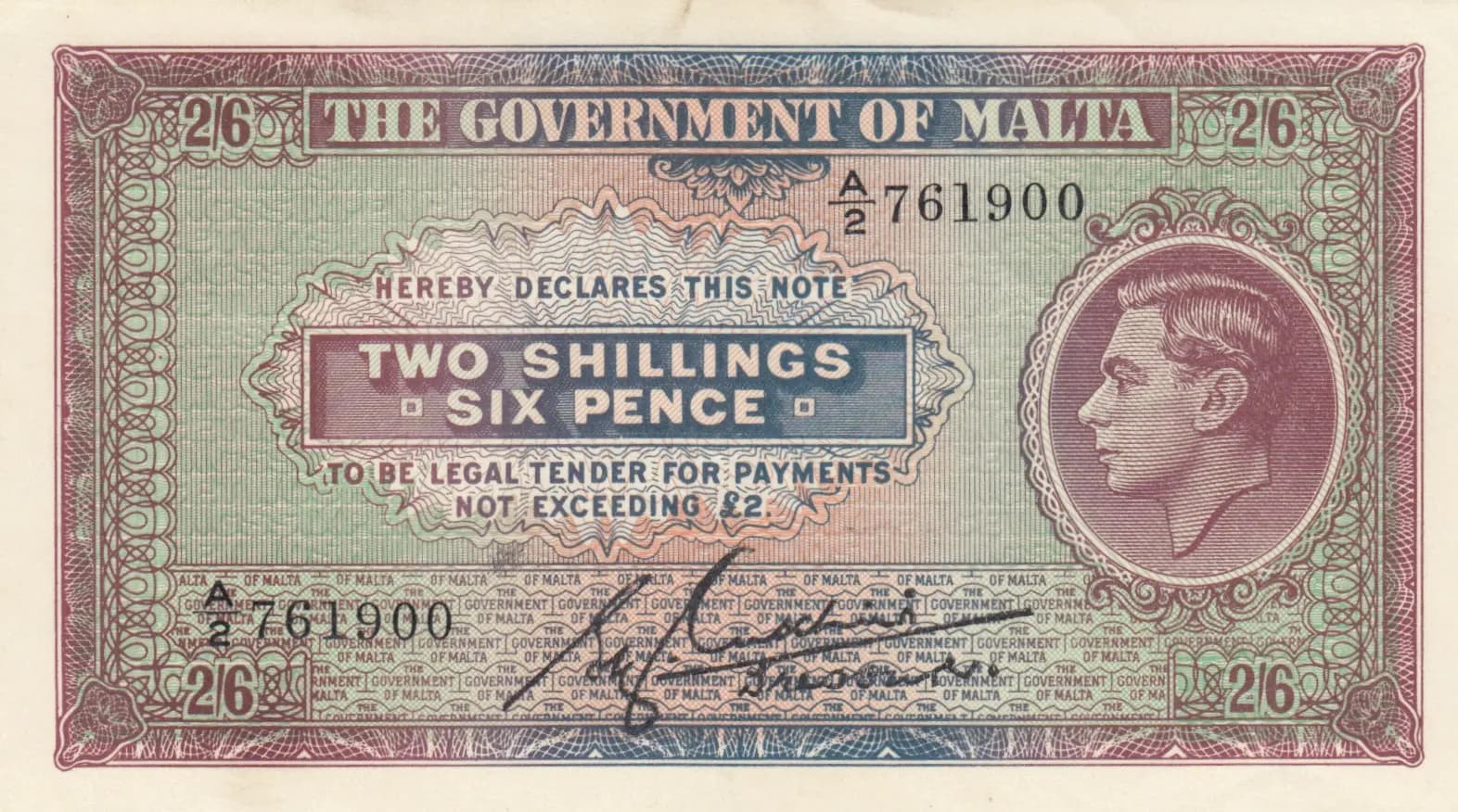
This is a Malta Government 2 Shillings 6 Pence note from 1940 (Pick P-18) graded EF, featuring a striking portrait of King George VI in an ornate baroque-style frame rendered in purple, pink, and green tones. The note exhibits moderate circulation wear including pen markings and age-related discoloration, but remains structurally sound with no significant tears, representing a solid mid-grade example of this pre-decimal Commonwealth issue.
Common. eBay market data shows consistent sales in the $12.50-$31.00 range across multiple condition grades (F to VF) over the past decade, with 2016 catalog valuations of $25 for VF and $185 for UNC. The EF-graded example shown would fall between these benchmarks, and the regular circulation of this issue combined with modest realized prices indicates a readily available note with no scarcity premium. No indication exists of limited print runs or early recall.
This note was issued by the Government of Malta in 1940, during the final year of the pre-decimal British currency system in the colony. The prominent portrait of King George VI, displayed in formal regalia within an ornate oval frame, reflects Malta's status as a British Crown possession at this time. The denomination in shillings and pence, along with the legal tender declaration limited to £2, illustrates the monetary conventions of the British Empire during World War II.
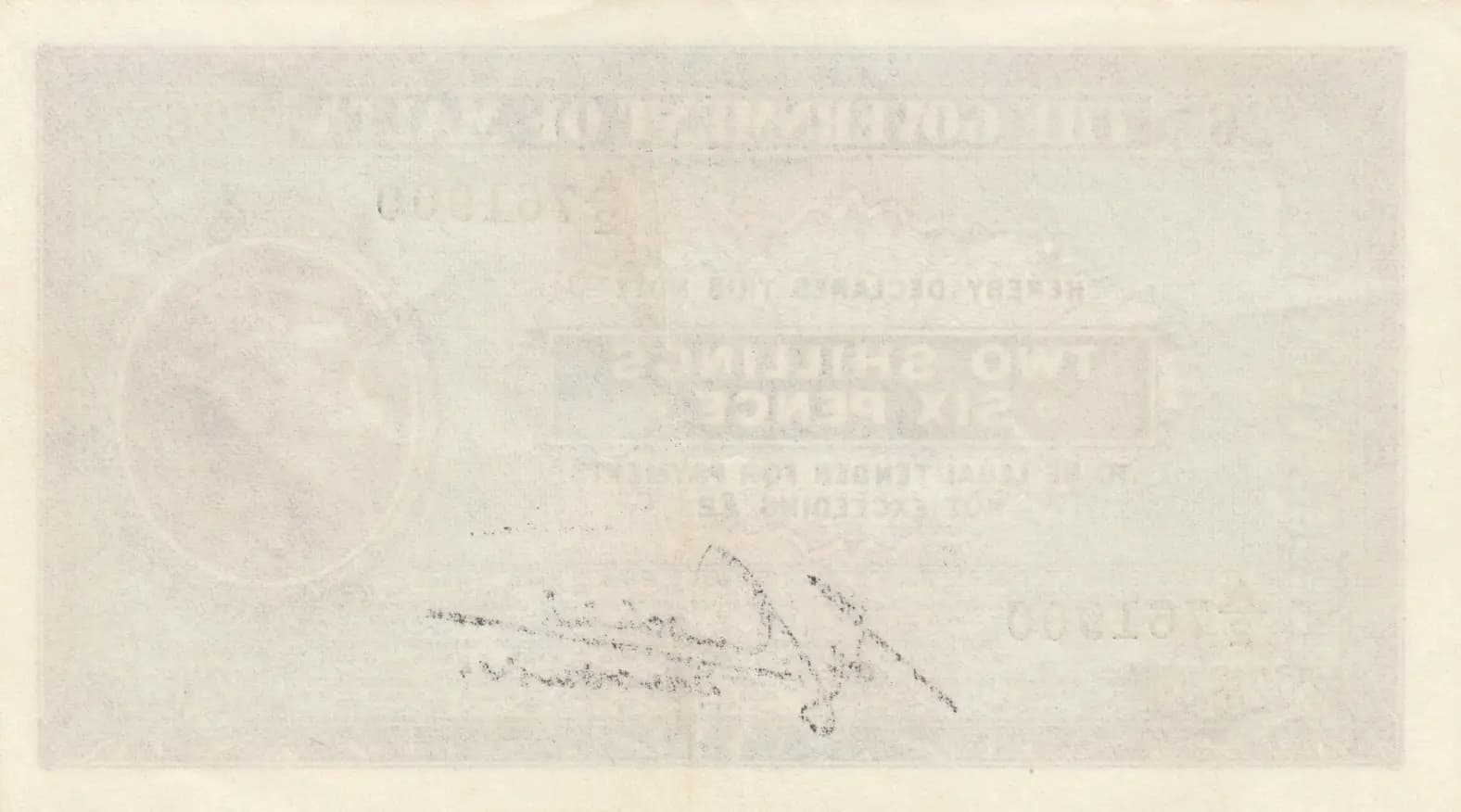
The obverse features a formal portrait of King George VI positioned at right, rendered in purple and maroon tones within an elaborate baroque-style oval frame with ornamental scrollwork. The portrait shows the King in right profile, wearing formal state attire. The surrounding design incorporates decorative rosette patterns in the corners and an intricate repeating text background reading 'GOVERNMENT OF MALTA' as a security measure. The color palette of purple, pink, green, and cream creates a distinctive aesthetic typical of Commonwealth currency of this era. The reverse is essentially blank (uniface design), consistent with the catalog description, with only a faint watermark element and aging foxing visible. The note's legal tender declaration is prominently stated, emphasizing its official governmental authority.
FRONT SIDE: 'THE GOVERNMENT OF MALTA' (header); 'HEREBY DECLARES THIS NOTE TO BE LEGAL TENDER FOR PAYMENTS NOT EXCEEDING £2.' (main legal declaration); 'TWO SHILLINGS SIX PENCE' (denomination in words); '2|6' (denomination in numerals); 'OF MALTA' and 'GOVERNMENT' (repeated in background security pattern); Serial number: 'A 2 761900' (appears twice). BACK SIDE: Predominantly blank with faint watermark element; hand-drawn signature or marking present (illegible).
This note was produced using fine line engraving, as evidenced by the intricate detail work visible throughout the design, particularly in the portrait, ornamental borders, and background security pattern. The multi-color printing in coordinated purple, pink, green, and cream tones suggests sophisticated color separation and registration techniques. The printer is identified as BWC (Bradbury Wilkinson & Company), though no imprint appears on the note itself. The repeating text background pattern and detailed ornamental work are characteristic of high-security banknote production from this period.
Serial number prefix 'A 2' with serial number 761900. This represents the standard variety for Pick P-18, with no known major varieties documented in PMG population reports (1 variant catalogued under base Pick number). The hand-drawn marking visible on the reverse appears to be a post-issue authentication or ownership mark rather than a printing variety. No overprints or significant deviations from the standard design are evident.