10 shillings 1963
Market Prices
16 salesAbout This Note
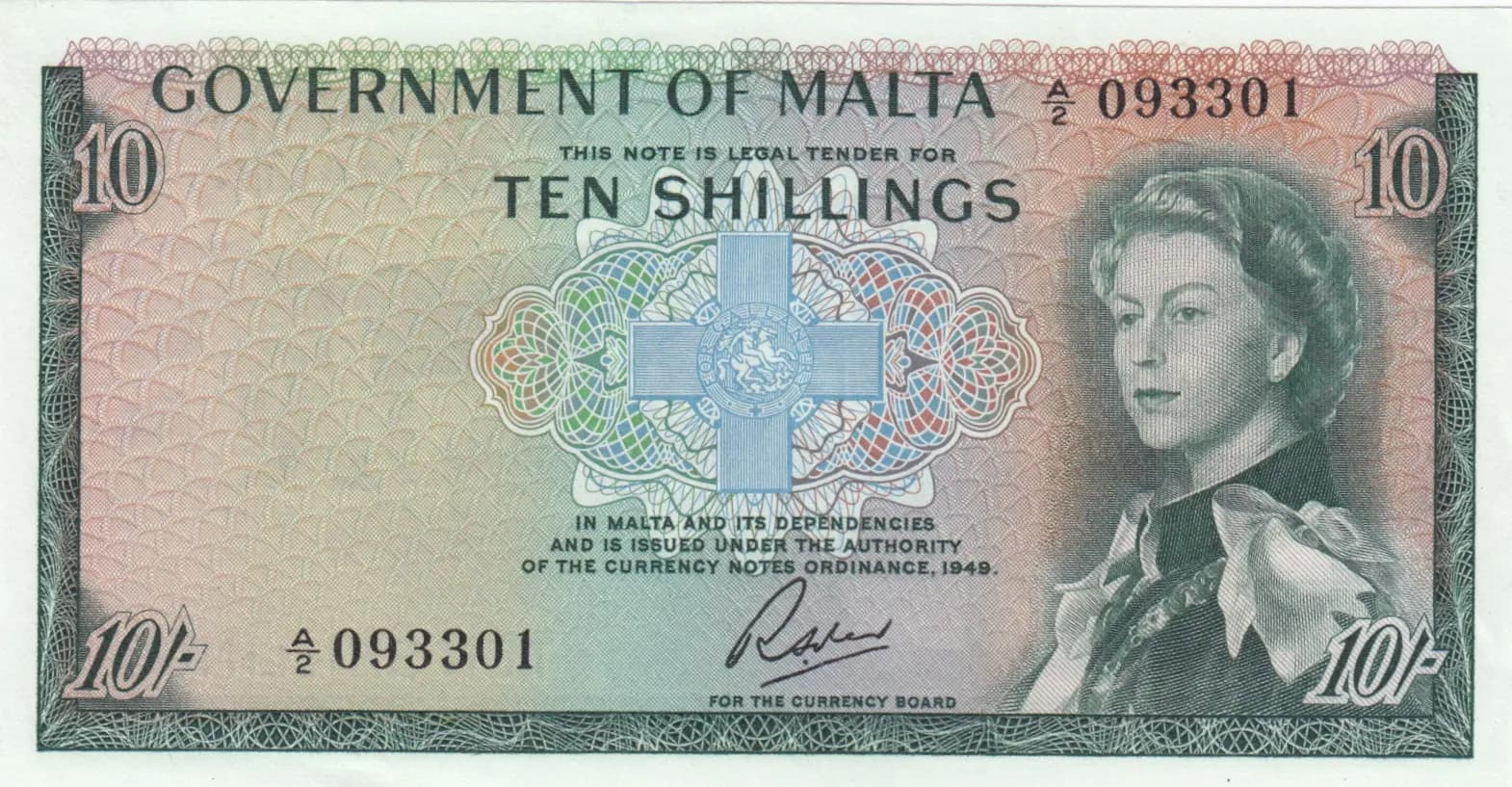
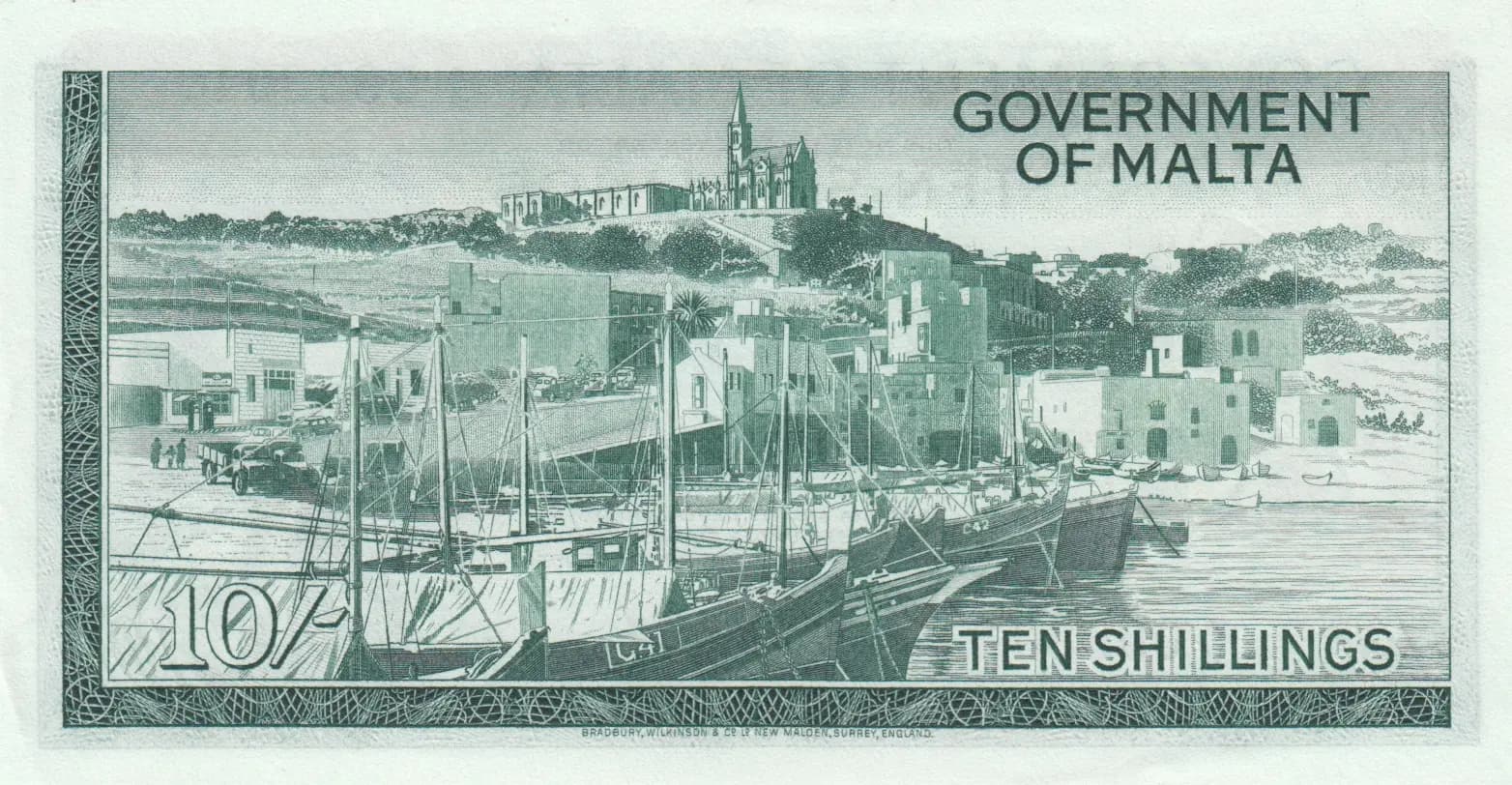
This is an exceptional example of the Malta 10 Shillings 1963 (Pick P-25), presented in uncirculated condition with pristine surfaces showing no wear, creases, or handling marks. The note features striking polychromatic intaglio printing with a dominant pink/salmon and green color scheme, displaying Queen Elizabeth II in formal profile on the obverse alongside an ornately detailed geometric cross design, while the reverse showcases a picturesque maritime scene of Mgarr Harbour in Gozo with traditional luzzu sailing vessels and the Għajnsielem Parish Church. This is a highly desirable example of early post-war Maltese currency from the transitional pre-independence period.
Common. The eBay market data provided shows consistent trading across multiple condition grades, with numerous sales ranging from $2.25 to $385 depending on condition and grading. Multiple sales at fine and very fine grades selling for $15.50-$22.50 indicate broad availability in the market. Catalogue values for 2019 place UNC examples at $475, but the frequency of sales across all grades confirms this was a substantial production run with no indication of limited mintage or recall. The PMG population report shows three catalogued variants (P-25a, P-25cts, P-25s), further suggesting common availability.
Issued under the Currency Notes Ordinance of 1949, this banknote represents Malta's monetary autonomy during the final years before independence in 1964. The obverse portrait honors Queen Elizabeth II's reign as the Commonwealth monarch during this era, while the reverse deliberately celebrates Maltese national identity through the depiction of Gozo's iconic Mgarr Harbour—a symbolic representation of the islands' maritime heritage and cultural landmarks. The note's design reflects the balance between Commonwealth ties and emerging Maltese national consciousness during this transitional political period.
The obverse features a formal right-facing portrait of Queen Elizabeth II in profile, positioned on the right side of the note, wearing formal dress with a brooch or medal. The dominant design element is a large ornate geometric cross in blue and green tones, centered on the note with intricate patterned backgrounds in red, blue, and green, surrounded by a decorative scalloped border frame. The reverse displays an engraved maritime landscape depicting Mgarr Harbour (Mġarr), Gozo, with traditional Maltese luzzu sailing boats (characterized by tall distinctive masts) anchored in the foreground on the left, while a coastal settlement with white buildings, palm trees, and the prominent bell tower of Għajnsielem Parish Church dominates the background on a hilltop. The color scheme transitions from the pink/salmon and green of the obverse to predominantly green/teal tones on the reverse.
FRONT: 'GOVERNMENT OF MALTA' | 'THIS NOTE IS LEGAL TENDER FOR' | 'TEN SHILLINGS' | 'IN MALTA AND ITS DEPENDENCIES AND IS ISSUED UNDER THE AUTHORITY OF THE CURRENCY NOTES ORDINANCE, 1949.' | 'FOR THE CURRENCY BOARD' | Serial number: 093301 | Denominations: '10/-' (multiple locations). BACK: 'GOVERNMENT OF MALTA' | 'TEN SHILLINGS' | '10/-' | 'BRADBURY, WILKINSON & CO LTD NEW MALDEN, SURREY, ENGLAND' (printer attribution).
This note was produced using fine line intaglio engraving by Bradbury, Wilkinson & Co Ltd (BWC), the renowned British security printer located in New Malden, Surrey. The printing method is evidenced by the precise geometric patterns, complex cross-hatching, intricate background designs, and detailed harbor scene visible in the visual analysis. Security features incorporated fine line engraving throughout, with layered color application and sophisticated repeating geometric patterns in the border areas typical of high-security banknote production of the era.
The PMG population report identifies three catalogued varieties for Pick P-25: P-25a, P-25cts, and P-25s, all printed by BWC. Based on the visual analysis showing 'Bradbury, Wilkinson & Co Ltd' attribution on the reverse, this note corresponds to the standard BWC printing. The serial number '093301' is visible on the obverse. Without additional diagnostic details regarding signatures, plate numbers, or other distinguishing characteristics from the images, the specific sub-variety (a, cts, or s designation) cannot be definitively determined from the visual analysis alone, though all three variants are known to exist within this Pick number.