1 pound 1969
Market Prices
26 salesAbout This Note
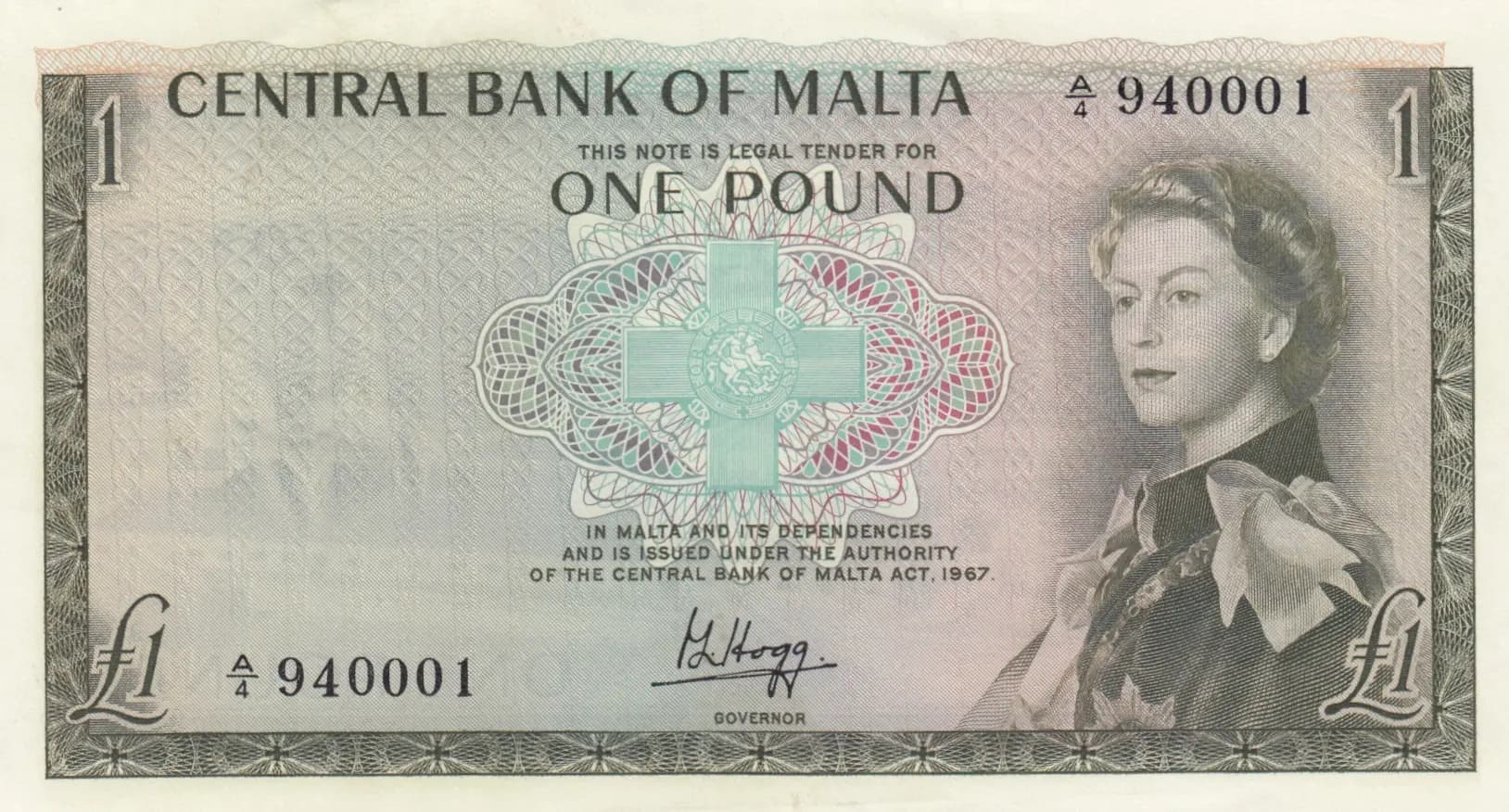
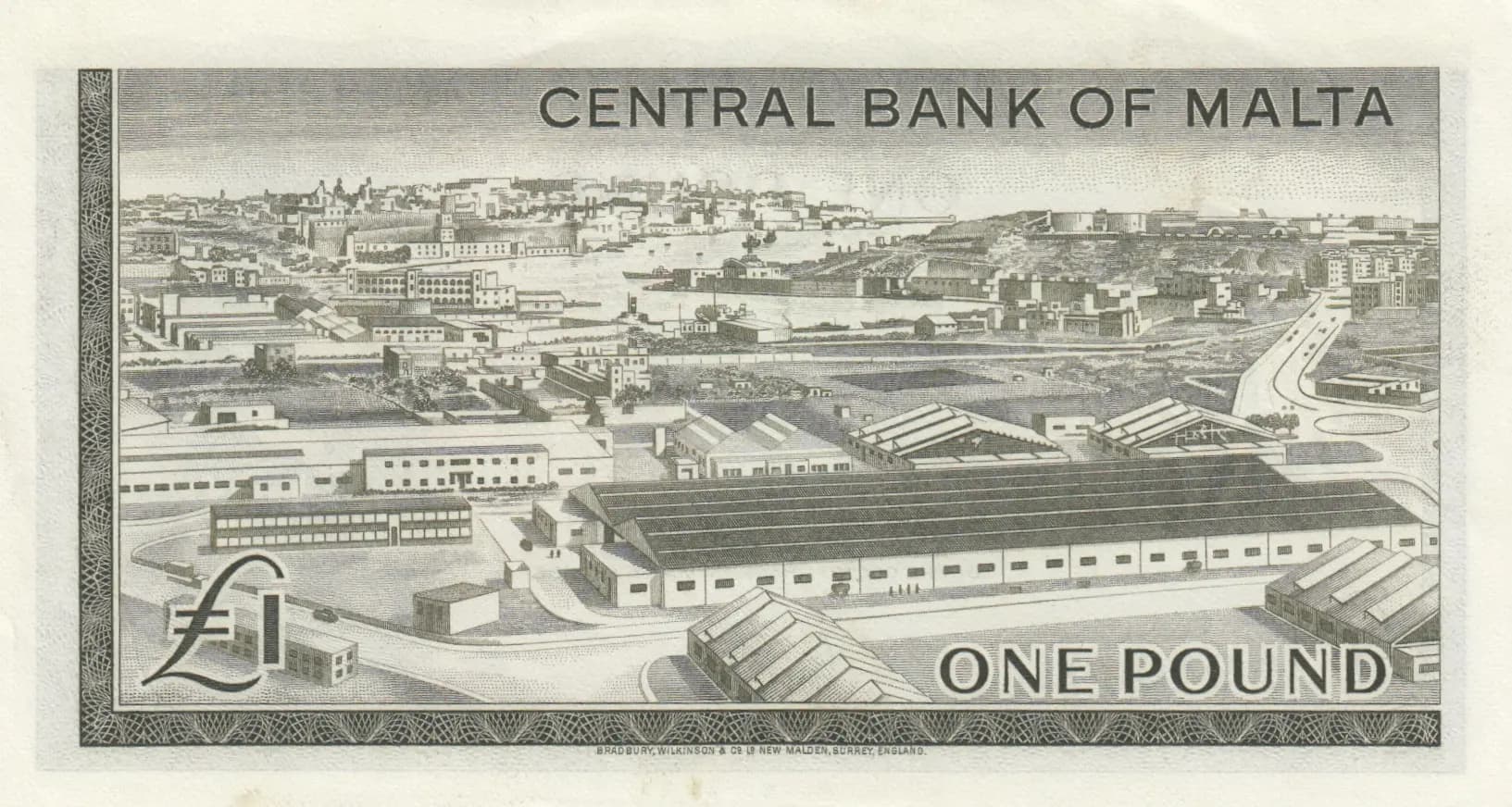
This is a well-preserved example of Malta's 1969 one pound note (Pick P-29), graded AU (About Uncirculated), featuring Queen Elizabeth II in profile on the obverse and an aerial view of the Marsa Industrial Estate on the reverse. The note exhibits crisp printing with minimal handling wear, excellent color definition in the green and red Maltese cross, and clean margins characteristic of high-grade specimens. The fine line engraving security printing and prominent Governor H. Hogg signature are clearly rendered, making this an attractive example of early post-independence Maltese currency.
Common. While this note saw regular circulation during the pound era (1969-2008), examples in AU condition are reasonably available in the secondary market. eBay sales data shows consistent pricing across multiple grade levels, with AU-graded notes typically fetching $60-$160, and UNC specimens commanding $300-$380. The extensive print run necessary to circulate this denomination throughout Malta's economy, combined with current availability in collector hands, indicates this is a common date in most conditions. No evidence of limited production or recall status.
Issued under the Central Bank of Malta Act of 1967, this note represents Malta's currency during the transition period following independence from British colonial rule. The 1967 law authorized the Central Bank to issue currency in the pound denomination, which remained Malta's monetary unit until 2008. The reverse features the Marsa Industrial Estate, reflecting Malta's mid-20th century development focus on industrial infrastructure and port facilities as economic drivers for the newly independent nation.
The obverse features a formal portrait of Queen Elizabeth II in profile facing left, rendered in fine-line black and white engraving style, positioned on the right side of the note. The dominant design element is an ornate Maltese Cross (the national symbol of Malta) in the center, featuring intricate geometric and floral patterns in green and red with a coat of arms emblem at its center. The note employs an olive-green primary color with multicolored security underprinting throughout. The reverse depicts an aerial panoramic engraving of the Marsa Industrial Estate, showing multiple factory and warehouse buildings, harbor/waterway infrastructure, residential structures on elevated terrain, and mountain features in the background—a representation of Malta's post-independence industrial development. Decorative corner flourishes and detailed border designs frame both sides.
FRONT: 'CENTRAL BANK OF MALTA' — issuing authority; 'THIS NOTE IS LEGAL TENDER FOR ONE POUND IN MALTA AND ITS DEPENDENCIES AND IS ISSUED UNDER THE AUTHORITY OF THE CENTRAL BANK OF MALTA ACT, 1967' — legal tender declaration referencing the 1967 legislation; Serial number 'A 940001'; Signature of Governor 'H.Hogg' with title 'GOVERNOR'; '£1' denomination mark. BACK: 'CENTRAL BANK OF MALTA' — issuing authority repeated; 'ONE POUND' — denomination; '£1' — denomination symbol; 'BRADBURY WILKINSON & CO LTD NEW MALDEN SURREY ENGLAND' — printer attribution.
This note was produced using traditional intaglio (engraved line) printing by Bradbury Wilkinson & Co Ltd, New Malden, Surrey—one of the world's most respected security printers of the era. The extensive fine-line engraving visible throughout both sides, including detailed cross-hatching patterns, intricate geometric border work, and finely rendered portraiture and landscape elements, are characteristic of high-security intaglio production. The multi-color printing on the obverse (olive-green with red and green security underprinting) required multiple passes through the printing press.
This specimen appears to be Pick P-29a (Bradbury Wilkinson printer, BWC variant). The visual analysis confirms the BWC printer attribution on the reverse. The serial number prefix 'A' and signature 'H.Hogg' are consistent with early printings from the 1969 issuance. PMG records indicate two catalogued variants (P-29a and P-29cts), both with BWC printing. Without additional comparative analysis of printing dates and signature changes, this note is catalogued as the standard P-29a variant; specialist collectors should verify specific signature types and early vs. late printing characteristics for definitive variety attribution.