2 rupees 1960
Market Prices
41 salesAbout This Note
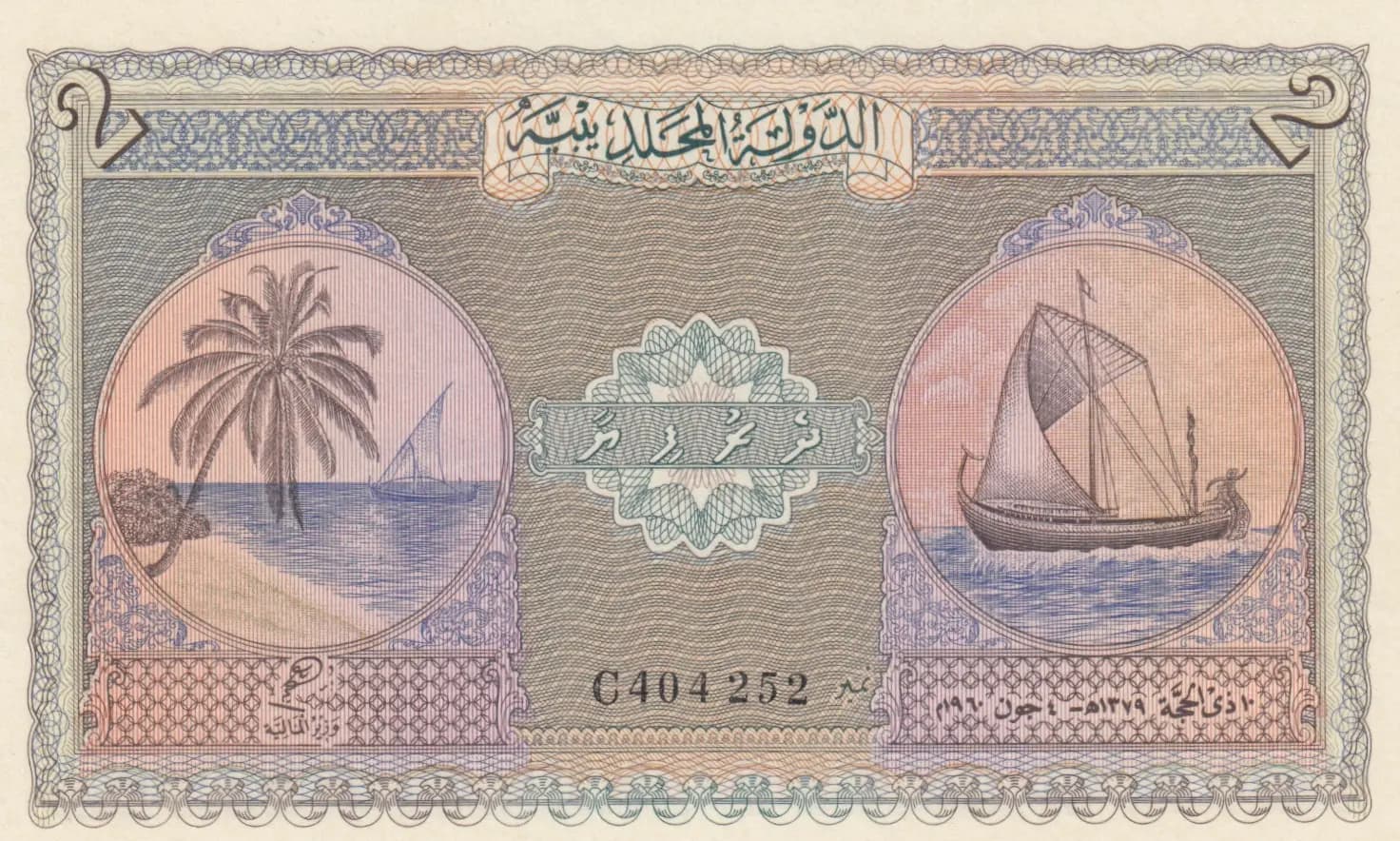
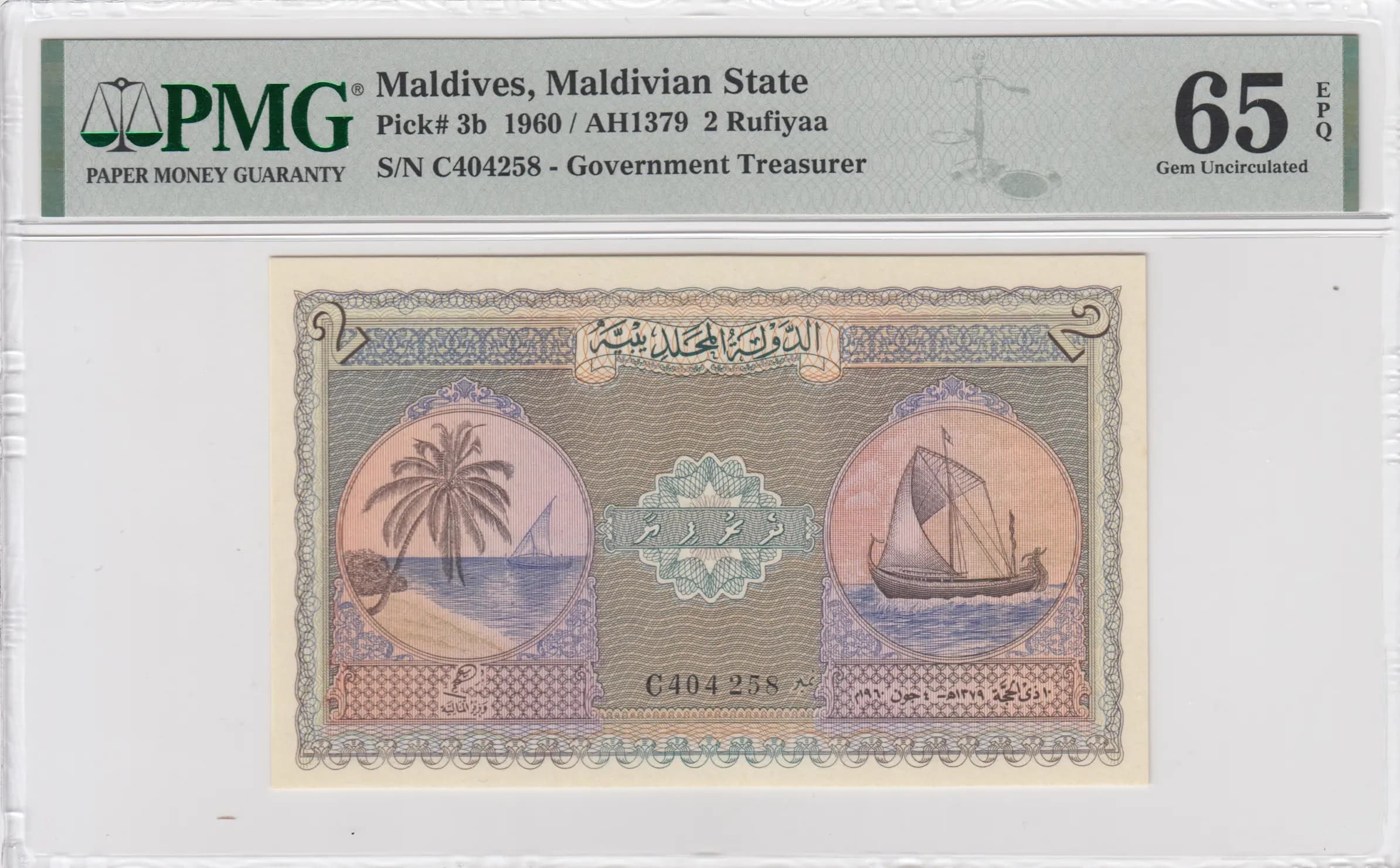
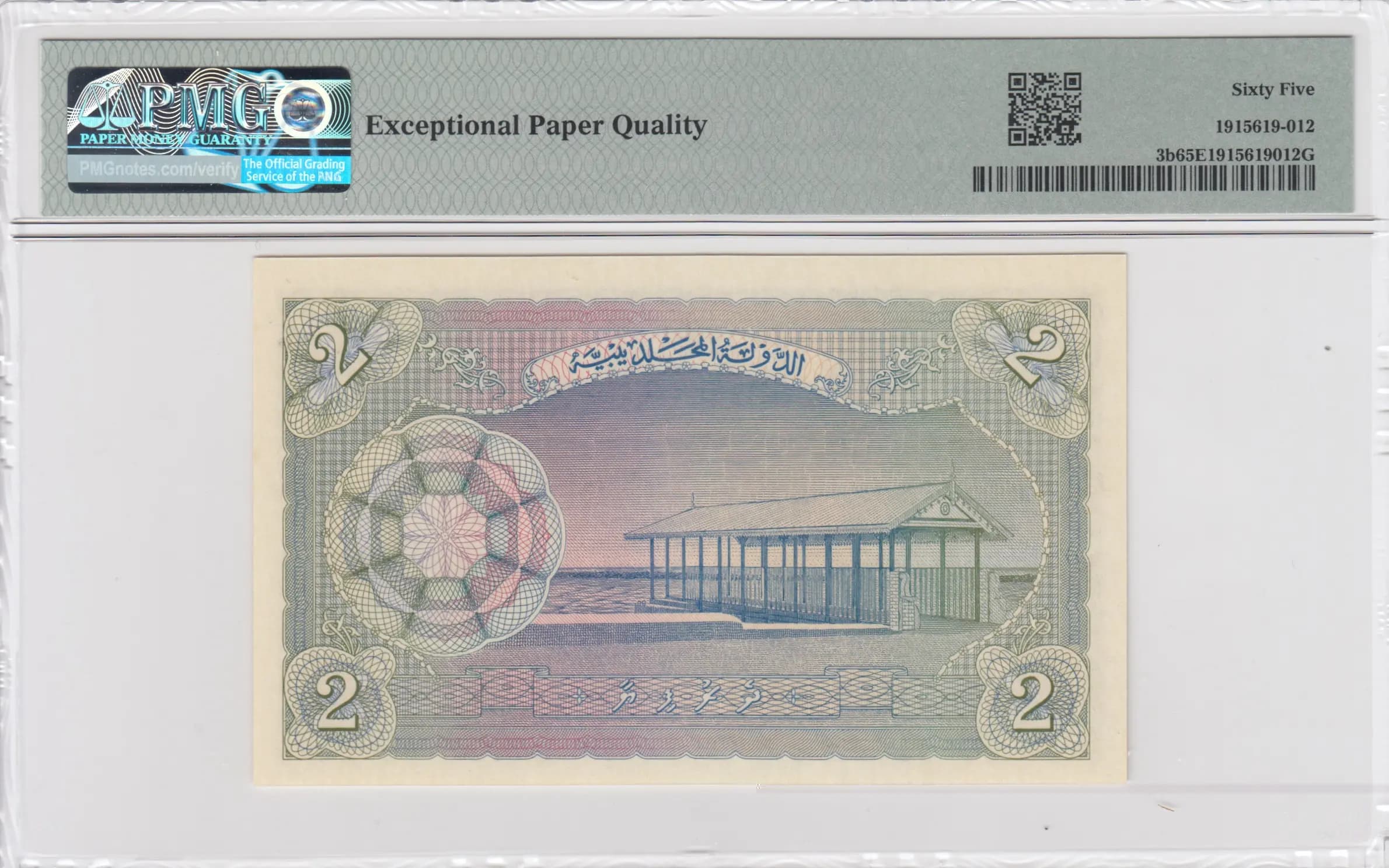
This is a PMG 65 EPQ graded 2 Rufiyaa note from the Maldivian State Treasury's 1960 issue (Pick 3b), representing an early and historically important currency of the Maldives. The note displays exceptional preservation with crisp paper, vibrant multicolored printing in beige, blue, purple, and green, and no visible circulation wear. The obverse features iconic maritime imagery—a palm tree on a tropical beach and traditional dhoni sailing vessels—while the reverse depicts a distinctive waterfront pavilion or royal jetty structure, making this an attractive example of mid-20th century tropical island currency design.
Common. While this note is from an early Maldivian issue, the 2 Rufiyaa denomination was produced in substantial quantities for circulation. eBay auction data spanning 2011-2026 shows consistent availability at modest price points, with PMG 65 examples regularly trading in the $35-55 range. The catalog value (2016) of $5 UNC and the high volume of graded examples entering the market indicate this is a readily obtainable note for collectors, not scarce or rare in any grade.
The 1960 2 Rufiyaa issue marks a significant period in Maldivian numismatic history, issued by the Maldivian State Treasury as the nation was transitioning toward greater autonomy (full independence would follow in 1965). The maritime and architectural imagery—the dhoni sailing vessels central to Maldivian culture and the waterfront pavilion (noted as a royal jetty, later demolished during port development)—reflects the islands' economic dependence on seafaring and trade while celebrating indigenous cultural symbols during this formative period.
The obverse presents two circular vignettes in an elegant compositional arrangement: the left vignette depicts a solitary palm tree on a sandy beach with ocean vista and a distant sailing vessel, while the right vignette features a traditional Maldivian dhoni (multi-hulled sailing vessel) in profile. These are separated by an ornate central rosette pattern rendered in fine geometric detail. The reverse showcases the note's most distinctive feature—a wooden waterfront structure identified as a royal jetty or pavilion with characteristic extended eaves, rendered in soft greens and blues over water. The entire note is framed with ornate corner scrollwork and intricate guilloche border patterns typical of security printing of the period. The color palette—beige, cream, blue, purple, pink, and green—creates a harmonious tropical aesthetic.
Front: 'ދވލްވެށްީ ސްޓޭްޓް' (Dhivehi) = 'Maldivian State'; Serial number 'C404258' (English). Back: 'ދވލްވެށްީ ސްޓޭްޓް' (Dhivehi) = 'Maldivian State'; Denomination '2' (English, indicating 2 Rufiyaa). All inscriptions appear in both Dhivehi script and English numerals, reflecting the bilingual convention of the era.
This note was produced using intaglio engraving (recess printing), evidenced by the fine line engraving patterns, detailed guilloche background designs, and intricate vignette rendering visible throughout both obverse and reverse. The high-quality register and sharp detail of the multicolored design elements suggest professional security printing, though the specific security printer is not confirmed in catalog data for the P-3b variety. The ornate scrollwork and geometric patterns display the hallmarks of hand-engraved security printing common to Commonwealth-era currency from the 1960s.
This is cataloged as Pick 3b, indicating it is the second major variety of the 1960 2 Rufiyaa issue. The visual analysis confirms the 1960 date and the characteristic obverse design with dual circular vignettes (palm tree and dhoni). The serial number format 'C404258' is consistent with this issue. PMG population data confirms multiple varieties exist for the base Pick number (P-3a, P-3b, P-3s, P-3as, P-3bs), with the 'b' designation distinguishing this variant from other subtypes, possibly related to printer, series, or signature variations.