1 rupee 1960
Market Prices
38 salesAbout This Note
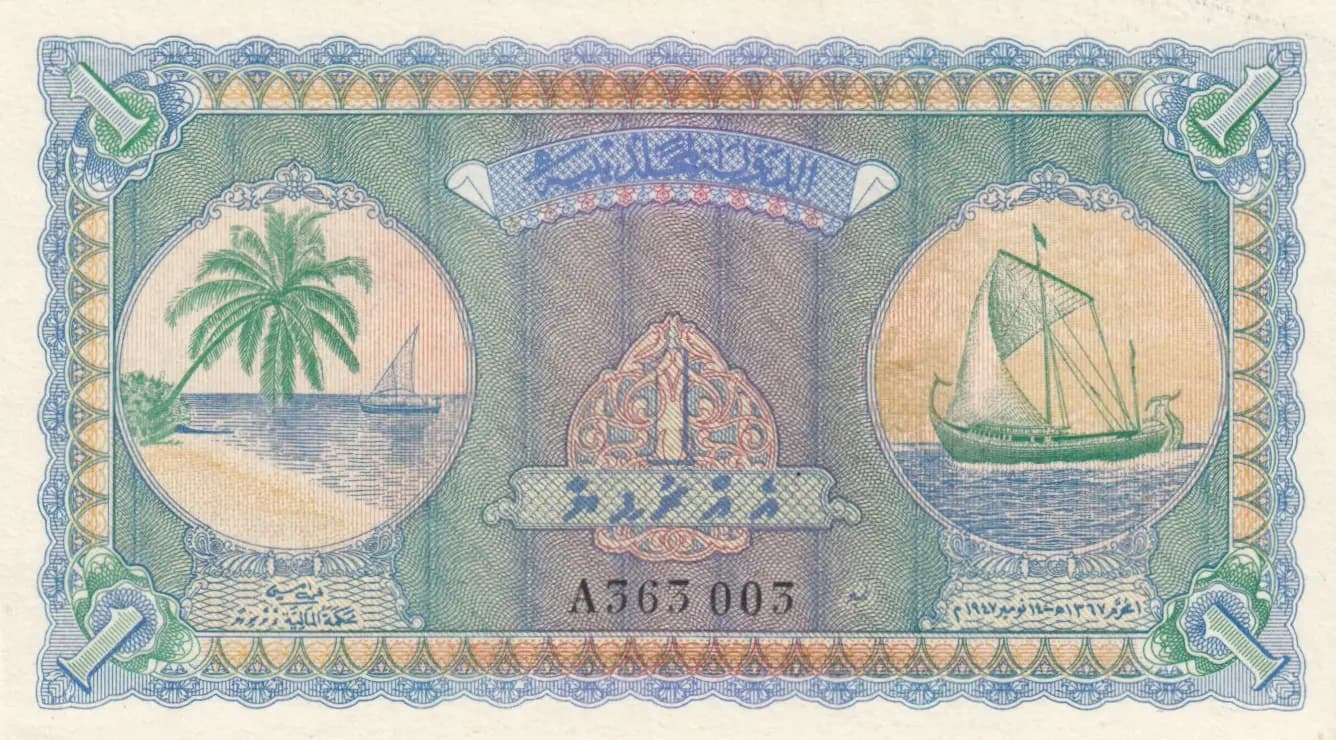
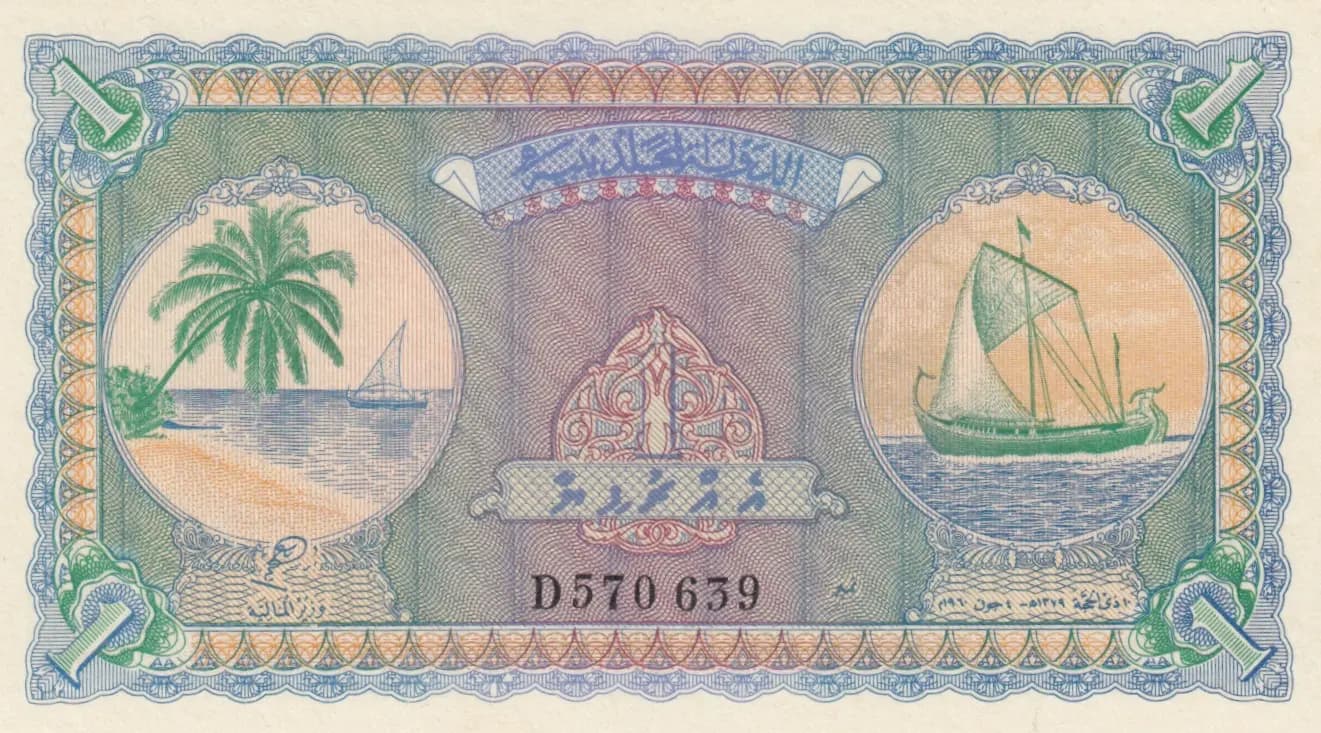
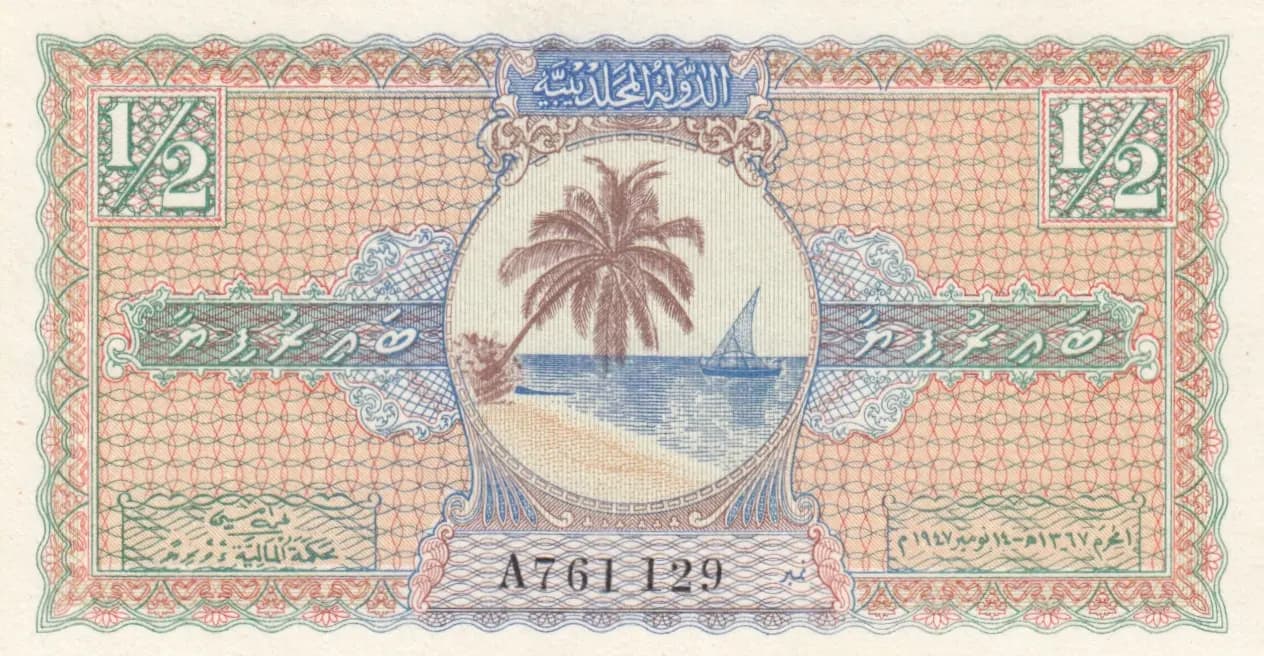
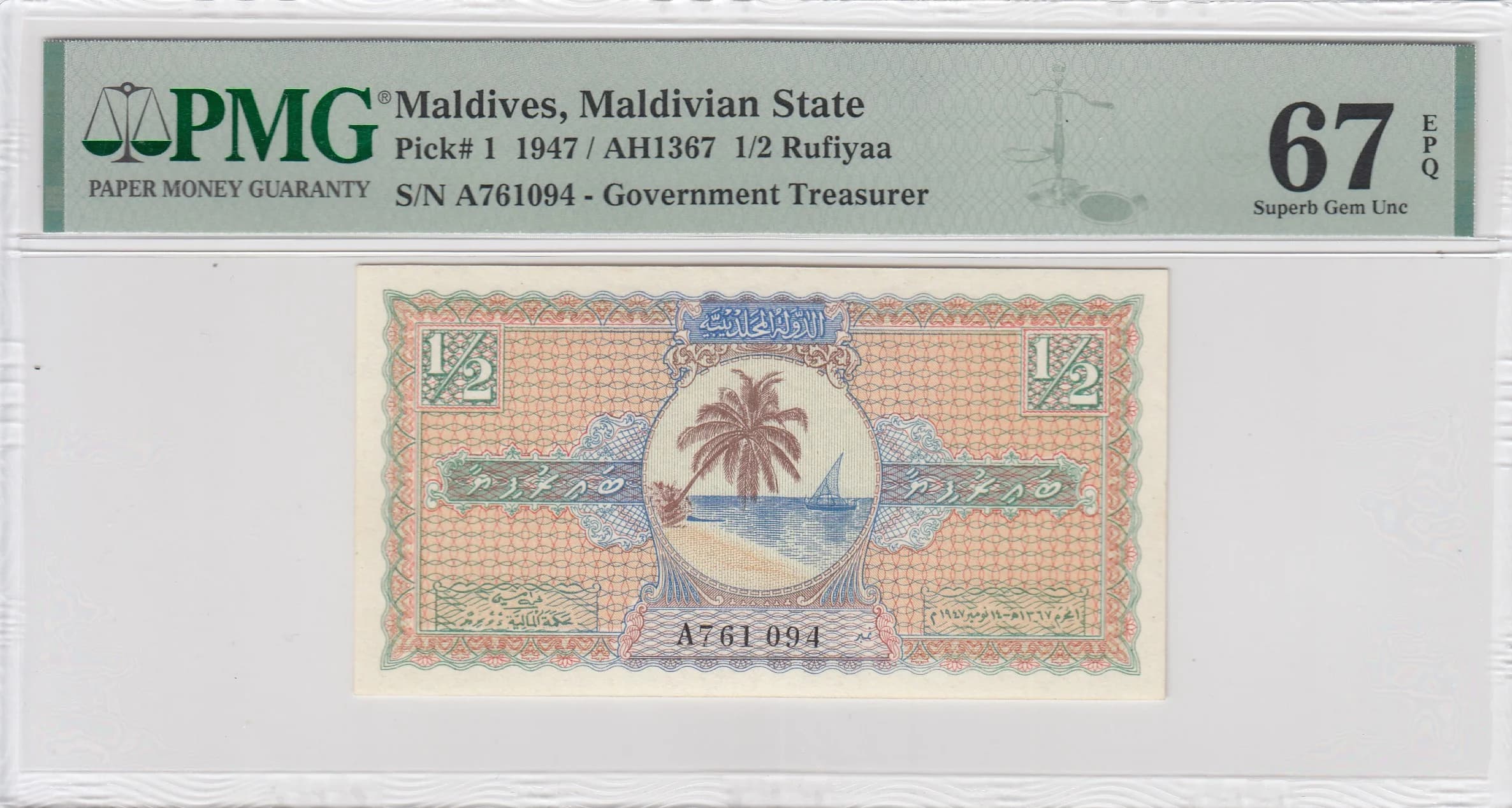
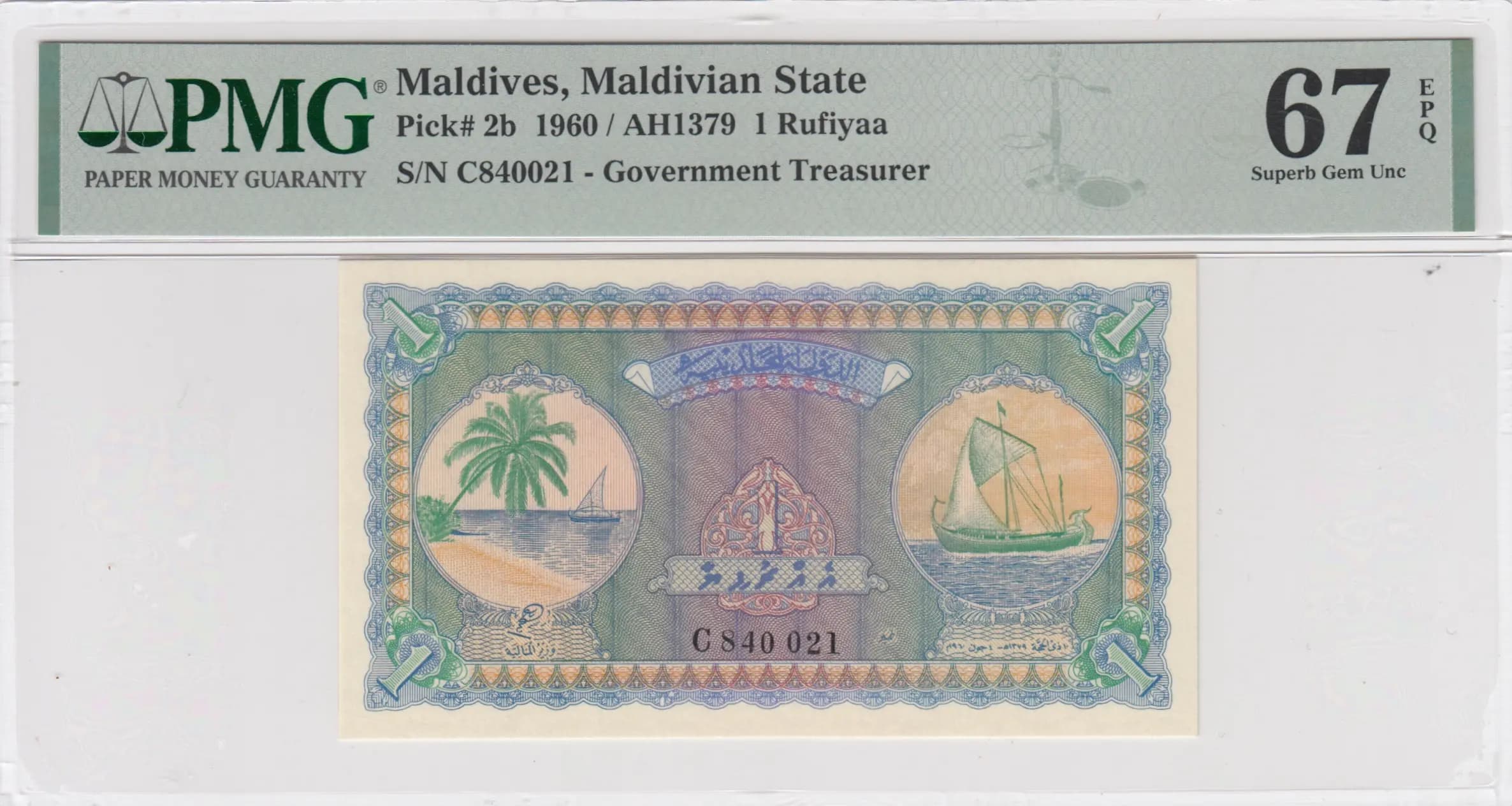
This is a PMG 67 EPQ graded 1 Rufiyaa note from the Maldivian State Treasury issued in 1960 (AH1379), representing an early post-independence currency issue. The note displays exceptional condition with crisp, sharp printing throughout, featuring iconic maritime imagery—a palm tree with sailing vessel on the left and a traditional dhow on the right—that reflect the Maldives' seafaring heritage. The blue-green and multicolored design with ornate geometric borders showcases fine engraving work characteristic of professional currency production, making this a desirable early example of Maldivian numismatics.
Common. The eBay price data shows consistent trading activity for this denomination and grade across multiple years (2012-2024), with PMG 67 examples regularly selling in the $70-$115 range, indicating steady collector demand but no scarcity premium. The catalog values (2016) list UNC at only $4, and numerous sales records show availability at all grade levels. The note does not appear to have been subject to recall or production limitation. While early for the Maldivian series, it is not rare.
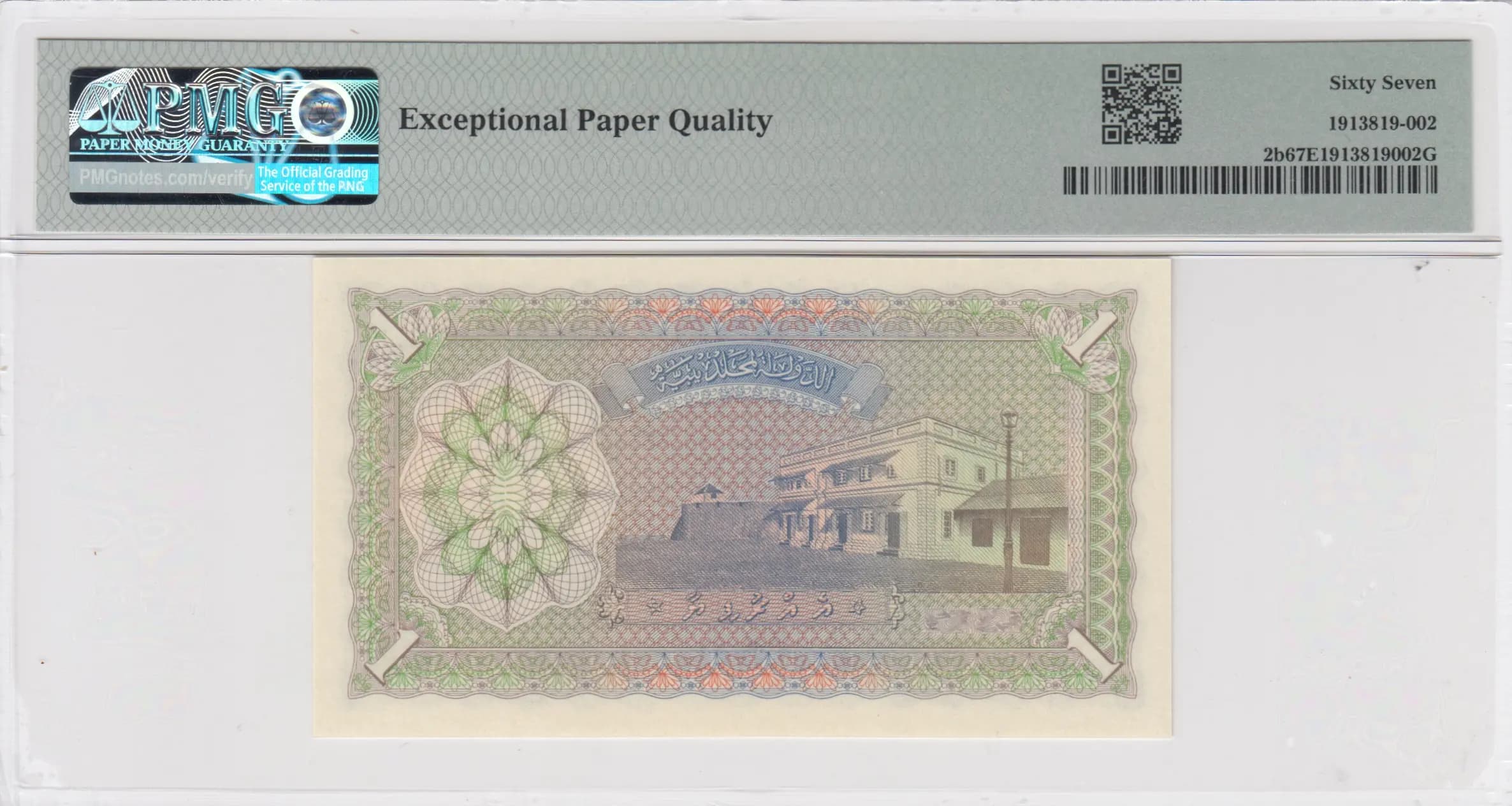
The 1960 1 Rufiyaa note was issued during the early years of the Maldivian State Treasury, a formative period in the nation's monetary independence following the transition from British colonial administration. The prominent maritime imagery—the dhow and palm tree—symbolizes the Maldives' dependence on seafaring trade and island economy, reflecting the nation's identity during this period of institution-building. The ornamental architectural rendering on the reverse depicts key government buildings (including the Customs House and administrative structures), anchoring the note's design to the nation's emerging institutional framework.
The obverse features a two-vignette composition with a left-side maritime scene depicting a coconut palm tree on a tropical beach with a small sailing vessel, and a right-side traditional Maldivian dhow under sail. These are separated by a central ornamental shield or crescent design characteristic of Islamic-influenced state seals. The reverse displays architectural imagery centered on a prominent multi-windowed institutional building (identified as the Customs House or Government administrative building), flanked by ornate geometric and floral patterns on the left side. An ornamental decorative motif appears above the building structure. Both sides are framed by repeating geometric border patterns in complementary colors. The overall design palette of blue-green, orange, cream, and brown reflects the tropical island setting and administrative authority of the issuer.
Front: Serial number C 840021 (English/numerals). Back: Thaana/Arabic script inscription above the building structure (specific text not clearly legible in provided image quality, likely containing issuer name, denomination, or official titles in Thaana script). The denomination '2' appears in bottom corners (likely representing the second denomination issued or a catalog variant marker).
Intaglio engraving with fine line work, producing the sharp, crisp impression visible throughout the note. The complex border designs, architectural detail, and fine geometric patterning are characteristic of high-security currency production. The clarity and precision of the printing in this PMG 67 example indicates professional security printing, likely by a European security printer serving Commonwealth nations during this period.
This example is cataloged as Pick P-2b (1960 issue). The PMG population report identifies multiple variants of the 1 Rufiyaa denomination including P-2a, P-2as, P-2b, P-2bs, and P-2s, suggesting varieties exist based on watermark, signature, or printer differences. The specific 'b' designation in P-2b may indicate a variant within the 1960 issue series. Serial number C 840021 places this within the regular production run for this variety.